
The Ultimate Guide to Portugal’s Top 10 Stretch Blow Molding Machine Manufacturers
Your 2025 guide to the top 10 Stretch blow molding machine manufacturers in Portugal. Compare cost, energy use, and local support to find the best PET solution.
If you’re buying a Stretch blow molding machine in Portugal, you’re making a big decision that impacts your production cost, flexibility, and competitiveness. This guide cuts through the noise. I’ll walk you through the top manufacturers with a presence here, break down the real-world costs, and give you a clear framework for choosing the right partner for your facility, whether you’re bottling water, olive oil, or personal care products.
Why This Matters in 2025 — energy efficiency, uptime, fast changeover, local service coverage in Portugal
In 2025, with high energy prices across Europe, efficiency isn’t a bonus; it’s essential for survival. The difference between an older hydraulic machine and a new all-electric or hybrid servo model can directly impact your profitability on every single bottle. Portuguese producers need machines that deliver maximum uptime and can switch between different bottle formats quickly to serve diverse customer orders.
Above all, verifiable local service is critical. A machine that’s down for days waiting for a part or a technician from another country is a liability. Your decision should weigh the machine’s specs just as heavily as the supplier’s ability to provide fast, reliable support within Portugal.
Cost and Pricing Signals for 2025 — one-stage vs two-stage, cavities, automation, FAT/SAT, import duties in Portugal
Machine prices vary widely. A simple two-stage machine for standard water bottles might start around €150,000, while a high-speed, multi-cavity line from a premium brand can exceed €1,000,000. One-stage Injection Stretch Blow Molding machines, ideal for cosmetics or specialty containers, have a different cost structure based on precision and complexity.
When budgeting, factor in mold costs (€10,000 – €50,000+ per set), automation for preform handling and bottle takeoff, and the scope of commissioning. For non-EU machines, remember to account for import duties and VAT. Always clarify what’s included in the Factory Acceptance Test (FAT) and Site Acceptance Test (SAT) to avoid unexpected costs for technician time and travel.
Energy, Utilities, and Sustainability — kWh per 1,000 bottles, compressed air recovery, IR oven zoning, servo drives
Energy is one of the highest operating costs. Ask every potential supplier for the machine’s energy consumption, measured in kWh per 1,000 bottles produced. All-electric machines typically offer the lowest energy use, as they eliminate the constant power draw of hydraulic pumps. Look for modern infrared (IR) ovens with precise zoning to heat preforms efficiently and servo-electric drives for clamping and stretching motions.
Don’t forget compressed air. It’s a massive energy consumer. Systems with air recovery can capture and reuse high-pressure air, significantly cutting your electricity bill. With Portugal’s commitment to EU sustainability targets, choosing an energy-efficient machine is also a smart long-term investment.
Throughput vs Flexibility Trade-offs — high-speed PET lines vs premium Injection Stretch Blow Molding small runs
Your business model dictates the right machine type. If you’re a large beverage co-packer producing millions of standard water or soda bottles, a high-speed, two-stage Mesin stretch blow molding is your best bet. These are built for raw output and efficiency on long production runs.
However, if you produce premium olive oil, cosmetics, or pharmaceutical containers with complex shapes, perfect clarity, and precise necks, a one-stage Injection Stretch Blow Molding (ISBM) machine is superior. What you lose in raw speed, you gain in kualitas control, lower scrap rates, and the flexibility to handle small, high-value runs without needing a massive inventory of preforms.
Mold, Tooling, and Quick-Change Strategy — preform molds, neck rings, EOAT, vision QC, changeover minutes
Your mold is just as important as your machine. A well-designed mold impacts bottle kualitas, cycle time, and material usage. When you buy a machine, you’re also buying into a tooling ecosystem. Consider the cost and availability of preform molds, stretch rods, and neck rings.
For producers in Portugal with a diverse product portfolio, quick-change capability is key. Ask suppliers for video-verified changeover times. A system that can be switched from one bottle to another in under 30 minutes by a single operator is far more valuable than one that requires hours of mechanical adjustments. Integrating end-of-arm tooling (EOAT) and vision quality control systems can further streamline your process.
Process Control and Quality — oven profile, preform temperature window, stretch ratios, blow/counter-pressure, Cp/Cpk
Modern machines offer incredible process control. The ability to fine-tune the oven heating profile, maintain a consistent preform temperature, and precisely manage stretch ratios is fundamental to producing strong, lightweight bottles. Look for machines that provide real-time data on blow pressure, cooling cycles, and material distribution.
This level of control directly reduces scrap and ensures your production meets high process capability standards (Cp/Cpk), which is often a requirement for supplying major brands. Stable, repeatable performance shift after shift is the goal.
Materials and Barriers — PET, rPET, PETG, multilayer (EVOH/nylon) and recycling in Portugal
Most machines run standard polyethylene terephthalate (PET). However, with EU mandates, the ability to process high percentages of recycled PET (rPET) is now a critical requirement. Not all machines handle rPET blends equally well, so verify this capability. For some aplikasi, you might use PETG for its exceptional clarity or require multilayer preforms.
Multilayer preforms contain a thin barrier layer of EVOH or nylon to protect sensitive products like juice, wine, or dairy from oxygen. If you need this, ensure your machine and oven are designed for it. Also, consider how using such materials aligns with Portugal’s recycling streams and circular economy initiatives.
Top 10 Stretch blow molding machine Manufacturers in Portugal
Sidel (direct sales and service in Portugal)

The web of sidel for blow molding machine factory/manufactures
Sidel is a global leader, especially in the high-speed beverage sector. Their presence in Portugal is strong, with direct sales and a dedicated field service team. They are the go-to choice for large-scale producers of water, carbonated soft drinks, and aseptic beverages who require complete, integrated packaging lines and premium performance.
Main products
Sidel’s portfolio is extensive, anchored by the EvoBLOW series of modular Stretch blow molding machines. They offer solusi for hot-fill, aseptic, and regular cold-fill applications, with a heavy focus on high output, energy efficiency (Super Combi lines), and bottle lightweighting potential.
Pros
Unmatched process expertise, especially for complex applications. Excellent local service and parts network in Europe. Industry-leading technology for speed and lightweighting. Strong focus on integrated line solutions.
Cons
Premium pricing reflects their market position. Machines are complex and may be overkill for smaller operations. Longer lead times are common.
Krones (direct sales and service in Portugal)

The web of pet krones for blow molding machine factory/manufactures
Krones is another German powerhouse and a direct competitor to Sidel, with a formidable reputation in the beverage and liquid food industries. They have a well-established service and sales structure covering Portugal, offering everything from standalone machines to full turnkey plant solutions. Their engineering is known for reliability and longevity.
Main products
The Contiform series is their flagship Mesin stretch blow molding platform. They offer a wide range of models for different output needs, including the Contiform 3 Speed, which is tailored for maximum output in the beverage segment. They also have integrated Blow-Fill-Cap (ErgoBloc) systems.
Pros
Highly reliable and durable machinery. Strong direct service presence across Europe. Excellent integration capabilities with other Krones equipment. Good reputation for customer support.
Cons
High initial investment cost. Can be less flexible for very small, custom runs compared to specialized manufacturers. Lead times can be substantial.
KHS (sales and service partner in Portugal)

The web of KHS asb for blow molding machine factory/manufactures
KHS Group, based in Germany, is a major player in filling and packaging technology for the beverage industry. They compete with Sidel and Krones and are known for their robust InnoPET Blomax series. Support in Portugal is typically handled through a combination of regional service hubs and local partners, ensuring good coverage.
Main products
The InnoPET Blomax series is their core offering. These machines are known for their efficiency and wide processing window. KHS also promotes its integrated block solutions (InnoPET BloFill) for space and energy savings, and they have strong barrier technology for sensitive beverages.
Pros
Very energy-efficient machines with advanced oven technology. Robust and reliable engineering. Strong option for medium to large beverage producers. Good focus on reducing total cost of ownership.
Cons
Pricing is in the premium segment. May not be the most agile choice for companies needing to do many small, custom runs.
SIPA (direct sales and regional service)

The web of SIPA for blow molding machine factory/manufactures
The Italian firm SIPA offers a uniquely broad portfolio, covering everything from preform injection molding to stretch blow molding and filling. This gives them a “single source” advantage. Being based in Italy, they have excellent logistical access and service responsiveness for the Portuguese market. They are known for flexibility and strong mold-making expertise.
Main products
SIPA offers both single-stage (ECS) and two-stage (SFR) rotary platforms. Their XTRA series is highly regarded for its wide process window and energy efficiency. They are a great choice for companies that need both standard and complex/custom PET containers.
Pros
Deep expertise across the entire PET process. Highly flexible and customizable solutions. Competitive pricing compared to German rivals. Strong mold and bottle design capabilities.
Cons
Their portfolio is so broad it can sometimes be complex to navigate. Not as dominant in the ultra-high-speed beverage segment as Sidel or Krones.
Nissei ASB Machine (European subsidiary and local agent support)

The web of NISSEI asb for blow molding machine factory/manufactures
Nissei ASB is a Japanese pioneer and global leader in one-stage Injection Stretch Blow Molding technology. Their machines are the industry standard for high-quality, blemish-free containers in cosmetics, pharmaceuticals, and food jars. They have a European head office in Germany and work through local agents to provide support in Portugal.
Main products
The ASB-series is their iconic one-stage, four-station platform, renowned for producing finished containers from raw resin. They offer a huge range of machine sizes, perfect for everything from tiny vials to large, wide-mouth jars.
Pros
Superb container quality, clarity, and precision. Ideal for non-beverage applications with complex shapes. Eliminates the need to buy, store, and handle preforms. Highly reliable machines.
Cons
Slower cycle times compared to two-stage systems. Higher initial investment for the machine itself. Less suited for simple, high-volume beverage bottles.
SMF (European sales and service)

The web of SMF for Extrusion blow molding machine factory/manufactures
SMF is a Polish manufacturer that has become a major force in the European market by offering high-quality, reliable machines at a very competitive price point. They are an excellent alternative to the traditional premium brands, especially for small to medium-sized enterprises. They serve the Portuguese market directly from their European base.
Main products
They offer a range of linear and rotary Stretch mesin cetak tiup, including the Optima and HS series. Their machines are known for being user-friendly, using readily available components, and offering a great balance of performance and cost.
Pros
Excellent price-performance ratio. Uses standard, high-quality European components (Siemens, Festo). Shorter lead times than many larger competitors. Good flexibility for various bottle types.
Cons
Lacks the extensive global service network of the top-tier brands. Not typically a provider of full turnkey lines.
lekamachine (global OEM with Asia coverage)

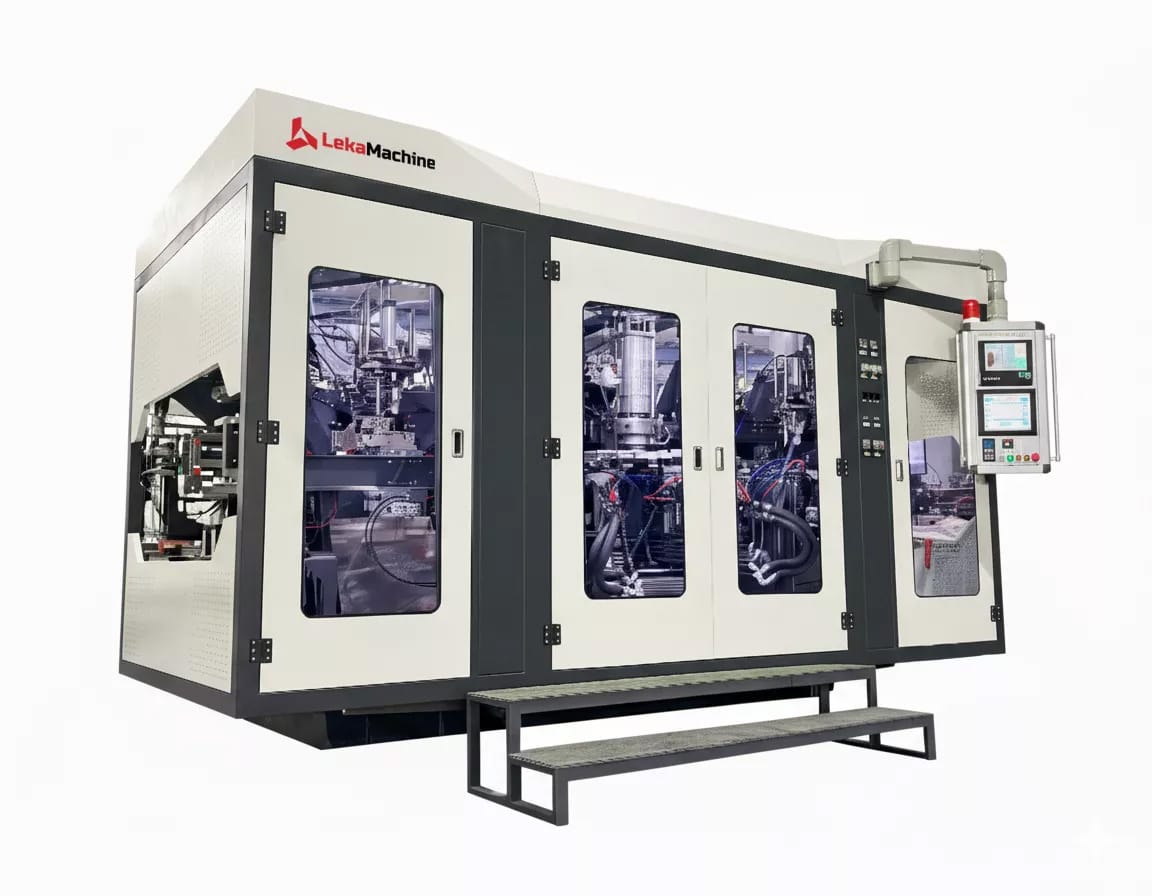
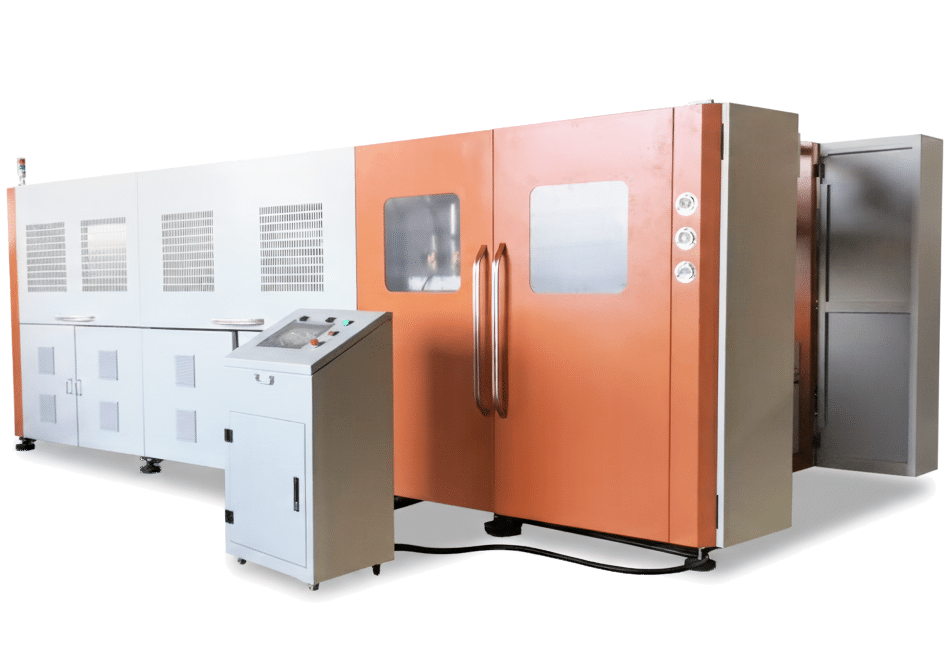
Mesin stretch blow molding ini memiliki kabinet servis tertutup dan area pembentukan yang dijaga untuk membentuk botol plastik.
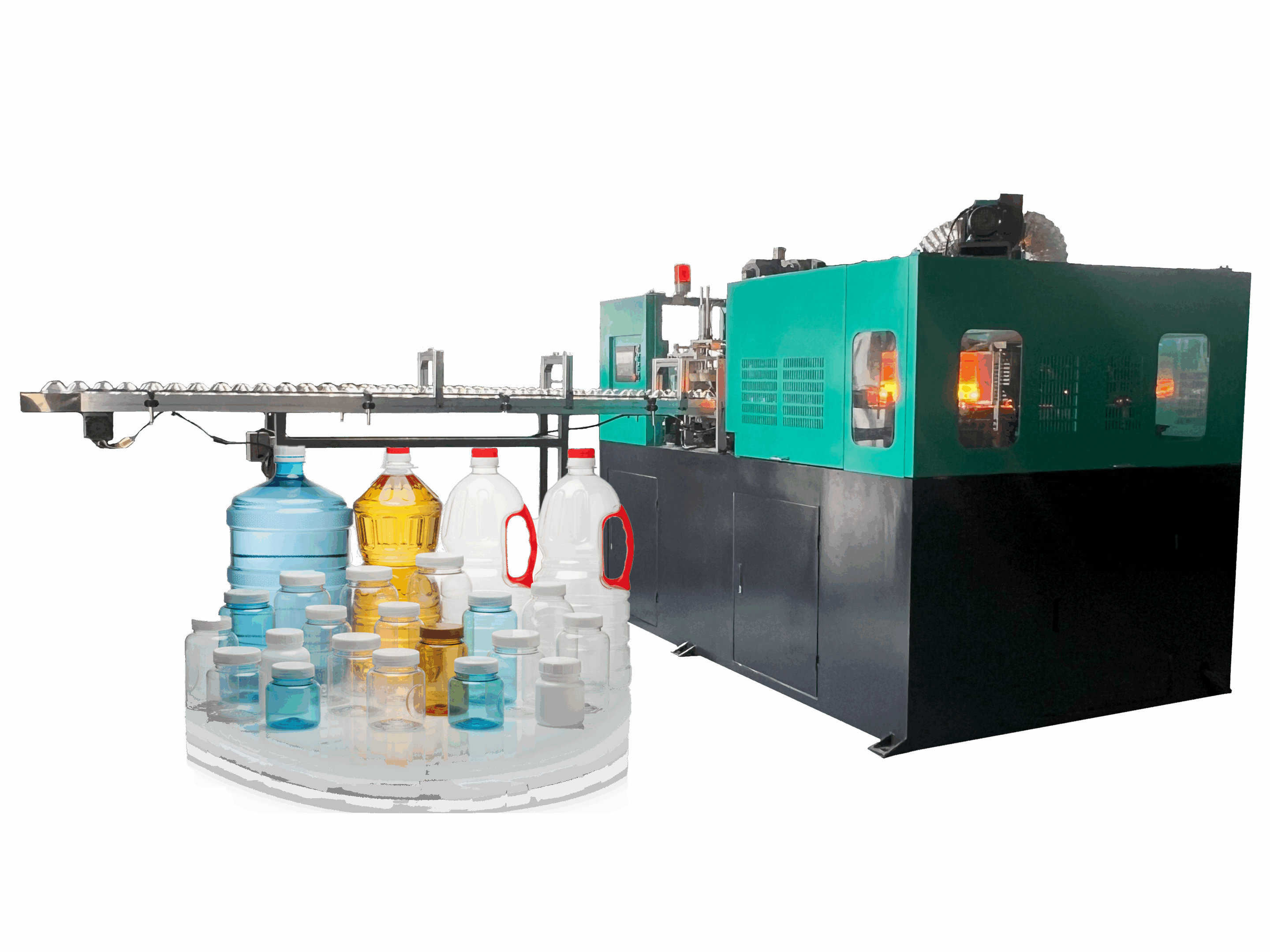
Leka Machine offers a compelling value proposition for Portuguese companies, particularly startups or established players needing to expand capacity quickly and affordably. As a global OEM, they focus on building reliable, efficient machines with an outstanding price-performance ratio. Their key advantage is a delivery lead time of 30-90 days, a fraction of what is typical from many European manufacturers. Support is handled through remote diagnostics and a regional service dispatch model.
Main products
Leka Machine provides both Stretch blow molding machines and Extrusion blow molding machines. Their Stretch Blow portfolio includes the AQUA Series, optimized for high-speed, stable production of water and beverage bottles, and the BOTTLER Series, designed for the precision molding of high-value cosmetic and non-standard PET containers.
Pros
Excellent price-performance. Extremely fast delivery lead times of 30-90 days. Machines are built for reliability and efficiency, making them a great fit for diverse production needs. Ideal for businesses needing to scale up without a massive capital investment.
Cons
Service is based on a remote and regional dispatch model, not a dedicated local office in Portugal. Brand is less established in Europe compared to legacy players. Best suited for clients comfortable with a global supplier relationship.
Official site: https://lekamachine.com
Aoki Technical Laboratory (European sales office)

The web of AOKI for blow molding machine factory/manufactures
Aoki is another top-tier Japanese manufacturer specializing in one-stage Injection Stretch Blow Molding. They are known for their innovation, precision, and compact machine designs. Their “Direct Heat Con” process is highly efficient. Like Nissei, they serve Portugal through their European sales office and support network.
Main products
Aoki’s AL-series of machines are famous for their three-station design, which is more compact than the traditional four-station layout. They excel at producing technically difficult bottles with high precision, making them popular in the personal care and medical sectors.
Pros
Extremely compact machine footprint. High energy efficiency. Outstanding precision and repeatability. Capable of molding very complex and small containers.
Cons
Lower throughput than two-stage machines. Represents a significant capital investment. Focused on a niche of high-precision molding.
Sacmi (regional sales and service)

The web of SSACMI for Extrusion blow molding machine factory/manufactures
Sacmi is a massive Italian industrial group, famous for its dominance in ceramics and closures. They also have a strong packaging and beverage division, offering integrated solutions that include stretch blow molding. Their geographical proximity to Portugal makes service and support straightforward. They are a strong contender for producers looking for integrated neck-and-bottle solutions.
Main products
Sacmi’s SBF series of rotary Stretch mesin cetak tiup are known for their reliability and are often integrated with their fillers and capping systems. They also have a unique compression blow forming (CBF) technology, which offers an alternative for producing certain types of containers.
Pros
Strong integration with world-class closure and filling technology. Robust, reliable machines. Good regional support network. Innovative technology options like CBF.
Cons
Blow molding is just one part of their vast business, so they may lack the singular focus of specialists. Their solutions are often geared towards complete lines.
PET All Manufacturing (European office and support)

The WEB for PETALL of Stretch blow molding machine
Based in Canada but with a strong European presence (including a facility in Poland), PET All Manufacturing offers a full range of PET processing equipment. They provide a solid, cost-effective alternative to the premium brands and are known for their flexible, customer-centric approach. They cover Portugal through their European operations.
Main products
PET All offers a wide range of two-stage linear and rotary machines. Their Liberty series of linear machines is a popular choice for its flexibility and affordability, making it ideal for custom molding and lower-volume production. They also supply molds and auxiliary equipment.
Pros
Competitive pricing. Good range of machines for various output needs. Flexible and willing to customize solutions. Full service from bottle design to tooling.
Cons
Smaller service network than the largest global players. Less brand recognition in the high-speed beverage segment.
Factors to Consider When Choosing a Stretch blow molding machine Manufacturer for a Startup — delivery time, training, TCO in Portugal
For a startup in Portugal, speed to market is everything. A long lead time for a machine means delayed revenue. A supplier with fast delivery, like lekamachine’s 30-90 day window, can be a significant competitive advantage. Simplicity and ease of use are also vital, as you may not have experienced technicians on staff initially. Look for a manufacturer that provides comprehensive, hands-on training in Portuguese.
Finally, focus on a predictable Total Cost of Ownership (TCO). This includes not just the purchase price but also the projected costs of energy (based on local electricity rates), spare parts, and service over the first few years. A slightly cheaper machine with poor energy efficiency or expensive parts can quickly become a financial burden.
How to Find a Stretch blow molding machine Manufacturer for Your Startup — shortlist, pilot, OEE, SLA, references in Portugal
Start by shortlisting 3-4 potential suppliers who fit your budget and application. Don’t just rely on brochures; insist on a pilot run using your actual preforms and resins. During the trial, measure critical metrics: Overall Equipment Effectiveness (OEE), scrap rate, energy consumption, and changeover time. This data is far more valuable than marketing claims.
Ask for a draft Service Level Agreement (SLA) that clearly defines response times and service costs in Portugal. Most importantly, request references from other Portuguese companies. Speaking to a current user about their real-world experience with the machine and the supplier’s support is the best due diligence you can do.
Domestic vs Overseas Stretch blow molding machine Manufacturers — responsiveness, cost, hybrid model in Portugal
Portugal doesn’t have major domestic manufacturers of these machines, so the choice is typically between EU-based suppliers and those from overseas (e.g., Asia). EU manufacturers (German, Italian) offer the benefit of proximity, no import tariffs, and often long-established service networks. However, this usually comes with premium pricing and longer lead times.
Overseas manufacturers, particularly from Asia, can offer significant cost advantages and faster delivery. The key is to verify their support structure. The best model is often a hybrid one: purchasing a cost-effective machine from a global OEM that has a robust remote diagnostics system and a reliable regional layanan partner or dispatch plan for on-site support.
Maintenance, Spare Parts, and Service Level Agreements — PM intervals, spares kit, MTTR, remote diagnostics
Before you buy, get a clear picture of the maintenance requirements. Ask for the recommended preventive maintenance (PM) schedule and the cost of a critical spares kit. Your service level agreement (SLA) should specify a target Mean Time To Repair (MTTR) and guarantee technician dispatch times to your facility in Portugal.
Modern remote diagnostics are a game-changer. The ability for a technician to log into your machine remotely to troubleshoot a problem can save you hours or even days of downtime. Confirm that the supplier has a well-staffed, responsive technical support team. Check where their nearest parts depot is located to ensure fast delivery of critical components.
Installation, Commissioning, and Ramp-Up — FAT/SAT checklists, training plans, ramp KPIs in Portugal
A smooth installation is crucial. Work with the supplier to develop detailed Factory Acceptance Test (FAT) and Site Acceptance Test (SAT) checklists. These should include specific performance criteria that the machine must meet before you sign off. A comprehensive training plan for your operators and maintenance staff, ideally conducted in Portuguese, is non-negotiable.
Agree on ramp-up Key Performance Indicators (KPIs) for the first few weeks of production. This ensures the supplier remains engaged until the machine is running consistently at the agreed-upon efficiency and output levels. Be sure to schedule the installation realistically, accounting for local Portuguese holidays when your staff or contractors may be unavailable.
Pilot Runs and Acceptance Criteria — pilot with production molds, OEE, energy, changeover
Never buy a machine based on a brochure or a trade show demonstration. The most critical step is a pilot run using your production molds, preforms, and colorants. This is where you verify the supplier’s claims. Run the machine for several hours and collect real data.
Your acceptance criteria should be written into the purchase contract and based on this pilot. Key metrics must include a minimum sustained Overall Equipment Effectiveness (OEE), a maximum scrap rate, a specific energy consumption target (kWh/1,000 bottles), and a verified changeover time. Visiting a local reference site in Portugal to see a similar machine in a real production environment is also highly recommended.
Total Cost of Ownership and ROI Modeling — energy rates, labor, logistics, residual value in Portugal
A true Return on Investment (ROI) calculation goes far beyond the initial purchase price. Build a TCO model using real-world numbers specific to your operation in Portugal. Use your actual industrial electricity tariff from EDP or another provider to calculate energy costs. Factor in local labor rates for operation and maintenance, and the cost of shipping spare parts.
Consider the machine’s efficiency—a machine that produces less scrap or allows for bottle lightweighting provides direct material savings. Finally, estimate a residual value for the equipment after 5 or 7 years. A well-maintained machine from a reputable brand will hold its value better, improving your overall TCO.
Operator Training and Change Management — HMI, recipes, SOPs, cross-shift audits in Portugal
The best machine in the world will underperform if your team doesn’t know how to use it properly. Evaluate the Human-Machine Interface (HMI) for ease of use. A system with a clear graphical interface and the ability to save recipes for different bottle types will reduce errors and speed up changeovers. The training must be provided in Portuguese.
Work with the supplier to develop clear Standard Operating Procedures (SOPs) for machine operation, safety, and routine maintenance. Implementing cross-shift audits where operators check key process parameters ensures consistency and helps identify potential issues before they lead to significant downtime or quality problems.
Digital Connectivity and Data — remote monitoring, alarms, MES/ERP links, predictive maintenance
In today’s manufacturing environment, data is crucial. Your new machine should provide digital connectivity. At a minimum, this includes remote monitoring capabilities and automated alarms sent via email or SMS. This allows your team to react to problems instantly, even when off-site.
Look for machines that can easily link to your Manufacturing Execution System (MES) or Enterprise Resource Planning (ERP) software to automate production reporting. More advanced platforms offer predictive maintenance features, using sensor data to predict when a component might fail, allowing you to schedule maintenance proactively and avoid unplanned downtime.
Case Studies and Benchmarks — energy reduction, changeover time, OEE gains in Portugal sectors
Seeing real-world results helps validate your choice. For example, a water bottler in the Algarve switched to an all-electric Mesin stretch blow molding and reduced their energy consumption per bottle by 40%, saving thousands of Euros annually. This is a direct impact on their bottom line.
An olive oil producer near Alentejo, who bottles many different SKUs, invested in a machine with a quick-change mold system. They cut their average changeover time from three hours to just 25 minutes, dramatically increasing their production flexibility and allowing them to take on smaller, more profitable orders.
A juice co-packer near Lisbon upgraded to a new machine with better process controls, increasing their Overall Equipment Effectiveness (OEE) from 70% to 88% and reducing their scrap rate by half. These are the tangible gains you should be looking for.
RFQ Checklist and Vendor Scorecard — energy (kWh), changeover minutes, coverage map in Portugal
When you send out your Request for Quotation (RFQ), be specific. Don’t just ask for a price; ask for guaranteed performance data. Your RFQ should require suppliers to provide the energy consumption (in kWh per 1,000 bottles) at specified production speeds, a video-verified changeover time, and a detailed list of what’s included in their recommended spares kit.
Ask for a technician coverage map for Portugal and their guaranteed service response times in an SLA. Create a vendor scorecard to compare the offers objectively. Weight the criteria based on your priorities: price might be 30% of the score, energy efficiency 25%, service support 25%, and lead time 20%. This data-driven approach ensures you make a logical decision, not just an emotional one.
Opsi Lain Selain Produsen Mesin Stretch Blow Molding — toll blow molding, refurbish/retrofit, proses alternatif
Buying a new machine isn’t your only option. For startups or for producing a new product with uncertain demand, using a contract manufacturer (toll blow molder) in Portugal can be a smart, low-risk way to start. This eliminates the capital expense and maintenance responsibilities, allowing you to focus on marketing and sales.
If you have existing equipment, refurbishing or retrofitting it with modern controls and more efficient components can be a cost-effective way to boost performance. Lastly, depending on your container’s requirements for clarity and neck finish, consider alternative processes like Injection Blow Molding or Extrusion Blow Molding, as they may be better suited for certain applications.
FAQ — Pertanyaan pembelian mesin stretch blow molding
Q: What is the main difference between one-stage and two-stage machines?
A: One-stage Mesin berproses dari resin plastik menjadi botol jadi in a single, integrated process. They offer superior quality and are great for complex shapes but are slower. Two-stage machines separate the process: first, preforms are dicetak injeksi, and then they are reheated and blown into bottles. This is much faster and more efficient for high-volume, standard-shaped containers like beverage bottles.
Q: What is a good energy consumption benchmark?
A: For modern, efficient two-stage machines, a good benchmark to target is between 0.20 and 0.35 kWh per 1,000 standard 0.5-liter water bottles. All-electric machines will be at the lower end of this range. Always get specific data for your bottle size and weight.
Q: How important is compressed air quality and recovery?
A: It’s critically important. The high-pressure air used for blowing must be clean, dry, and oil-free to avoid contaminating the bottles. An air recovery system, which can cut compressed air energy consumption by 30-50%, often has an ROI of less than two years and is a must-have for cost control.
Q: Do I need a special machine for hot-fill bottles?
A: Yes. Hot-filling requires Botol PET that can withstand high temperatures (around 85°C) without deforming. This is achieved through a special heat-setting process in the blow molder, which requires specific oven capabilities, mold designs, and process controls. Standard machines cannot produce true hot-fill bottles.
T: Berapa waktu pergantian yang realistis?
A: For a full changeover (molds, neck tooling, gripper adjustments), a modern machine with quick-change features should be doable in 20-45 minutes by a trained operator. Older or more basic machines can take several hours. Ask for a video guarantee.
Q: What should I stock for spare parts?
A: Your manufacturer will provide a recommended critical spares kit. This typically includes items that wear out or are prone to failure, such as oven lamps, seals, gaskets, sensors, and key pneumatic or electronic components. Having these on-site can turn a multi-day shutdown into a one-hour fix.
Q: How do remote diagnostics actually work?
A: Through a secure internet connection, a service technician from the manufacturer can log in to your machine’s control system. They can see all operating data, view error logs, and troubleshoot the process remotely, often identifying the root cause of a problem in minutes without needing to travel to your plant.
Q: What does a typical warranty cover?
A: A standard warranty is usually 12 months or 2,000 operating hours, whichever comes first. It typically covers defects in materials and workmanship. It does not cover normal wear-and-tear items (like seals and lamps) or damage caused by improper operation or maintenance. Always read the fine print.
Kesimpulan — kesesuaian platform, layanan terverifikasi, TCO terukur, langkah selanjutnya
Memilih Mesin stretch blow molding in Portugal comes down to three things: finding the right platform for your products, verifying the supplier has a rock-solid service plan for your location, and modeling the Total Cost of Ownership with real-world local data. The premium European brands offer incredible technology, while agile global suppliers like lekamachine provide a powerful mix of speed and affordability.
Your next steps are clear. Shortlist 3-4 vendors from this guide that fit your needs. Engage them with a detailed RFQ, insist on a pilot run with your materials, and speak directly to their existing customers in Portugal. This rigorous process will ensure your investment pays off for years to come.


0 Komentar