
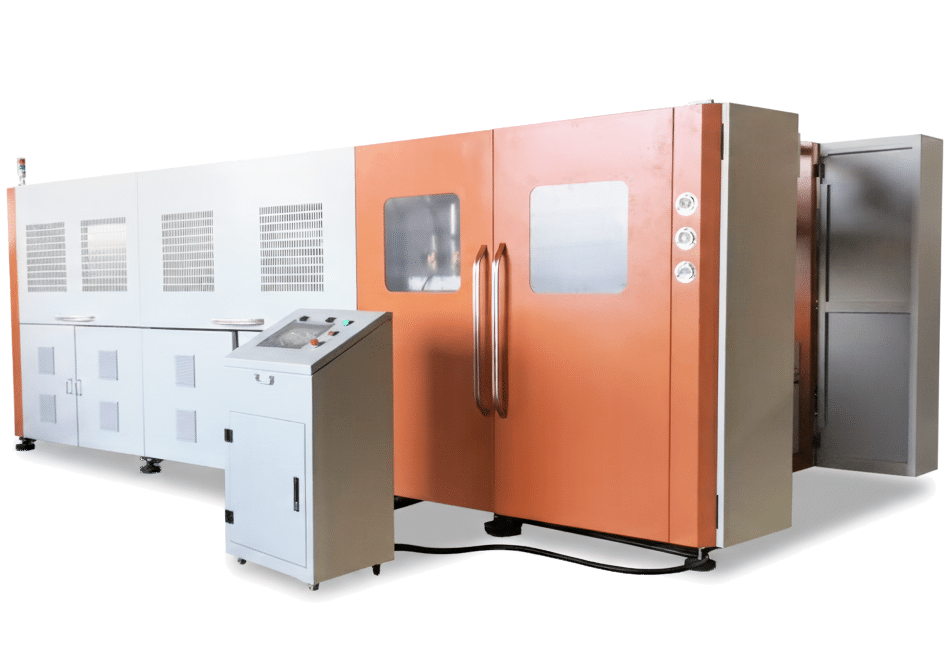
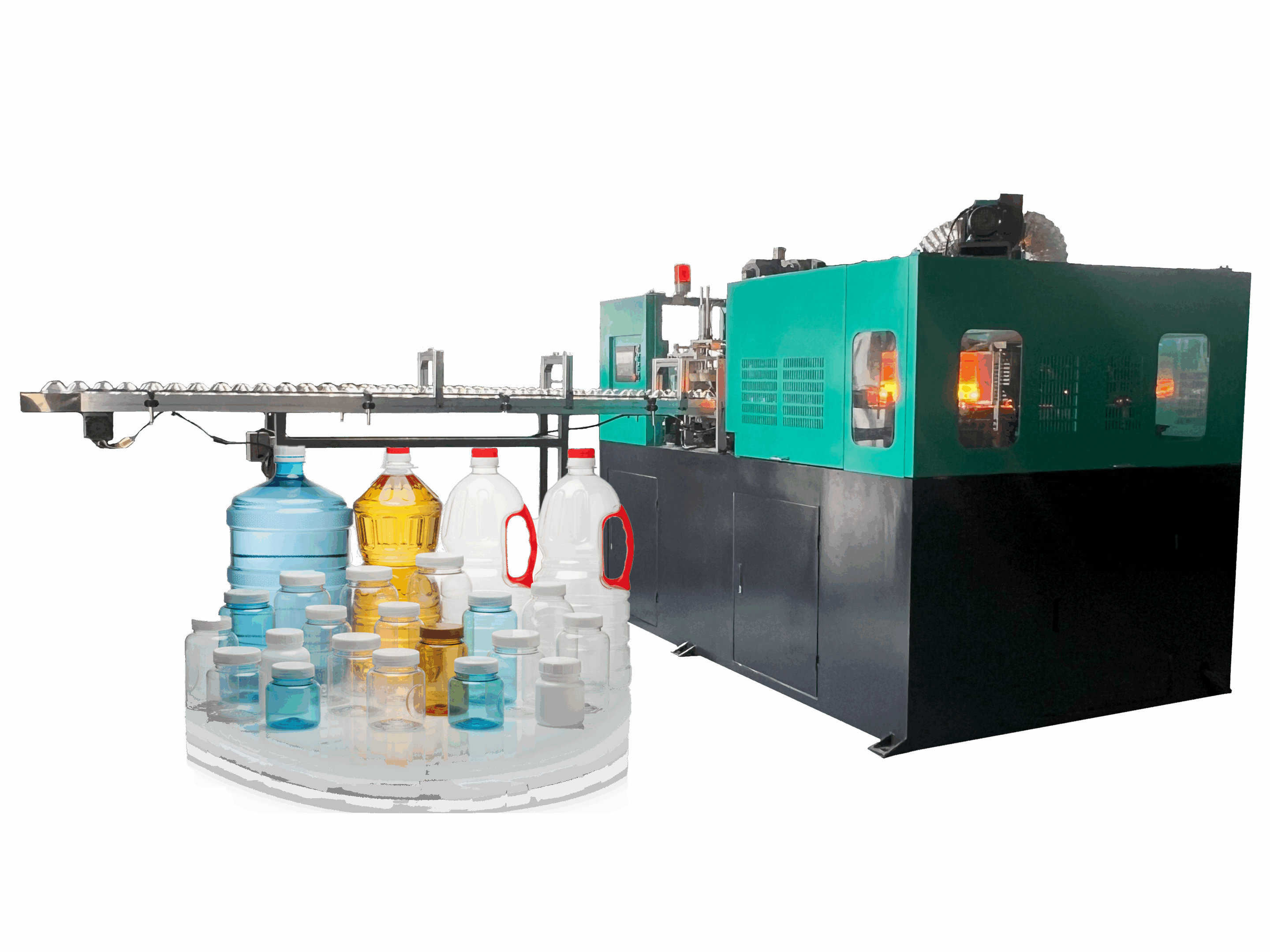
10 Produsen Mesin Ekstrusi Blow Molding Terbaik di Prancis
Panduan 2025 kami untuk 10 produsen mesin cetak tiup ekstrusi terbaik di Prancis, berfokus pada TCO, layanan lokal, efisiensi energi, dan waktu produksi.
If you’re looking to buy an Extrusion blow molding machine in France, you know the stakes are high. Choosing the right partner impacts your production uptime, energy bills, and ability to compete. This guide cuts through the noise to give you a straightforward look at the top manufacturers serving the French market, helping you make a better, more informed decision.
Sekilas tentang Produsen (dengan Situs Resmi)
Kautex Maschinenbau — https://www.kautex-group.com
lekamachine — https://lekamachine.com
Bekum — https://www.bekum.com
Sidel — https://www.sidel.com
Uniloy — https://www.uniloy.com
Cetakan Tiup ST — https://www.st-blowmoulding.com
Magic MP — https://www.magicmp.it
Plastiblow — https://www.plastiblow.it
Teknik Graham — https://www.grahamengineering.com
R&B Plastics Machinery — https://www.rbplasticsmachinery.com
Mengapa Ini Penting di Tahun 2025 (Tren mesin cetak tiup ekstrusi, waktu operasional, energi)
In 2025, the French market is all about efficiency and sustainability. With some of the highest energy prices in Europe, manufacturers are looking for machines that consume less power. At the same time, EU regulations are pushing for more recycled content (like rHDPE), which requires robust and reliable process controls. Uptime isn’t just a goal; it’s essential for survival, making local service and parts availability more critical than ever.
Sinyal Biaya dan Penetapan Harga untuk Tahun 2025 (Penetapan harga mesin cetak tiup ekstrusi, faktor pendorong biaya)
The price of an Extrusion blow molding machine in France can range from around €150,000 for a basic, single-head shuttle machine to well over €1.5 million for a high-output, all-electric, multilayer rotary wheel system. Key cost drivers include the clamping force, number of cavities, extruder size, and the complexity of the die head (especially for multilayer applications with EVOH). Don’t forget to budget for CE certification, freight, import duties if sourced from outside the EU, and the cost of installation and training (commissioning).
Energi, Utilitas, dan Keberlanjutan (mesin cetak tiup ekstrusi serba listrik, efisiensi energi)
Energy is a huge part of your total cost of ownership (TCO). All-electric Extrusion blow molding machine platforms are becoming the standard for small- to mid-size containers because they use significantly less energy (kWh per 1,000 bottles) than hydraulic or hybrid machines. They offer cleaner, quieter operation and greater precision. For larger industrial parts, modern hybrid machines with servo-hydraulic pumps offer a good balance of power and efficiency. Look for machines with well-insulated extruder barrels and energy-efficient servo drives to manage France’s high electricity costs.
Pertimbangan antara Throughput dan Fleksibilitas (kepala putar vs kepala kontinu vs kepala akumulator)
Your choice of machine depends on what you make. For high-volume, standardized products like HDPE milk bottles, a rotary wheel machine offers the highest throughput. For diverse products with frequent mold changes, like cosmetic or household chemical bottles, a continuous shuttle machine provides excellent flexibility. For large industrial parts over 20 liters, such as chemical drums or automotive components, an accumulator head machine is the only way to go, as it can extrude a large shot of plastic (parison) very quickly.
Strategi Cetakan, Peralatan, dan Perubahan Cepat (perubahan cepat, kontrol parison, pelabelan dalam cetakan)
With high labor costs in France, minimizing downtime between production runs is crucial. When you request a quote (RFQ), ask for video-verified mold changeover times. Modern quick-change systems can reduce this process from hours to under 30 minutes. Also, consider technologies like in-mold labeling (IML) to eliminate secondary labeling steps and sophisticated parison control to reduce material usage and improve container strength.
Pengendalian Proses dan Kualitas (pengendalian ketebalan dinding, pemrograman parison)
Konsisten kualitas is non-negotiable. Modern machines use closed-loop process controls and detailed parison programming (often with 100 points or more) to ensure precise wall thickness distribution. This not only makes a stronger bottle but also reduces plastic consumption and scrap rates. This is especially important when running rHDPE, which can have greater process variability than virgin resin.
Bahan dan Penghalang Multilapis (botol multilapis HDPE, PP, PETG, EVOH)
French producers commonly use HDPE for bottles and jerrycans, PP for hot-fill applications, and PETG for clear cosmetic containers. For food products requiring a long shelf life, such as UHT milk or sauces, multilayer bottles with an EVOH barrier layer are essential to block oxygen. The trend is moving towards solusi that are easier to recycle, so discuss options for compatible barrier materials and lightweighting with your potential suppliers.
Top 10 Extrusion Blow Molding Machine Manufacturers in France
Kautex Maschinenbau (German OEM with strong French support)

Kautex is a global leader and one of the pioneers of Extrusion blow molding machine technology. They are well-regarded in France for their high-performance KBB all-electric machines, ideal for consumer packaging, and their KCC and KBS hydraulic machines for industrial and automotive applications. Their proximity and service network, often managed from their Belgian hub, ensures good support for French customers.
Produk utama
All-electric KBB series for packaging, KBS series for automotive fuel tanks, and KCC series for kemasan industri. They offer advanced multilayer heads and quick-change systems.
Keuntungan
Excellent engineering and reliability, strong focus on energy efficiency with all-electric models, established service presence in Western Europe.
Kekurangan
Premium pricing reflects their market position, lead times can sometimes be long for popular models.
Situs resmi: https://www.kautex-group.com
lekamachine (OEM global dengan cakupan Asia)

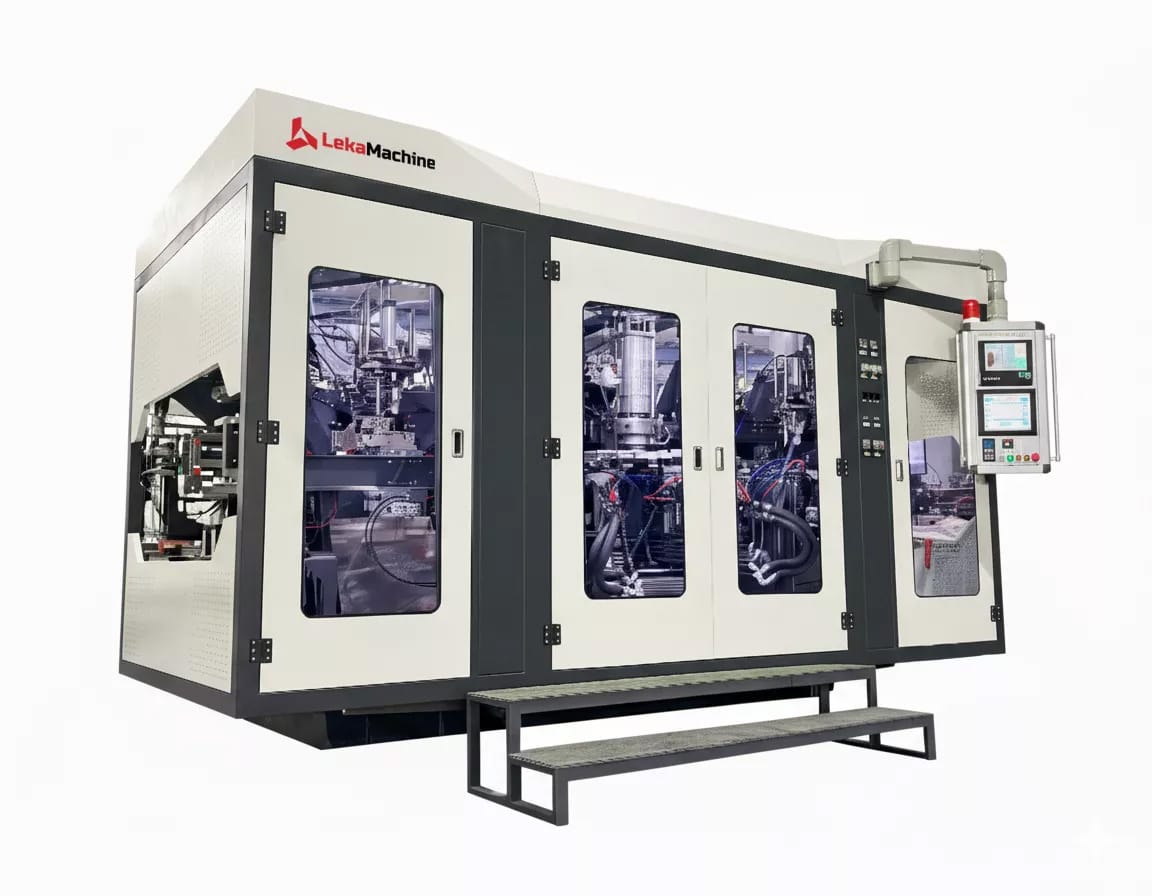
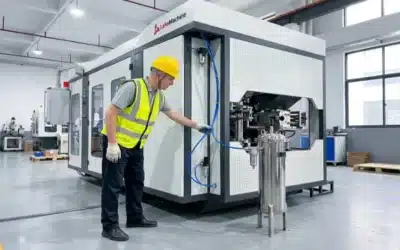
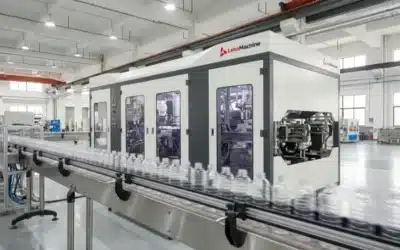
LekaMachine offers a compelling value proposition for French buyers looking for a balance of performance, flexibility, and cost-effectiveness. The company provides a range of hybrid and all-electric machines suitable for everything from small cosmetic bottles to large industrial containers. Support for the French market is handled through a network of European service partners and robust remote diagnostic capabilities, ensuring assistance is readily available.
Produk utama
The FORMA series offers versatile hybrid machines for general-purpose molding. [cite: 14, 16] [cite_start]The AERO series is built for high-speed, automated production lines. [cite: 27, 28] [cite_start]The TITAN series is engineered for large industrial drums and parts. [cite: 43, 44]
Keuntungan
Competitive pricing, very fast 30–90 day delivery lead time, wide range of machines for diverse applications, and strong custom engineering capabilities.
Kekurangan
As a global OEM with primary production in Asia, they rely on regional partners for on-site service rather than a direct subsidiary in France. Brand recognition is still growing in Europe compared to established German competitors.
Situs resmi: https://lekamachine.com
Bekum (German OEM with established French presence)
Bekum is another top-tier German manufacturer with a long history and a strong reputation in France, particularly in the packaging sector. Their machines are known for their durability and precision. They offer both all-electric and hydraulic shuttle machines, catering to a wide range of applications from food and beverage to cosmetics and healthcare.
Produk utama
The Eblow series (all-electric) and Hyblow series (hybrid) for packaging applications. They also offer large tandem blow and industrial machines. Known for their patented C-frame clamping unit.
Keuntungan
High-quality construction and long machine life, excellent process control and repeatability, strong direct service and support network in France.
Kekurangan
Higher initial investment cost, custom configurations can lead to longer delivery times.
Situs resmi: https://www.bekum.com
Sidel (French-founded global leader, focused on PET but with EBM history)

While Sidel is globally famous for its PET mesin cetak tiup regang, its roots are in France and it has a history with extrusion blow molding. They offer solutions for HDPE, especially for the dairy and beverage industries. For French companies already using Sidel equipment, leveraging their extensive service network for extrusion blow molding can be a significant advantage.
Produk utama
Ekstrusi Lekamachine primarily for HDPE beverage and food containers, often integrated into complete packaging lines.
Keuntungan
Unmatched service and support network in France, deep expertise in beverage packaging, ability to deliver fully integrated turnkey lines.
Kekurangan
Their Extrusion blow molding machine portfolio is not as broad as specialists like Kautex or Bekum. Primarily focused on high-volume applications.
Situs resmi: https://www.sidel.com
Uniloy (US-based with European operations)

Uniloy offers one of the broadest portfolios in the industry, including shuttle machines, reciprocating screw machines, and accumulator head industrial machines. Their European operations, often based out of Italy and Germany, provide sales and service to the French market. They are a solid choice for companies needing versatile and proven technology.
Produk utama
U-Series all-electric shuttle machines, classic reciprocating screw machines for high-output Botol HDPE (like milk jugs), and accumulator head machines for parts up to 200 liters.
Keuntungan
Wide variety of machine types for almost any application, strong history and proven designs, good value proposition.
Kekurangan
Service in France is typically handled by regional European teams, which may not be as localized as some direct competitors.
Situs resmi: https://www.uniloy.com
ST Blow Moulding (Italian specialist with French distribution)

Acquired by Kautex but operating as a distinct brand, ST Blow Moulding specializes in suction blow molding and Extrusion blow molding machine solutions for complex 3D parts, particularly for the automotive industry. They also have a range of machines for packaging and industrial goods. They have a solid presence in France through distributors and agents.
Produk utama
ASPI series for suction cetakan tiup (3D parts) and EC/IS series of shuttle machines for packaging and industrial containers.
Keuntungan
Leader in technology for complex hollow parts (e.g., automotive ducts), cost-effective solutions for standard applications, good flexibility and customization.
Kekurangan
Smaller service footprint in France compared to the largest German players; relies on partners for support.
Situs resmi: https://www.st-blowmoulding.com
Magic MP (Italian all-electric innovator

Magic is an Italian manufacturer that has focused heavily on all-electric technology for over a decade. Their machines are known for being extremely energy-efficient, fast, and compact. For French companies focused on sustainability and reducing operational costs for small to medium-sized packaging, Magic is a compelling option.
Produk utama
A full range of all-electric shuttle machines, from small single-station units to large double-station models. They are known for low energy consumption and high-speed cycles.
Keuntungan
Market leader in all-electric technology, very low energy consumption, compact machine footprint, competitive pricing.
Kekurangan
Portfolio is focused entirely on all-electric shuttle machines, so they do not offer solutions for very large industrial parts.
Situs resmi: https://www.magicmp.it
Plastiblow (Italian specialist for smaller containers)

Plastiblow, another Italian maker, specializes in all-electric shuttle machines, particularly for the cosmetics, pharmaceutical, and food industries. They excel at producing smaller, high-precision containers. Their machines are valued for their reliability, clean operation, and ease of use, making them a good fit for regulated production environments.
Produk utama
All-electric shuttle machines with clamping forces from 5 to 25 tons, often equipped for coextrusion and in-mold labeling.
Keuntungan
Excellent for small, complex bottles, very energy efficient, suitable for cleanroom environments, strong reputation for kualitas and precision.
Kekurangan
Focused on a specific niche of smaller containers; not a provider for large jerrycans or industrial products.
Situs resmi: https://www.plastiblow.it
Graham Engineering (US OEM with European service)

Graham Engineering is a major US manufacturer known for its rotary wheel machines, which are workhorses in the dairy, food, and household chemical sectors. They also offer shuttle and accumulator head machines. They serve the French market through a European sales and service network, providing high-output solutions for converters.
Produk utama
High-speed rotary wheel extruders, Accumulator head machines for industrial applications, and shuttle machines. They have strong capabilities in multilayer technology.
Keuntungan
Leading technology for high-volume wheel machines, robust and durable equipment, deep process expertise.
Kekurangan
Support in France is regional rather than local. Their primary focus is on high-output applications, which may not suit all producers.
Situs resmi: https://www.grahamengineering.com
R&B Plastics Machinery (US-based with international sales)
R&B (formerly know as Blow Mold Barr-Rosseau) offers a line of rugged, no-nonsense accumulator head and shuttle machines. They are known for building robust, long-lasting equipment that is easy to maintain. While they don’t have a direct office in France, they sell internationally and can be a good option for companies needing a simple, reliable machine for large parts without the complexity of some European systems.
Produk utama
MAX series of accumulator head machines and shuttle machines designed for industrial applications. They are known for structural rigidity and durability.
Keuntungan
Very robust and durable machine construction, simple and easy-to-maintain designs, cost-effective for their size and clamping force.
Kekurangan
Limited direct service and support in France, technology is more traditional compared to the all-electric leaders.
Situs resmi: https://www.rbplasticsmachinery.com
Factors to Consider When Choosing a Extrusion blow molding machine Manufacturer for a Startup
If you’re just starting out, your priorities are different. Focus on simplicity, reliability, and support. A machine that is easy to operate and maintain is critical. Delivery time is also a major factor—a long wait for a machine means delayed revenue. Look for a supplier that offers comprehensive training, has service technicians who can reach you quickly, and provides a predictable Total Cost of Ownership (TCO) so you can manage your budget effectively.
How to Find a Extrusion blow molding machine Manufacturer for Your Startup
Start by shortlisting 3 to 5 potential suppliers who fit your budget and application. Insist on a pilot run or demonstration using your own molds and plastic resin if possible. This is the only real way to measure performance. Use this trial to measure Overall Equipment Effectiveness (OEE), scrap rate, energy consumption (kWh), and changeover time. Finally, ask for references from other companies in France and try to visit a local installation.
Domestic vs. Overseas Extrusion blow molding machine Manufacturers
Choosing a manufacturer with a direct subsidiary in France or a neighboring country often means faster service response times and easier access to spare parts. However, this usually comes at a premium price. Overseas manufacturers, particularly from Asia, can offer significant cost savings on the initial purchase. The key is to verify their support model. A hybrid approach, like an Asian manufacturer with a European parts depot and a network of local service technicians, can provide the best of both worlds.
Pemeliharaan, Suku Cadang, dan SLA (cakupan layanan, suku cadang, MTTR)
Before you buy, get a clear picture of the maintenance plan. Ask for a list of recommended spare parts and their costs. A good Service Level Agreement (SLA) is crucial. It should define guaranteed response times for service calls and a target for Mean Time To Repair (MTTR). Confirm where the spare parts depot is located; a European warehouse is essential to avoid long waits for critical components.
Instalasi, Komisioning, dan Peningkatan Kapasitas (FAT/SAT, kriteria penerimaan)
Your purchase contract should detail the acceptance process. This includes a Factory Acceptance Test (FAT) at the manufacturer’s site and a Site Acceptance Test (SAT) at your plant in France. Define clear acceptance criteria, such as cycle time, scrap rate, and energy consumption for a specific product. Also, ensure the plan includes comprehensive operator and maintenance training, accounting for French holidays and work schedules to ensure a smooth ramp-up.
Uji Coba dan Kriteria Penerimaan (OEE, kWh per 1.000 botol)
The best way to validate a machine’s performance is with a time-boxed pilot run using your production molds. During this test, log key performance indicators (KPIs) like OEE, kWh per 1,000 bottles produced, and changeover times. This data not only confirms the machine meets your needs but also serves as a performance baseline for the future. Use this data to finalize the terms of your SLA.
Pemodelan Total Biaya Kepemilikan dan ROI (Kalkulator TCO, model pengembalian modal)
Don’t just look at the purchase price. A true ROI calculation must include the Total Cost of Ownership. Build a simple TCO model that includes the machine cost, shipping, installation, energy costs (based on your rate in €/kWh), planned maintenance, and spare parts over a 5- or 10-year period. A cheaper machine that consumes more energy or requires more maintenance can easily end up costing you more in the long run.
Pelatihan Operator dan Manajemen Perubahan (Standarisasi HMI, SOP)
A new machine is only as good as the team running it. Choose a machine with a modern, intuitive Human-Machine Interface (HMI), preferably available in French. The supplier should provide in-depth training for your operators and maintenance staff. Standardizing your Standard Operating Procedures (SOPs) for machine setup, operation, and changeovers will ensure consistent performance across all shifts.
Konektivitas Digital dan Data (pemantauan jarak jauh, integrasi MES/ERP)
Modern machines should be Industry 4.0 ready. This means they can connect to your network for remote monitoring, alarms, and production data collection. This data can be integrated with your Manufacturing Execution System (MES) or Enterprise Resource Planning (ERP) software to give you a real-time view of your production efficiency, helping you identify opportunities for improvement and predictive maintenance.
Studi Kasus dan Tolok Ukur (penghematan energi sebelum/sesudah, perubahan alat, OEE)
When evaluating suppliers, ask for studi kasus relevant to the French market or similar industries. For example, a dairy producer could ask for data on a machine producing HDPE milk bottles, showing before-and-after metrics for energy savings or OEE improvement. A cosmetics company might look for benchmarks on quick changeover times for a line producing multiple bottle shapes and sizes.
Daftar Periksa RFP dan Kartu Skor Pemasok (Template RFP, perbandingan vendor)
Your Request for Quotation (RFQ) should be detailed. Go beyond price and ask for specific performance data: guaranteed energy consumption (kWh) at different speeds, video proof of mold changeover time, a detailed preventative maintenance schedule with parts costs, a map of their service technician coverage in France, guaranteed SLA response times, and at least two local customer references you can speak with. Use a scorecard to compare suppliers across these critical points.
Opsi Lain Selain Produsen Mesin Blow Molding Ekstrusi (manufaktur kontrak, mesin refurbish, alternatif)
If buying new isn’t the right fit, you have other options. You could use a contract manufacturer (toll blow molder) in France to produce your bottles, avoiding the capital investment entirely. Another option is to buy a refurbished machine from a reputable specialist, which can save money, though it may lack the latest energy efficiencies. Finally, for certain applications like small cosmetic jars or PET bottles, consider alternative processes like injection cetak tiup injeksi atau cetak blow molding.
PERTANYAAN YANG SERING DIAJUKAN
What is the main difference between an all-electric and a hybrid Extrusion blow molding machine?
An all-electric machine uses servo motors for all movements (clamping, carriage, blow pin), offering the highest energy efficiency and precision. A hybrid machine uses a mix of electric and servo-hydraulic power, often using hydraulics for the powerful clamping motion, providing a good balance of performance and cost for larger containers.
What are typical delivery timelines for machines in France?
For European manufacturers, lead times are often 6-9 months. Some Asian manufacturers like LekaMachine can offer faster delivery, sometimes as quick as 30-90 days, which can be a significant advantage.
Is an EVOH multilayer machine difficult to operate?
Yes, they are more complex than monolayer machines. They require operators with good training to manage the multiple extruders and complex die head. The startup and shutdown procedures are also more involved to purge the barrier material correctly.
What is a realistic energy consumption for a modern all-electric machine?
For a small to medium packaging application, a good benchmark for a modern all-electric machine is around 0.3 to 0.5 kWh per kilogram of processed plastic. Always ask for this metric in your RFQ.
What are the most important KPIs for an acceptance test (SAT)?
The critical three are: achieving the quoted cycle time, staying below a maximum scrap rate (e.g., <2%), and meeting the specified energy consumption limit, all while producing containers that meet your quality standards.
Apa saja yang harus tercantum dalam Perjanjian Tingkat Layanan (SLA) dasar?
It should include a guaranteed maximum response time for a technician to be on-site (e.g., 24 or 48 hours), 24/7 telephone/remote support, and guaranteed availability of critical spare parts from a European depot.
Can I use molds from one machine brand in another?
Sometimes, but not always. It depends on the mold platen size, stack height (mold thickness range), and utility connections. Always verify mold compatibility when buying a new machine to replace an old one.
Are financing or leasing options available in France?
Yes, most major manufacturers and their local agents can connect you with financing partners that offer leasing and other financing solutions tailored to capital equipment purchases in France.
Tautan eksternal
Elipso – French Plastic and Flexible Packaging Association: https://www.elipso.org
Plastics Europe – Pan-European association of plastics producers: https://www.plasticseurope.org
EUROMAP – European Plastics and Rubber Machinery: https://www.euromap.org
Plastiques & Caoutchoucs Magazine – French industry publication: https://www.plastiques-caoutchoucs.com
Kesimpulan (langkah selanjutnya, daftar pendek, uji coba, SLA)
Choosing the right Extrusion blow molding machine in France comes down to three things: finding the right technology for your products, verifying the manufacturer has a solid and responsive local or regional service network, and modeling the Total Cost of Ownership. Use this guide to create your shortlist, then dig deeper. Request hard data, insist on a pilot run, and negotiate a clear SLA. That is the best way to secure a partner that will support your growth for years to come.


0 Komentar