

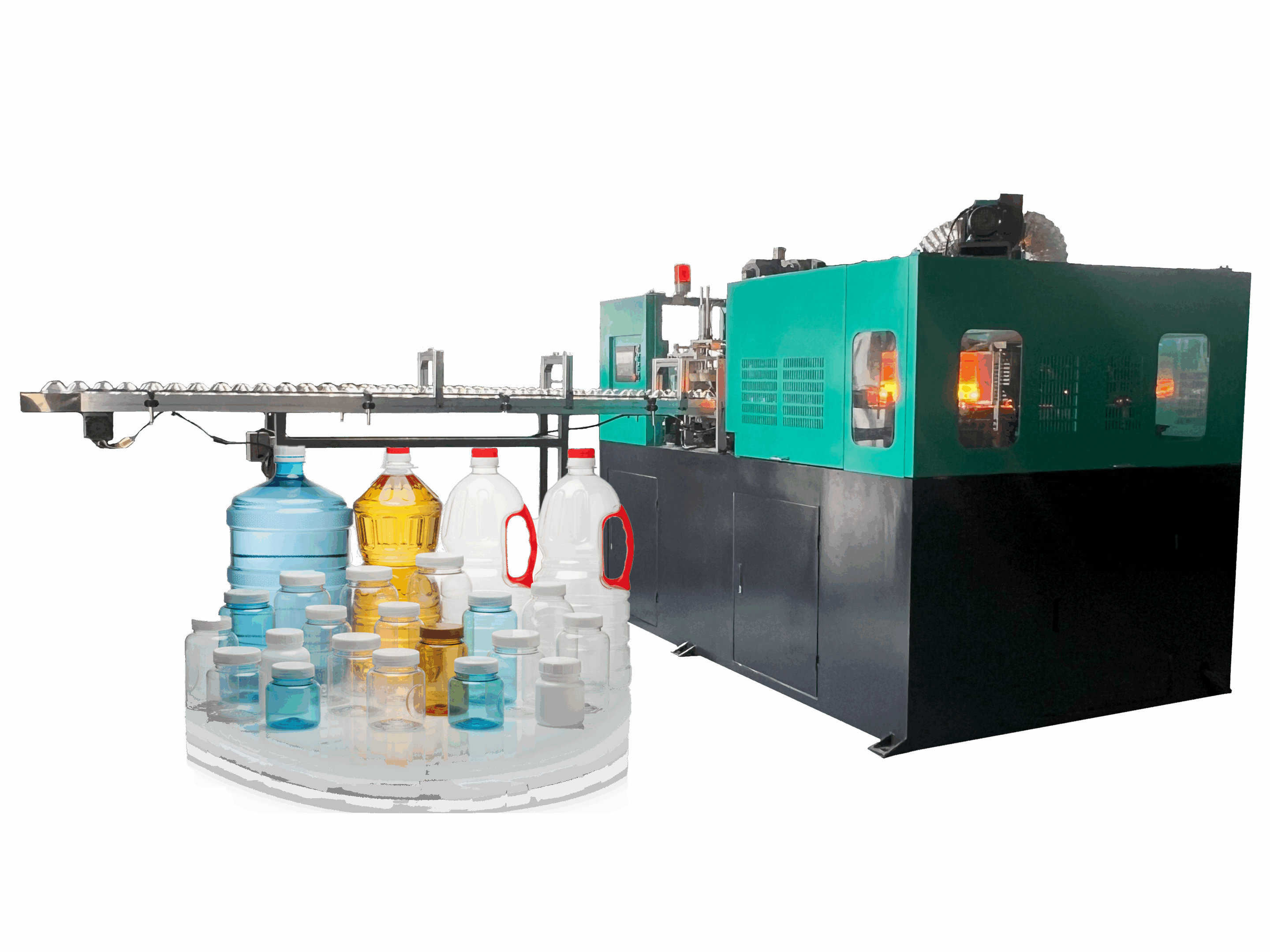
Guide ultime des machines de soufflage étirage-soufflage : 10 meilleurs fabricants en Amérique latine (2025)
Find the best Stretch blow molding machine for your needs in Latin America. This guide reviews the top 10 manufacturers for 2025, comparing price, performance, and local support to help you make a smart investment.
Choosing the right machine is a big decision. It impacts your production speed, energy bills, and ability to keep up with customer orders. I’ve worked in this industry for years, and I’ve seen firsthand how the right equipment can make or break a business. This guide cuts through the noise to give you a straightforward look at the best options available in Latin America, from global leaders to high-value newcomers.
Manufacturers At-a-Glance (with Official Sites) — Stretch blow molding machine brands and official websites in Latin America
Couronnes — https://www.krones.com
Sidel — https://www.sidel.com
KHS — https://www.khs.com
SIPA — https://www.sipa.it
lekamachine — https://lekamachine.com
Machine Nissei ASB — https://www.nisseiasb.co.jp
SMF — https://smfgermany.de
Pavan Zanetti — https://www.pavanzanetti.com.br
Chumpower — https://www.chumpower.com
Aoki Technical Laboratory — https://www.aokitech.co.jp
Why This Matters in 2025 — energy efficiency, uptime, fast changeovers, local service coverage in Latin America
In 2025, your machine needs to do more than just make bottles. With high and unpredictable energy costs across much of Latin America, efficiency isn’t a bonus; it’s essential for survival. You need a machine that minimizes electricity and compressed air usage. Uptime is just as critical. A breakdown during peak season can be a disaster, so reliable equipment with fast local service is non-negotiable. Finally, as consumer tastes change, you’ll need to switch between bottle shapes and sizes quickly. Fast changeovers mean less downtime and more flexibility to serve your clients.
Cost and Pricing Signals for 2025 — one-stage vs two-stage, cavities, automation, FAT/SAT, import duties in Latin America
When you get a quote, the final price can be confusing. The biggest factor is often one-stage versus two-stage technology. One-stage machines are great for specialty containers but are slower. Two-stage machines are the workhorses for high-volume beverage bottles. The number of cavities in the mold directly impacts output and cost. More cavities mean higher upfront investment but lower cost per bottle. Don’t forget to budget for automation (like preform handling), shipping, and import duties, which can vary significantly between countries in the region. Always clarify what’s included for the Factory Acceptance Test (FAT) and Site Acceptance Test (SAT), as this affects commissioning costs. Prices can range from $150,000 USD for smaller, simpler machines to well over $2,000,000 USD for high-speed automated lines.
Énergie, services publics et durabilité — kWh pour 1 000 bouteilles, récupération d’air comprimé, zonage des fours infrarouges, servomoteurs
Energy is one of your biggest operating costs. Ask every manufacturer for their machine’s energy consumption, measured in kilowatt-hours (kWh) per 1,000 bottles. Modern machines use efficient infrared (IR) ovens with precise heating zones to avoid wasting energy. All-electric machines with servo drives are typically more efficient than older hydraulic models. Also, look for systems that recover and reuse high-pressure compressed air, as air compressors are notoriously power-hungry. These features directly lower your monthly bills and make your operation more sustainable.
You need to match the machine to your business. If you’re supplying bottles for a major soda or water brand in Brazil or Mexico, you need a two-stage Stretch blow molding machine built for pure speed and throughput. These machines can produce tens of thousands of bottles per hour. On the other hand, if you’re making premium cosmetic jars or pharmaceutical bottles with complex shapes, a one-stage Injection Stretch Blow Molding (moulage par soufflage) (ISBM) machine is a better fit. It offers higher precision and is better for smaller, more flexible production runs, even though it’s slower.
Stratégie de moules, d'outillage et de changement rapide — moules de préformes, bagues de col, EOAT, contrôle qualité par vision, temps de changement de format
Your machine is only as good as its tooling. The qualité of your preform molds, stretch rods, and neck rings determines the final quality of your bottle. When you’re running multiple products, the time it takes to change these parts is critical. Look for machines designed for quick changeovers, often promising times under 30 minutes. Ask suppliers for video proof of their changeover times. Consider adding automated systems like vision quality control (QC) and robotic end-of-arm tooling (EOAT) to improve consistency and reduce labor costs.
Contrôle et qualité des procédés — profil du four, plage de température des préformes, taux d’étirage, soufflage/contre-pression, Cp/Cpk
Making a good bottle every single time requires precise control. The machine’s control system needs to manage the oven heating profile perfectly, ensuring each preform is at the ideal temperature before blowing. It must also precisely control the stretch ratios and the blowing pressure. Good process control reduces scrap and material waste. Ask potential suppliers about their process capability, using metrics like Cp and Cpk, to understand how stable and repeatable their machines are from shift to shift.
Materials and Barriers — PET, rPET, PETG, multilayer (EVOH/nylon) and recycling in Latin America
Most machines run standard polyethylene terephthalate (PET). But with growing sustainability mandates in countries like Chile and Colombia, your machine must be able to handle recycled PET (rPET), often in blends up to 100%. If you make bottles for juices, sauces, or dairy, you might need a machine that can handle multilayer preforms. These have a special barrier layer like EVOH or nylon to protect the product from oxygen. Make sure the machine you choose is compatible with the materials you plan to use now and in the future, and understand how those materials fit into local recycling streams.
Top 10 Stretch blow molding machine Manufacturers in Latin America
Krones (strong presence in Brazil and Mexico)
Krones is a German powerhouse, especially in the high-speed beverage and dairy sectors across Latin America. They are known for providing complete, integrated “line solutions” from processing to filling and packaging. Their Contiform series is a benchmark for reliability and high output in the two-stage market. With major service hubs in Brazil and Mexico, they offer robust local support for the region’s largest markets.
Principaux produits
Their flagship is the Contiform 3 series, known for very high speeds (over 80,000 bottles/hour) and energy efficiency. They focus exclusively on two-stage machines designed for round-the-clock production in demanding environments like water, CSD, and beer bottling plants.
Avantages
Exceptional reliability and build quality. Excellent integration with Krones fillers and other line equipment. Strong local service and parts infrastructure in key Latin American countries. High energy efficiency.
Cons
Premium pricing reflects their top-tier market position. Less focused on small or mid-size applications; better suited for large corporations.
Site officiel : https://www.krones.com
Sidel (extensive service network across Latin America)

Sidel, part of Tetra Laval, is another global leader with a massive installed base in Latin America. They compete directly with Krones in the beverage industry but also have a strong portfolio for food, home, and personal care products. Their EvoBLOW machines are known for performance and flexibility, and their regional service network is one of the most comprehensive available.
Principaux produits
The Sidel EvoBLOW series is their core offering, available in regular and high-speed (H) models. They are known for their modular design, allowing customization for specific needs like preferential heating for flat bottles or hot-fill capabilities. They focus on two-stage technology.
Avantages
Highly flexible and modular machine platforms. Strong focus on lightweighting bottles and reducing resource consumption. Extensive global experience and a very strong service presence throughout Latin America.
Cons
High initial investment cost. The complexity of their systems may require more intensive operator training.
Site officiel : https://www.sidel.com
KHS (major turnkey provider in the region)

https://www.khs.com/
KHS is a well-respected German manufacturer that, like Krones and Sidel, specializes in complete turnkey lines for the beverage industry. Their InnoPET Blomax series is known for its durability and process stability. They have a solid footprint in Latin America, particularly in Mexico, Brazil, and Argentina, servicing major beverage producers.
Principaux produits
The InnoPET Blomax is their workhorse two-stage machine. They emphasize energy savings through features like their double-gate heating system and air recovery. Their machines are built for high-output, 24/7 operations.
Avantages
Robust and durable engineering. Strong process control for consistent bottle quality. Good integration with their filling and packaging machinery. Established service teams in the region.
Cons
Primarily focused on the high-end beverage market. Can be more expensive than other options. Lead times can be long.
Site officiel : https://www.khs.com
SIPA (strong in both machines and molds)
SIPA is an Italian company with a unique position, offering not just two-stage Stretch blow molding machine (XTRA series) but also one-stage (ECS) systems, preform injection machines, and molds. This gives them a broad perspective on the entire PET container process. They have a good presence in Latin America, especially for customers who value their integrated expertise in tooling and machine performance.
Principaux produits
Their portfolio includes the XTRA series for high-speed two-stage blowing and the ECS series for one-stage production of specialty containers. This makes them a versatile supplier for both high-volume and high-value applications.
Avantages
Deep expertise across the entire PET production chain, from preform to bottle. Offers both one-stage and two-stage solutions. Known for excellent mold quality and performance.
Cons
Their broad portfolio can sometimes make navigating their offerings complex for new buyers. Service network may not be as dense as the top German players in all countries.
Site officiel : https://www.sipa.it
lekamachine (OEM mondial avec couverture en Asie)

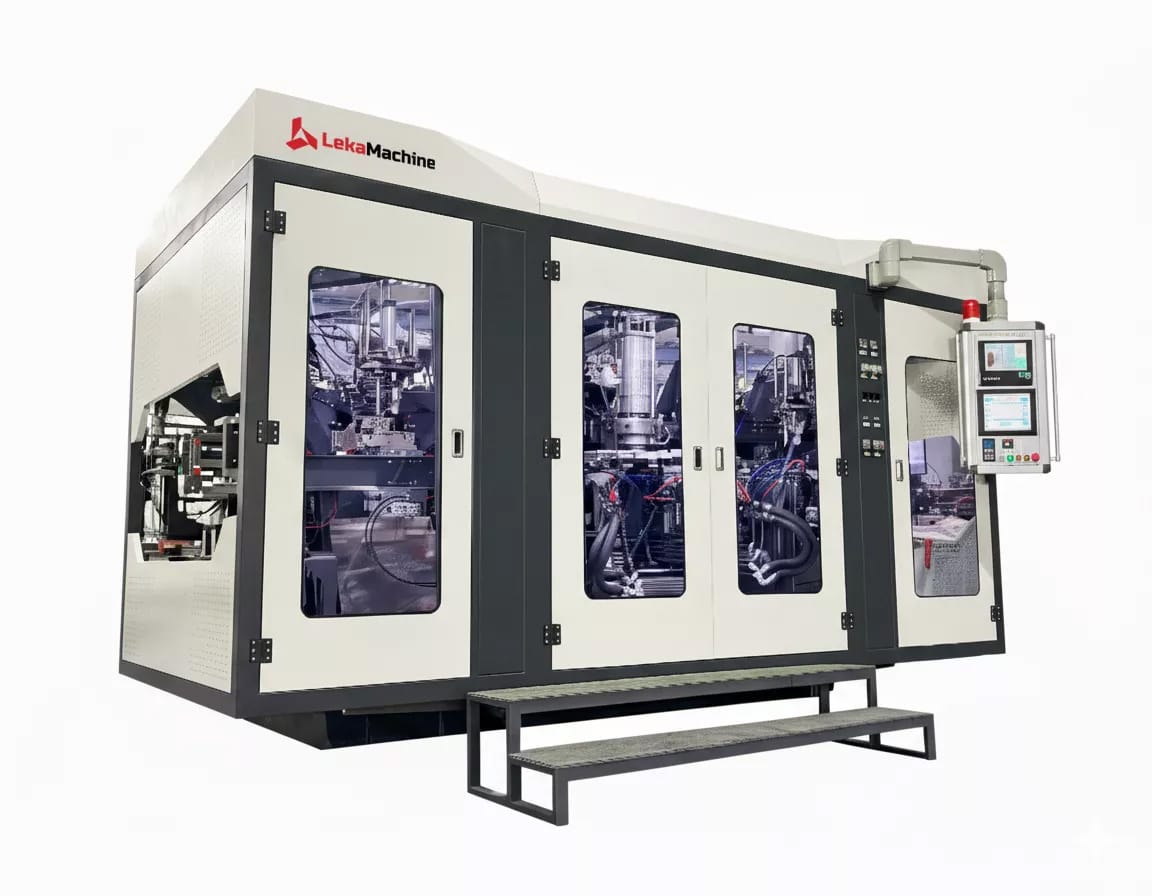
lekamachine is a strong contender for Latin American businesses looking for excellent value and speed. As a global OEM, they focus on building reliable, efficient machines without the overhead of some larger European brands. Their key advantage is an ultra-short delivery lead time of 30-90 days, which is a game-changer for companies needing to expand capacity quickly to meet new contracts. They serve the Latin American market through regional partners and robust remote support, offering a fantastic price-performance ratio.
Principaux produits
lekamachine offers two main series for des bouteilles PET. The AQUA Series is optimized for high-speed, stable production of water and beverage bottles. The BOTTLER Series is designed for fine-moulding of high-value containers like cosmetic bottles, wide-mouth jars, and other des formes personnalisées, offering exceptional precision and flexibility.
Avantages
30-90 day delivery is one of the fastest in the industry. Excellent price-performance value. Reliable machines for both high-volume beverage (AQUA series) and specialty containers (BOTTLER series). Flexible and responsive to customer needs.
Cons
Local on-site support is managed through partners rather than a direct subsidiary. Brand is less established in the region compared to legacy European suppliers.
Site officiel : https://lekamachine.com
Nissei ASB Machine (leader in one-stage technology)
https://www.nisseiasb.co.jp/en/
Nissei ASB is a Japanese company that is the undisputed world leader in one-stage Injection Stretch blow molding machine. For producers of non-beverage containers—such as cosmetic jars, pharmaceutical bottles, and wide-mouth food containers—they are often the first choice. They have a strong direct presence in key markets like Mexico and Brazil, providing sales and technical support.
Principaux produits
Their core products are the ASB-series one-stage machines. These machines are famous for producing blemish-free, high-precision containers directly from resin in a single, integrated process. They offer a huge range of models for various sizes and applications.
Avantages
Unmatched quality for cosmetic, pharma, and specialty containers. Scuff-free production since preforms are not handled. Excellent for complex shapes and wide-mouth jars. Strong regional offices.
Cons
Slower cycle times compared to two-stage machines. Not suitable for high-volume, low-cost beverage bottles. Higher initial investment than many two-stage options.
Site officiel : https://www.nisseiasb.co.jp
SMF (flexible and cost-effective European option)

SMF is a Polish/German manufacturer that has built a strong reputation for producing high-quality, reliable two-stage machines at a competitive price point. They are very popular with small to medium-sized enterprises in Latin America that need modern technology without the high price tag of the top-tier brands. Their machines are known for being user-friendly and flexible.
Principaux produits
They offer a wide range of linear and rotary two-stage machines, including the Optima and HS series. They are particularly strong in machines for custom and complex bottle shapes, including hot-fill and preferential heating options.
Avantages
Great balance of price, quality, and technology. High degree of flexibility and customization. User-friendly controls. Strong option for non-beverage applications requiring two-stage speed.
Cons
Service and support in Latin America are typically handled through a network of agents and distributors, which can vary in quality. Not a full-line provider.
Official site: https://smfgermany.de
Pavan Zanetti (leading domestic manufacturer in Brazil)

Pavan Zanetti is a well-established Brazilian machine manufacturer, giving them a significant home-field advantage within Mercosur. They produce a range of machines de moulage par soufflage, including Stretch blow molding machine models tailored for the local market. For Brazilian companies, they offer the benefits of local manufacturing, service, and payment in local currency, avoiding import complexities.
Principaux produits
They offer linear two-stage Stretch blow molding machine designed for small to medium output. Their machines are known for being robust and simple to operate and maintain, a good fit for regional producers of food, chemical, and personal care products.
Avantages
Local manufacturing in Brazil avoids import taxes for Mercosur members. Service and spare parts are readily available. Straightforward, durable machine design. Payment in local currency is a major plus.
Cons
Technology may not be as advanced as leading European or Japanese competitors. Primarily focused on the Brazilian and South American markets.
Official site: https://www.pavanzanetti.com.br
Chumpower (proven and reliable option from Taiwan)

Chumpower is one of Taiwan’s leading Stretch blow molding machine manufacturers with a significant global footprint, including a solid presence in Latin America. They are known for high-speed rotary machines that offer a compelling alternative to more expensive European models. They have a reputation for reliability and have been successful in the region’s competitive CSD and water bottling industries.
Principaux produits
Their LSS series of high-speed linear and CPSB series of rotary machines are their main offerings. They cater to the high-volume beverage market and have proven their performance in demanding, 24/7 production environments across the continent.
Avantages
Competitive pricing for high-speed rotary machines. Proven reliability in the Latin American market. Good performance for standard beverage bottle production. Responsive support through regional agents.
Cons
Brand recognition is not as high as top-tier European players. The most advanced features may lag behind the market leaders.
Official site: https://www.chumpower.com
Aoki Technical Laboratory (one-stage specialists)

Aoki is a Japanese company and a direct competitor to Nissei ASB in the one-stage machine market. They are highly respected for their innovative engineering and the quality of their machines. Their unique “Direct Heat-Con” process conditions preforms efficiently, leading to energy savings and high-quality bottles. They have a presence in Latin America via their US subsidiary and local agents.
Principaux produits
Aoki’s AL series of one-stage machines are their primary product. They offer models that can handle a wide variety of resins and produce everything from small pharma bottles to large handled containers in a single machine.
Avantages
Excellent bottle quality and precision. Innovative and energy-efficient technology. Capable of handling a wide range of container shapes and sizes. Strong reputation for durability.
Cons
Like all one-stage machines, they are not intended for high-speed beverage applications. Premium Japanese engineering comes with a higher price tag.
Official site: https://www.aokitech.co.jp
Factors to Consider When Choosing a Stretch blow molding machine Manufacturer for a Startup — delivery time, training, TCO in Latin America
If you’re a startup, your priorities are different. You can’t afford long delays or unpredictable costs. Delivery time is critical; waiting 9-12 months for a machine from Europe can kill your business before it starts. A manufacturer with a short lead time gives you a massive advantage. Look for a machine that is simple to operate and maintain, and make sure the supplier provides thorough, hands-on training in Spanish or Portuguese. Finally, focus on the Total Cost of Ownership (TCO), not just the sticker price. A cheaper machine that constantly breaks down or wastes energy will cost you far more in the long run.
How to Find a Stretch blow molding machine Manufacturer for Your Startup — shortlist, pilot, OEE, SLA, references in Latin America
Start by creating a shortlist of 3-5 potential suppliers that fit your budget and application. Don’t just rely on brochures. Insist on a pilot run using your actual preforms and resins. During the test, measure everything: Overall Equipment Effectiveness (OEE), scrap rate, energy use, and changeover time. Negotiate a clear Service Level Agreement (SLA) that defines response times for service calls. Most importantly, ask for and visit references in your country or a neighboring one. Seeing the machine in a real production environment is the best due diligence you can do.
Domestic vs Overseas Stretch blow molding machine Manufacturers — responsiveness, cost, hybrid model in Latin America
Choosing a domestic manufacturer like Pavan Zanetti in Brazil offers great responsiveness, easy access to spare parts, and no import hassles. However, the technology might not be the most advanced. Top overseas manufacturers from Europe or Japan offer cutting-edge performance but often come with a high price and long lead times. A hybrid model, like sourcing from a high-value global OEM like lekamachine that works with local service partners, can offer the best of both worlds: advanced, cost-effective technology with responsive regional support.
Maintenance, pièces de rechange et accords de niveau de service — Intervalles de maintenance préventive, kits de pièces de rechange, MTTR, diagnostics à distance
Before you buy, get a clear picture of the maintenance plan. Ask for the recommended Preventive Maintenance (PM) intervals and the cost of a critical spares kit. Your purchase agreement should include a Service Level Agreement (SLA) with a guaranteed Mean Time To Repair (MTTR). Given the vast distances in Latin America, remote diagnostic capabilities are essential. The ability for a technician to log into your machine remotely to troubleshoot a problem can save you days of downtime.
Installation, Commissioning, and Ramp-Up — FAT/SAT checklists, training plans, ramp KPIs in Latin America
A smooth startup is crucial. The supplier must provide detailed checklists for the Factory Acceptance Test (FAT) at their facility and the Site Acceptance Test (SAT) at yours. This ensures everyone agrees on what “working perfectly” means. A clear training plan for your operators and maintenance staff is also a must. Agree on ramp-up Key Performance Indicators (KPIs), such as achieving a certain production efficiency within the first 30 days. Be sure to account for local holidays and potential customs delays in your project timeline.
Essais pilotes et critères d'acceptation — essai pilote avec moules de production, TRS, énergie, changement de série
Never sign off on a machine without a proper pilot run. This means using your production molds, your preforms, and your colorants. Run the machine for several hours to simulate a real shift. Measure the key metrics: OEE, energy consumption per 1,000 bottles, scrap rate, and a timed changeover. These results should be part of your formal acceptance criteria in the contract. This is your best chance to verify the manufacturer’s claims before the final payment is due.
Total Cost of Ownership and ROI Modeling — energy rates, labor, logistics, residual value in Latin America
A smart purchase decision goes beyond the initial price. Build a simple Total Cost of Ownership (TCO) model to calculate your Return on Investment (ROI). Factor in the machine’s purchase price, shipping, and installation. Then, project your operating costs over 5-7 years using local energy rates, labor costs, and the price of spare parts and maintenance. A more efficient, reliable machine might cost more upfront but deliver a much faster payback.
Operator Training and Change Management — HMI, recipes, SOPs, cross-shift audits in Latin America
Your team’s ability to run the machine effectively is key to its success. A good machine will have a simple, intuitive Human-Machine Interface (HMI), ideally available in Spanish or Portuguese. The manufacturer should help you develop a recipe library for your different bottles and create Standard Operating Procedures (SOPs) for operation and changeovers. Consistent training across all shifts is vital to prevent quality issues and ensure everyone is following the same best practices.
Connectivité numérique et données — surveillance à distance, alarmes, liaisons MES/ERP, maintenance prédictive
Modern machines are data hubs. They should offer remote monitoring so you can check production status from your phone or office. The machine should be able to send alarms via email or SMS if there’s a problem. Look for machines that can easily connect to your Manufacturing Execution System (MES) or Enterprise Resource Planning (ERP) software to share production data. This connectivity is the first step toward using data for predictive maintenance, which helps you fix problems before they cause downtime.
Case Studies and Benchmarks — energy reduction, changeover time, OEE gains in Latin America sectors
Real-world examples show what’s possible. For instance, a major beverage bottler in Mexico switched to an all-electric Stretch blow molding machine and cut their energy consumption per bottle by 40%. A dairy producer in Colombia invested in a machine with quick-change molds, reducing their changeover time from four hours to just 25 minutes, allowing them to produce a wider variety of yogurt drink bottles. An agrochemical company in Argentina improved their OEE by 15% by upgrading to a new, more reliable machine with better process controls, drastically cutting scrap.
Request for Quotation Checklist and Vendor Scorecard — energy (kWh), changeover minutes, coverage map in Latin America
When you request a quote (RFQ), be specific. Don’t just ask for a price; ask for guaranteed performance metrics. Your RFQ should require suppliers to provide energy consumption in kWh per 1,000 bottles, a video-verified changeover time, and a technician service coverage map for Latin America. Also ask for a recommended spares kit with pricing and their standard SLA response times. Use this data to create a vendor scorecard, allowing you to compare suppliers objectively on the factors that matter most to your business, not just on price.
Autres options que les fabricants de machines de soufflage étirage-soufflage — soufflage en régie, reconditionnement/mises à niveau, procédés alternatifs
Buying a new machine isn’t your only option. If your volume is low or unpredictable, you could use a contract manufacturer, also known as a toll blow molder, to produce bottles for you. This eliminates the capital investment and maintenance headaches. If you have an older machine, refurbishing it or retrofitting it with modern controls and servo drives can be a cost-effective way to improve performance. Finally, for certain applications, other processes like injection blow molding (for small, high-precision pharma bottles) or moulage par soufflage-extrusion (for handled containers) might be a better fit.
FAQ — Stretch blow molding machine buying guide
Quelle est la principale différence entre les machines mono-étapes et bi-étapes ?
A one-stage machine performs both injection molding of the preform and stretch blow molding of the bottle in a single, integrated machine. It’s best for high-clarity, complex shapes but is slower. A two-stage machine separates these processes; you buy ready-made preforms and feed them into a reheat Stretch blow molding machine. This is much faster and is the standard for high-volume beverage bottle production.
What is a typical energy consumption per 1,000 bottles?
This varies greatly with bottle size and machine technology. A modern, energy-efficient all-electric machine might use between 1.5 to 3.0 kWh to produce 1,000 standard 0.5-liter water bottles. Older hydraulic machines can use significantly more. Always ask for this specific metric from suppliers.
How important is compressed air for these machines?
It’s critical. The process uses high-pressure air (around 40 bar / 580 psi) to stretch and form the bottle. The air compressor system is a major energy consumer. Look for machines with air recovery systems that can reduce consumption by up to 40%, which translates into major cost savings.
Quel est un temps de changement réaliste ?
For a skilled team on a modern machine designed for quick changes, a full mold changeover can take anywhere from 15 to 45 minutes. On older or less optimized machines, it can easily take several hours. Ask for video evidence of the changeover process to verify a supplier’s claims.
Can these machines support hot-fill applications?
Yes, but it requires a special process. The machine must be equipped for “heat-set” production, which involves using a special mold and process parameters to create a bottle that can withstand hot filling (typically 85-95°C) without shrinking or deforming. Not all standard machines can do this.
How compatible are machines with recycled PET (rPET)?
Most modern machines from reputable manufacturers can handle high percentages of rPET, often up to 100%. However, rPET can behave differently than virgin PET, sometimes requiring adjustments to the oven heating profile or process parameters. It’s crucial to confirm the machine’s rPET capabilities and conduct trials.
What are the recommended preventive maintenance intervals?
Typically, manufacturers recommend a basic daily and weekly check by the operator, with more thorough mechanical and electrical inspections by trained technicians every 3 to 6 months (or after a certain number of operating hours). A major annual service is also standard.
How long does installation and commissioning take in Latin America?
Including shipping, customs clearance, installation, and commissioning, a typical project can take 2 to 4 months from the time the machine leaves the factory until it’s in full production. This can vary based on port congestion, customs efficiency in the destination country, and site readiness.
https://www.ptonline.com/zones/blow-molding
https://www.plasticsindustry.org
https://www.abiplast.org.br (Brazilian Plastic Industry Association)
https://www.anipac.com (Mexican Plastic Industry Association)
Conclusion — Adéquation de la plateforme, service vérifié, Coût Total de Possession (CTP) mesuré, prochaines étapes
Choosing the right Stretch blow molding machine in Latin America comes down to three things: finding the right technology for your products (platform fit), confirming the supplier has a reliable and responsive local service plan, and modeling the true Total Cost of Ownership beyond the initial price. The best machine on paper is worthless if you can’t get a spare part or a technician when you need one.
Your next step should be to shortlist 3-4 manufacturers from this list that align with your needs. Contact them, provide your project specifications, and demand the hard data: energy usage, a video-verified changeover, and a clear service plan for your country. By focusing on performance and long-term value, you’ll make an investment that pays off for years to come.


0 commentaires