

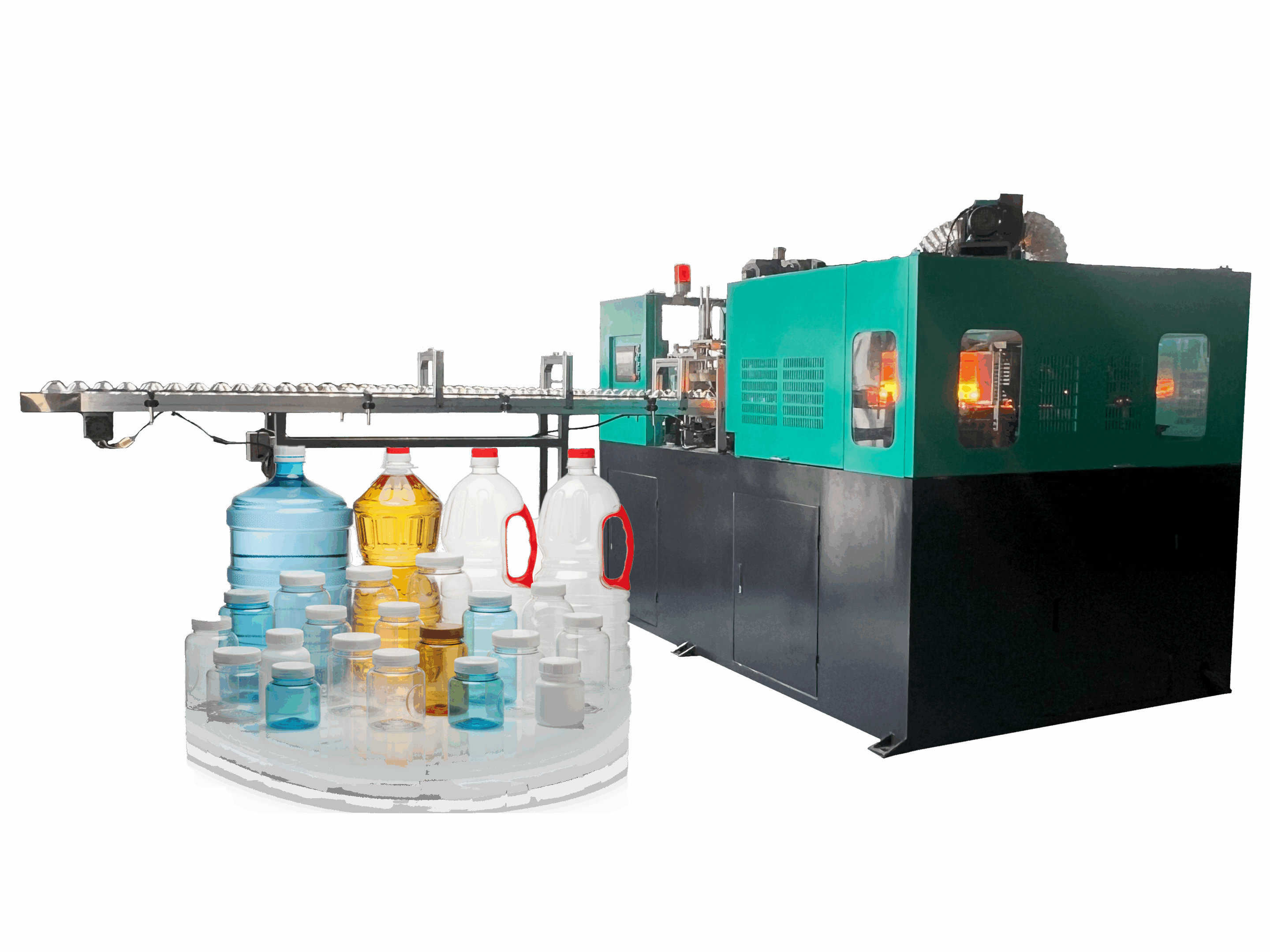
Achat d'une machine de moulage par extrusion-soufflage entièrement électrique : quelles sont les spécifications techniques importantes ?

At our factory, we often see clients struggle to evaluate new electric machinery because they rely on basic quotes. Moving from hydraulic to all-electric requires checking specific details to avoid costly production failures.
Request a detailed servo motor data sheet specifying torque curves and rotor inertia, a platen deflection analysis map, and the specific control loop cycle times for wall thickness. Additionally, demand a comprehensive Bill of Materials (BOM) identifying safety compliance standards and third-party certifications to ensure long-term reliability.
Here is the breakdown of the technical documents and specifications you must verify before signing a contract.
Which specific servo motor and drive parameters are critical for my production needs?
When we calibrate our flight controllers and servo drives, we find that generic "power ratings" are often misleading. If you do not verify the torque-speed curve, the machine might stall during cold starts or heavy loads.
torque-speed curve 1
Focus on the torque-speed characteristics, specifically the peak overload capacity and the corner speed where torque drops. You must also verify the rotor inertia ratio to ensure the drive can handle rapid acceleration for the mold carriage without overheating or losing precision during high-speed cycles.

Understanding Torque Characteristics
In the hydraulic world, force is linear. In our electric machines, force is rotational. A common mistake buyers make is looking only at the "Peak Torque" or kW rating. This oversimplification leads to undersized equipment. You need to see the relationship between torque and speed.
We recommend asking for the Rated Torque ($T_{n}$) and the Stall Torque ($T_{0}$). The rated torque determines your continuous extrusion output without overheating. The stall torque is critical for "cold starts" or holding the clamp force during cooling. If the machine lacks sufficient stall torque, the screw may jam when processing viscous materials like fractional melt HDPE.
The Importance of Liquid Cooling
We strongly advise against air-cooled servo systems for blow molding. In our experience, plastic factories are dusty environments. Dust clogs the cooling fins of air-cooled motors, causing them to overheat and reduce power to protect themselves. This slows down your production.
Instead, specify Liquid-Cooled Drives. These use water or glycol to remove heat efficiently. They allow the motors to run harder and maintain stable temperatures regardless of the factory environment. This also reduces the load on your facility’s HVAC system.
Inertia and Response
For the mold carriage, acceleration is more important than top speed. You must check the Inertia Mismatch Ratio. This measures the difference between the load (the heavy mold) and the motor. Ideally, this ratio should be below 10:1. If the load is too heavy for the motor’s inertia, the carriage will overshoot or shake, causing defects in the bottle.
Key Servo Parameters to Request
| Paramètres | Pourquoi c'est important | Target Benchmark |
|---|---|---|
| Peak Torque ($T_{max}$) | Needed for fast mold closing and locking. | 300% Overload for 2 seconds |
| Torque Ripple | Prevents pulsing in the parison. | < 1% Cogging Torque |
| Response Time | Critical for sharp thickness changes (handles). | < 50ms Mechanical Time Constant |
| Cooling Method | Ensures 24/7 operation without derating. | Liquid (Water/Glycol) |
How do I ensure the clamping force and platen dimensions match my mold requirements?
Our engineering team frequently solves issues where a client’s machine has high theoretical tonnage but poor rigidity. This leads to mold "breathing," which creates ugly parting lines and forces you to scrap products.
Request a Finite Element Analysis (FEA) report showing platen deflection under maximum load to prevent mold flashing. Verify the daylight opening and tie-bar spacing against your largest mold, and ensure the spec sheet details the automatic lubrication system type to guarantee longevity of the toggle mechanism.

Platen Deflection and Parallelism
Tonnage is just a number. The structural integrity of the machine is what applies that force. When the machine clamps down, the metal platens naturally bend. If they bend too much, the mold opens slightly in the center.
You should request a Platen Deflection Map based on Finite Element Analysis (FEA). Industry standards suggest deflection should not exceed 0.05mm per 300mm of length. If the deflection is higher, you will see flash on the bottom of your bottles and wear out your mold guide pins prematurely. Also, check for linear guides on the moving platen. These provide better parallelism than traditional tie-bar bushings.
Real Clamping Force Calculation
Do not guess your tonnage needs. The required force is not just about blowing pressure (6-8 bar). It is about the Pinch-Off Pressure. When the mold closes on the plastic parison to weld the bottom seam, the localized pressure can exceed 50 bar.
If your machine is weak, the mold will "breathe." To prevent this, ask for the Clamping Force Repeatability (e.g., ±0.5 tons). Electric machines use load cells to measure strain. The system should automatically adjust the servo position to keep the force consistent as the mold heats up and expands during the day.
Lubrication of the Toggle
Electric machines use mechanical toggles that need grease, not oil baths. The pivot points are under high stress. We recommend specifying an Automatic Central Lubrication System. Avoid manual greasing for high-speed machines. The system should have sensors to alarm if a grease line is blocked. Use high-performance pastes with additives like Molybdenum Disulfide to prevent the pins from seizing.
What details regarding the PLC control system and software version should be in the spec sheet?
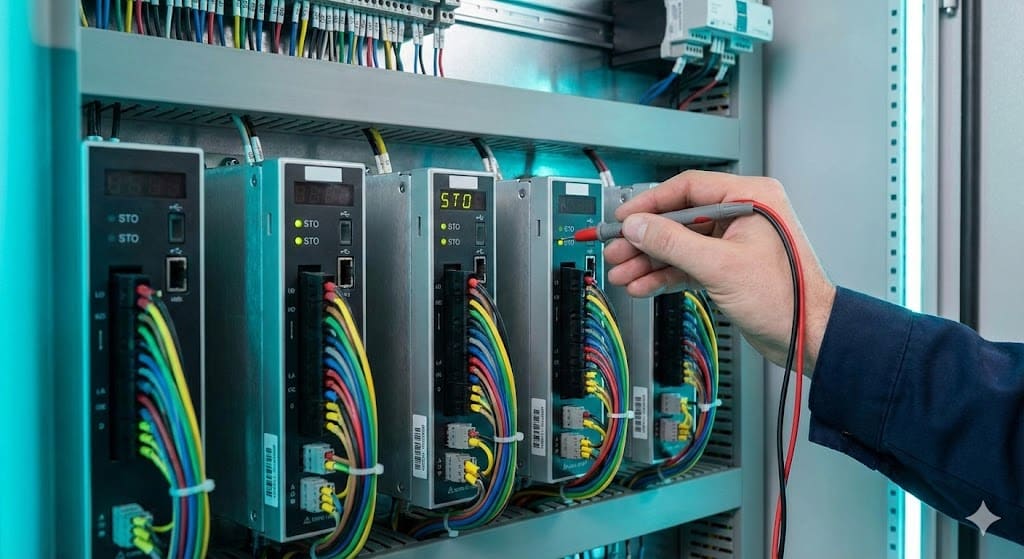
We build machines that need to talk to your other equipment, and we know that a "black box" controller is a nightmare for maintenance. You need a system that is open, fast, and uses standard components.
ANSI/SPI B151.15 3
Specify the exact brand and model of the PLC and HMI to ensure open architecture and spare part availability. You must request the cycle time for critical control loops, particularly parison wall thickness control, and confirm the system supports standard connectivity protocols like OPC UA for data collection.
Control Loop Speed Matters
The PLC is the brain of your all-electric machine. However, not all "brains" think at the same speed. In blow molding, millisecond precision defines quality. You must ask about the Durée du cycle of the critical loops.
For the Parison Wall Thickness Control (WTC), the loop should update every 1-2 milliseconds. If the controller is too slow, the thickness profile on your bottle will be "smeared." Sharp transitions, which are needed for bottle shoulders or heels, will become gradual and weak.
Connectivity and Industry 4.0
Modern manufacturing requires data. Your specification sheet must explicitly confirm compliance with Euromap 77. This uses the OPC UA protocol to send data to your MES (Manufacturing Execution System). It allows you to see cycle counts, energy use, and alarms in real-time.
Also, check for Euromap 67. This is the standard interface for connecting a takeout robot. Using these standards means you are not locked into proprietary systems that are hard to integrate.
Component Transparency
Demand transparency in the Bill of Materials (BOM). Are the drives and PLC proprietary custom-made parts, or are they Commercial Off-The-Shelf (COTS) from brands like Siemens, B&R, or Omron?
We always advise buying machines with COTS components. If the machine manufacturer goes out of business, you can still buy a replacement drive from a local distributor. If the hardware is proprietary, you are totally dependent on the OEM.
UL Listed 5
Control System Checklist
| Fonctionnalité | Enregistrements du nombre de particules | Bénéfice |
|---|---|---|
| WTC Loop Speed | 1-2 ms update rate | Sharp profile control for complex bottles. |
| Data Protocol | Euromap 77 (OPC UA) | Secure, real-time connection to MES. |
| Robot Interface | Euromap 67 | Plug-and-play robot integration. |
| Hardware Source | COTS (Siemens, B&R, etc.) | Easy spare parts sourcing locally. |
Should I request a comprehensive list of safety features and compliance certifications?
In our experience exporting to the US and Europe, safety regulations are strict and non-negotiable. A machine that fails a safety audit can shut down your factory floor, so valid certification documents are essential.
Euromap 67 6
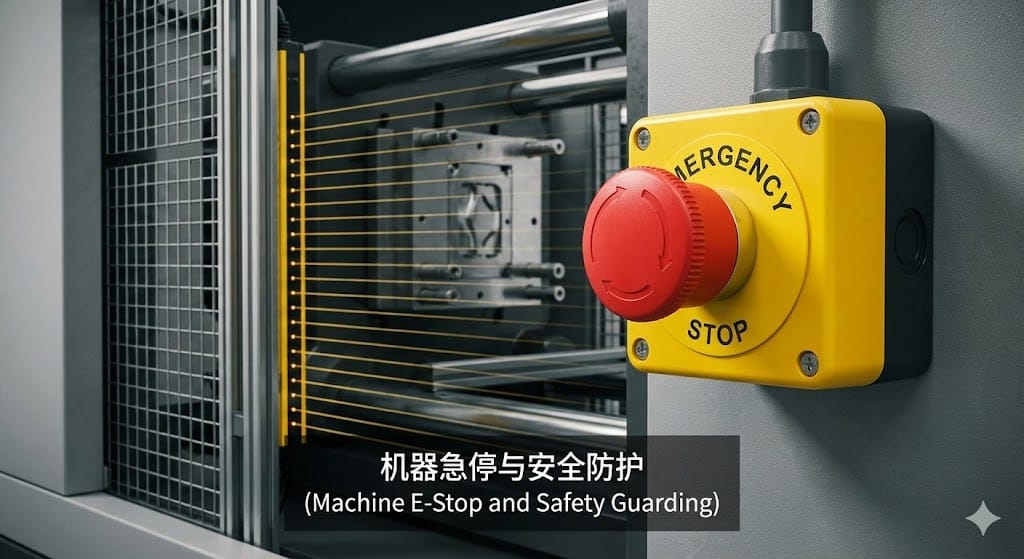
Demand a Declaration of Conformity for CE or UL listing for electrical components to satisfy local regulations. The specification sheet must detail the safety category of the emergency stop architecture and confirm that guarding meets ANSI/SPI or ISO standards to protect operators from high-speed moving parts.
Electrical Compliance and UL/CE
For the North American market, verify that the control cabinet and major components are UL Listed ou CSA Certified. If you import a machine with non-listed components, you may face delays during municipal electrical inspections. You might even be forced to pay for expensive field evaluations.
For Europe, you need a valid CE Declaration of Conformity. Do not just accept a sticker on the machine. Request the actual Third-Party Safety Audit Report from a recognized body like TUV or Intertek.
Safety Categories and Redundancy
The electrical safety architecture is defined by categories (ISO 13849-1). You should specify Category 3 or 4 (PL d or PL e) for all critical functions like gate locks and emergency stops.
This means the system has redundancy. It uses dual-channel wiring. If one relay fails or welds shut, the second channel will still stop the machine. A single component failure cannot make the machine unsafe.
Molybdenum Disulfide 8
Mechanical Standards
Ensure the machine meets ANSI/SPI B151.15 (for the US). This standard dictates the requirements for guarding and thermal warnings.
Also, ask about Mold Safety Protection. Since electric servo motors are very strong, they can crush a mold if a bottle is stuck. The controller should monitor the torque signature. If the torque deviates even slightly (detecting an obstruction as thin as 1mm), the machine must stop instantly to save your mold.
Conclusion
Transitioning to all-electric machinery requires a shift from buying "power" to buying "precision." By verifying these specific technical sheets, you ensure your investment delivers high efficiency and quality.
Finite Element Analysis (FEA) 9
Would you like me to review a supplier’s technical specification sheet for you to identify any missing critical data?
Liquid-Cooled Drives 10
notes de bas de page
- Provides technical context on servomotor characteristics and performance metrics. ↩︎
- Official European Commission page explaining CE marking and conformity requirements. ↩︎
- Direct reference to the specific safety standard for extrusion blow molding. ↩︎
- Official ISO standard page for safety of machinery control systems. ↩︎
- Official site of Underwriters Laboratories explaining certification marks. ↩︎
- Official source for European plastics machinery interface standards. ↩︎
- Official definition of the Open Platform Communications Unified Architecture standard. ↩︎
- Defines the chemical compound used as a high-performance solid lubricant. ↩︎
- Explains the computational method used for predicting structural behavior. ↩︎
- Explains the mechanism of liquid cooling used in high-performance machinery. ↩︎


0 commentaires