
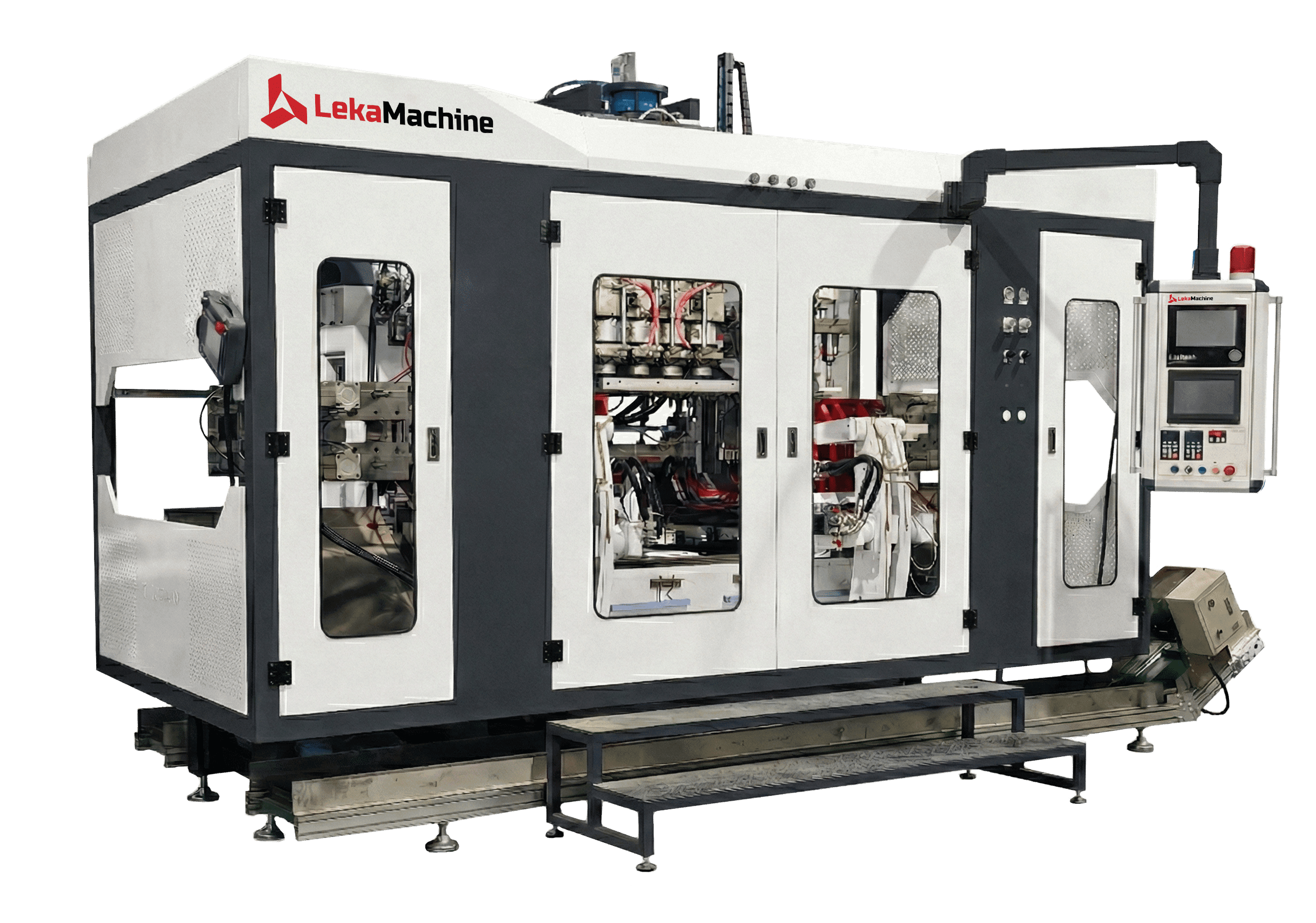
Extrusion blow molding machines (EBM)
HDPE/PP bottles, jerry cans & drums — understand EBM technology, machine types, applications, and turnkey line solutions from LEKA Machine.
PRODUCT FAMILY
EBM Lineup:10ml | 6L | 30L | 2000L Tanks
From 10ml Bottles to 2000L Tanks: Our EBM Range
Machine Range for10ml,6L, 30L & 2000L Tank Production
HDPE/PP EBM Solutions—10ml,6L, 30L & 2000L
Small to XXL:10ml, 6L, 30L & 2000L Accumulator/dual-station
Our Three Series: Smart / Forma / Titan
SMART series
Série FORMA
FORMA series Plus
série TITAN

What Is an Extrusion Blow Molding Machine?
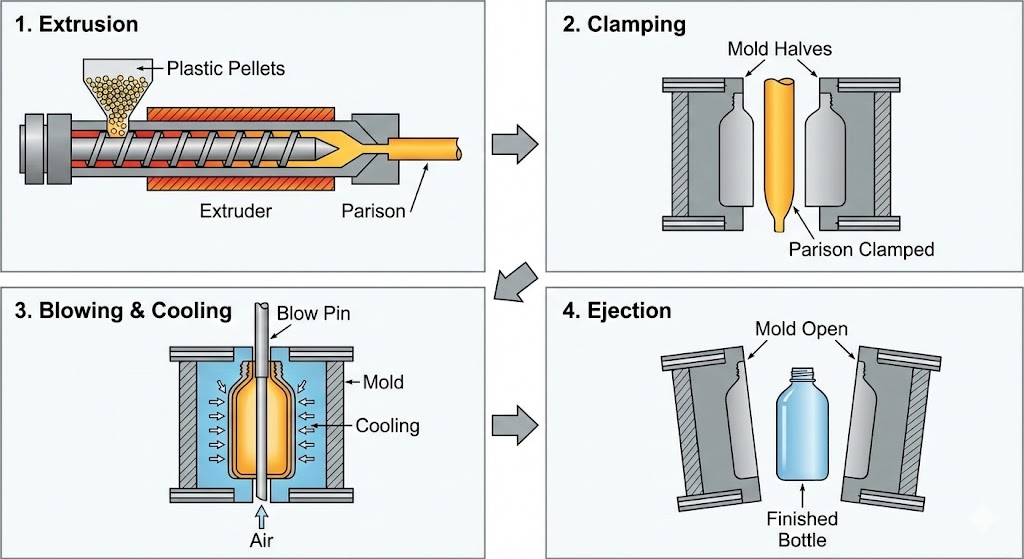
Extrusion blow molding (EBM) makes hollow plastic containers by extruding molten polymer into a tube (parison), closing the mold, and blowing air to form the final shape. It is widely used for HDPE / PP bottles, jerry cans, and drums — especially when you need thick walls, integrated handles, large volumes, and stable output.
- Best-fit materials: HDPE / PP / PCR blends (depending on performance requirements).
- Best-fit products: detergent & shampoo bottles, edible-oil jerry cans, chemical drums, large industrial parts.
- Not the main route for PET water bottles: PET is typically produced via Stretch Blow Molding (SBM / ISBM).
What Products Can You Produce with EBM?
Most buyers search by the container they want to manufacture. This section helps you match product types with the right EBM approach, then move quickly into the correct series selection (FORMA / TITAN).
Bottles (10 ml – 6 L)
Detergent, shampoo, cosmetics, household chemicals. Focus: neck tolerance, wall uniformity, decoration yield.
Jerry Cans (5 – 30 L)
Edible oil, agrochemicals, lubricants. Focus: handle strength, ESCR, low leak rate, fast changeover.
Drums (20 – 220 L)
Chemical and industrial transport. Focus: accumulator head to reduce parison sag and control thick-wall zones.
Large Parts / Tanks
Automotive ducts, pontoons, tool cases, barriers. Focus: programmed parison, thick walls, multilayer options.
Quick Recommendation
- 0–30 L bottles & jerry cans: start with FORMA (continuous EBM).
- 20–220 L+ drums & thick-wall parts: start with TITAN (accumulator head).
- Need PCR / multilayer / sight stripe: consider co-extrusion configuration.
- All-electric option: available for projects requiring lower energy consumption, cleaner operation, and stable repeatability — ideal for cosmetics, food, and export-oriented plants.
- Servo-driven & low-noise setup: recommended when factory environment, audit requirements, or long-term OPEX control are key concerns.
- Fully automatic turnkey line: complete in-line solution including feeding, robot take-out, leak test, labeling, packing, and palletizing — one-stop line integration.
To Recommend the Right Model, Tell Us 4 Things
Bottle / Jerrycan / Drum / Part
e.g., 1L / 5L / 25L / 100L
bph or pcs/hour + cavities
HDPE / PP / PCR% / barrier?
Machine Types of Extrusion Blow Molding Machines
Extrusion blow molding machines are designed in different structures to match container size,
wall thickness, automation level, and production strategy.
Below is a practical classification to help you select the right machine type.
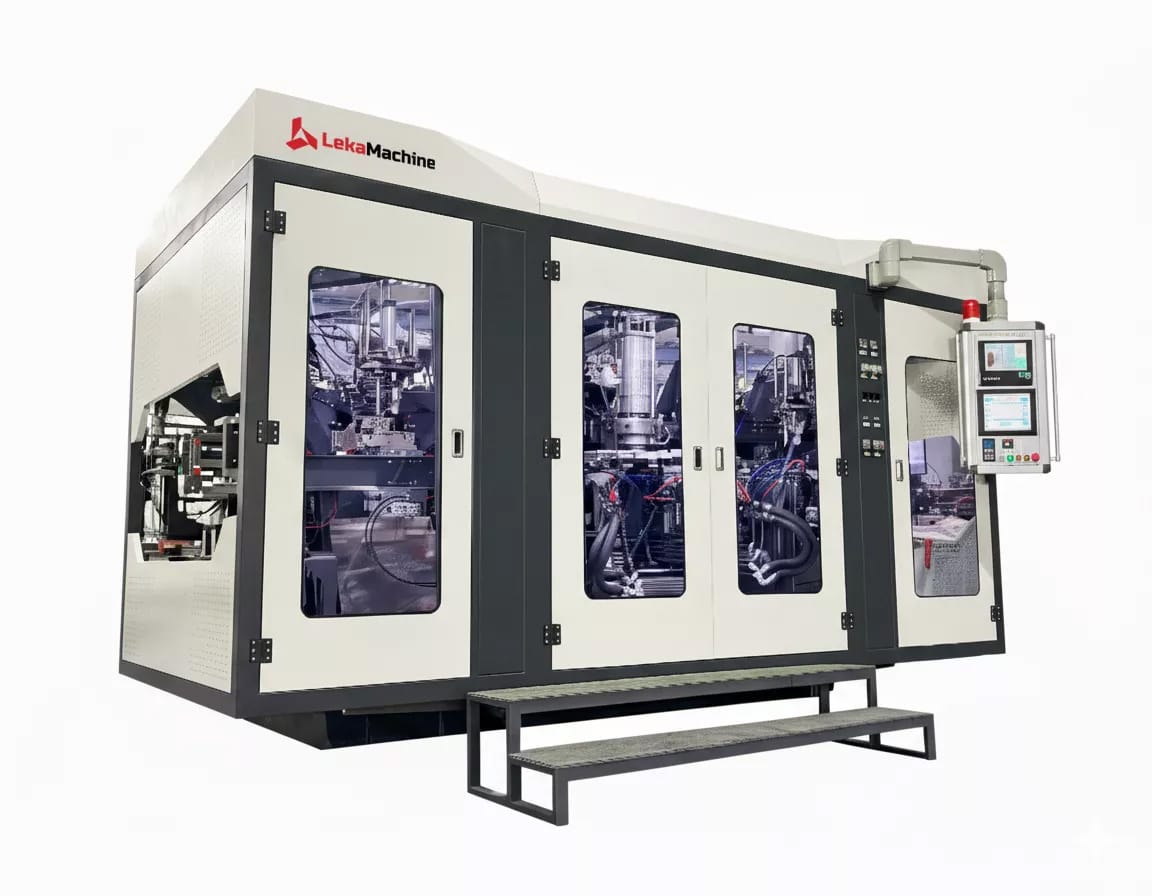
High-speed fully automated in line
FORMA plus 0-50L

High-speed Customization blow molding
FORMA 0-50L
Multi-layered Customization
FORMA 0-16L
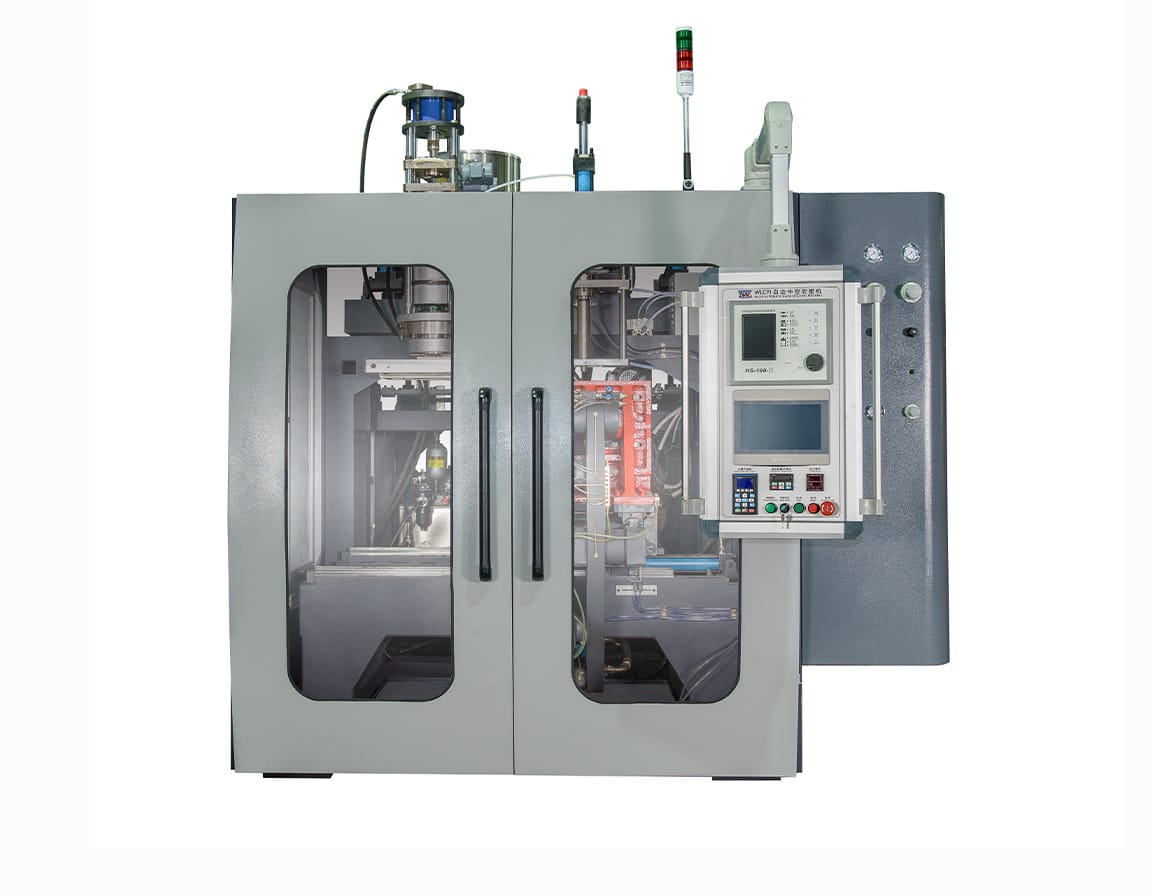
Single Station Customization
All Electric FORMA 0-50L
FORMA Series — Continuous Extrusion Blow Molding Machine
The FORMA series is the most widely applied EBM solution for small to medium containers. It balances productivity, flexibility, and automation scalability, making it the first choice for most packaging projects.
- Typical products: bottles, jerry cans, containers (10 ml – 30 L).
- Production focus: fast cycle time, stable output, frequent mold change.
- All-electric option: available for lower energy consumption, clean operation, and low noise.
- Automation-ready: robot take-out, in-mold deflashing, leak testing, labeling & packing lines.
- Ideal users: detergent, cosmetics, food oil, household chemical manufacturers.
Accumulator Blow Molding 0-100L TITANseries

Accumulator Blow Molding 50-200L TITANseries

Accumulator Blow Molding 100-2000L TITANseries

Accumulator Blow Molding Customization
TITAN MAX
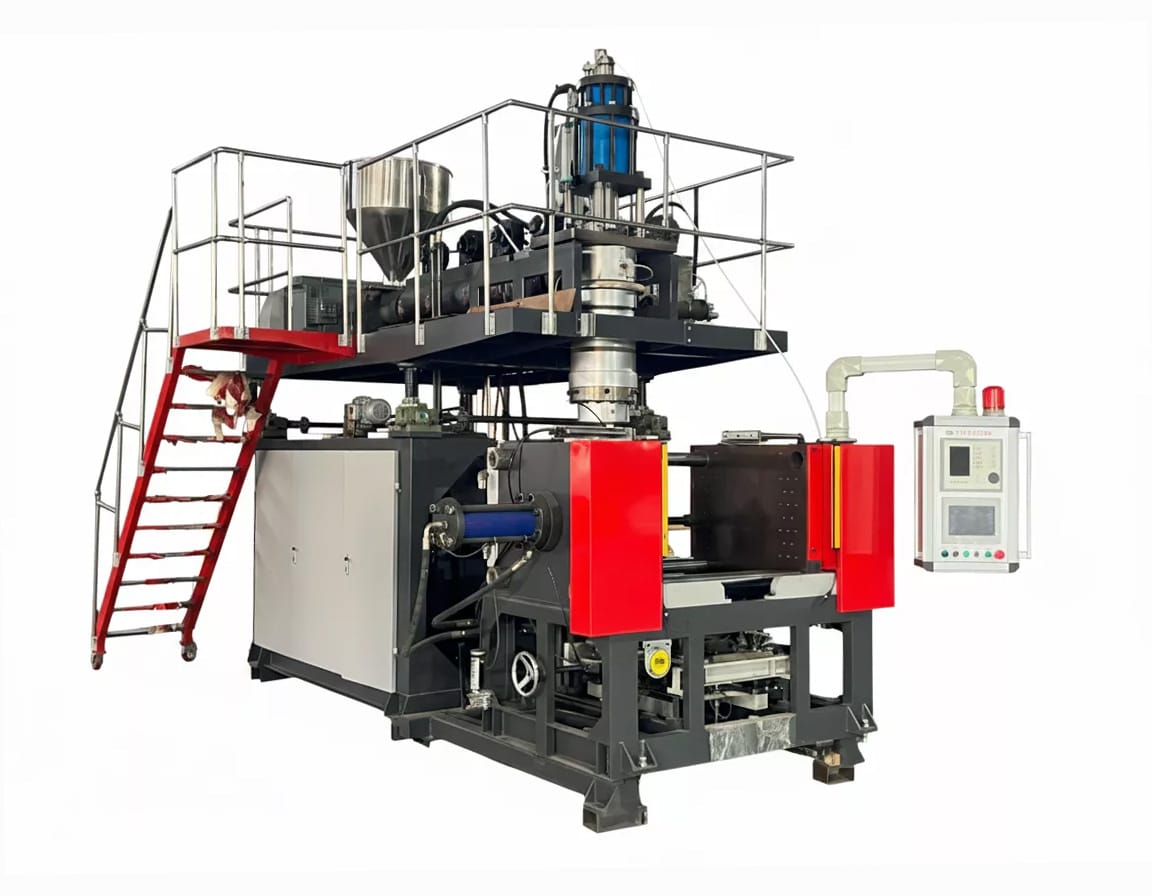
TITAN Series — Accumulator Head Extrusion Blow Molding Machine
TITAN machines are engineered for large-volume and thick-wall containers,
where precise parison control and wall distribution are critical for performance and safety.
- Typical products: drums, tanks, jerry cans, industrial hollow parts (20 – 220 L+).
- Core technology: accumulator head eliminates parison sag before mold closing.
- Multi-layer capability: supports PCR core layers, barrier layers, and sight stripes.
- Ideal users: chemical packaging, industrial logistics, automotive & heavy-duty sectors.
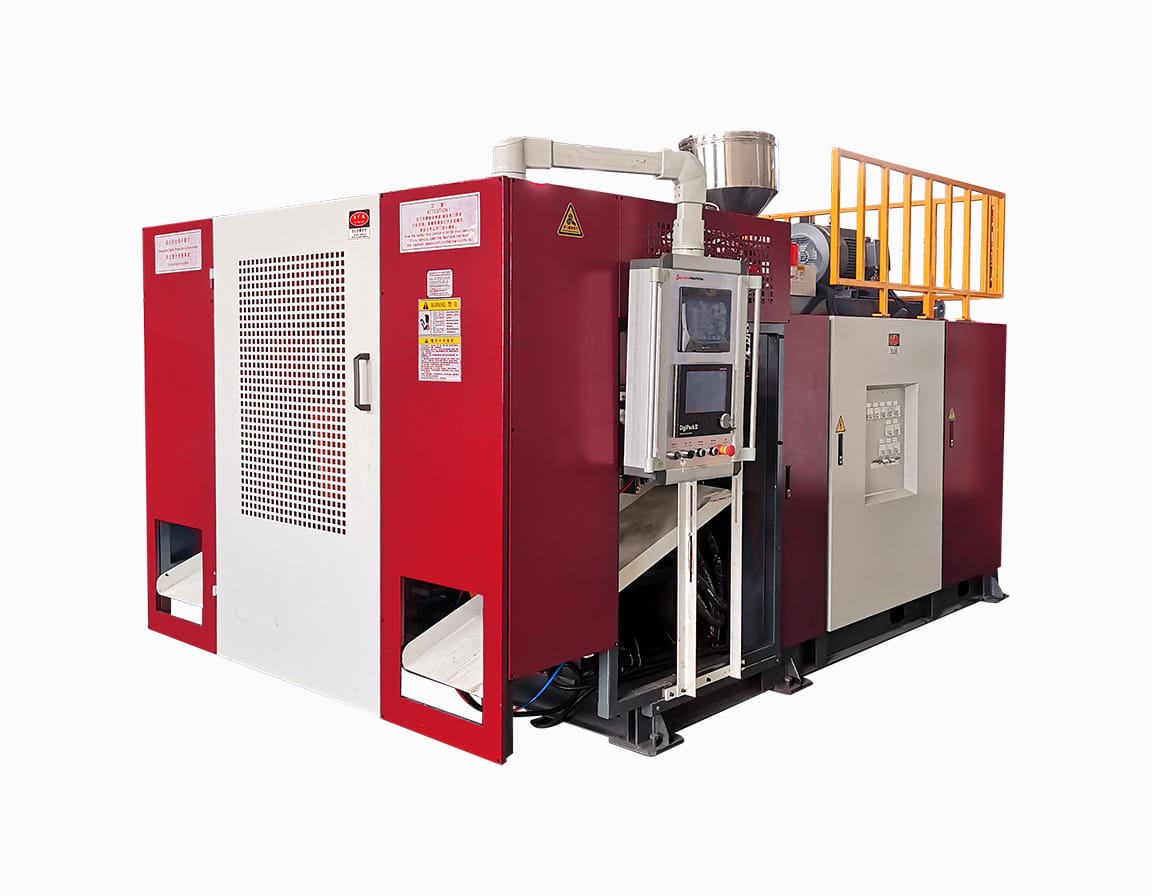
AERO series 2L
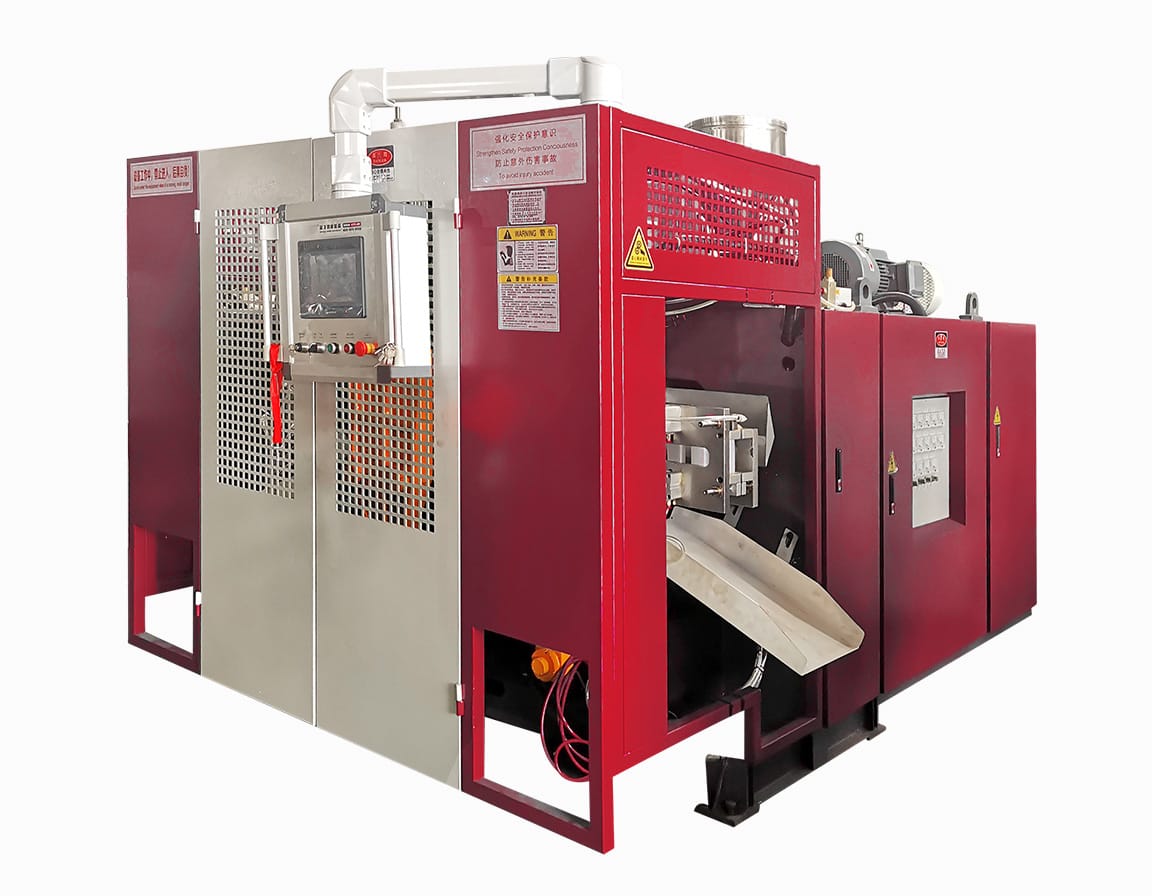
AERO series 5L
AERO Series — Mass-Production Extrusion Blow Molding Machine
AERO is designed for projects prioritizing cost efficiency and stable mass production.
It offers a simplified configuration while retaining the core advantages of extrusion blow molding.
- Typical products: daily-use bottles and containers (up to 30 L).
- Machine concept: essential functions with simplified structure.
- Upgrade path: optional parison control, inspection systems, and automation modules.
- Ideal users: entry-level factories and cost-sensitive production lines.
EBM vs SBM vs IBM: Which Blow Molding Process Fits Your Product?
Buyers often confuse machine types. Use this comparison to quickly choose the correct process based on material, container design, and production goals — then we can recommend the right machine configuration.
Quick Comparison Table
| Decision Factor | EBM (Extrusion Blow Molding) | SBM / ISBM (Stretch Blow Molding) | IBM (Injection Blow Molding) |
|---|---|---|---|
| Typical materials | PEHDPPPCR blends Best for polyolefins and recycled content options. | PETrPET Best for clear PET bottles with stretch orientation. | PPPETGPC Used for small bottles needing high neck accuracy. |
| Best-fit products | Detergent / shampoo bottles, jerry cans, drums, industrial parts, handle containers. | PET water / beverage bottles, carbonated drinks, clear packaging requiring high clarity. | Small pharma / cosmetic bottles (often with high neck precision requirements). |
| Handles & complex shapes | Strong advantage. Integrated handles and thick-wall zones are common. | Limited (typically no integrated handle; shape constraints for stretch). | Limited (small size focus; less suitable for handle parts). |
| Wall thickness / strength | Excellent for thick walls, reinforced corners, chemical resistance designs. | High strength from stretch orientation (PET), especially for pressure bottles. | Good uniformity for small bottles; not for large thick-wall containers. |
| Clarity / appearance | Usually opaque (HDPE/PP). Appearance depends on resin and mold finishing. | Best for high clarity PET bottles and premium visual requirements. | Good for small clear bottles depending on material. |
| Cost & production strategy | Excellent for many SKUs, handle parts, PCR structures; flexible with molds and co-ex layers. | Best for high-volume PET lines; requires preforms + stretch blow system. | Best for small bottle niche; different tooling and product constraints. |
How to Choose the Right Extrusion Blow Molding Machine
The fastest way to select the correct EBM machine is to define your container, throughput target, and performance constraints. Use the checklist below to avoid overspec and reduce project risk.
Buyer Checklist (5 Minutes)
-
1) Container geometry
Handles, deep corners, wide neck, sight stripe? These directly affect head type, parison programming, and mold design. -
2) Volume range & wall thickness
Small bottles (ml–L) often favor continuous EBM; thick-wall drums and large parts typically favor accumulator head. -
3) Target output
Provide pcs/hour (or bph) + cavity + cycle expectation. Output drives clamping structure, station count, and automation ROI. -
4) Material & recycled content
HDPE/PP/PCR% (and barrier needs) determine screw design, layer structure (co-ex), and QC requirements. -
5) Automation level
Decide if you need robot take-out, deflashing, leak test, checkweigher, labeling, packing, palletizing — or a turnkey line.
Selection Path (Simple Rules)
Use these rules to shortlist the machine type first, then we fine-tune mold cavities, utilities, and automation package.
Go with FORMA when your project is mainly 0–30 L bottles / jerry cans and you want flexibility and scalable automation.
Go with TITAN when you produce large-volume / thick-wall drums, tanks, or industrial parts where parison sag control matters.
Consider all-electric / low-noise configurations when energy, cleanliness, or audit requirements are priorities.
What We Need From You
Bottle / Jerrycan / Drum / Part
e.g., 500ml / 5L / 25L / 100L
pcs/hour (or bph) + cavity
HDPE / PP / PCR% / barrier?
Industries & Applications for Extrusion Blow Molding
Extrusion blow molding is widely used for HDPE/PP packaging where durability, chemical resistance, integrated handles, and thick walls matter. Explore common industries below and request a recommended machine configuration.
Cosmetics & Personal Care (HDPE/PP)
Stable neck tolerance and uniform wall thickness improve decoration yield (silk print / labeling). Clean operation and low-noise configurations help meet higher production standards.
Recommended: FORMA (0–30 L) with optional automation pack.
Food & Beverage (HDPE/PP Containers)
Ideal for edible-oil jerry cans and HDPE/PP food containers where sealing reliability, stacking strength, and consistent weight control are important.
Recommended: FORMA for bottles & jerry cans; co-ex available if needed.
Home & Industrial Chemicals
Detergent, bleach, cleaners, solvents and chemical packaging require ESCR performance, reinforced handles/corners, and low leak rate for safe transport.
Recommended: FORMA (5–30 L) or TITAN for larger drums/tanks.
Industrial Drums & Large Parts
For thick-wall drums, tanks and industrial hollow parts, accumulator head technology improves parison stability and helps control wall thickness distribution in critical zones.
Recommended: TITAN (20–220 L+) with multi-layer options when required.
Need a One-Stop Fully Automatic Turnkey Line?
We can integrate feeding, robot take-out, deflashing, leak testing, labeling, packing, and palletizing. Send your container + output + material, and we’ll propose the best configuration.
Key Advantages of LEKA Extrusion Blow Molding Machines
Buyers care about three things: stable quality, lower operating cost, et reliable support. Below are the advantages that directly impact scrap rate, energy, downtime, and long-term TCO.
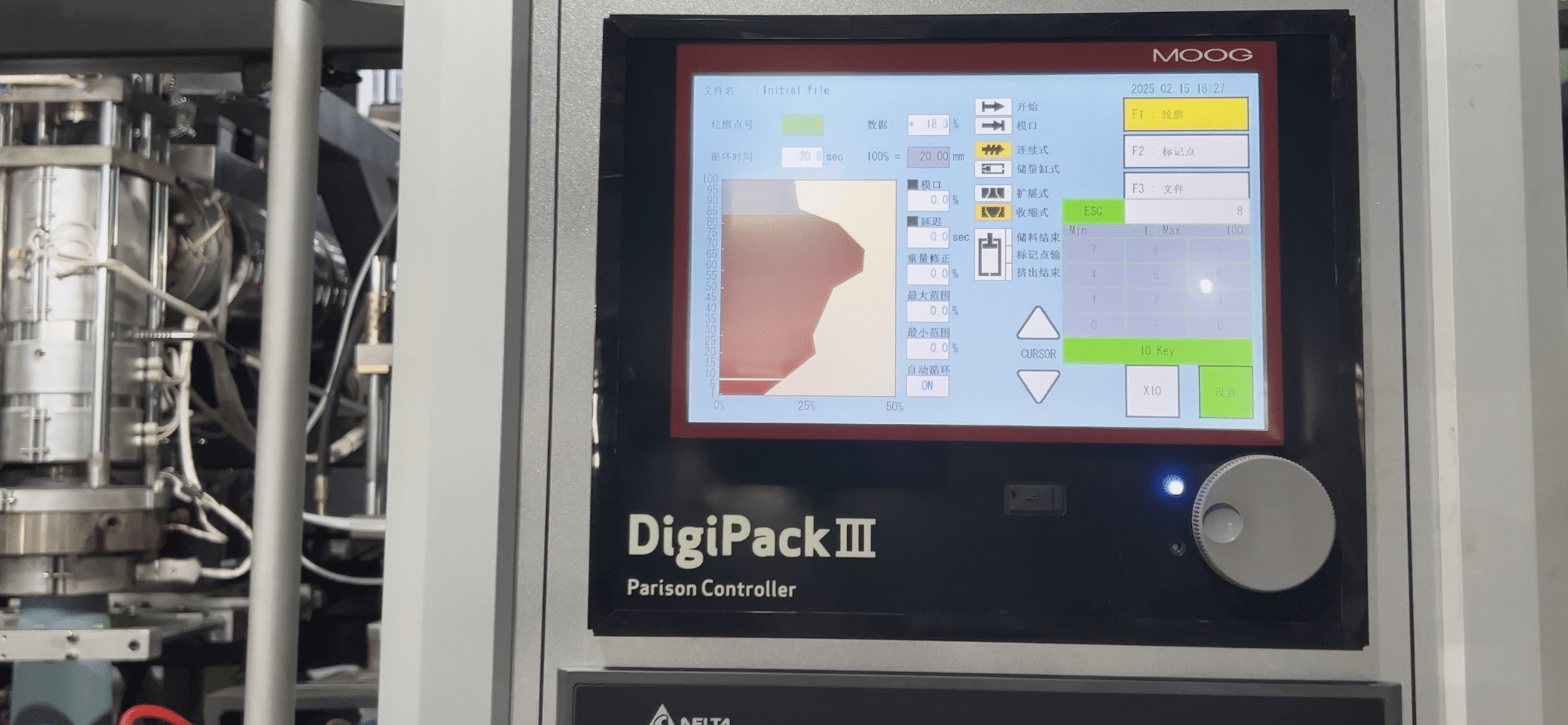
Closed-Loop Wall Thickness Control (MOOG)
Programmed parison control reinforces handles, corners, and threads to reduce thin spots, leaks, and rejects — especially for jerry cans and chemical containers.
Lower Energy Window & Efficient Drive Options
Optimized heating, drive systems, and process tuning reduce kWh/kg. Optional all-electric configuration improves cleanliness and noise control for higher-standard plants.
Fast Changeover for Multi-SKU Production
Quick-connect utilities and recipe recall reduce changeover time, improving utilization for OEM factories with frequent SKU switching.
PCR / rHDPE Ready & Multi-Layer Co-Extrusion
Support recycled core layers and functional structures (e.g., sight stripe / barrier layer) to reduce resin cost while keeping sealing and top-load performance.
Inline Quality Control & Reduced Rework
Optional in-line deflashing, leak testing, vision inspection, and checkweighing reduce manual rework and improve batch consistency.
Turnkey Line Integration (One-Stop Automation)
We can integrate feeding, robot take-out, conveyors, labeling, packing, and palletizing — reducing your supplier coordination risk and project timeline.
OPC-UA / MES Connectivity (Optional)
Output, energy, rejects, and downtime events can be tracked for production reporting, traceability, and carbon/efficiency management.
Remote Diagnostics & After-Sales Support
Remote troubleshooting, defined spare parts, and structured support reduce downtime for overseas plants. Service response and training can be planned based on your project timeline.
Compliance & Safety Options
Guarding, safety interlocks, and clean-production options can be configured for export markets and audit needs, helping reduce compliance risk.
Want a Recommended Configuration for Your Container?
Send container type + volume + output + material. We will recommend the best series (FORMA/TITAN/AERO) and an automation package that fits your production goals.
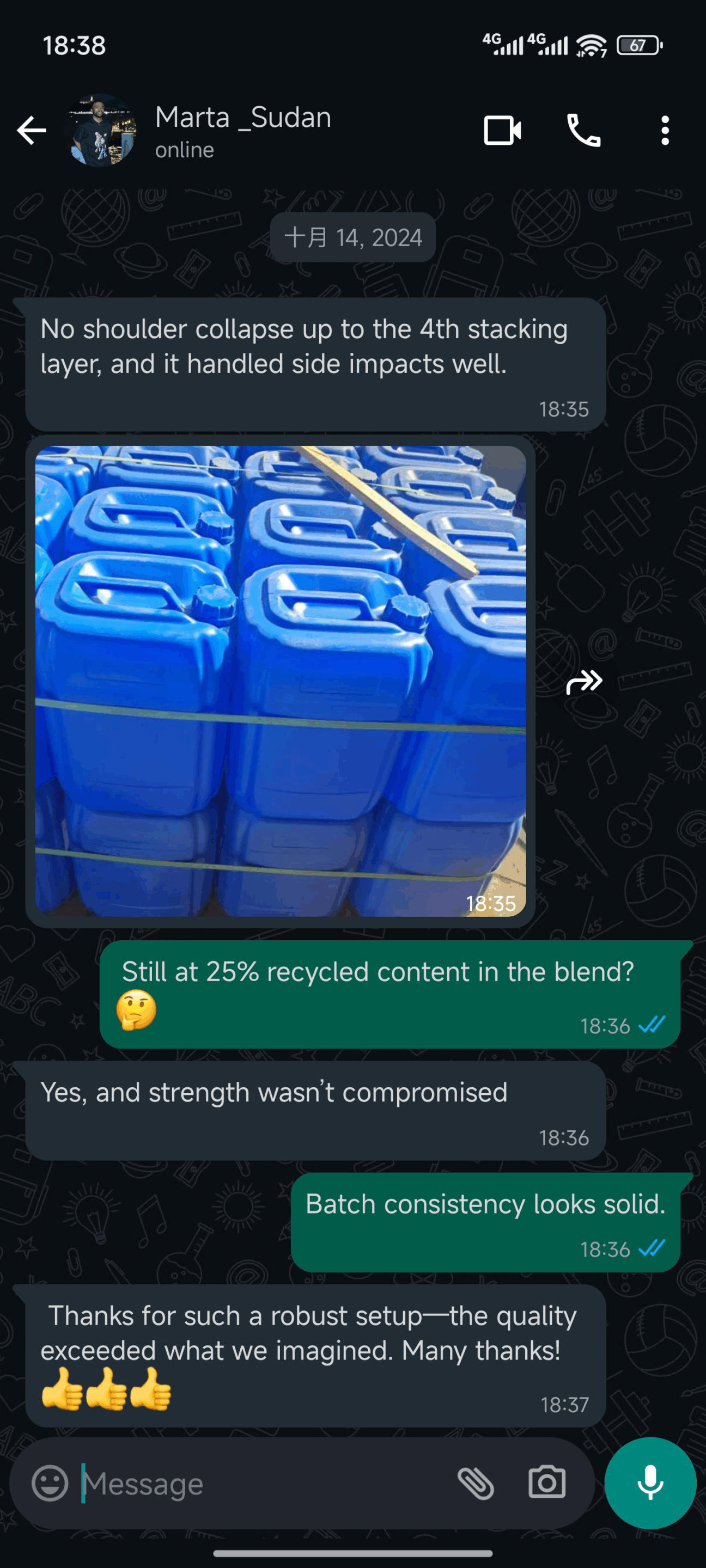
Customer Testimonials
Real feedback highlights from global customers using LEKA machines.




Want Similar Results on Your Line?
Send your container type, volume, output, and material. We’ll recommend the right series and configuration.
FAQ: Extrusion Blow Molding Machines
Quick answers to the most common questions buyers ask before choosing an EBM line — covering materials, output, automation, and support.
What products are best made by EBM (Extrusion Blow Molding)?
- Bottles (detergent, shampoo, household chemicals)
- Jerry cans (edible oil, agrochemicals, lubricants)
- Drums / tanks / large industrial parts (thick-wall designs)
Can your EBM machines run PCR / recycled materials?
- Stable parison control (programming / closed-loop options)
- Process window optimization (temperature / cooling / venting)
- Optional co-ex structures (e.g., Virgin/PCR/Virgin) when appearance or compliance requires it
How do I choose between FORMA and TITAN?
- FORMA: 0–30 L bottles & jerry cans (continuous extrusion; flexible options)
- TITAN: thick-wall drums / large parts (accumulator head helps reduce parison sag)
What does “automation pack / turnkey line” typically include?
- Auto feeding, robot take-out, in-mold deflashing
- Leak test, checkweigher, vision inspection
- Conveyors, labeling, packing, palletizing (one-stop turnkey line)
How do you support overseas installation and after-sales service?
Prendre contact
Améliorez votre activité grâce à des solutions avancées de moulage par soufflage
Avec plus de 20 ans d'expertise, Lekamachine fabrique des machines de moulage par soufflage durables et performantes pour répondre aux exigences de l'industrie. Développez votre production grâce à un équipement fiable, conçu avec précision.
- Leader reconnu dans la technologie du moulage par soufflage.
- De solides capacités de R&D et de production stimulent l'innovation.
- Au service de clients dans plus de 70 pays.
- Des délais de réponse rapides, généralement dans les 24 heures.
- Des solutions personnalisées adaptées aux besoins de votre entreprise.