
How Should I Arrange Technical Training for Operators After Purchasing an All-Electric Extrusion Blow Molding Machine?

We understand that upgrading to all-electric technology can feel overwhelming for your production team. Without the right preparation, the advanced precision of these machines becomes a source of confusion rather than efficiency.
To arrange effective technical training, prioritize hands-on commissioning where operators actively run startup procedures under supervision. Request electrical schematics and HMI maps two weeks early, and ensure your maintenance team masters servo-specific tasks like ball screw lubrication and belt tensioning instead of hydraulic routines.
Proper preparation minimizes the learning curve and protects your investment from day one.
What documentation should I request before the machine arrives?
We always advise our clients to study the machine’s logic well before the container arrives at the factory. Waiting until delivery day to look at the manuals often results in unnecessary confusion and slower production ramp-up.
You must request digital copies of the HMI navigation map, electrical schematics, and servo drive manuals at least two weeks before delivery. This lead time allows your key personnel to familiarize themselves with the control logic and interface layout before the physical machine hits your floor.

The Importance of Early Review
Getting the documentation early acts as a "flight simulator" for your staff. When we export machines to North America or Europe, we notice a distinct difference in startup speed between clients who reviewed the files beforehand and those who did not.
For all-electric extrusion blow molding machines, the control logic is fundamentally different from hydraulic systems. The logic relies on precise positioning rather than pressure limits. Therefore, your electrical engineers need time to understand the inputs and outputs (I/O) mapped in the schematics.
inputs and outputs (I/O) 1
IT and Remote Access Preparation
One often overlooked aspect of documentation is the requirement for remote connectivity. Modern all-electric machines often feature teleservice capabilities for instant diagnostics. However, your IT department will likely have strict firewall rules.
remote connectivity 2
By requesting the network configuration requirements early, you can involve your IT staff during the pre-installation phase. They can configure the necessary secure gateways to grant vendor access. This ensures that when a problem arises later, our engineers can remotely troubleshoot immediately, rather than waiting days for IT approval.
Essential Document Checklist
To ensure nothing is missed, use the following checklist when communicating with your supplier:
| Document Type | Submission Deadline | Objectif |
|---|---|---|
| HMI Navigation Map | 2 Weeks Pre-Delivery | Familiarize operators with menu structures and button locations. |
| Electrical Schematics | 2 Weeks Pre-Delivery | Allow electricians to trace circuits and prepare power drops. |
| Servo Drive Manuals | 2 Weeks Pre-Delivery | Help maintenance understand error codes and torque limits. |
| Network Config / IP | 2 Weeks Pre-Delivery | Enable IT to set up secure VPN or remote teleservice access. |
Do you provide on-site training during the commissioning phase?
At our factory, we find that operators learn best by actually performing the tasks, not just by standing around. Passive observation rarely translates into the confidence needed to run high-speed production lines independently.
Yes, effective commissioning includes at least three full days of hands-on production runs. Your operators must actively handle start-up, shutdown, and error recovery under vendor supervision rather than just watching. This ensures they build the muscle memory required to manage the machine independently.

Active vs. Passive Training
The biggest mistake we see during installation is the "classroom approach," where operators stand back and watch the technician set up the machine. This creates a false sense of security. The machine runs perfectly while the technician is there, but the moment they leave, the operators panic at the first alarm.
We structure our commissioning to force engagement. The technician’s role shifts from "doer" to "coach." By the third day, your staff should be holding the controls while the technician simply observes. This active handling includes recovering from emergency stops and clearing jams—scenarios that are stressful if not practiced.
The "Super User" Strategy
Staff turnover is a reality in manufacturing. To mitigate the risk of losing operational knowledge, we strongly recommend establishing a "Super User" certification program. Identify one high-potential internal engineer or senior operator to receive advanced training.
This person becomes your internal trainer. The vendor formally qualifies them to train future hires. This creates a sustainable knowledge loop within your company, preventing the "brain drain" that happens when your only trained operator quits.
Shifting the Mindset: Pressure vs. Position
A critical part of this training is the mindset shift required for all-electric platforms.
- Hydraulic Mindset: "If it’s not molding right, increase the pressure."
- Electric Mindset: "If it’s not molding right, check the position."
We conduct a pre-training workshop to shift this thinking. In an all-electric machine, over-torquing (pushing harder) can physically damage sensitive ball screws and servo components. Operators must learn that precision, not force, is the key to quality.
How do I ensure my team understands the servo motor maintenance?
Our engineers often see expensive all-electric machines fail because maintenance teams treat them exactly like their old hydraulic units. The maintenance protocols are fundamentally different and require specific, disciplined habits.
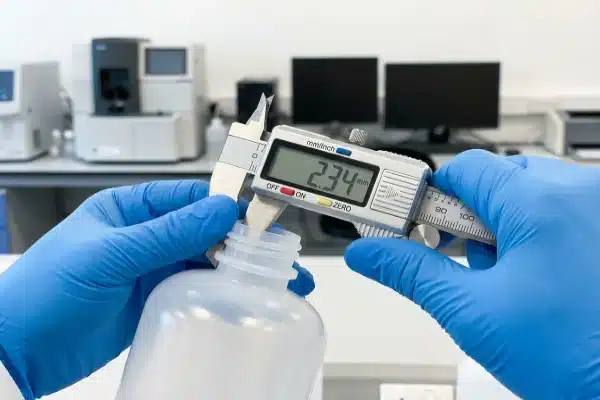
Ensure the maintenance curriculum specifically covers ball screw lubrication intervals and drive belt tensioning. These critical mechanical tasks replace traditional hydraulic fluid maintenance in all-electric systems. Additionally, include safety modules on high-voltage lock-out/tag-out procedures, as capacitor discharge times differ significantly from hydraulic pressure-release protocols.
The High-Voltage Safety Difference
Safety is the first priority. On a hydraulic machine, the danger is visible—high-pressure oil leaks or crushing hazards. On an all-electric LEKA machine, the danger is invisible.
The servo drives use large capacitors that store lethal amounts of energy even after the main power is cut. Training must include specific modules on:
- Lock-Out/Tag-Out (LOTO): Specific to high-voltage cabinets.
- Discharge Times: Waiting the manufacturer-specified time (often 5-10 minutes) for capacitors to drain before touching terminals.
This differs significantly from simply releasing hydraulic pressure valves, and it is non-negotiable for operator safety.
Mechanical Maintenance Focus
In the absence of hydraulic oil changes and filter replacements, your team might assume the machine is "maintenance-free." This is dangerous. The focus simply shifts to different components.
- Ball Screws: These provide the precise movement. They require specific grease at exact intervals. If they run dry, they wear out quickly and are expensive to replace.
- Drive Belts: These transfer power from the motor. They must be checked for tension. Loose belts cause "slop" in the movement, leading to part defects.
Leveraging Energy Data
One huge advantage of electric machines is data. Training should mandate the interpretation of real-time energy monitoring.
Since servo motors draw power proportional to the load, a sudden spike in energy consumption usually indicates a mechanical issue (like a binding bearing or lack of lubrication) avant the machine fails. Operators should be trained to watch these metrics as an early warning system.
Comparison of Maintenance Focus
| Fonctionnalité | Hydraulic Machine Focus | All-Electric Machine Focus |
|---|---|---|
| Power Source | Pump health, Oil temperature | Servo Drive capability, Capacitor safety |
| Movement | Cylinder seals, Hoses | Ball Screws, Belts, Couplings |
| Lubrication | Oil filtration, Leak checks | Automatic greasing systems, Grease quality |
| Warning Signs | Leaking oil, Overheating | Abnormal noise, Energy consumption spikes |
Can I get video tutorials for routine operation and troubleshooting?
We believe that thick paper manuals often get lost in a drawer or ignored by younger staff who prefer digital media. In our experience, accessible video content is the fastest way to solve shift-change problems.
high ROI 3
You should secure access to the manufacturer’s library of step-by-step video tutorials for mold changes and routine parison wall thickness adjustments. These videos serve as a long-term reference library for new hires, covering alarm code interpretation and diagnostic history logs to resolve recurring process deviations.

Visualizing Routine Procedures
Text-based manuals can be ambiguous. When an instruction says "adjust the parison profile," a new operator might not know which screen to access. Video tutorials bridge this gap.
large capacitors 5
We recommend asking for videos covering high-frequency tasks:
- Mold Changes: Showing the exact sequence of unbolting and recalibrating.
- Parison Adjustment: Visualizing how the 100-point profile on the screen corresponds to the thickness of the actual plastic bottle.
- Start-up/Shut-down: The correct sequence to avoid heater damage.
These videos should be stored on a tablet or a computer near the production line, acting as an "on-demand" instructor for the night shift or new employees.
Lock-Out/Tag-Out (LOTO) 6
Decoding Diagnostics and Alarms
Modern electric machines are communicative. When they stop, they usually tell you why. However, "Servo Overload Axis X" is meaningless if the operator doesn’t know what Axis X is.
firewall rules 7
Training must cover the Diagnostic History Log. This is more than just reading the current alarm. It involves looking at the history to see patterns.
- Example: If Axis X alarms every day at 2:00 PM, is it related to the ambient temperature rising? Is it a specific mold action?
We train operators to use the diagnostic log to identify recurring process deviations. This empowers them to solve the root cause rather than just hitting the "Reset" button and hoping for the best.
HMI navigation map 8
Recommended Video Library Content
To build a robust training database, ensure you have the following video modules:
ball screw 9
| Video Category | Specific Content Examples | Target Audience |
|---|---|---|
| Basics | Machine Safety, HMI Navigation, Emergency Stops | All Operators |
| Process | Parison Profiling, Temperature Tuning, Cooling Setup | Process Engineers |
| Maintenance | Greasing Points, Belt Tensioning, Drive Replacement | Maintenance Techs |
| Dépannage | Reading Alarm Codes, Input/Output Signal Checks | Super Users |
Conclusion
Successfully integrating an all-electric blow molding machine requires a proactive training strategy. By securing documentation early, focusing on hands-on commissioning, and mastering servo-specific maintenance, you ensure long-term efficiency and high ROI.
electrical schematics 10
Footnotes
- Clarifies the communication signals between the machine’s control system and devices. ↩︎
- Provides an authoritative definition of remote access in an industrial context. ↩︎
- Explains the financial metric used to evaluate the machine’s profitability. ↩︎
- Defines the hollow plastic tube formed during the blow molding process. ↩︎
- Identifies the component storing electrical energy, posing a specific safety hazard. ↩︎
- Links to official safety standards for controlling hazardous energy during maintenance. ↩︎
- Explains the network security barrier that often blocks industrial teleservice. ↩︎
- Describes the user interface standard for industrial machinery control. ↩︎
- Explains the mechanical component responsible for precise linear motion in electric machines. ↩︎
- Defines the technical drawings required for understanding machine circuits. ↩︎



0 commentaires