
How can I check if a Chinese supplier has a track record of exporting all-electric extrusion blow molding machines to Europe?
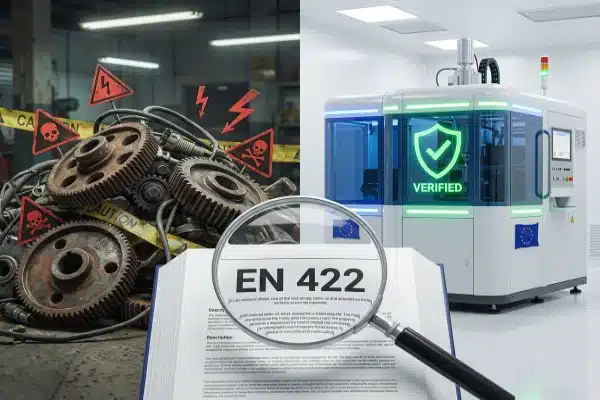
Sourcing machinery globally is a gamble, and we often see buyers lose that bet. At our factory, we frequently hear horror stories from clients who previously bought "European-standard" machines that arrived with unsafe wiring and fake certificates. You need to separate the true exporters from the domestic players pretending to go global.
To verify a Chinese supplier’s European export record, audit their "Notified Body" number in the NANDO database and demand a machine-assembly "Declaration of Conformity" referencing EN 422. Cross-reference their customer list with customs data platforms like Panjiva, and insist on DDP shipping terms to test their logistics network.
These verification steps act as a firewall, protecting your capital from non-compliant equipment.
How can I verify the authenticity of their CE certification and compliance documents?
We spend months compiling technical files and undergoing third-party audits to ensure our machines are safe for EU operators. It is frustrating to see competitors slap a generic "CE" sticker on a machine that hasn’t been tested, putting your employees and your insurance coverage at risk. You must dig deeper than the certificate PDF they email you.
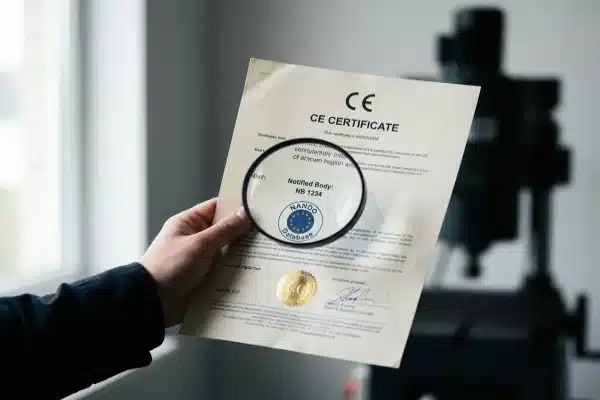
Legitimate CE verification requires checking the "Notified Body" 4-digit code against the European Commission’s NANDO database. Reject certificates only covering individual components like PLCs. You must demand a Declaration of Conformity for the full machine assembly under Directive 2006/42/EC, specifically referencing the EN 422 blow molding safety standard.
The "Component vs. System" Trap
One of the most common tricks we see in the industry involves the scope of the certification. A supplier might send you a valid CE certificate, but if you read the fine print, it only applies to the Siemens PLC or the Delta servo drive installed inside the cabinet. This is useless for your safety compliance.
You are buying a machine, not a box of parts. You must demand a Declaration of Conformity (DoC) for the entire machine assembly. This document must specifically reference Directive 2006/42/EC (Machinery Directive) et le EN 422, which is the specific safety standard for blow molding machines. If the supplier hesitates or says the component certificates are "enough," they are not compliant.
Auditing the Notified Body
A genuine CE mark for hazardous machinery is often accompanied by a 4-digit number (e.g., CE 1234). This identifies the "Notified Body" that authorized the certification. Many dubious suppliers use expired numbers or numbers belonging to unrelated testing labs.
You should verify this immediately using the NANDO database (New Approach Notified and Designated Organisations). If the number doesn’t exist, or if the organization is not authorized for machinery, the certificate is fake.
The "Ghost" Character Test
Compliance isn’t just about paper; it’s about the machine’s interface. When we program our HMI (Human Machine Interface) for European clients, every single error code must be translated.
Ask the supplier to show you the "Alarm History" page on a live machine via video call. Toggle the language to English. If you see "Ghost" Chinese characters remaining in the background logs or error descriptions, it is a clear sign they simply switched the interface language without localizing the core system. This negligence will make troubleshooting impossible for your local operators.
| Document / Feature | Fake/Domestic Supplier | Genuine Exporter |
|---|---|---|
| CE Certificate Scope | Components only (Motor, PLC) | Full Machine Assembly (EN 422) |
| Notified Body | Missing or Expired Number | Verifiable on NANDO Database |
| HMI Alarm Log | Mixed Chinese/English | 100% Translated English |
| Safety Logic | Software-based only | Hardwired Safety Relays (Pilz/Sick) |
Can the supplier provide contactable references from current European customers?
We know that a list of logos on a website means very little in today’s digital age. When we work with new partners, we encourage them to speak with our long-term clients because trust is built on consistency. If a supplier blocks you from speaking to their past customers, they are likely hiding unresolved technical failures.
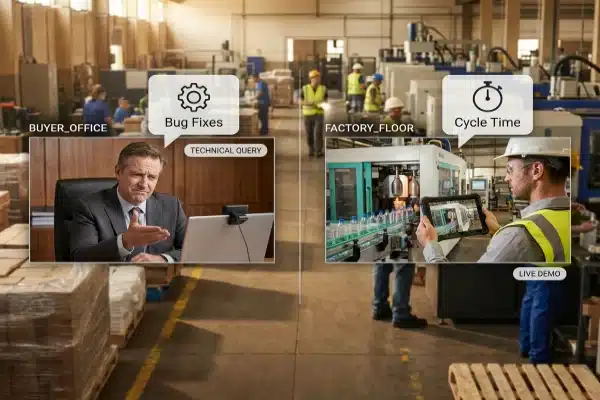
Validating references involves more than an email introduction. You must independently verify the contact on LinkedIn and ask specific "cross-interrogation" questions about after-sales response times and software bug fixes. Legitimate references will share technical critiques, while fake "friendly" distributors will only offer vague, positive praise without specific details.
"Bill of Lading" Forensics
Suppliers can lie, but customs data does not. Before you even ask for a reference list, use third-party platforms like Panjiva, ImportGenius, or Volza. Search the supplier’s legal name.
If they claim to be a major exporter to Germany and Italy, but the data only shows shipments to Vietnam, India, or Nigeria, their "European experience" is fabricated. We have seen companies claim extensive EU networks while having zero records of shipments crossing European borders.
The Reference Cross-Interrogation
When a supplier does provide a contact, do not just ask "Is the machine good?" That invites a polite, useless answer. You need to use what we call "cross-interrogation" techniques to verify if the reference is a real factory owner or just a paid friend.
Legitimate factory owners have scars. They have faced issues and solved them. Ask specific, painful questions:
- "How long did it take them to fix the last software bug?"
- "What is their procedure when a servo drive fails?"
- "Can you send a photo of the machine running in your plant right now?"
The "Service Partner" Contract
A major differentiator for us is our ability to support machines remotely or via local partners. Instead of asking "Do you have service?", demand to see a signed Service Agreement with a third-party engineering firm in Europe.
Legitimate exporters do not fly technicians from China for every minor sensor failure; that is too slow and expensive. They contract local freelancers or agencies. If they cannot show you a contract or name a specific local partner, their "global service" is a myth.
Questions to Detect Fake References
| Question Category | Ask the Reference This | Red Flag Answer (Fake/Shill) |
|---|---|---|
| Dépannage | "Tell me about the last technical glitch you had." | "We have never had any problems." (Impossible) |
| Logistics | "Who handled the customs clearance for you?" | Vague answers or "I don’t know." |
| Operation | "What is your average cycle time for [specific bottle]?" | "The machine runs very fast." (No data) |
What proof can they show regarding their experience with European voltage and safety standards?
When we calibrate flight controllers or servo systems for our European orders, we have to completely change our standard setup. Domestic Chinese electricity is different, and simply adding a transformer is a lazy, dangerous workaround. If a supplier tries to sell you a "modified" domestic machine, your energy bills and maintenance costs will skyrocket.
True European-ready machines feature native 400V/50Hz servo motors, not standard Chinese 380V systems masked by external transformers. Verify this by inspecting the electrical schematics for proper grounding and demanding to see the "Alarm History" page to ensure error codes are fully translated, not left in Chinese characters.
Native 400V vs. Transformer Patches
In China, the standard is 380V/50Hz. In many parts of Europe, it is 400V or even higher. A lazy manufacturer will take a standard domestic machine and bolt on a cheap step-up transformer.
Why is this bad?
- Heat & Waste: Transformers generate excess heat and waste energy, reducing the efficiency of an "all-electric" machine.
- Point of Failure: It adds another heavy, expensive component that can fail.
- Space: It takes up valuable floor space.
We build our European-spec machines with native 400V servo drives and motors. This proves we sourced components specifically for the export market rather than repurposing domestic stock. Ask for the "Bill of Materials" (BOM) for the main motors. If the rated voltage is 380V, they are giving you a domestic patch job.
GDPR-Compliant Remote Access
Connectivity is standard on modern machines, but data privacy laws in Europe are unique. We use secure, audited gateways like Secomea or Ewon for remote troubleshooting.
Many Chinese suppliers are unaware of GDPR (General Data Protection Regulation). If they ask to install unrestricted remote desktop software (like TeamViewer) directly onto the machine’s main PC without a VPN or hardware firewall, they are violating EU data privacy standards. This is a massive compliance risk for your company.
The Shipping Mark Spy
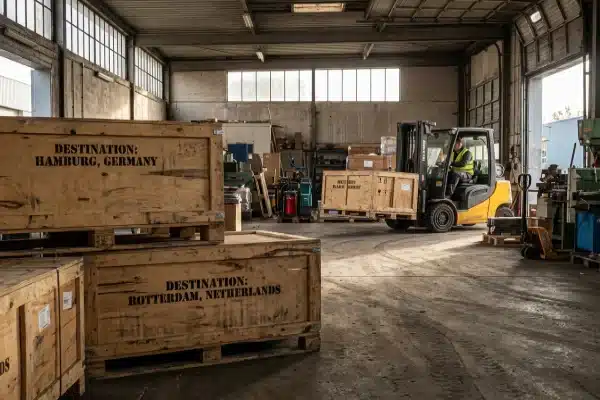
Here is a simple visual test you can do during a factory video tour. Ask the cameraperson to walk to the loading dock or the packaging area. Look at the shipping marks stenciled on the wooden crates waiting to be loaded.
- Legitimate Exporter: You will see names of cities like "Hamburg," "Genoa," or "Rotterdam."
- Domestic Player: You will see Chinese characters or addresses in domestic provinces.
If they claim to be busy exporting to Europe but every crate on the dock is labeled for domestic delivery, they are lying about their current market reach.
Electrical Specification Checklist
| Fonctionnalité | Domestic Chinese Standard | European Export Standard |
|---|---|---|
| Voltage | 380V / 50Hz | 400V / 50Hz (Native) |
| Wire Colors | Chinese GB Standard | EN 60204-1 (EU Standard) |
| Grounding | PE (Protective Earth) | TN-S or TN-C-S Systems |
| Remote Access | Unsecured TeamViewer | GDPR Compliant (Secomea/Ewon) |
How do I confirm their ability to handle logistics and customs clearance for Europe?
Our logistics team fights daily battles with paperwork to ensure smooth delivery, so we know how complex it is. A supplier who thinks shipping to Europe is just "putting it on a boat" will leave you with a machine stuck in customs hell. You need a partner who understands the financial and legal reality of importation.
Test a supplier’s logistics capability by requesting a DDP (Delivered Duty Paid) quote to your factory door. Inexperienced exporters will refuse or only offer FOB terms. Additionally, during a video tour, inspect shipping crates on their loading dock for recognizable European addresses rather than domestic Chinese destinations.

The DDP "VAT" Test
The ultimate test of a supplier’s confidence in their logistics network is the DDP (Delivered Duty Paid) quote. When you ask for DDP, you are asking the manufacturer to take full responsibility for shipping, insurance, import duties, and VAT handling right up to your doorstep.
- Experienced Exporters: We will calculate the freight, check the HS code for duty rates, and provide a quote (or explain clearly why we prefer DAP due to VAT reclamation issues). We understand the process.
- Inexperienced Suppliers: They will panic. They will refuse and insist on FOB (Free on Board) or CIF (Cost, Insurance, Freight) because they have no idea how to handle European customs clearance or VAT numbers.
Documentation Consistency
Customs brokers in Europe are strict. A single digit wrong on an HS code or a missing "Certificate of Origin" can delay your machine for weeks, incurring massive storage fees at the port.
Ask the supplier to send you a redacted set of shipping documents from a previous European shipment. You want to see:
- Connaissement showing a European port.
- Commercial Invoice with a valid EORI number.
- Packing List that matches the invoice.
If they cannot produce this "past work" evidence, you are likely their "guinea pig" for their first European shipment. Do not pay for their tuition.
Line Integration Logic
Finally, logistics isn’t just about the boat; it’s about your floor. We often find that domestic machines are built with conveyors that don’t match European standard heights (e.g., 900mm – 1000mm).
Verify they have the engineering capacity to match your downstream equipment. Ask: "How do you integrate with my existing packer?" If they don’t ask for the packer’s datasheet, they are not planning the integration—they are just shipping a standalone unit that will cause bottlenecks the day it arrives.
Conclusion
Verifying a supplier requires auditing NANDO databases, demanding native 400V components, and cross-referencing shipping history. Don’t trust claims; trust verified data.


0 commentaires