
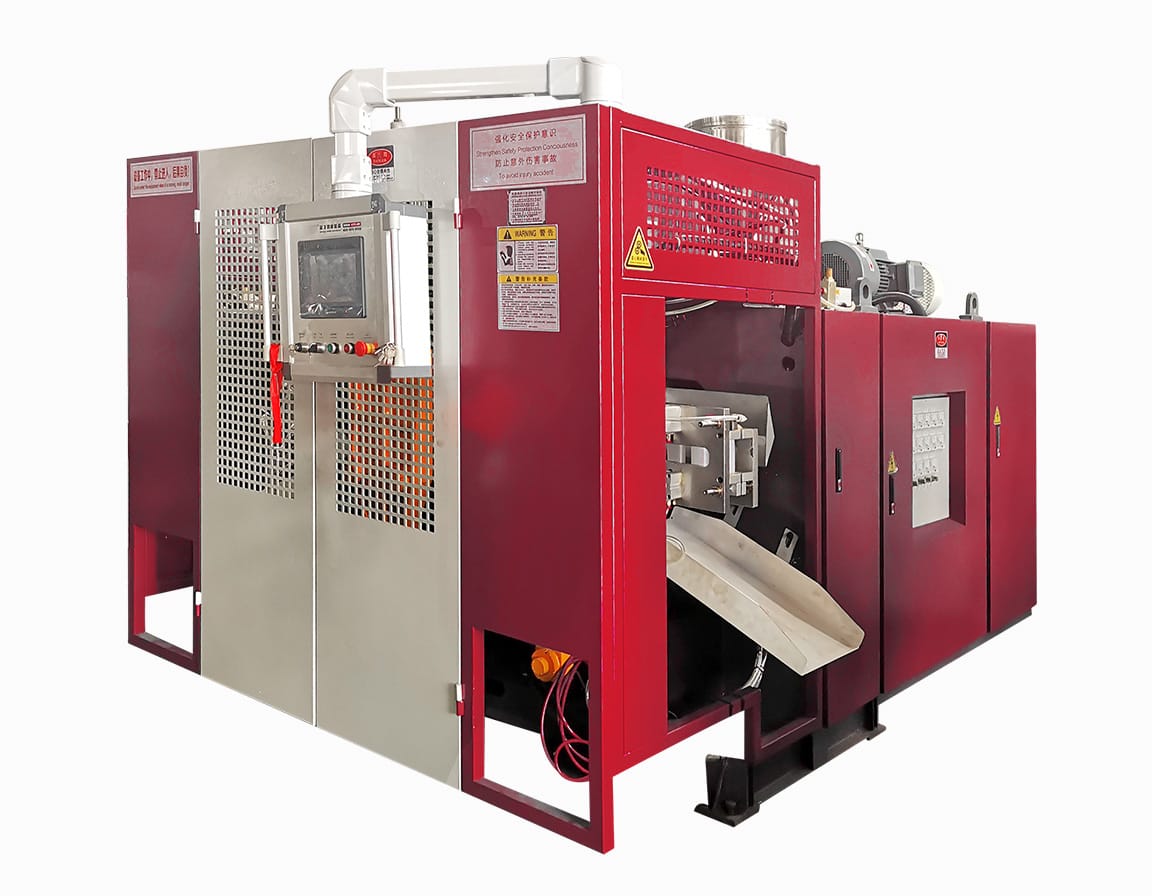
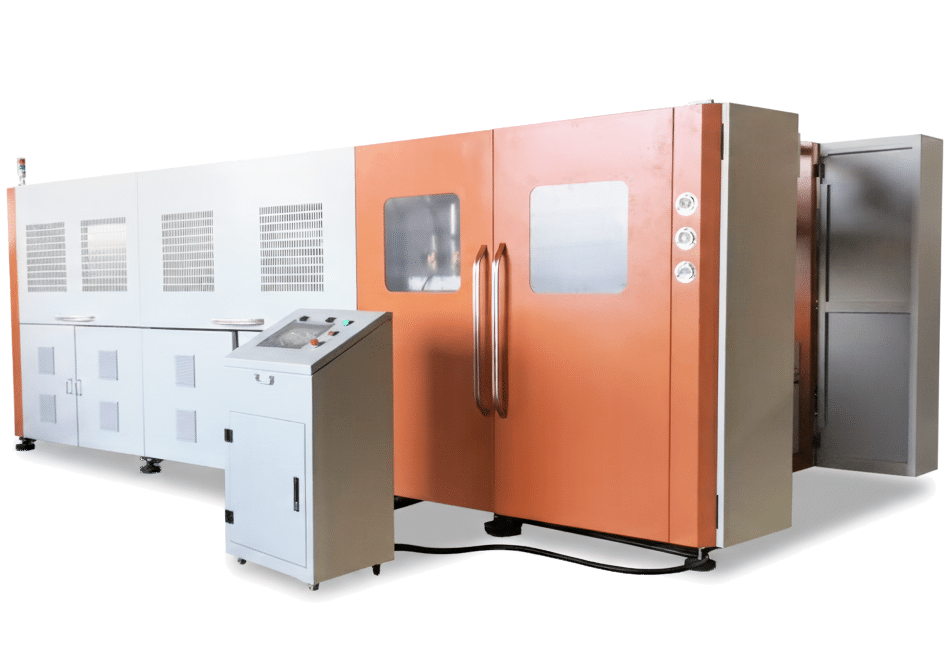
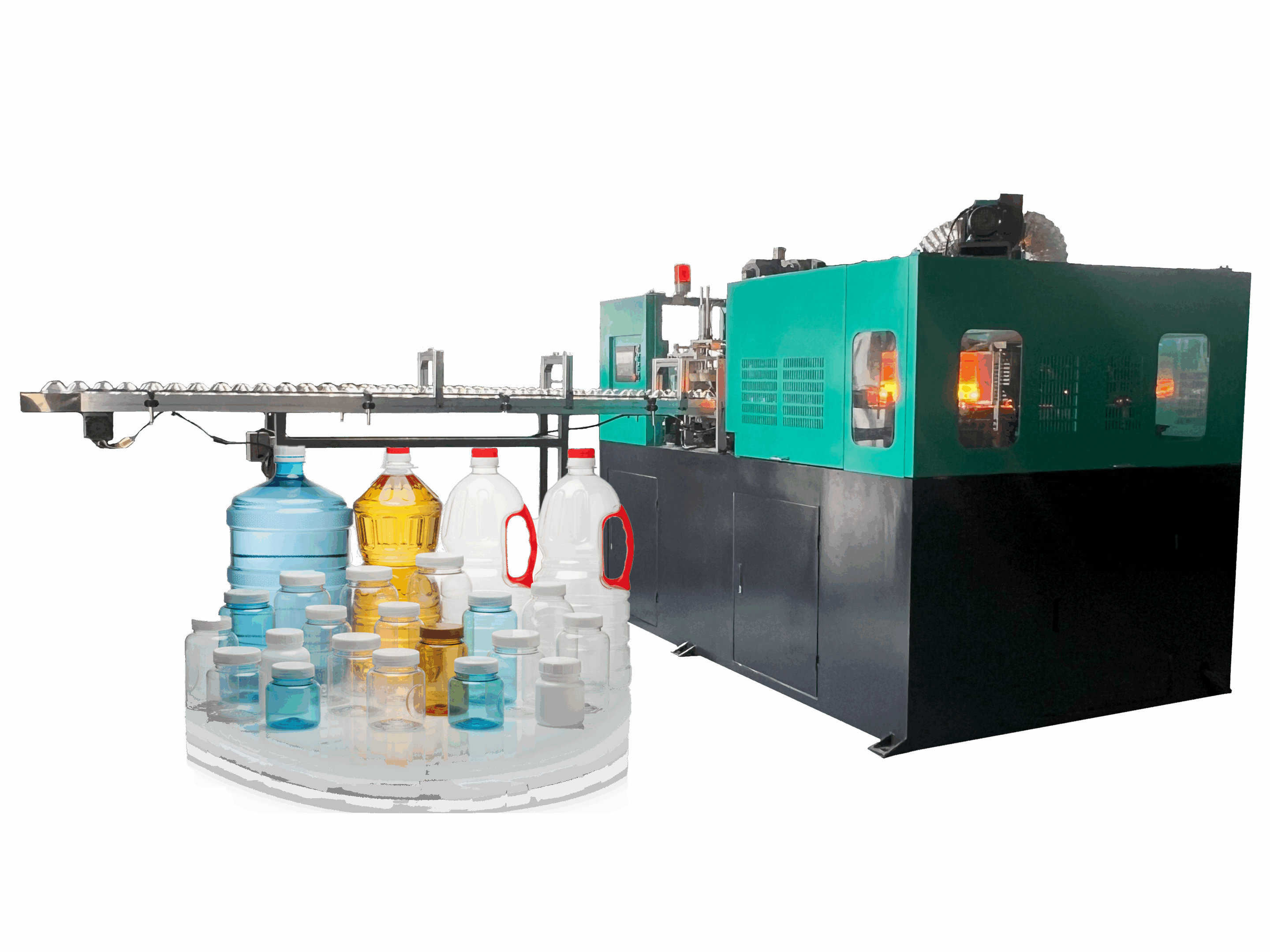
Guide Ultime des Machines de Moulage par Soufflage d'Extrusion : 10 Meilleurs Fabricants en Biélorussie (2025)
Your 2025 guide to the top 10 Extrusion blow molding machine manufacturers in Belarus. Compare pricing, energy efficiency, and local service to find the best vendor.
Choosing the right Extrusion blow molding machine is a major decision for your business. This guide breaks down the top manufacturers available in Belarus, focusing on what matters most in 2025: machine performance, energy costs, local support, and total cost of ownership. I’ll help you understand the options so you can make a smart investment that pays off for years.
Manufacturers At-a-Glance (with Official Sites)
Kautex Maschinenbau — https://www.kautex-group.com
lekamachine — https://lekamachine.com
Bekum — https://www.bekum.com
Techne — https://www.technemachines.com
SMF — https://www.smfglowbal.com
Plastiblow — https://www.plastiblow.it
Hesta — https://www.hesta.de
Jwell Machinery — https://www.jwellchina.com
TONGDA — https://www.tongda-machine.com
Uniloy — https://www.uniloy.com
Why This Matters in 2025
In Belarus, manufacturers are focused on serving both the domestic market and the wider Eurasian Economic Union (EAEU). This requires efficiency and reliability. For 2025, the key decision drivers are energy consumption, machine uptime, and the availability of responsive technical support. With potentially long logistics chains from Western Europe or Asia, having a supplier with strong regional service coverage is critical to avoid costly downtime.
Fast changeovers are also becoming more important as product diversity increases. The ability to quickly switch between producing HDPE milk bottles, household chemical containers, and agrochemical jerrycans allows you to be more agile and responsive to market demands.
Cost and Pricing Signals for 2025 (Extrusion blow molding machine pricing, cost drivers)
Machine prices vary widely. A basic single-station shuttle machine for 5-liter jerrycans might start around 250,000 BYN, while a high-cavitation, all-electric, multilayer machine can easily exceed 2,000,000 BYN. Key cost drivers include the clamping force, number of cavities, extruder size, and especially the complexity of the die head for multilayer applications (like those with an EVOH barrier). Don’t forget to budget for import duties, VAT, logistics, installation, and training, which can add a significant percentage to the final cost.
Energy, Utilities, and Sustainability (all-electric Extrusion blow molding machine, energy efficiency)
While energy prices in Belarus are state-regulated, efficiency is still a major factor in your total cost of ownership (TCO). All-electric machines are becoming the standard for high-volume production of smaller containers due to their lower energy use (kWh per 1,000 bottles) and cleaner, quieter operation. For larger containers made on accumulator head machines, look for hybrid options with servo-hydraulic pumps, which offer better energy efficiency than older, fully hydraulic systems. Good insulation on the extruder and die head is a simple but effective way to reduce wasted energy.
Throughput vs. Flexibility Trade-offs (rotary vs continuous vs accumulator head)
The right machine type depends entirely on your product mix.
• Continuous shuttle machines are the workhorses for the Belarusian market, offering excellent flexibility for small to medium-sized containers like milk bottles, flacons de shampoing, and 5-10 liter jerrycans.
• Rotary wheel machines are built for one thing: speed. If you have a massive, long-term contract for a single type of bottle, a rotary machine offers the lowest cost per unit, but it is not flexible.
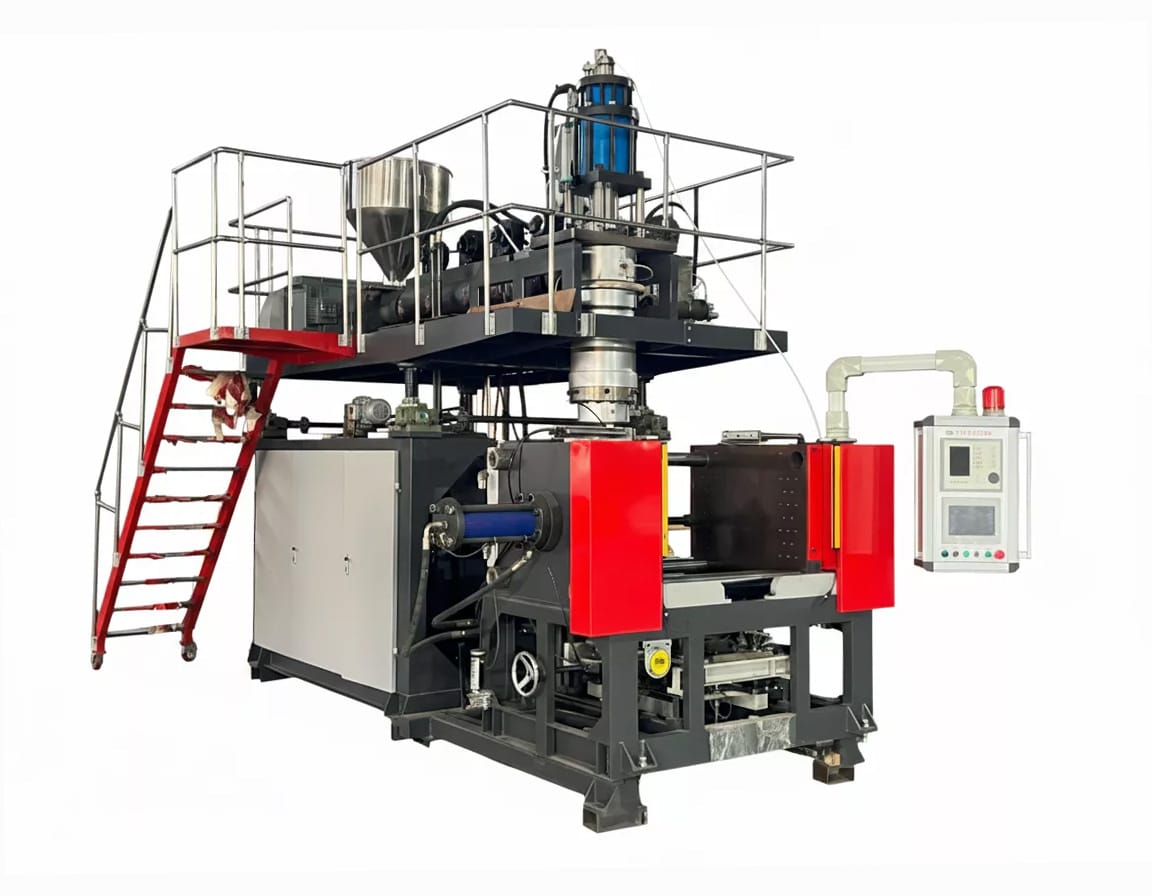
• Accumulator head machines are for large, thick-walled parts. Think 20-liter chemical drums, large automotive components, or floating pontoons. They are slower but necessary for these heavy-duty applications.
Mold, Tooling, and Quick-Change Strategy (quick changeover, parison control, in-mold labeling)
Your machine is only as good as its tooling. Investing in high-qualité molds made from the right materials (like aircraft-grade aluminum or beryllium copper for better cooling) pays off in cycle time and part quality. For high-mix production, ask vendors for video-verified quick-changeover times. Features like quick-connect plates for water, air, and hydraulics, and mold-change carts can reduce downtime from hours to under 30 minutes, which is a huge productivity gain.
Process Control and Quality (wall thickness control, parison programming)
Modern machines offer incredible process control. Look for parison programmers with at least 100 points. This allows you to precisely control the wall thickness of your container, putting plastic only where it’s needed. This saves material, reduces weight, and improves performance (like top-load strength). Stable die head heating and precise blow pressure profiles are essential for producing consistent, high-quality bottles from the first shift to the last.
Materials and Multilayer Barriers (HDPE, PP, PETG, EVOH multilayer bottles)
High-Density Polyethylene (HDPE) is the most common material used in Extrusion blow molding machine, perfect for dairy products, jerrycans, and household chemical bottles. Polypropylene (PP) is used for applications requiring higher temperatures or clarity. For produits sensibles to oxygen, like certain sauces or agrochemicals, you’ll need a multilayer machine capable of co-extruding a thin barrier layer of EVOH. Ensure your material choices align with recycling streams available within Belarus and the EAEU.
Top 10 Extrusion Blow Molding Machine Manufacturers in Belarus
Kautex Maschinenbau (German engineering with regional support)

Kautex is a global leader, known for high-performance machines for industrial packaging and automotive applications. They are a premium choice, focused on technology, efficiency, and reliability. Service and support for Belarus are typically handled through their German headquarters or regional partners, ensuring access to expert technical assistance.
Principaux produits
Their KBB series offers versatile all-electric solutions for consumer packaging, while their KCC and KBS series are robust hydraulic and hybrid machines for industrial containers and automotive parts. They are pioneers in multilayer technology and quick-change systems.
Avantages
Exceptional reliability and build qualité. Advanced process control for material savings. Strong performance in all-electric technology. Good for complex automotive and industrial parts.
Cons
Premium pricing means a higher initial investment. Lead times can be long. Finding local technicians with deep Kautex-specific experience can be a challenge.
Official site: https://www.kautex-group.com
lekamachine (OEM mondial avec couverture en Asie)

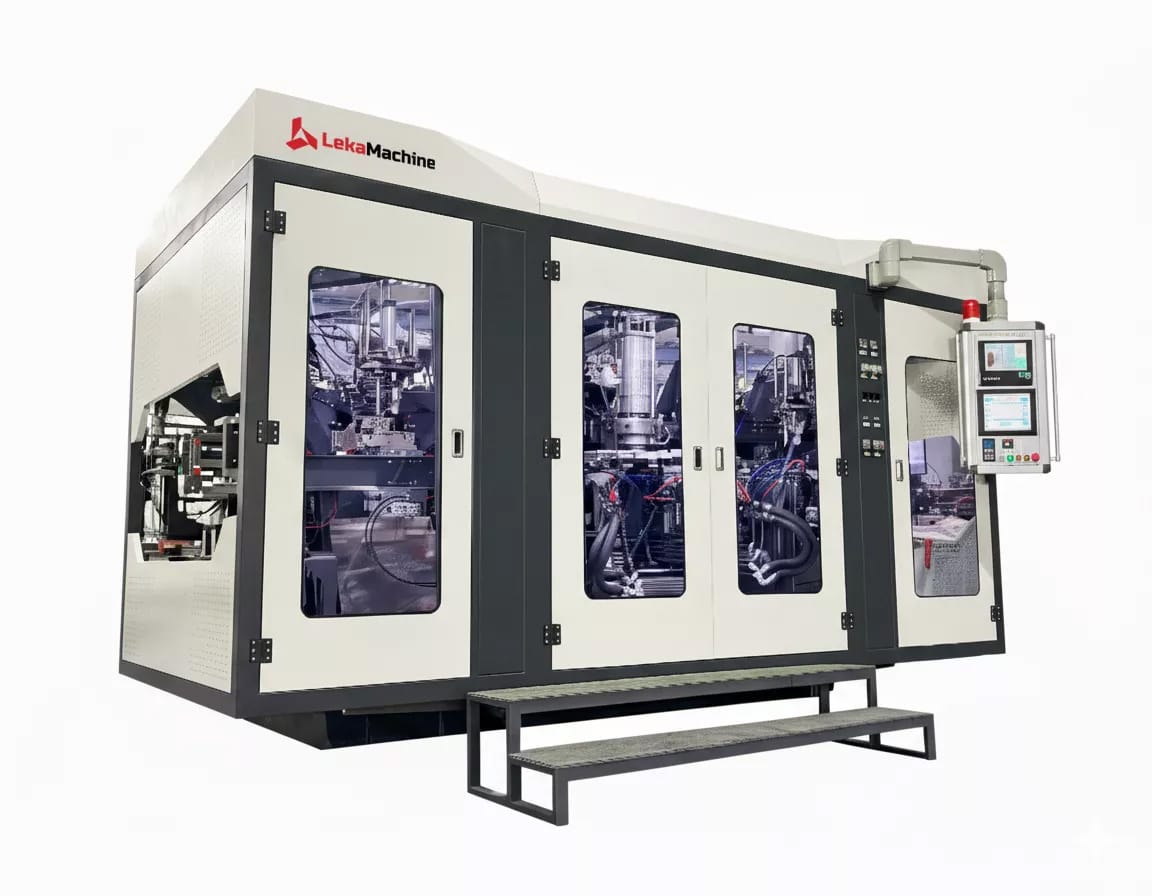
LekaMachine offers a practical balance of performance, cost, and speed. They provide a range of extrusion blow molding machines well-suited for producing everything from small bottles to large industrial drums. For Belarus, support is managed globally, combining remote diagnostics with a network of regional service technicians to provide installation and troubleshooting.
Principaux produits
Their portfolio includes the versatile FORMA Series for general-purpose containers, the high-speed AERO Series for mass production [cite: 37, 42][cite_start], and the heavy-duty TITAN Series for large industrial products like chemical drums and floaters[cite: 2, 4]. [cite_start]They offer reliable hybrid systems that balance power and efficiency[cite: 88].
Avantages
One of the fastest delivery times in the industry, with a 30–90 day delivery lead time being a major advantage. Competitive pricing provides an excellent return on investment. Solid, reliable machine construction. Flexible machine configurations to suit different production needs.
Cons
Relies on a regional service partner model rather than a direct office in Belarus. Brand is less established in the region compared to German competitors.
Official site: https://lekamachine.com
Bekum (German innovator with strong CIS presence)

Bekum is a household name in moulage par soufflage, with a reputation for precision and durability. They have a long history in the CIS region and a strong understanding of the local market needs, particularly for packaging. Their machines are known for their longevity, often running for decades.
Principaux produits
Bekum offers a full range of machines, from the electric EBLOW series for consumer packaging to the hybrid HYBLOW and BA series for industrial containers. They are well-regarded for their handleware technology and multilayer heads.
Avantages
Excellent machine longevity and high resale value. Strong reputation for quality and precision. Good regional support network. C-frame design on some models offers excellent accessibility for mold changes.
Cons
Higher upfront cost compared to Asian manufacturers. Can be over-engineered for simpler applications. Spare parts can be expensive.
Official site: https://www.bekum.com
Techne (Italian specialist in industrial packaging)

Techne is an Italian manufacturer that focuses primarily on high-output machines for industrial packaging, such as containers for lubricants, chemicals, and food products. They are known for building robust and reliable long-stroke shuttle machines.
Principaux produits
Their lineup consists of continuous extrusion shuttle machines, often with multiple cavities for high throughput. They have strong capabilities in producing stackable jerrycans and containers up to 30 liters.
Avantages
Specialized in industrial packaging solutions. Machines are built for continuous, 24/7 operation. Good value for the level of performance and reliability offered. Strong focus on tool and mold integration.
Cons
Less focus on all-electric technology compared to some competitors. Their product range is more specialized, with fewer options for very small or very large containers.
Official site: https://www.technemachines.com
SMF (Polish manufacturer with proximity advantage)

Based in Poland, SMF offers a significant logistical advantage for Belarus. They are better known for stretch blow molding but also produce a range of extrusion blow molding machines. Their proximity means faster delivery, easier access to technicians, and quicker spare parts shipping compared to overseas suppliers.
Principaux produits
SMF offers shuttle machines suitable for producing containers from 50 ml to 30 liters. Their machines are practical, no-frills solutions designed for reliable production of standard packaging items.
Avantages
Excellent proximity to Belarus, reducing shipping costs and lead times. Good, responsive service due to geographical closeness. Competitive European quality at a reasonable price point.
Cons
Less technologically advanced than top-tier German manufacturers. Smaller market share and reputation in extrusion blow molding compared to their PET machine business.
Official site: https://www.smfglowbal.com
Plastiblow (Italian firm focused on all-electric technology)

Plastiblow, an Italian company, was one of the early adopters of all-electric technology in moulage par soufflage-extrusion. They focus on small to medium-sized containers for cosmetics, pharmaceuticals, and food, where cleanliness and precision are key.
Principaux produits
Their core offering is a range of all-electric shuttle machines known for low energy consumption, quiet operation, and suitability for cleanroom environments. Models are available with single or double carriages.
Avantages
Leaders in energy-efficient all-electric technology. Excellent precision and repeatability, ideal for high-value packaging. Clean operation with no hydraulics reduces risk of contamination.
Cons
Higher initial cost than hydraulic or hybrid machines. Limited options for large industrial containers over 30 liters. Service support in Belarus may rely on regional hubs.
Official site: https://www.plastiblow.it
Hesta (Compact and efficient German machines)

Hesta is a German manufacturer known for producing very compact and fast small-format shuttle machines. They are an excellent choice for producing bottles under 5 liters, especially for cosmetics, household chemicals, and pharmaceuticals where floor space may be limited.
Principaux produits
Their product line consists of single and double-station shuttle machines, available in both all-electric and hydraulic versions. Their clever vertical clamping unit design saves a significant amount of factory floor space.
Avantages
Extremely compact machine footprint. Fast dry cycle times for high output of small bottles. High level of German engineering and quality. Good for co-extrusion and view-stripe applications.
Cons
Primarily focused on containers below 10 liters. Premium pricing for their technology. Can be complex to maintain for teams not used to their designs.
Official site: https://www.hesta.de
Jwell Machinery (Large Chinese manufacturer with broad portfolio)
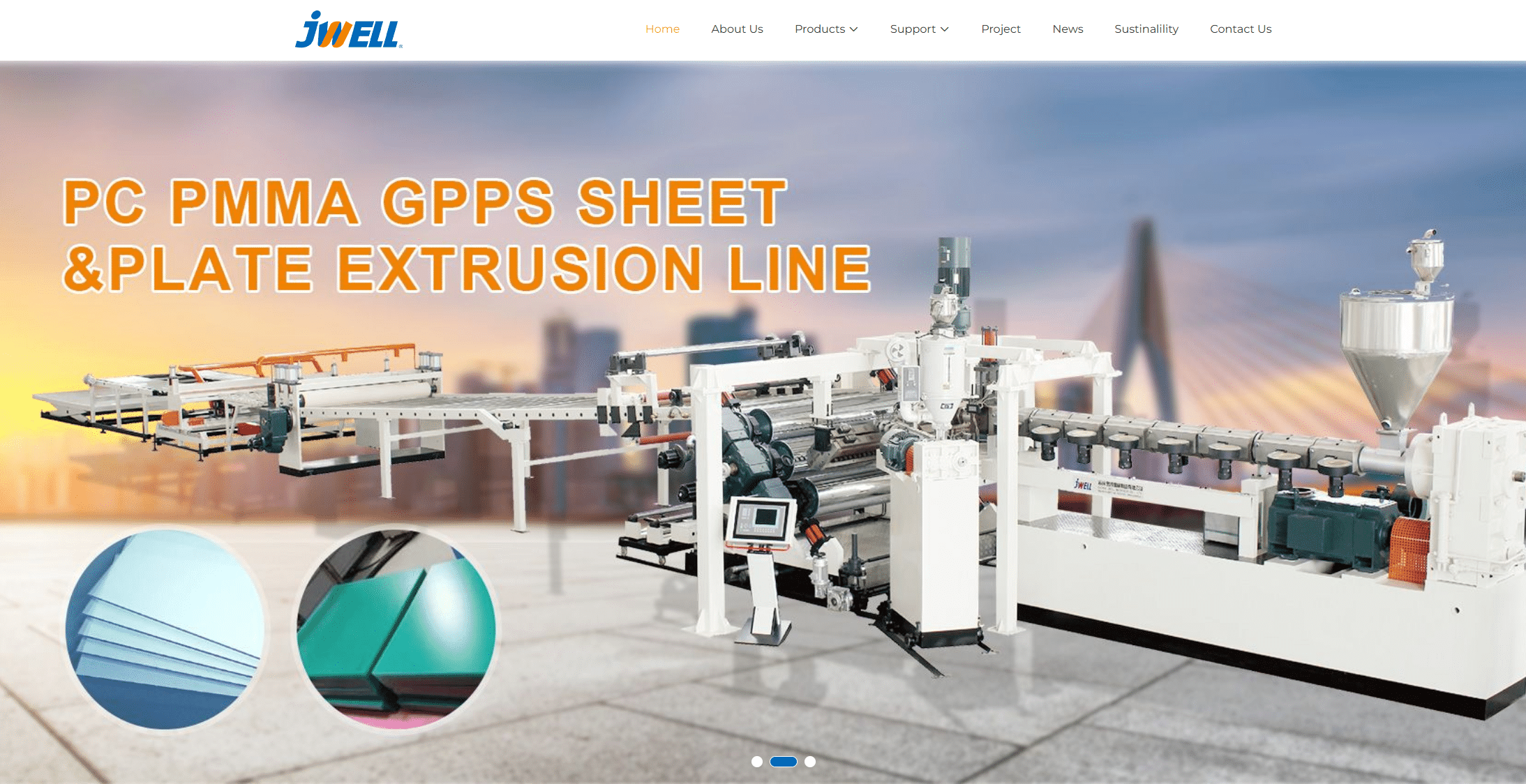
Jwell is one of the largest extrusion machinery manufacturers in China, with a massive portfolio that includes extrusion blow molding machines. They offer cost-effective solutions for a wide range of applications and have a growing global presence, including service support in the CIS region.
Principaux produits
They produce a wide variety of machines, from small bottle lines to large accumulator head machines for making items like pallets and road barriers. They offer standard, reliable technology suitable for general-purpose production.
Avantages
Very competitive pricing. Wide range of machine sizes and types available. Established logistics network for shipping to the CIS region. A viable option for budget-conscious projects.
Cons
Technology is not as advanced as leading European brands. Machine finishing and user interface may be less refined. Consistency of support can vary by region.
Official site: https://www.jwellchina.com
TONGDA (Chinese manufacturer with a focus on value)
TONGDA is another major Chinese manufacturer offering cost-effective blow molding solutions. They have a strong track record in Asia, Africa, and Latin America, and provide practical, affordable machines for companies looking to expand capacity without a massive capital outlay.
Principaux produits
Their range covers shuttle machines for bottles from a few ml up to 30L jerrycans, and accumulator head machines for drums up to 220L. They focus on delivering reliable hydraulic and hybrid machines.
Avantages
Affordable entry price point. Proven machine designs that are relatively simple to operate and maintain. Capable of handling a wide variety of product sizes.
Cons
Longer lead times due to shipping from China. After-sales support relies on remote communication and regional agents. Not at the forefront of energy efficiency or process control technology.
Official site: https://www.tongda-machine.com
Uniloy (Global brand with strong industrial focus)

Uniloy is a well-known brand with American roots, offering a wide range of moulage par soufflage technologies. They are particularly strong in reciprocating screw machines for dairy gallons and industrial accumulator head machines. Their global footprint means they have experience supporting customers worldwide.
Principaux produits
The Uniloy brand is known for its reciprocating screw machines, ideal for high-volume bouteille en PEHD production. They also offer robust accumulator head machines for large parts and shuttle machines for specialty containers.
Avantages
Strong reputation in specific niches like the dairy industry. Robust, long-lasting machine construction. Global parts and service network. Proven technology for industrial applications.
Cons
Can be more expensive than other options. Their European service presence is less dense than German or Italian competitors, which could affect response times to Belarus.
Official site: https://www.uniloy.com
Factors to Consider When Choosing a Extrusion blow molding machine Manufacturer for a Startup (startup manufacturer selection)
For a startup in Belarus, your first machine needs to be reliable, easy to operate, and backed by accessible support. A facteur clé is delivery time; waiting 9-12 months for a machine is a major delay. A manufacturer offering a shorter lead time can get you into production and generating revenue much faster. Also, prioritize machines with intuitive controls and look for suppliers that offer comprehensive training in Russian.
How to Find a Extrusion blow molding machine Manufacturer for Your Startup (how to choose, vendor shortlist, RFQ)
Start by shortlisting 3-4 suppliers who fit your budget and application. Don’t just rely on brochures. Send them your molds (or have them build a pilot mold) and your specific polymer resin. Ask for a live or recorded production run. You need to see them make *your* part. Measure the cycle time, energy consumption (kWh), and scrap rate. This data is far more valuable than any sales presentation.
Domestic vs. Overseas Extrusion blow molding machine Manufacturers (local service vs cost)
There are very few, if any, domestic manufacturers in Belarus. Your choice is between nearby European (German, Italian, Polish) suppliers and overseas Asian (Chinese) suppliers. European machines generally offer higher technology and potentially faster service from regional hubs but come at a premium price. Asian manufacturers provide a significant cost advantage and often faster delivery, but service will rely on remote support and regional partners. A hybrid approach—a cost-effective machine from Asia supported by a strong regional service agent—is often the best balance.
Maintenance, Spare Parts, and SLAs (service coverage, spare parts, MTTR)
Before you buy, ask for a list of critical spare parts and their costs. Confirm where their nearest parts depot is located—having parts available within the EAEU (e.g., in Russia) is a huge advantage that avoids customs delays. A good Service Level Agreement (SLA) should define target response times for technical support and a guaranteed maximum time for a technician to be on-site. Don’t underestimate the value of remote diagnostics, where a technician can log into your machine online to troubleshoot problems instantly.
Installation, Commissioning, and Ramp-Up (FAT/SAT, acceptance criteria)
Your purchase contract should clearly define the acceptance criteria. A Factory Acceptance Test (FAT) should be performed at the manufacturer’s site before shipping. Once the machine arrives, a Site Acceptance Test (SAT) at your facility confirms it meets the agreed-upon performance metrics (e.g., cycle time, scrap rate). Factor local holidays and customs clearance times into your project timeline to ensure a smooth installation and ramp-up.
Pilot Runs and Acceptance Criteria (OEE, kWh per 1,000 bottles)
The best way to verify performance is with a pilot run using your actual production mold and material. Define clear, measurable acceptance criteria in your purchase order. Key metrics should include Overall Equipment Effectiveness (OEE) of over 80%, a specific energy consumption target (e.g., kWh per 1,000 bottles), and a demonstrated changeover time. Visiting a reference customer in the region running a similar machine is also highly recommended.
Total Cost of Ownership and ROI Modeling (TCO calculator, payback model)
The purchase price is just the beginning. To understand the true cost, you need to model the Total Cost of Ownership (TCO) over 5-7 years. Your model should include the initial capital cost, shipping and installation, energy costs (using your local BYN per kWh rate), routine maintenance and spare parts, and labor. A more efficient but more expensive machine might have a much faster payback period than a cheaper, less efficient one.
Operator Training and Change Management (HMI standardization, SOPs)
A modern machine is only effective if your team can operate it properly. Ensure the supplier provides comprehensive training in Russian. A good Human-Machine Interface (HMI) with recipe storage allows you to save settings for each product, ensuring consistency across different shifts. Develop clear Standard Operating Procedures (SOPs) for machine setup, operation, and mold changes.
Digital Connectivity and Data (remote monitoring, MES/ERP integration)
Modern machines are data hubs. They can provide real-time information on production counts, cycle times, scrap rates, and energy usage. Remote monitoring allows you or the manufacturer to view the machine’s status from anywhere. For larger operations, ask about integrating the machine with your Manufacturing Execution System (MES) or Enterprise Resource Planning (ERP) software to automate data collection and production scheduling.
Case Studies and Benchmarks (before/after energy savings, changeover, OEE)
• A Belarusian dairy producer replaced an old hydraulic shuttle machine with a new all-electric model. They reduced energy consumption per bottle by 40% and increased output by 15% due to faster, more consistent cycles.
• A manufacturer of agrochemical containers invested in a machine with a quick-change system. They reduced their average mold changeover time from 4 hours to just 45 minutes, allowing them to take on more small-batch orders profitably.
• By upgrading to a machine with a 100-point parison controller, a company producing 5L jerrycans reduced the average container weight by 8% without sacrificing top-load strength, saving thousands of BYN in material costs annually.
RFQ Checklist and Vendor Scorecard (RFQ template, vendor comparison)
When you send out a Request for Quotation (RFQ), be specific. Ask for more than just a price. Demand key data points like: energy consumption (kWh) at a specified cycle time, a guaranteed scrap rate, video proof of a mold changeover time, a list and cost of the recommended 2-year spare parts kit, and details on their service and support structure for Belarus. Create a scorecard to compare vendors not just on price, but on performance, TCO, and local support.
Other Options Than Extrusion blow molding machine Manufacturers (contract manufacturing, refurb, alternatives)
Buying a new machine isn’t the only option. For a new product launch or uncertain volumes, you could use a contract manufacturer (toll blow molder) to produce the parts for you. This eliminates capital investment and risk. Another option is to buy a refurbished machine from a reputable rebuilder, which can offer a good balance of cost and performance. Lastly, for containers requiring high clarity or very precise necks, other processes like le soufflage étiré (for PET) or injection blow molding might be more suitable.
Conclusion (prochaines étapes, présélection, pilote, SLA)
The best Extrusion blow molding machine for your business in Belarus is a combination of the right technology, a realistic budget, and, most importantly, reliable local or regional support. Start by defining your product needs, shortlist 3-4 vendors, and demand real-world performance data. Focus on the total cost of ownership, not just the sticker price. A smart investment now will build a strong foundation for your company’s growth.
Liens externes :
- Plastics News – Blow Molding: https://www.plasticsnews.com/topic/blow-molding
- Plastics Technology – Blow Molding: https://www.ptonline.com/zones/blow-molding
- Society of Plastics Engineers (SPE) Blow Molding Division: https://www.blowmoldingdivision.org/
- Extrusion Blow Molding 101: https://www.mjspackaging.com/blog/extrusion-blow-molding-101/
- An Introduction to Stretch Blow Molding: https://kruger.industries/injection-stretch-blow-molding/


0 commentaires