
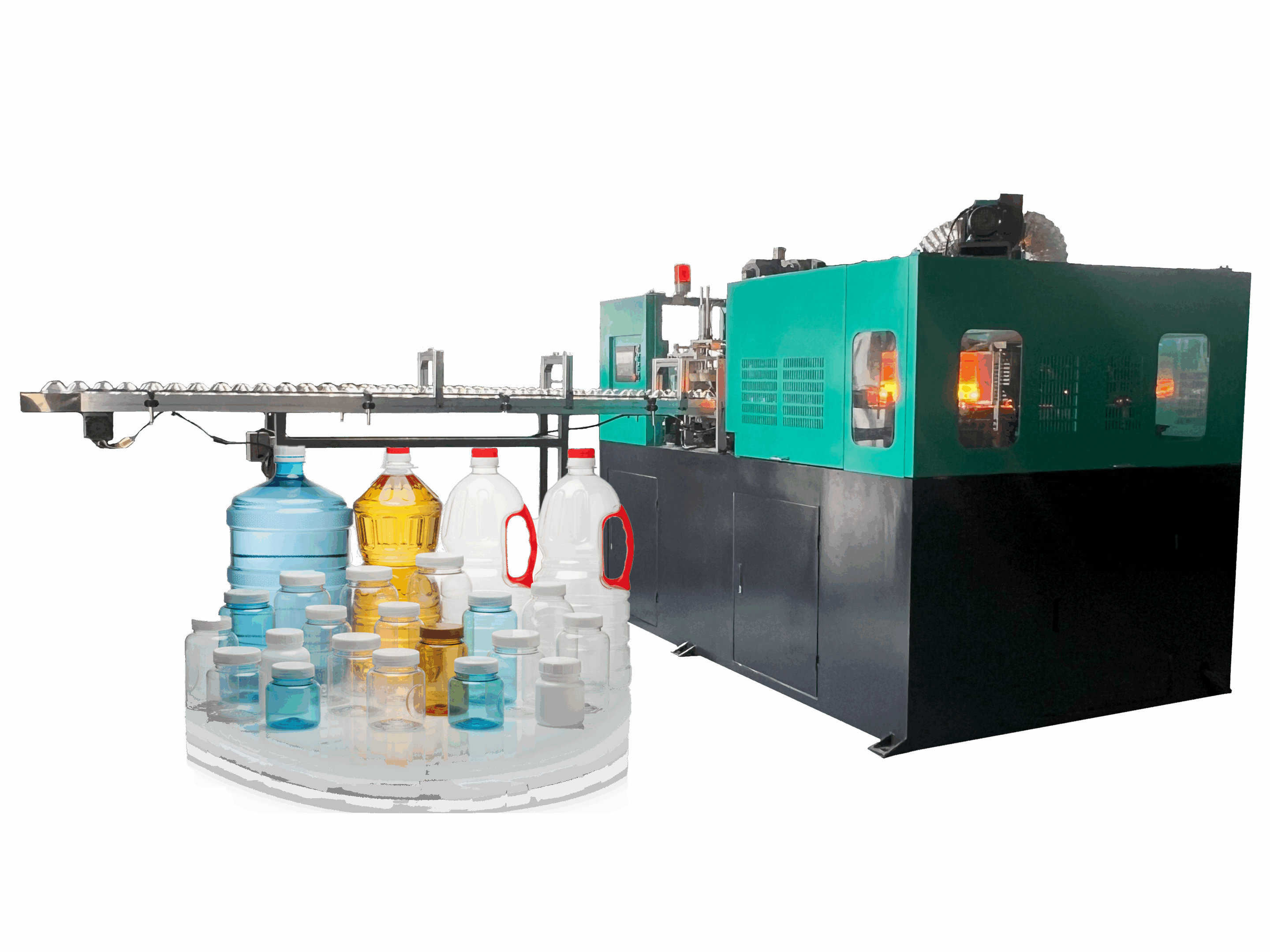
Comment définir clairement vos besoins avant d'acheter une machine de moulage par extrusion-soufflage ?
You are about to write a very large check for a machine that will define your business for the next decade, and you feel that knot in your stomach because you are worried you might miss a small detail that ruins everything. I see this anxiety in my clients every day, but the solution is simple: stop guessing and start defining your exact needs on paper before you ever talk to a supplier.
To define your requirements effectively, you must first lock down your container specifications including volume, weight, and material type, then match these to the machine’s output capacity and cavity configuration. Finally, you need to calculate the Total Cost of Ownership (TCO), including hidden factors like mold transportation, energy consumption, and spare parts availability.

Many buyers rush into asking about prices without knowing exactly what they need the machine to do. This is a mistake. If you do not have a clear list of requirements, you will end up with a machine that is either too weak to handle your workload or too expensive to run profitably. In the following sections, I will walk you through the exact steps I use to help my clients clarify their needs. We will cover everything from product specs to the hidden costs of logistics. Let’s get your requirements sorted out so you can buy with confidence.
Clarify Your Bottle, Container and Material Requirements First?
You might think you know what you want to produce, but vague ideas like “a standard soap bottle” or “a strong jerry can” are not enough for a machine manufacturer to give you the right solution. If you get the physical specifications of your product wrong at the start, no amount of machine tuning can fix the problem later.
Start by defining the exact volume range (e.g., 500ml to 5L), the target weight of the finished part, and the specific plastic material (HDPE, PP, or LDPE). You must also calculate the “shot size,” which includes the extra waste material (flash) needed to form the bottle, as this determines the extruder capacity you need.
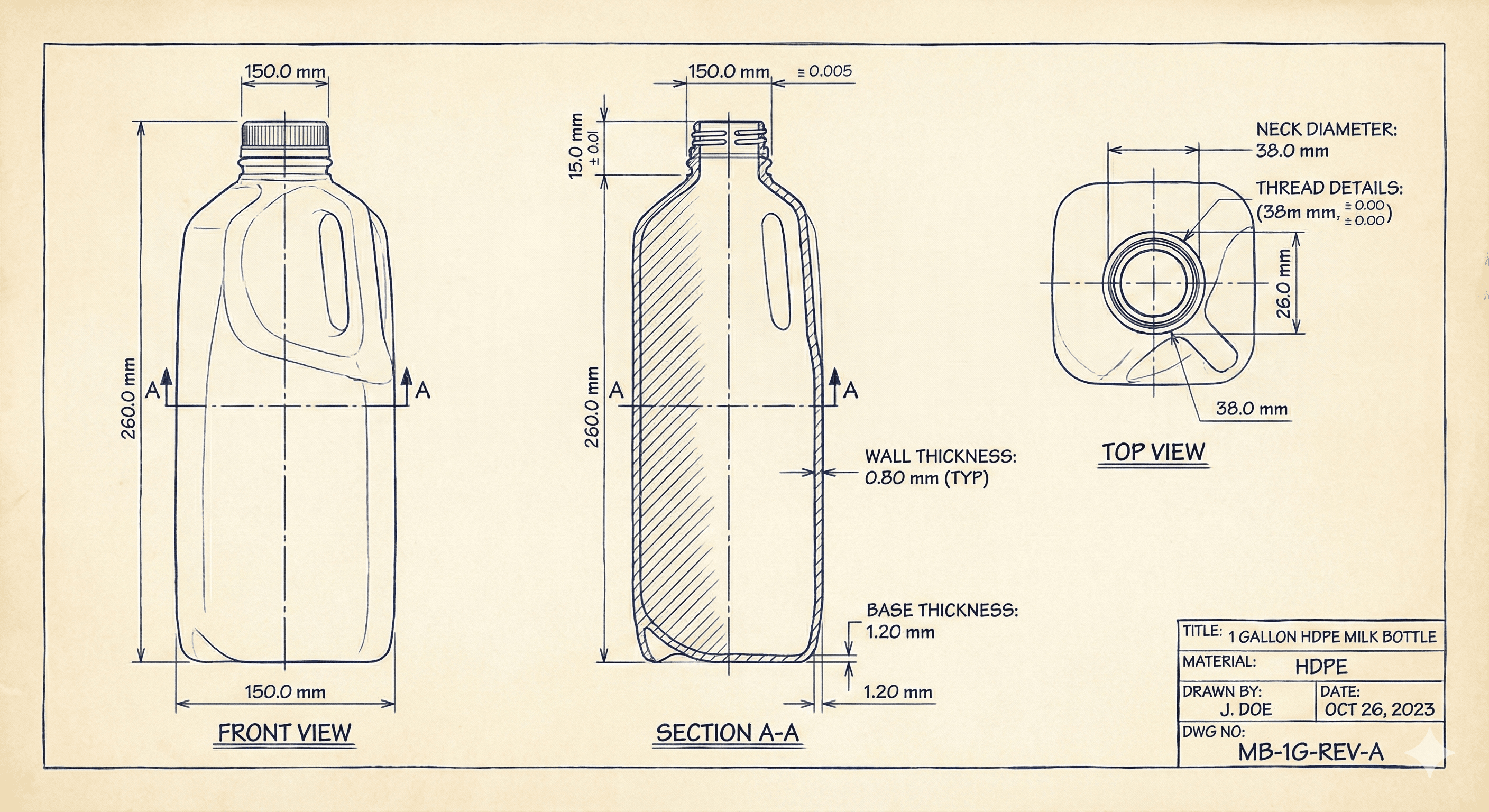
This technical drawing shows a handled HDPE milk bottle used to define dimensions and wall thickness for extrusion blow molding molds.
Define Product Dimensions and Material Characteristics
The first thing I ask my clients is to get specific about dimensions. You need to establish the container volume range and the wall thickness. This is not just a detail; it changes the cycle time. For example, a standard wall thickness of 0.060 inches or thinner usually allows for a fast cycle time of 40 to 50 seconds. However, if you need a thick, heavy-duty container with walls around 0.120 to 0.180 inches, your cycle time could slow down to 180 seconds. That is a huge difference in daily output. You also need to verify the cooling time. Cooling typically accounts for one-third to two-thirds of the total molding cycle. If your product is thick, it stays in the mold longer, and you produce less per hour.
Next, you must choose the right material. Most of my clients use HDPE because it is strong, FDA-approved, and handles temperatures from -75°F to 160°F. But if you need a squeeze bottle, you might want LDPE, which is softer. If you need higher heat resistance up to 170°F, you need PP (Polypropylene). Be careful here: PP is stiffer and requires higher precision in processing than LDPE. You also need to understand the mold surface finish. For HDPE, we often use a slightly rough cavity surface to prevent visual defects like “orange peel,” whereas other materials might need a mirror finish.
Calculate the True Shot Size and Flash
Many buyers forget to account for “flash.” Flash is the excess plastic that gets pinched off the top and bottom of the bottle. Your machine does not just melt the plastic for the bottle; it melts the plastic for the bottle plus the flash. You need to calculate the total shot size. Typically, if you have flash only on the top and bottom (like a standard bottle), you need 25% to 40% more material than the final product weight. If you have flash all around the part (like some complex automotive parts or handles), you might need 50% to 100% additional material. If you do not calculate this, you might buy a machine with an extruder that is too small to fill your molds.
Coordinate Mold Customization Early
I always advise coordinating your mold production with your machine manufacturer. I have seen clients try to save money by buying a mold from a cheap third-party shop, only to find it doesn’t fit the machine perfectly. When you build them together, we can optimize the design. We can use standardized tools to lower costs, often reducing mold costs by 15% to 30%. More importantly, we can confirm the “cavity spacing.” This is the distance between the bottles in the mold. If this spacing is wrong, you get uneven cooling and weak spots in the plastic. You typically want spacing between 50mm and 200mm depending on the machine. Getting this confirmed early prevents expensive rework later.
| Paramètres | Pourquoi c'est important | Typical Values |
|---|---|---|
| Épaisseur de la paroi | Determines cooling time and production speed. | 0.060″ (fast) vs 0.180″ (slow) |
| Flash Percentage | Determines the required extruder capacity. | +25-40% (Top/Bottom) |
| Cavity Spacing | Prevents uneven cooling and product defects. | 50mm – 200mm |
Align Extrusion Blow Molding Machine Configuration with Output, Automation and Budget?
Are you trying to buy a Ferrari for a grocery run, or a bicycle for a cross-country race? If you do not match the machine configuration to your production goals, you will either burn through your budget on features you don’t use, or you will bottleneck your entire factory with a machine that is too slow.
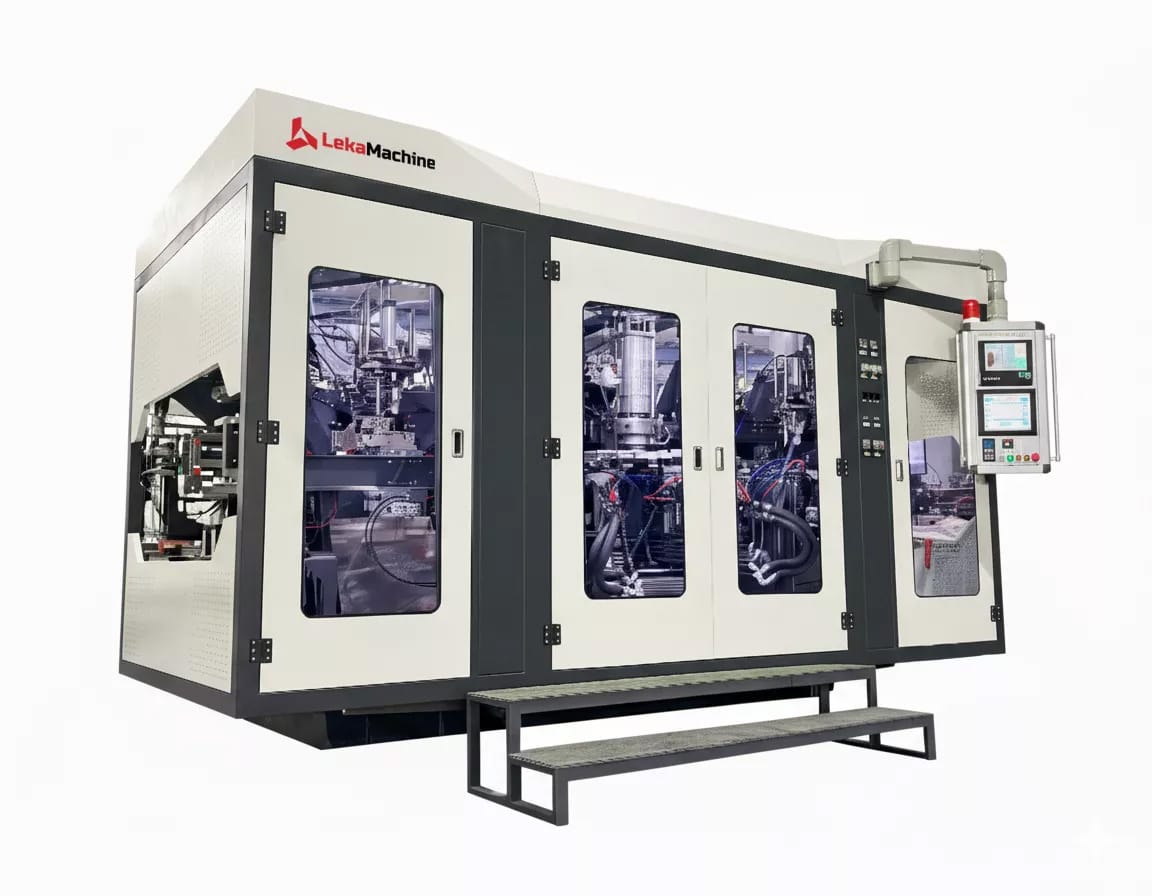
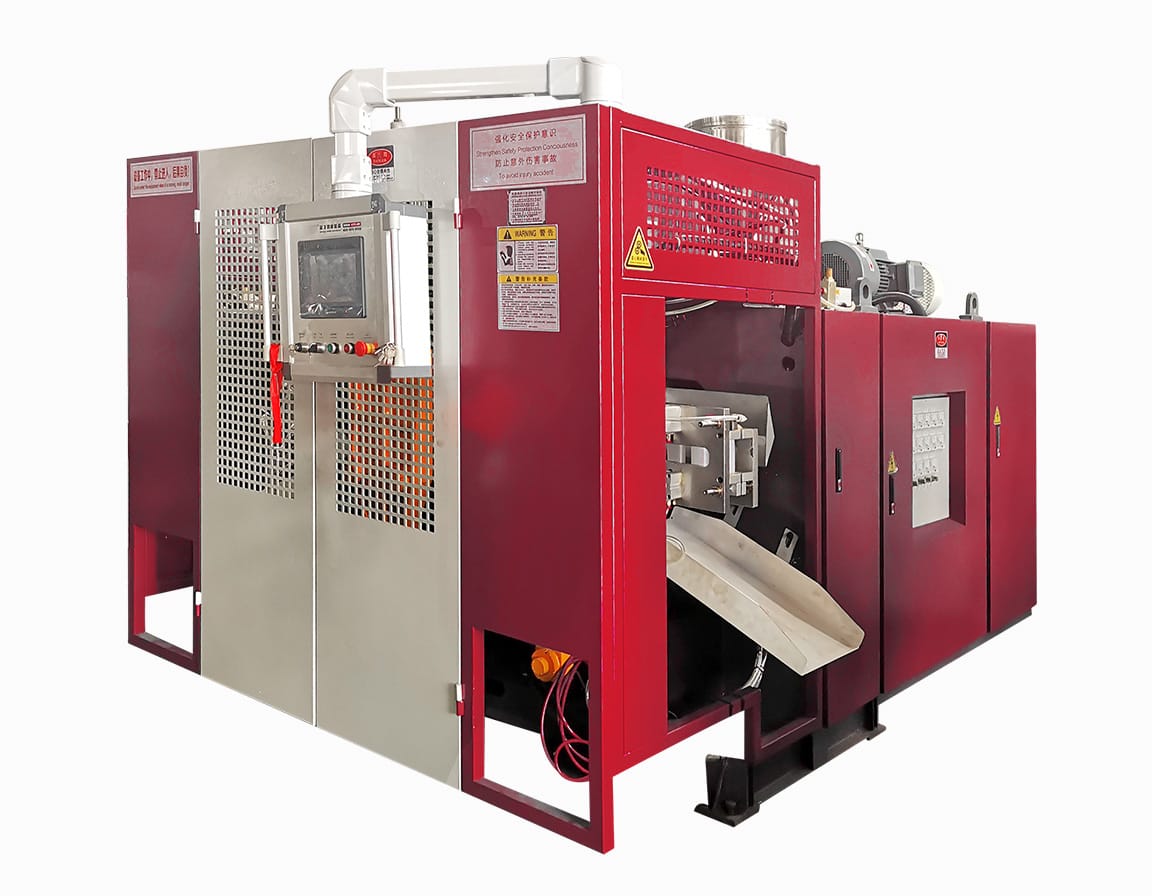
You must determine your required Bottles Per Hour (BPH) to choose between continuous or accumulator head machines. Then, verify critical specs like extruder screw diameter and clamping force, and decide if you need automation features like auto-deflashing to reduce labor costs.

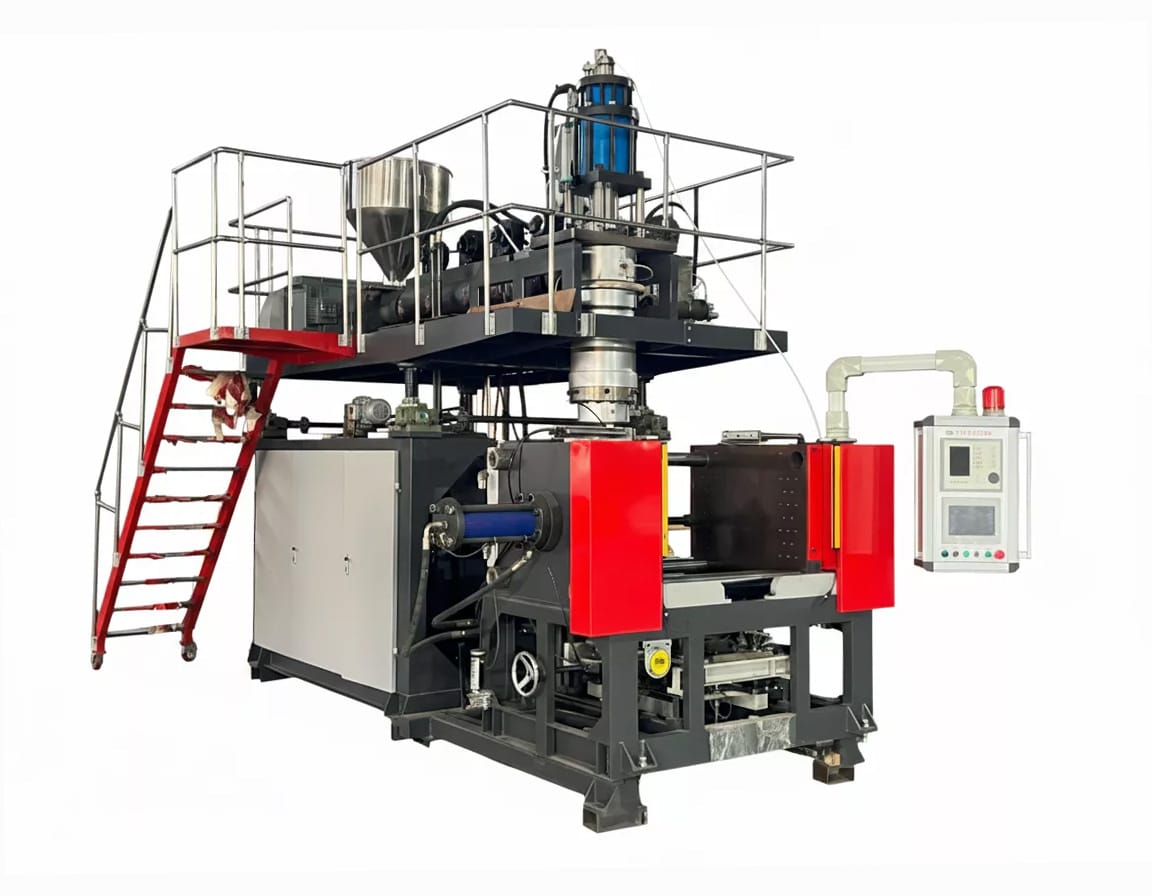
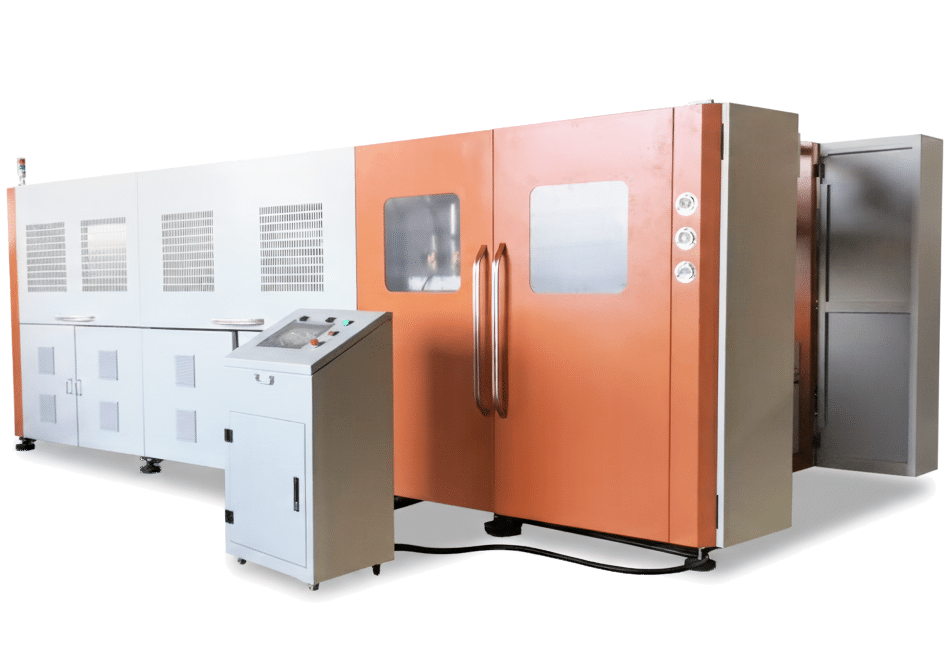
Ce collage montre les têtes d'accumulation et d'extrusion continue d'une machine de moulage par extrusion-soufflage formant des paraisons pour la production de bouteilles en plastique.
Select the Machine Type Based on Volume
First, look at your production numbers. How many units do you need per hour? For large industrial containers (like big water tanks), we use Tête d'accumulateur machines. These can make as few as 45 units per hour, but they can handle massive shots of plastic up to 240 kg. For standard bottles, you look at Continuous Extrusion machines. If your volume is low to moderate, a Single Station machine is fine. If you need higher efficiency, a Double Station machine allows one side to cool while the other side blows, effectively doubling your output. For very high speeds (like 20,000+ BPH), you would look at rotary machines, but those are huge investments.
Check the Extruder and Clamping Power
Once you know the type, look at the guts of the machine. The extruder is the heart. You need to check the screw diameter and the length-to-diameter ratio (L/D). You want to estimate the extruder output at about 80% of its maximum speed. You do not want to run a machine at 100% all day; it wears out faster. Also, check the plasticizing capacity (kg/h). Can it melt enough plastic for your cycle time? Next, check the clamping force. This is measured in kilonewtons (KN). The clamp has to be strong enough to keep the mold closed against the air pressure blowing inside. If the clamp is weak, your bottles will have ugly seams or varying dimensions.
Parison Control and Automation
One feature I tell everyone to get is Parison Thickness Control. This allows you to control the thickness of the plastic tube (parison) at different points (from 100 to 300 points) as it drops. This creates a bottle that is strong at the corners but not wasteful in the middle. It saves a lot of material cost over time. Finally, plan for automation. Do you want a guy standing there with a knife trimming plastic off every hot bottle? Probably not. An automatic deflashing system removes that excess material right in the machine. It increases the initial price, but it pays for itself by reducing labor and ensuring consistent qualité. If you are doing complex containers, you might also need multi-layer extrusion capabilities, which adds more extruders to the machine setup.
| Fonctionnalité | Meilleur pour | Bénéfice |
|---|---|---|
| Tête d'accumulateur | Large containers (bidons Jerry, drums) | Handles heavy shots of plastic. |
| Double Station | High volume small bottles | Doubles output without doubling space. |
| Contrôle de Parison | All qualité bouteilles | Saves material, ensures uniform wall thickness. |
Set Clear Expectations on After-Sales Service, Spare Parts and Total Cost of Ownership?
The sticker price on the invoice is just the entry fee to the game. The real cost of a machine comes later—when it consumes power, requires maintenance, or breaks down and you are waiting for a part from the other side of the world while your factory floor sits silent.
To understand the real cost, you must calculate the Total Cost of Ownership (TCO) by adding up energy consumption, installation fees, and the often-overlooked cost of mold transportation. You also need to confirm specific regulatory compliance and the availability of local technical support to minimize downtime.
Calculate the Hidden Costs
Let’s talk about money beyond the machine price. A small machine might cost $50,000, while a large one is $500,000. But that is not your total cost. First, installation and setup can run you another $10,000 to $50,000 depending on complexity. Then there is electricity. A mid-sized machine draws 50 to 100 kW. Over a year, that electricity bill could be $10,000 to $30,000. You need to check the cooling system specifications too—how much water flow (m³/h) does it need? If your factory chiller isn’t big enough, you will have to upgrade your infrastructure, which is another hidden cost.
One specific expense people always forget is mold transportation. Molds are heavy chunks of steel. Large multi-cavity molds can weigh several tons. If you are importing from Asia, ocean freight for these molds can cost $5,000 to $20,000. Plus, they need special packaging (custom wooden or steel frames) which costs another $2,000 to $8,000. Always ask for a CIF (Cost, Insurance, and Freight) price so you see these numbers before you sign the contract.
Compliance and Spare Parts
You need to define your compliance requirements. Are you making food containers? Then you need FDA-approved materials and a machine that doesn’t leak hydraulic oil onto the product. You might need CE marks or ISO 9001 certifications. Premium machines often include these, which justifies a higher price because it lowers your risk of being shut down by an inspector. Finally, ask about spare parts. If a heater band burns out, can you get one locally, or do you have to wait two weeks for shipping? I always suggest checking if the machine uses standard parts from brands like Siemens or Schneider. If the machine uses proprietary parts that you can only buy from the fabricant, you are trapped. Ensure you have a support plan in place, whether that is a local technician or robust remote support.
The Value of Local Support vs. Import Savings
This is the trade-off. Machines from Asia can be 40% to 50% cheaper initially. That is a massive saving. But you have to add import tariffs (which can be 25%) and the freight costs I mentioned. Domestic suppliers might be more expensive upfront, but they offer faster support. You have to weigh these options. If you choose an international supplier, like us at LEKAmachine, ensure they provide “door-to-door” logistics service and have a clear process for remote engineering support. This bridges the gap and allows you to enjoy the cost savings without the logistical nightmares.
Conclusion
Defining your requirements is the most profitable work you will do before buying a machine. By locking down your product specs, matching them to the right machine configuration, and calculating the true TCO including logistics, you protect your investment. Do not guess; calculate, define, and then buy.
Mon rôle
I am Slany Cheuang, the Technical Sales Manager at LEKAmachine. Based in China, I help businesses around the world navigate the complexities of normes.. My job is to bridge the gap between your production needs and the right machinery, handling everything from sourcing to door-to-door logistics.
My Target Audiences
I write for factory owners, procurement managers, and production directors in the Food, Beverage, and Household Chemical industries. Whether you are an established OEM looking to expand capacity or a growing brand bringing production in-house, my insights are designed to help you make smart, profitable equipment decisions.


0 commentaires