
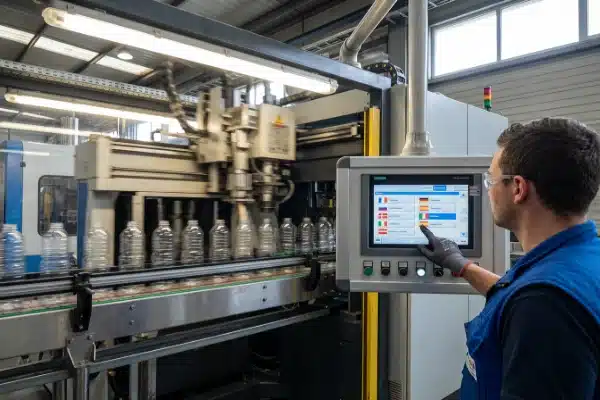
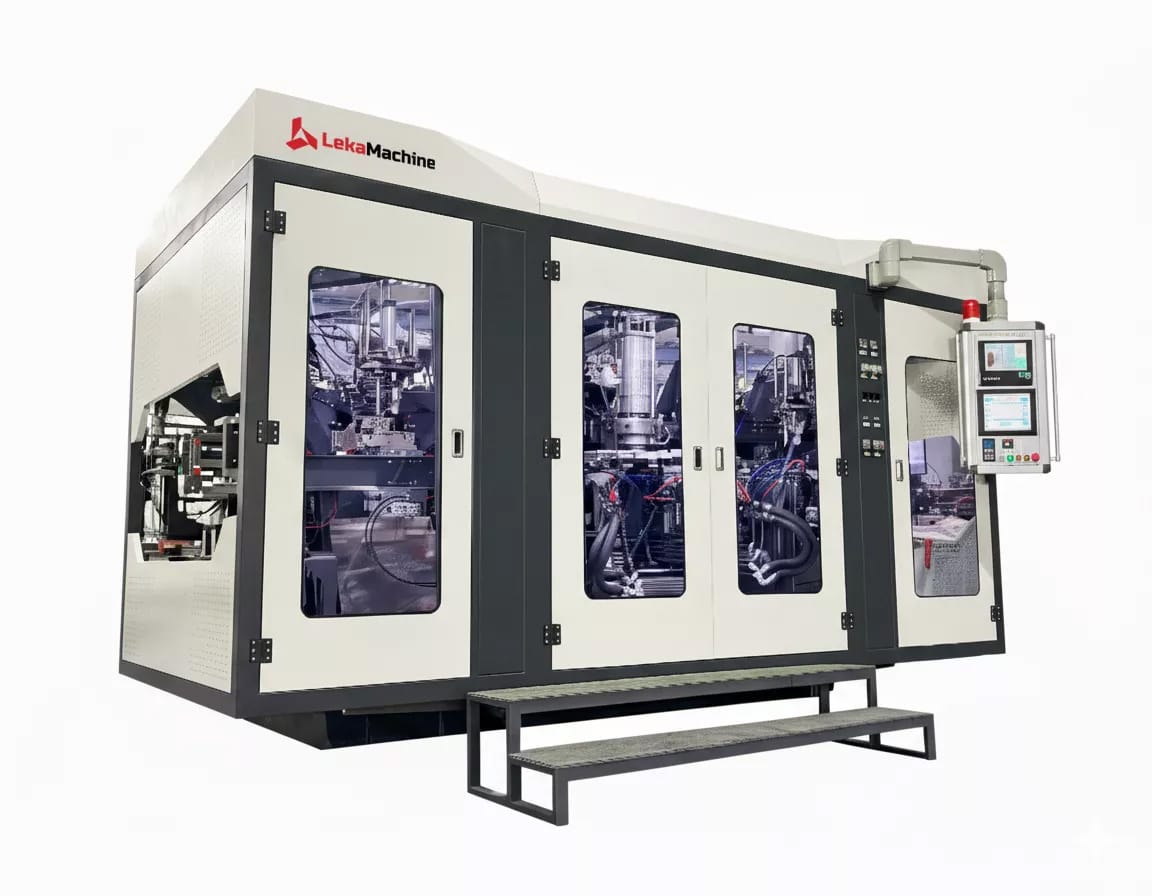
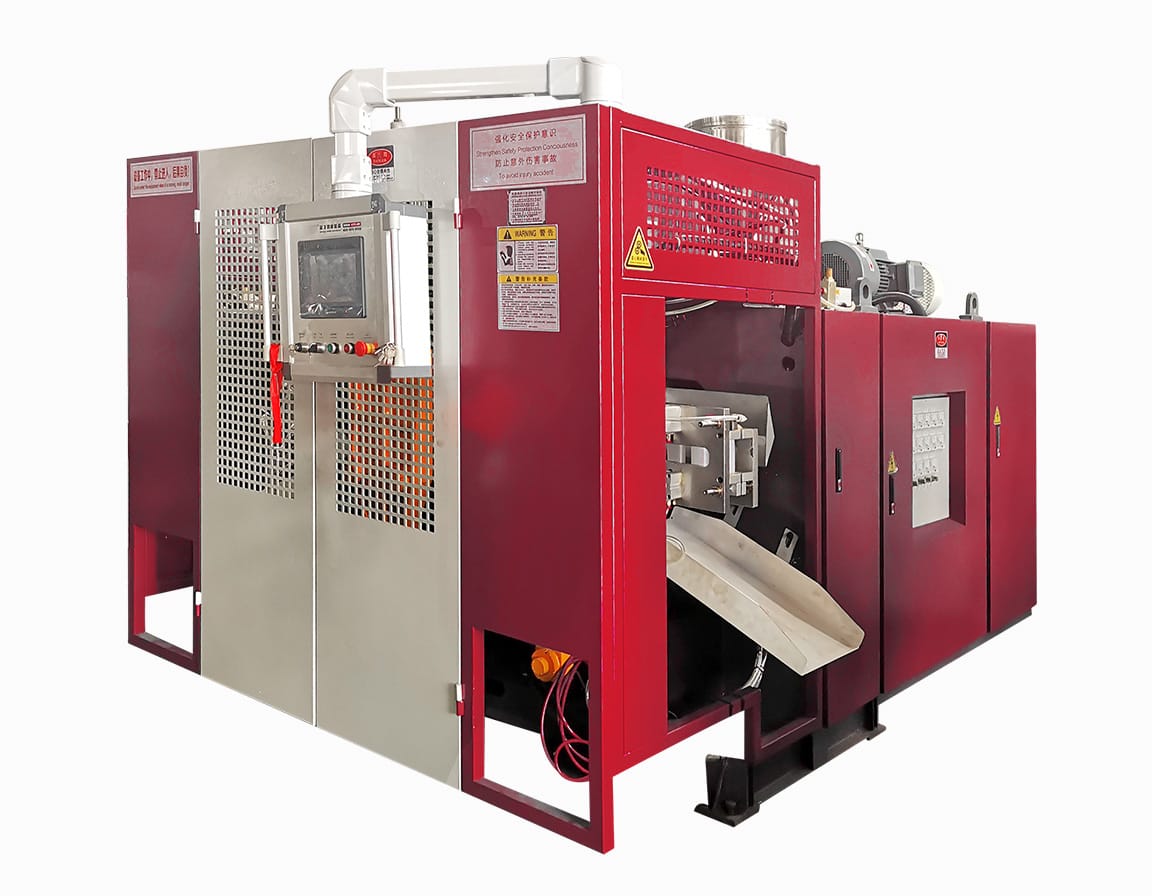
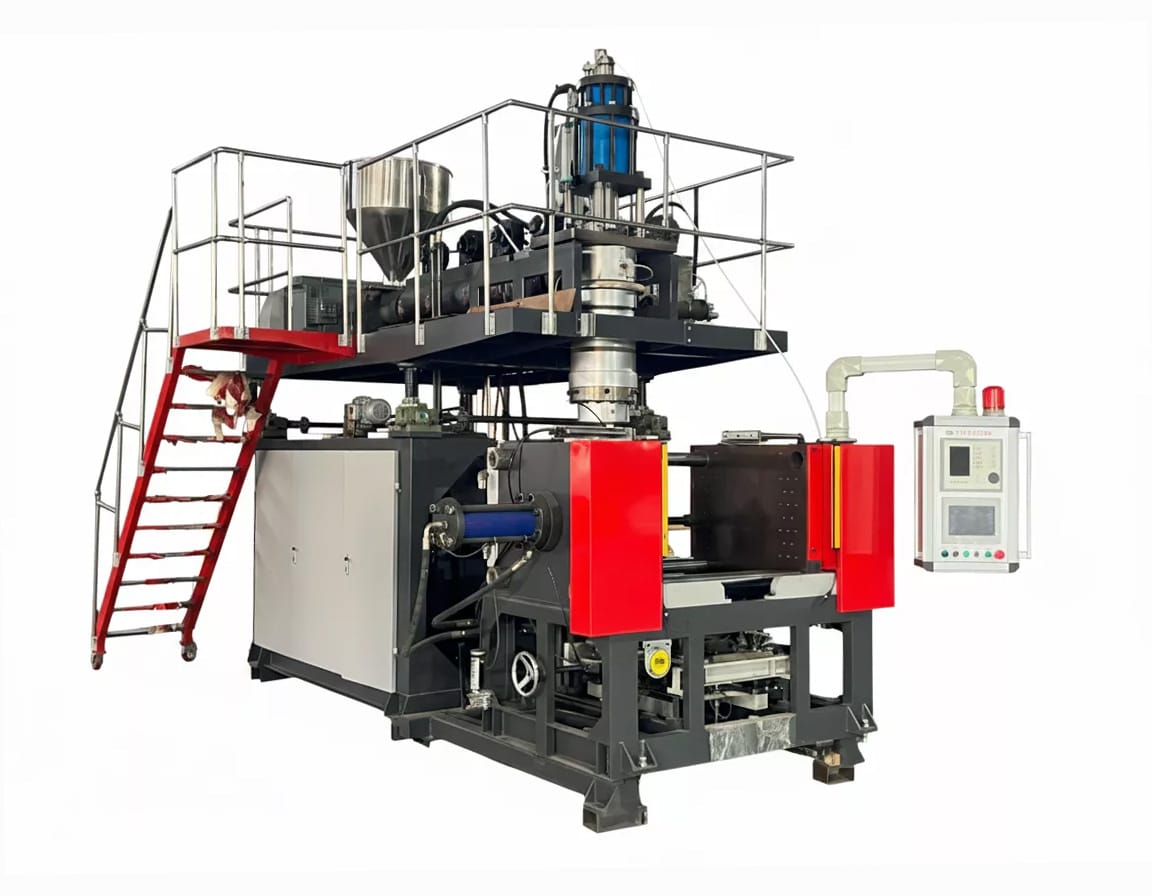
# Top Stretch Blow Molding Machine Manufacturers for Afghanistan (2026)

**Author:** Slany Cheuang, Technical Sales Manager, LEKA Machine

## Quick summary (for busy buyers)

- This guide focuses on **stretch blow molding (SBM/ISBM) for PET bottles** used in water, CSD, juice, edible oil, and selected hot-fill formats.
- Built for **PET bottle producers, procurement managers, and engineering managers in Afghanistan** who need a practical shortlist and RFQ checklist.
- Afghanistan is a **100% import-dependent SBM market**; selection often depends on **remote support readiness**, **power fluctuation tolerance**, and **distributor logistics**.
- The shortlist below is **not ranked**; it’s listed in **alphabetical order** so you can compare suppliers using FAT evidence, utilities sheets, and documentation.
- This guide is written by LEKA Machine. **LEKA is included in the shortlist as a reference option; buyers should verify fit via RFQ evidence.**

## Table of contents

- [Scope and process boundary (SBM only)](#scope-and-process-boundary-sbm-only)
- [How we evaluate manufacturers (transparent scoring)](#how-we-evaluate-manufacturers-transparent-scoring)
- [Shortlist: 10 manufacturers to consider for buyers in Afghanistan](#shortlist-10-manufacturers-to-consider-for-buyers-in-afghanistan)
- [Decision shortcuts (scenario-based)](#decision-shortcuts-scenario-based)
- [RFQ checklist (copy/paste)](#rfq-checklist-copy-paste)
- [Recommended next steps](#recommended-next-steps)
- [FAQ](#faq)

## Scope and process boundary (SBM only)

**Stretch blow molding (SBM/ISBM)** produces **PET containers** by reheating a PET preform, stretching it with a rod, and blowing it with high-pressure air inside a mold. It is commonly implemented as **2-step reheat stretch blow molding** (preforms supplied externally, then reheated and blown) or **1-step ISBM** (injection + blowing in one system).

This guide covers SBM/ISBM only and **excludes extrusion blow molding (EBM), injection blow molding (IBM), and other unrelated processes**.

## How we evaluate manufacturers (transparent scoring)

### 1) Bottle quality & process window (30%)

**What to check**
- Oven heat uniformity, zone stability, and how recipes handle preform variation (weight/IV/wall).
- Stretch/blow control stability: material distribution, base/heel definition, neck finish protection.
- Defect modes: haze, pearlescence, base-off, ovality, paneling, gate whitening, inconsistent top load.

**What evidence to request**
- FAT bottle samples across target weights plus a thickness map (defined measurement points).
- Trial report with key setpoints (oven zones, stretch timing, blow curve) and scrap/defect notes.
- Mold cooling concept and base insert approach (especially for heavier bottles or heat-set needs).

### 2) Throughput stability & OEE drivers (20%)

**What to check**
- Stable BPH at your bottle family (not a single “max speed” number).
- Jam points: preform feed, transfer, take-out, air conveyor interface, bottle queue management.
- Downtime drivers: sensor logic, timing, handling of warped preforms, recovery after stops.

**What evidence to request**
- Run log showing stops by category, plus operator interventions for similar bottle sizes.
- Changeover breakdown: what format parts are changed, what is recipe-based, typical time per step.
- Recommended spares for 12–24 months and a preventive maintenance schedule.

### 3) Energy & utilities footprint (15%) (compressor, HP air, oven efficiency)

**What to check**
- HP air demand: pressure range (bar) and consumption (Nm³/h) at your cavities and bottle sizes.
- Oven efficiency: zone control strategy, insulation, and recipe repeatability at your ambient conditions.
- Cooling requirements: mold water flow/temperature and chiller sizing assumptions.

**What evidence to request**
- Utilities sheet covering HP/LP air, power, and cooling water for each bottle format.
- Compressor/dryer recommendation including dew point and filtration requirements.
- Site requirement list with acceptable ambient temperature range and recovery behavior after trips.

### 4) Automation, changeover & operator dependency (15%)

**What to check**
- Operator steps for start-up/shutdown, mold change, preform change, recipe control, and QC sampling.
- Sensor redundancy and stable logic that reduces operator dependency.
- Integration readiness: leak tester, base inspection, conveyors, pack-off, filling interfaces.

**What evidence to request**
- SOP outline and training plan (including remote learning delivery if travel is restricted).
- Video evidence of a real format change and restart sequence after a stop.
- Documentation list: manuals, electrical drawings, PLC backup procedures, spare BOM.

### 5) Service readiness for Afghanistan + documentation (20%)

**What to check**
- Remote-first service model: diagnostics workflow, WhatsApp/video support, spare routing via regional hubs.
- **Voltage stability tolerance**: behavior under power fluctuations and recovery logic after dips.
- Distributor realities: who owns commissioning, escalation, warranty boundaries, and parts stocking.

**What evidence to request**
- Remote support workflow (response pattern, data needed for diagnosis).
- Electrical protection recommendations (stabilizer/UPS scope, surge protection, restart checklist).
- FAT/SAT templates and a punch-list process suitable for remote + local team collaboration.

## Shortlist: 10 manufacturers to consider for buyers in Afghanistan

**Method:** Alphabetical order (not ranked).

The Afghanistan SBM buyer environment is characterized by **import-only sourcing**, frequent **directory misclassification**, preference for **maintainable configurations**, sensitivity to **grid instability**, and reliance on **remote support**.

### Excel Filtration
**Best-fit applications:** Entry-level PET bottles for water/juice; small-to-mid output where simplicity and maintainability matter
**Typical SBM configurations:** Practical 2-step SBM (semi-automatic to basic automatic). Confirm reheat oven zoning, stretch rod control repeatability, and preform transfer stability for your bottle sizes.
**Service & delivery considerations for Afghanistan:** Verify who provides commissioning support (manufacturer vs partner). Define the remote troubleshooting workflow, minimum spares kit, and logistics path for parts into Afghanistan.
**RFQ questions to ask:**
- What electrical protection package do you recommend for unstable grid conditions (stabilizer/UPS/surge)?
- Provide a utilities sheet (HP air bar + Nm³/h, power, cooling) for our bottle family and target BPH.
- How will remote diagnostics be handled (data required, typical response steps, escalation)?

**Reference video:** https://www.youtube.com/embed/2xGcp_3r2ko
**Contact Us:** https://lekamachine.com/contact/

### KHS
**Best-fit applications:** Beverage lines (water/CSD) where integration discipline, QC, and downstream packaging interfaces are critical
**Typical SBM configurations:** Fully automated 2-step SBM and integrated beverage environments. Confirm format flexibility, stability at target BPH, and the full utilities ecosystem (air/cooling/power protection).
**Service & delivery considerations for Afghanistan:** Often via regional distributors; verify scope: FAT ownership, SAT supervision, spares responsibility, PLC/HMI backup handover, and warranty boundaries for Afghanistan.
**RFQ questions to ask:**
- Who is the contracting service entity for Afghanistan (scope, escalation, and limits)?
- What are the minimum site requirements to sustain quality (air dew point, cooling, ambient limits)?
- What documentation and backups are provided at SAT (electrical drawings, PLC programs, spares BOM)?

**Reference video:** https://www.youtube.com/embed/NmjHXXhkwUo
**Contact Us:** https://lekamachine.com/contact/

### Krones
**Best-fit applications:** Beverage producers scaling lines with strong integration and validation requirements
**Typical SBM configurations:** Integrated 2-step SBM in beverage plants. Validate throughput stability at your formats, changeover strategy, and data capture for acceptance testing (FAT/SAT).
**Service & delivery considerations for Afghanistan:** Confirm distributor coverage model and on-site feasibility. Ensure remote support procedures are explicit, with a spares stocking plan to avoid long downtimes.
**RFQ questions to ask:**
- Which parts must be stocked locally for the first 12–24 months to protect uptime?
- What remote diagnostic stack is supported and what data can the customer export?
- How is performance validated (FAT plan + acceptance criteria + measurement method)?

**Reference video:** https://www.youtube.com/embed/soiGsZj7hn0
**Contact Us:** https://lekamachine.com/contact/

### Laxmi Automation
**Best-fit applications:** Cost-sensitive PET bottle production; small-to-mid output; projects prioritizing maintainability
**Typical SBM configurations:** Practical 2-step SBM. Confirm whether your target is semi-automatic or automatic and how preform handling and reject management are implemented.
**Service & delivery considerations for Afghanistan:** Validate remote engineering support depth and spare parts dispatch route. Confirm how restart/recovery works after voltage dips.
**RFQ questions to ask:**
- Describe recovery behavior after power dips: what resets, what must be re-homed, what safeguards exist?
- Provide changeover steps and typical changeover time for our bottle family.
- Confirm preform compatibility assumptions (neck finish, gate type, weight tolerance, IV range).

**Reference video:** https://www.youtube.com/embed/tAZvl-U9GRc
**Contact Us:** https://lekamachine.com/contact/

### LEKA Machine (lekamachine.com)
**Best-fit applications:** Water/CSD, juice, edible oil; projects needing a configuration matched to utilities, operators, and spares strategy
**Typical SBM configurations:** 2-step reheat stretch blow molding in linear or rotary layouts depending on target BPH. Focus on stable preform handling, oven zoning/recipes, stretch rod repeatability, and right-sizing HP air/cooling for your formats.
**Service & delivery considerations for Afghanistan:** Plan for remote-first support: connectivity requirements, spares kit, and electrical protection for grid fluctuation. Align early on mold/preform supply to reduce compatibility risk.
**RFQ questions to ask:**
- Provide utilities sheet and site requirement list for our bottle family (HP air bar + Nm³/h, power, cooling).
- Define remote commissioning steps and acceptance criteria (FAT/SAT checklist and measurement plan).
- Recommend electrical protection and recovery logic for unstable voltage.

**Disclosure:** LEKA Machine is the publisher of this guide.
**Reference video:** https://www.youtube.com/embed/wUOESdoRlHs
**Contact Us:** https://lekamachine.com/contact/

### Maiwei
**Best-fit applications:** High-volume beverage output (water/CSD) where buyers target higher BPH via imports
**Typical SBM configurations:** Higher-output 2-step SBM with stronger automation. Validate oven control, preform feed stability, blow curve control, and bottle handling for your format range.
**Service & delivery considerations for Afghanistan:** Confirm remote diagnostic support and parts routing. Insist on a practical spares kit and a written escalation process for major faults.
**RFQ questions to ask:**
- Provide a validated run reference for similar bottle sizes and cavity count (with utilities data).
- List the most common stops and the remote troubleshooting steps used to recover.
- Recommend spares for 12–24 months and define lead times via your shipping route.

**Reference video:** https://www.youtube.com/embed/_39R-oi3Zds
**Contact Us:** https://lekamachine.com/contact/

### Sidel
**Best-fit applications:** Beverage producers with strict QC and validation expectations; broader line-integration needs
**Typical SBM configurations:** High-performance 2-step SBM and line integration discipline. Validate format flexibility, stability at target BPH, and bottle quality repeatability across preform variation.
**Service & delivery considerations for Afghanistan:** Often accessed via regional distributors. Clarify boundaries between distributor vs OEM responsibilities, and define spares stocking and remote support flow suitable for restricted travel environments.
**RFQ questions to ask:**
- Who delivers training and troubleshooting support for Afghanistan, and what is the escalation path?
- What acceptance test plan is standard (FAT/SAT) and how are bottles measured?
- What site prerequisites protect quality (air dew point, cooling stability, power protection)?

**Reference video:** https://www.youtube.com/embed/UZWPYGWjYTA
**Contact Us:** https://lekamachine.com/contact/

### Shyam Plastic Machinery
**Best-fit applications:** Maintainability-first projects; small-to-mid bottlers scaling gradually; frequent format changes
**Typical SBM configurations:** Practical 2-step SBM selections. Confirm preform handling, reject management, and operator steps for stable restart after stops.
**Service & delivery considerations for Afghanistan:** Validate remote engineering support readiness and spare parts routing. The KPI is how quickly faults can be isolated via video + logs and resolved with stocked parts.
**RFQ questions to ask:**
- What operator skill level is assumed and what training materials are included?
- How does the system behave under voltage dips and how does it recover safely?
- Can you support mold/preform alignment (neck finish and tolerance assumptions)?

**Reference video:** https://www.youtube.com/embed/Bx85kU8321M
**Contact Us:** https://lekamachine.com/contact/

### Tech-Long
**Best-fit applications:** Higher-output beverage and edible oil where throughput stability, automation, and integration matter
**Typical SBM configurations:** Higher-speed 2-step SBM lines. Confirm oven zoning/recipe control, preform feed stability, blow curve control, and changeover method for your bottle family.
**Service & delivery considerations for Afghanistan:** Plan for remote support and a spares-on-shelf strategy. Validate electrical protection requirements and define the FAT/SAT process suitable for limited travel scenarios.
**RFQ questions to ask:**
- Provide utilities sheet and validated BPH at our bottle sizes and cavity count.
- What remote diagnostic outputs are available (alarms, trends, recipe backups, event logs)?
- What electrical protection is required and how is restart/recovery verified?

**Reference video:** https://www.youtube.com/embed/VRbW_lwuLqw
**Contact Us:** https://lekamachine.com/contact/

### Youngsun
**Best-fit applications:** High-volume PET bottle production where buyers focus on higher-output solutions via import channels
**Typical SBM configurations:** Multi-cavity 2-step SBM with automation. Validate bottle handling stability and defect control across preform variation, especially if preforms are sourced from multiple channels.
**Service & delivery considerations for Afghanistan:** Confirm remote troubleshooting maturity and spare parts planning. Define what data is needed for diagnosis and the realistic parts route into Afghanistan.
**RFQ questions to ask:**
- What is the standard remote support workflow in the first 90 days after SAT?
- What preventive maintenance intervals and critical spares are recommended?
- How do you maintain bottle quality stability if preform suppliers vary?

**Reference video:** https://www.youtube.com/embed/YBE35qKBMt0
**Contact Us:** https://lekamachine.com/contact/

## Decision shortcuts (scenario-based)

### 1) Water/CSD high-speed output
**What matters**
- Stable BPH at your bottle family, not a single headline number.
- Oven recipe repeatability and preform handling stability (jam resistance).
- Utilities: HP air sizing, dryer dew point, cooling stability, and restart behavior after trips.

**What to verify**
- FAT with your preform spec and bottle drawing; thickness map + leak testing method.
- Utilities sheet: HP air (bar + Nm³/h), power, cooling; confirm compressor/dryer scope.
- Stop/alarm log approach and remote troubleshooting workflow.

**Common mistake**
- Buying on speed claims while under-scoping **HP air + drying + cooling + preform consistency**, causing unstable output and quality drift.

### 2) Edible oil / heavier bottles (material distribution, base design)
**What matters**
- Material distribution control for heel/base strength and load performance.
- Mold cooling strategy and base insert design suitable for heavier bottles.
- Changeover stability if multiple sizes are planned (format parts + recipes).

**What to verify**
- Thickness mapping and drop/leak testing plan during FAT.
- Mold concept: base insert, venting approach, and cooling layout.
- Utilities sheet that matches the heavier bottle’s process window.

**Common mistake**
- Reusing a “water bottle” base concept for oil bottles, leading to weak bases and instability in stacking or handling.

### 3) Hot-fill / juice (heat-set, neck finish, temperature resistance)
**What matters**
- Heat-set capability and a defined validation method (temperature resistance and deformation checks).
- Neck finish protection and dimensional stability.
- Recipe control discipline and repeatability over longer runs.

**What to verify**
- Heat resistance test plan (fill-temp simulation, deformation metrics, sampling plan).
- Oven zone control and recipe versioning/locking approach.
- Preform spec limits (IV/weight/wall tolerance) tied to an acceptable quality window.

**Common mistake**
- Treating hot-fill like standard water bottles—leading to paneling, shrink, or neck distortion.

### 4) Limited skilled labor / need for stable automation
**What matters**
- Operator dependency: guided SOPs, stable sensors, and predictable recovery logic after stops.
- Remote support maturity: video-first troubleshooting with clear checklists.
- Power fluctuation tolerance and protection plan (stabilizer/UPS/surge) aligned to the controls.

**What to verify**
- Start-up/shutdown/mold change evidence and a step-by-step procedure.
- Electrical protection recommendation and restart checklist after voltage dips.
- Spare parts plan suitable for Afghanistan import routing constraints.

**Common mistake**
- Over-complex systems without a realistic training + spares + remote support plan, creating long downtimes for minor faults.

## RFQ checklist (copy/paste)

| Category | What to Ask | Evidence to Request |
|---|---|---|
| Bottle specs | bottle volume range, neck finish, bottle design constraints, target bottle weight window | bottle drawings + tolerances, sample bottles, thickness map method & points |
| Preform specs | preform spec & weight, neck finish, IV range, gate type, allowed variation | preform drawings, QC spec, acceptable variation range for stable blowing |
| Output | target BPH per bottle size, cavity count, stable output conditions | FAT run report for similar format, stop/alarm log example, acceptance criteria |
| Process choice | 1-step vs 2-step, justification, preform supply plan | process recommendation note, layout, preform handling flow |
| Machine layout | linear vs rotary, justification, footprint and expansion path | layout drawing, footprint, changeover steps/time, format parts list |
| Oven & recipes | oven zones, recipe control, repeatability, temperature stability | oven zone diagram, recipe examples, validation notes across bottle family |
| Stretch/blow control | stretch rod control, stroke repeatability, blow curve control, neck protection | control description, maintenance schedule, thickness map evidence |
| HP air demand | HP air pressure (bar) & consumption (Nm³/h) per format; air quality requirement | utilities sheet; compressor/dryer sizing; dew point & filtration spec |
| Compressor/dryer | compressor capacity, dryer type, dew point, filtration, condensate handling | air system recommendation; scope list; assumptions and margins |
| Cooling | mold water flow/temp, chiller sizing, ambient temperature limits | cooling requirement sheet; mold cooling layout; chiller recommendation |
| Molds | mold set approach, base insert strategy, venting, mold change method | mold concept drawings; changeover SOP; spare inserts list |
| QC plan | leak test, base inspection, dimensions, sampling frequency | QC flow proposal; test records from FAT; integration list |
| Changeover | changeover steps, typical time, tools, format parts & recipes | changeover checklist; video evidence; format parts list |
| Documentation | manuals, electrical drawings, PLC/HMI backups, spare list, PM schedule | documentation index; sample pages; deliverable list at FAT/SAT |
| FAT/SAT | protocols, acceptance criteria, punch-list process | FAT/SAT templates; measurement plan; sampling approach |
| Spares | critical spares (12–24 months), lead times, restock plan, shipping route | recommended spares kit with part numbers; logistics assumptions |

## Recommended next steps

- Explore SBM configurations → https://lekamachine.com/stretch-blow-molding-machine/
- Request a fit-check & RFQ checklist → https://lekamachine.com/contact/
- Typical beverage applications (water/CSD) → https://lekamachine.com/stretch-blow-molding-machine/
- Typical edible oil / hot-fill considerations → https://lekamachine.com/stretch-blow-molding-machine-manufactures/

## FAQ

### 1) 1-step vs 2-step SBM: which is better for Afghanistan?
There isn’t a universal “better” choice. **2-step SBM** is often preferred when you can reliably source PET preforms and want scalable output with dedicated reheat/blow control. **1-step ISBM** reduces dependence on external preform supply by integrating injection and blowing, but it changes the utilities profile and operational approach. In Afghanistan, align the decision to preform logistics, operator skill, remote support feasibility, and the stability of your power and air systems.

### 2) Linear vs rotary: when does each make sense?
**Linear** machines are often selected for simpler maintenance, easier format change, and moderate outputs. **Rotary** platforms are typically selected for higher outputs and continuous production, but they can be less forgiving of utilities instability and weak maintenance discipline. For Afghanistan, validate site readiness (power protection, air quality, cooling stability) and define the recovery workflow after stops before choosing on speed alone.

### 3) Why does preform quality affect bottle defects so much?
SBM relies on controlled reheating, stretching, and blowing. If preforms vary in weight, IV, gate quality, or wall thickness, heating becomes uneven and stretching becomes unstable. This shows up as haze/pearlescence, weak bases, ovality, inconsistent top load, and higher scrap. You should qualify **preform + mold + machine process window** together during FAT.

### 4) How do I estimate HP air & compressor sizing?
Start with the supplier’s utilities sheet specifying blow pressure (bar) and air consumption (Nm³/h) at your bottle sizes and cavities. Add margin for leaks, dryer performance, ambient conditions, and future expansion. Confirm air quality requirements (dew point and filtration). Plan for electrical protection because compressor trips will stop production and create quality instability during restart.

### 5) How do I validate BPH and bottle quality claims (FAT test plan)?
Use a written FAT protocol: bottle drawings, preform spec, target BPH by size, defect limits, and measurement methods (thickness map points, leak test parameters, dimensions). Run steady-state trials long enough to capture stop patterns and recipe drift. Require a clear acceptance method and define what data you will receive (event logs, recipes, backups), especially if post-install troubleshooting is remote-first.

### 6) What documentation should I require (manuals, electrical drawings, spare list)?
Request operating and maintenance manuals, electrical drawings, wiring lists, PLC/HMI backups with restore procedure, spare BOM with part numbers, and a preventive maintenance schedule. Also require FAT/SAT templates and an “as-built” revision record. In environments where on-site OEM visits may be restricted, documentation becomes your fastest path to diagnosing and resolving issues remotely.

### 7) What’s the Afghanistan-specific procurement trap to avoid?
Misclassified “manufacturers” in local directories can create procurement confusion—many listings are end-product producers or general trading companies. Treat supplier qualification as an engineering process: verify actual OEM capability, service model, spares availability, and acceptance testing. If a distributor or trading house is involved, put boundaries in writing (FAT ownership, warranty, escalation, and spares commitments).

### 8) What’s the single most important local spec to insist on?
**Power fluctuation tolerance and recovery behavior.** Ask how the machine behaves under voltage dips, what protection is recommended, and how restart is executed safely. Require a written electrical protection scope (stabilizer/UPS/surge) and a restart checklist. Validate recovery behavior during FAT where possible.
How should I verify whether the pneumatic system of the ALL electric extrusion blow molding machine is equipped with an oil-water separator?
At LEKA Machine, we frequently warn clients that "all-electric" systems still rely heavily on compressed...

0 commentaires