
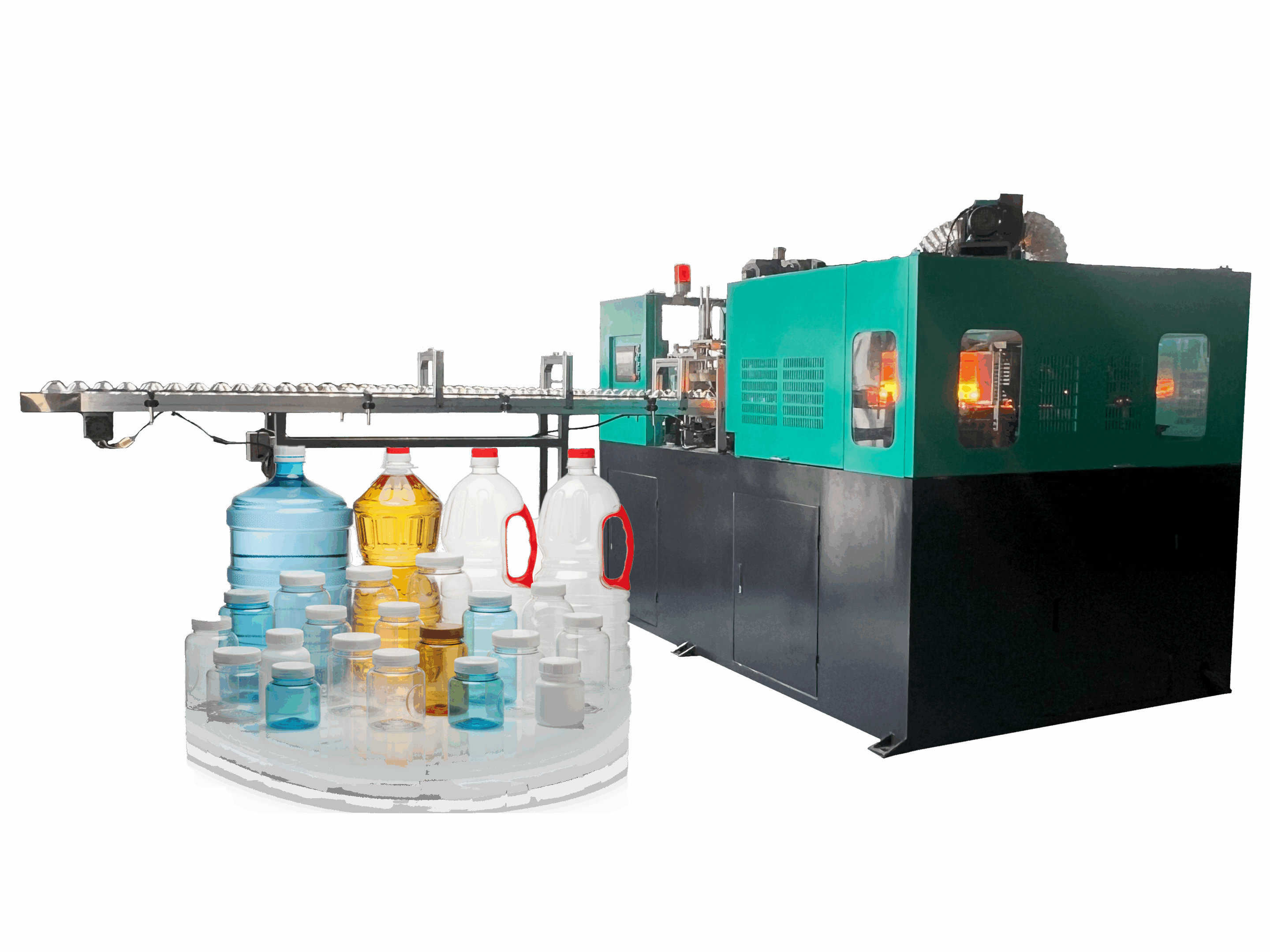
How can I determine whether the lubrication system of an all-electric extrusion blow molding machine poses a risk of product contamination?

At our facility, we know that spotting a drop of oil on a finished medical bottle is a production nightmare. Contamination ruins batches and damages brand trust, but modern electric machines offer a clean solution.
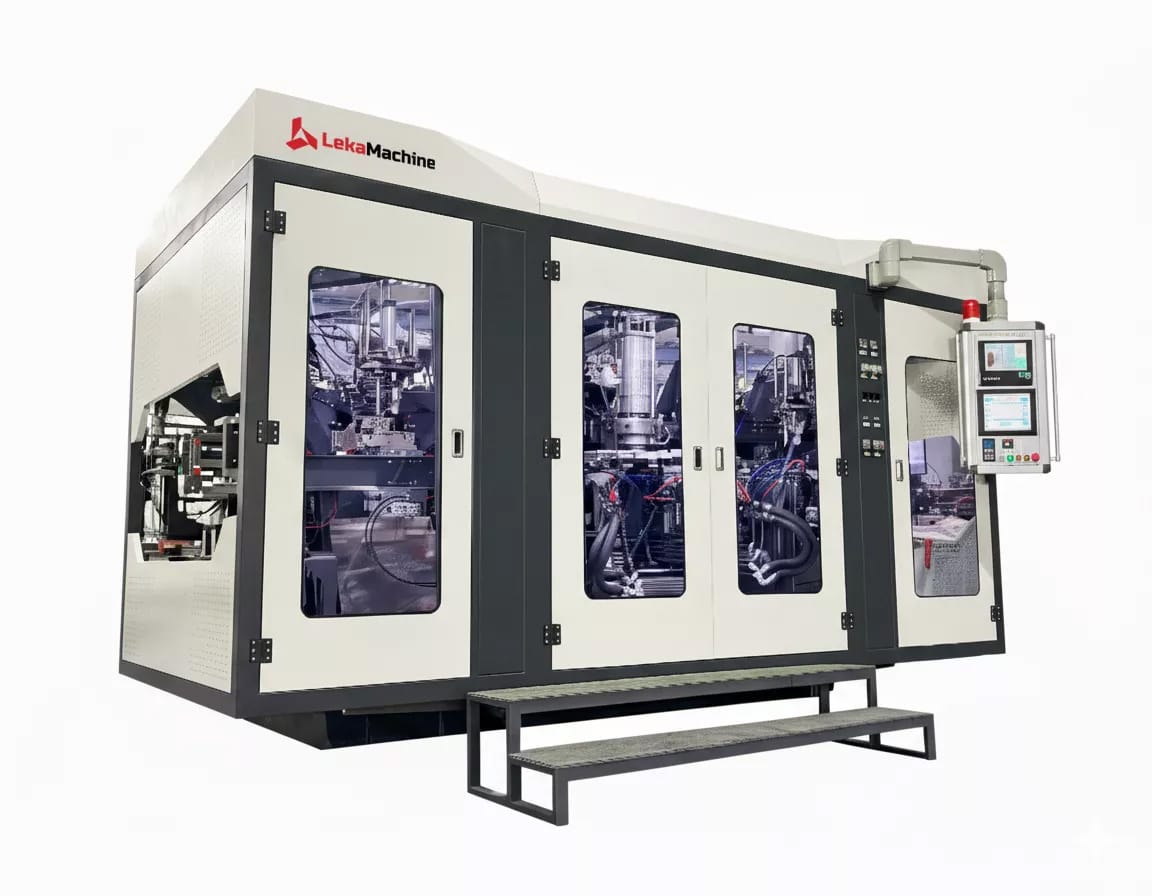
To determine contamination risks, audit the toggle isolation design and verify if the lubrication system uses a closed-loop recirculating setup. All-electric machines significantly reduce hydraulic leaks, but you must ensure the toggle mechanism is physically shielded from the mold area and utilizes FDA-approved food-grade grease for safety.
Let’s examine the specific mechanisms and maintenance protocols that keep your production line clean and compliant.
Do all-electric machines require food-grade grease for medical or food packaging?
When we configure machines for pharmaceutical clients, standard lithium grease is never an option. Using the wrong lubricant in a sterile environment creates unacceptable liability risks for your business logic and consumer safety.
sterile environment creates unacceptable liability 1
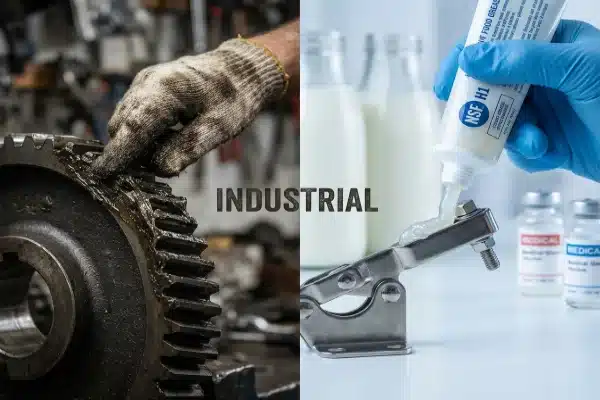
Yes, all-electric machines producing medical or food packaging require NSF H1 certified food-grade grease. While electric drives eliminate hydraulic oil, the mechanical toggle linkages still need lubrication; using food-grade options ensures that incidental contact does not render the final plastic container unsafe for consumer use.
Understanding Lubrication Classes
Many buyers operate under the misconception that "all-electric" means "lubricant-free." While we have removed the hydraulic power pack—which eliminates gallons of pressurized oil—the machine still relies on heavy-duty mechanical movement. The clamping unit uses a toggle system, and the carriage movement relies on ball screws and linear guides. All these metal-on-metal components require friction reduction.
In our engineering reviews, we strictly categorize lubricants based on the target application:
- H1 Lubricants: These are food-grade lubricants used in food-processing environments where there is some possibility of incidental food contact.
- H2 Lubricants: These are used on equipment and machine parts in locations where there is no possibility that the lubricant or lubricated surface contacts food.
The "Incidental Contact" Risk
Even in a well-designed machine, "incidental contact" is a real risk. A technician might touch a guide rail and then handle a parison, or a slight amount of aerosolized grease could settle near the mold during high-speed opening and closing.
If you are producing shampoo bottles, standard grease might be acceptable. However, for milk bottles, yogurt containers, or saline IV bags, the risk profile changes. Standard industrial grease often contains toxic additives for extreme pressure performance. Food-grade options use non-toxic thickeners (like aluminum complex) and base oils ensuring that if a microscopic amount touches the bottle, it remains safe.
hygiene standards your customers demand 2
Performance Trade-offs
Years ago, food-grade grease was considered inferior in durability. Today, that is no longer true. We find that modern synthetic food-grade greases offer excellent thermal stability and load-carrying capacity, matching the lifecycle of standard industrial lubricants.
Table: Comparison of Standard vs. Food-Grade Grease in Blow Molding
| Fonctionnalité | Standard Industrial Grease (Lithium) | Food-Grade Grease (NSF H1) |
|---|---|---|
| Primary Use | General industrial components, automotive | Food, beverage, medical packaging machinery |
| Toxicity | High (contains heavy metals/additives) | Non-toxic, odorless, tasteless |
| Contamination Risk | Product recall if detected | Safe for incidental contact (up to 10 ppm) |
| Coût | Low to Medium | High (typically 20-40% more expensive) |
| Washout Resistance | Modéré | High (often designed to resist cleaning agents) |
How does the toggle design prevent lubricant from dripping onto the molds?
We often see older machine designs where gravity pulls excess grease directly onto the mold platens. This design flaw forces operators to constantly wipe surfaces, killing efficiency and increasing scrap rates significantly.
ISO Class 7 or 8 standards 3
Toggle designs prevent dripping by utilizing sealed bearings and under-mounted linkages that physically separate the kinematics from the molding zone. High-end machines employ specific shielding or "clean pans" beneath the clamping unit to catch excess grease, ensuring it falls away from the sterile parison and mold cavities.

positive displacement injectors 4
The Architecture of Cleanliness
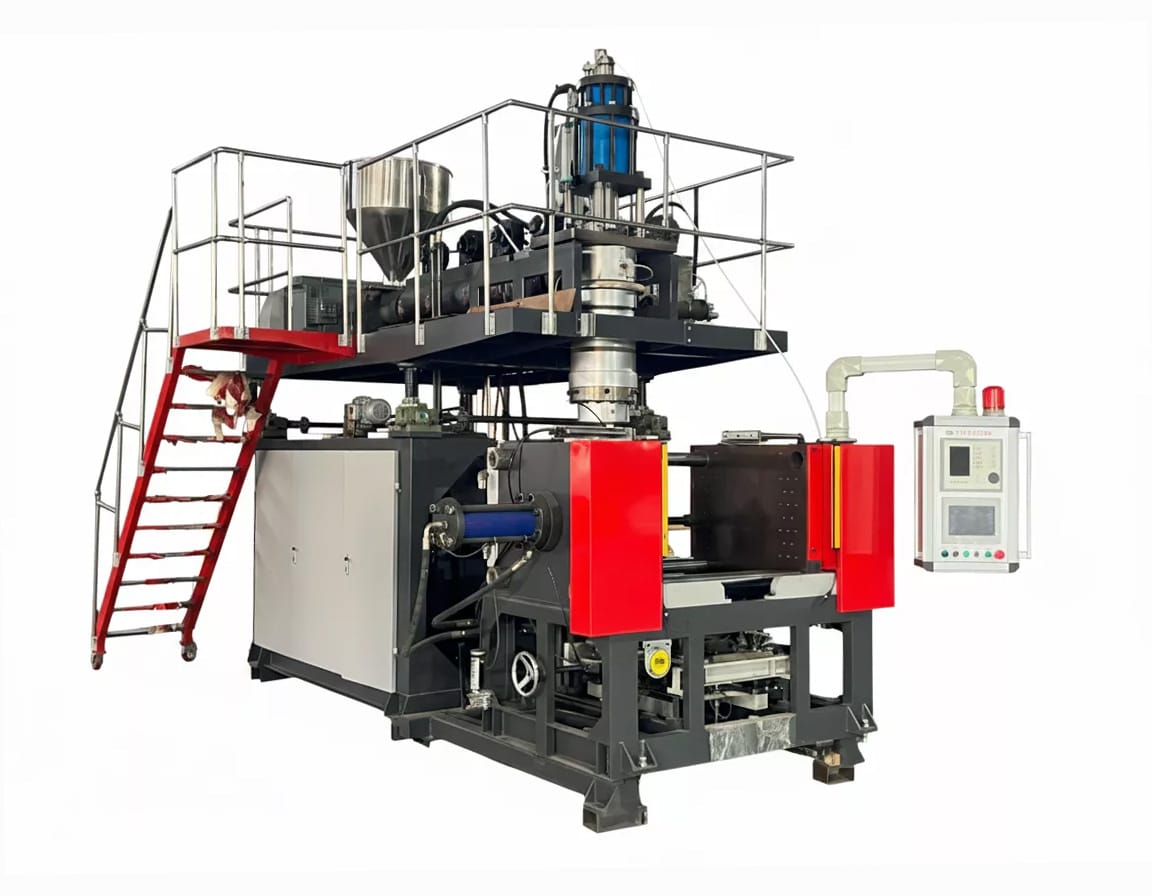
The physical layout of the clamping unit is the first line of defense against contamination. In traditional hydraulic machines, the clamping cylinder is often directly above or behind the mold, and the toggle arms are exposed.
In our all-electric designs, we prioritize specific architectural features to mitigate this:
modern synthetic food-grade greases 5
- Shielded Toggle Mechanisms: We install stainless steel or transparent polycarbonate shields over the main toggle linkages. This acts as a physical barrier. If a bearing seal fails or a lube line bursts, the grease hits the shield, not your mold or the hot parison.
- Guide Rail Position: On superior machines, linear guide rails are positioned outside the immediate "drop zone" of the bottles. This prevents grease from the linear bearings from dripping down onto the conveyor belt where finished bottles are cooling.
Automated Metering vs. Manual Greasing
The method of applying grease dictates the messiness of the machine.
- Manual Greasing: This is highly risky. Operators tend to "over-grease," assuming more is better. The excess grease oozes out of the joints, turns black with dust, and eventually drips.
- Centralized Automatic Lubrication (Volumetric): We recommend systems that use positive displacement injectors. These deliver a precise, metered amount of grease (e.g., 0.05cc) to each point at set intervals. There is no excess to drip.
Gravity Management
Smart engineering respects gravity. We incorporate "drip trays" or "clean pans" specifically located under the main pivot points of the clamp. These trays are slanted to channel any waste oil or grease to a collection cup at the rear of the machine, completely bypassing the production area.
H3: Key Design Features for Contamination Control
- Sealed Bushings: Using self-lubricating or sealed bushings reduces the need for free-flowing grease.
- Remote Grease Zerks: Placing grease points outside the safety cage allows maintenance without opening the door, but also keeps the grease gun away from open molds.
- Electric Motor Placement: Ensuring servo motors are fully enclosed (IP65 rated) prevents carbon dust from the motor brakes from entering the clean area.
What maintenance routines ensure the lubrication system remains sealed and clean?
In our assembly hall, we emphasize that a machine is only as clean as its maintenance schedule. Neglecting seal inspections inevitably leads to messy leaks, black specks on bottles, and contaminated final products.
metal-on-metal components require friction reduction 6
Effective maintenance requires weekly inspections of the automatic lubrication pump pressure and visual checks of all wiper seals on guide rails. Technicians must clean old grease purge points regularly to prevent buildup, verify that metering valves are functioning, and immediately replace cracked hoses to maintain a sealed, contaminant-free system.

All-electric machines significantly reduce 7
The "Set and Forget" Fallacy
Many factory managers treat automatic lubrication systems as "set and forget." This is a critical error. An automatic pump will continue to cycle even if a hose is broken, pumping grease onto the floor or machine frame rather than into the bearing.
We advise including specific checks in your PM (Preventative Maintenance) plan. A leaking hose doesn’t just waste expensive food-grade grease; it creates a migration path for dirt to enter your bearings, causing premature wear and creating a mess that can migrate to your product.
NSF H1 certified food-grade grease 8
Managing Waste Grease
Fresh grease forces old grease out of the bearings. This "spent" grease is often dark (oxidized) and contains metal particulates.
- The Problem: If allowed to accumulate, this spent grease builds up into "stalactites" that hang from the toggle arms. Eventually, vibration shakes a chunk loose, and it falls into the mold or onto a hot bottle.
- The Routine: Your maintenance team must wipe down the toggle joints and guide rails weekly. It is not enough to just refill the reservoir. The cleaning of the machine is as important as the lubrication itself.
The Crash Kit for Lubrication
We recommend keeping a specific spare parts kit for your lube system. Waiting two weeks for a specific high-pressure nylon hose means your machine runs dry—or leaks—for two weeks.
Table: Recommended Lubrication Maintenance Schedule
| Fréquence | Task | Objective |
|---|---|---|
| Daily | Check reservoir level | Ensure pump is not running dry (air lock risk). |
| Hebdomadaire | Wipe down toggle joints | Remove spent grease buildup to prevent dripping. |
| Hebdomadaire | Inspect hoses and fittings | Identify cracks or loose fittings before they leak. |
| Mensuel | Verify metering valves | Ensure every point gets grease (look for dry bearings). |
| Trimestrielle | Clean reservoir filter | Remove contaminants from the supply tank. |
| Yearly | Flush system (if needed) | Remove oxidized grease or if switching grease types. |
Critical Warning: Mixing Greases
Never mix different grease chemistries (e.g., Lithium base vs. Calcium Sulfonate). Incompatible thickeners will react, turning the grease into a hard solid or a watery liquid. Both scenarios result in seal failure and massive leakage, posing a severe contamination risk.
Can I request a clean-room ready configuration to minimize contamination risks?
When we partner with dairy or saline solution manufacturers, standard configurations often fall short. Upgrading to a clean-room package effectively bridges the gap between industrial machinery and laboratory standards, ensuring high yields.
incidental food contact 9
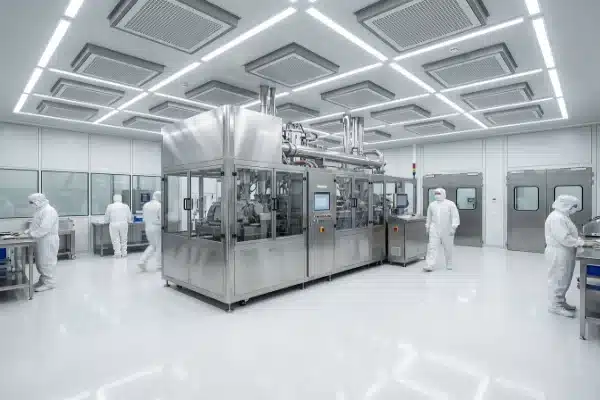
You can request clean-room configurations which include stainless steel covers, HEPA filter integration above the clamping unit, and ionized air curtains. These customizations are specifically engineered to neutralize static and physically isolate the parison from any mechanical particulate generation, ensuring compliance with ISO Class 7 or 8 standards.
de moulage par soufflage par extrusion 10
Beyond the Standard Machine
An all-electric machine is naturally cleaner than a hydraulic one, but for high-end applications, it is not enough. You can and should request a "Clean Package" or "Medical Package" during the quotation phase. Retrofitting these features later is difficult and expensive.
Key Components of a Clean-Room Configuration
Stainless Steel Cladding:
Standard machines use painted sheet metal. Over years, paint can chip. Clean-room configurations replace key guarding panels with stainless steel. This eliminates paint chips as a contamination source and allows for aggressive sanitization using alcohol or strong cleaning agents without corroding the panels.HEPA Filtration Units (Laminar Flow):
We can mount a laminar flow hood directly above the mold area. This unit blows a curtain of HEPA-filtered air downwards over the parison and the mold.- Benefit: It creates positive pressure. If the machine generates any dust (belt dust, grease particles), the air curtain pushes it down and away from the open mold cavities.
Active Exhaust Systems:
To manage the heat and potential particulates from the toggle mechanism, we can install localized exhaust fans inside the machine guarding. These fans pull air out of the mechanical cabinet and vent it outside the clean room (or into a filter system), creating negative pressure in the "dirty" mechanical zones and keeping the "clean" molding zone pristine.Static Elimination:
Plastic parisons act like magnets for dust due to static electricity. A clean-room configuration includes ionizing bars near the die head. By neutralizing the static charge on the parison, we prevent airborne dust and microscopic grease particles from sticking to the hot plastic.
H3: Conveyor Integration
The contamination risk doesn’t end when the bottle leaves the mold.
A clean configuration must include covered conveyors. We use polycarbonate tunnels over the take-out conveyor to shield the bottles until they reach the leak tester or bagger. Without this, a clean machine might still result in dirty bottles if the factory environment isn’t perfect.
Table: Standard vs. Clean-Room Configuration Features
| Composant | Standard Configuration | Clean-Room / Medical Configuration |
|---|---|---|
| Guarding Material | Painted Mild Steel | Stainless Steel / Anodized Aluminum |
| Gestion de l'air | Passive Ventilation | HEPA Laminar Flow Hood (Positive Pressure) |
| Lubricants | Standard Lithium Grease | NSF H1 Food-Grade Grease Mandatory |
| Convoyeurs | Open Belt | Enclosed Tunnel with UV sterilization options |
| Pneumatics | Standard Exhaust | Capture Exhaust (vented outside clean area) |
Conclusion
Determining contamination risk requires looking beyond the "all-electric" label. By insisting on food-grade lubricants, verifying shielded toggle designs, and adhering to strict maintenance, you ensure your machinery meets the hygiene standards your customers demand.
notes de bas de page
- FDA Quality System Regulation highlighting the legal necessity of sterility in medical manufacturing. ↩︎
- ISO 14159 standard covering hygiene requirements for the design of machinery. ↩︎
- Official ISO 14644 standard definition for cleanroom classifications mentioned in the text. ↩︎
- Technical specifications from a leading lubrication company explaining how metering injectors work. ↩︎
- Manufacturer documentation detailing the performance characteristics of modern synthetic H1 lubricants. ↩︎
- Educational resource from MIT explaining the fundamentals of tribology and friction reduction. ↩︎
- Major OEM product page validating the clean operation benefits of electric blow molding technology. ↩︎
- Link to the official NSF White Book listing registered nonfood compounds and H1 standards. ↩︎
- Official FDA regulation (CFR 178.3570) defining safety standards for lubricants with incidental contact. ↩︎
- General background definition of the core manufacturing process discussed in the article. ↩︎


0 commentaires