


Should I choose FOB or CIF terms when purchasing an ALL electric extrusion blow molding machine?
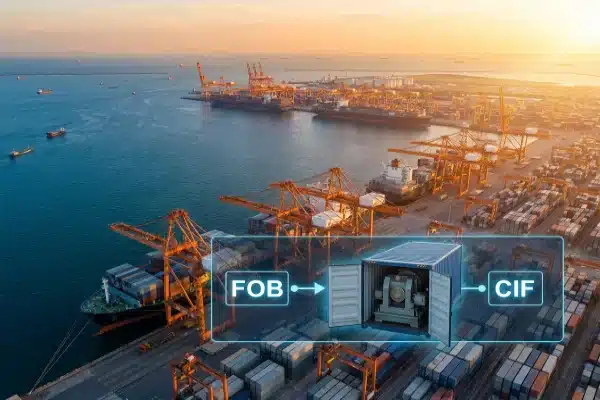
When we coordinate shipments for our global clients, we see the stress caused by shipping acronyms. Picking the wrong term can turn a profitable machine investment into a logistical nightmare full of hidden fees.
For electric extrusion blow molding machines, FOB (Free on Board) is generally safer than CIF. FOB gives you control over the freight forwarder, ensures better insurance coverage for sensitive electronics, and prevents hidden destination fees, whereas CIF often leads to inflated costs and logistical blind spots.
Let’s break down exactly why the shipping term matters more than you might think when importing high-value machinery.
What are the risks of letting the supplier handle shipping under CIF terms?
In our years exporting to North America and Europe, we often warn new clients about the "convenience" trap of CIF. Handing over logistics seems easy until the hidden costs pile up at the destination port.
CIF terms expose buyers to significant financial risks through hidden "kickbacks" between sellers and forwarders. Suppliers often select the cheapest transport to maximize their profit, resulting in non-negotiable, inflated destination handling charges (DHC) and CISF fees that you must pay to release your cargo.
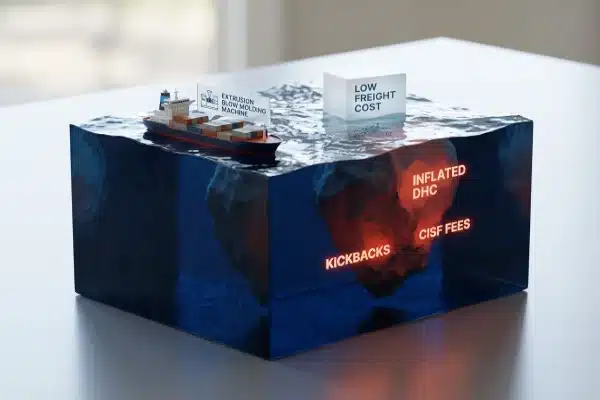
When we discuss "risks" with our clients, we aren’t just talking about physical damage; we are talking about the financial trap known as the "Zero Freight" scams common in CIF (Cost, Insurance, and Freight) contracts.
The Hidden "Kickback" Mechanism
In a CIF arrangement, the seller (manufacturer) pays the ocean freight. To save money, some suppliers choose forwarders who offer them incredibly low—or sometimes zero—freight rates. How does the forwarder make money? They charge the buyer (you) astronomical fees upon arrival.
This leads to the "Hostage Cargo" situation. The destination agent, who works for the seller’s forwarder, will refuse to release the Delivery Order (DO) until you pay these arbitrary fees. Since you did not hire them, you have no leverage to negotiate.
Loss of Visibility
When we ship spare parts or "Crash Kits" to our customers, we want them to know exactly where the package is. Under CIF, the shipping process is a "Black Box."
- Unpredictable Transshipments: Sellers maximize margin by choosing the cheapest, slowest route. Your machine might sit in a transshipment hub like Singapore or Busan for weeks.
- Planning Nightmares: Without accurate arrival dates, you cannot schedule cranes, forklifts, or prepare your floor space effectively.
CIF vs. FOB: The Control Matrix
| Fonctionnalité | CIF (Cost, Insurance, Freight) | FOB (Free on Board) |
|---|---|---|
| Freight Forwarder Selection | Seller (Supplier) | Buyer (You) |
| Negotiation Power | None (You are a captive customer) | High (You are the direct client) |
| Destination Charges | Often Inflated (Hidden Kickbacks) | Standard / Pre-negotiated |
| Route Selection | Cheapest/Slowest | Optimized for Speed/Safety |
By letting the supplier handle shipping, you are essentially gambling with the final timeline and cost of your project.
Does FOB give me better control over the freight forwarder and shipping schedule?
When we calibrate our machine controllers, timing is everything. We know that syncing the machine’s arrival with technician visas requires precise scheduling that CIF simply cannot offer.
Destination Handling Charges 1
FOB grants buyers direct authority to nominate their own freight forwarder, ensuring real-time tracking and schedule optimization. This control is crucial for synchronizing the machine’s arrival with the installation team’s travel plans, preventing costly downtime where engineers wait for delayed vessels selected by an indifferent seller.
Choosing FOB (Free on Board) is not just about cost; it is about protecting the technical integrity of the equipment and the timeline of your project. As a manufacturer of all-electric blow molding machines, we understand that these units are more sensitive than old-school hydraulic giants.
Institute Cargo Clauses (A) 3
Protecting Sensitive Electronics
All-electric machines rely on high-precision servo amplifiers and motion controllers. These components are vulnerable to two things during ocean transit:
- Salt Corrosion: Salty sea air can damage electronics if the container is placed on the deck.
- G-Force Acceleration: Rough seas can loosen connections.
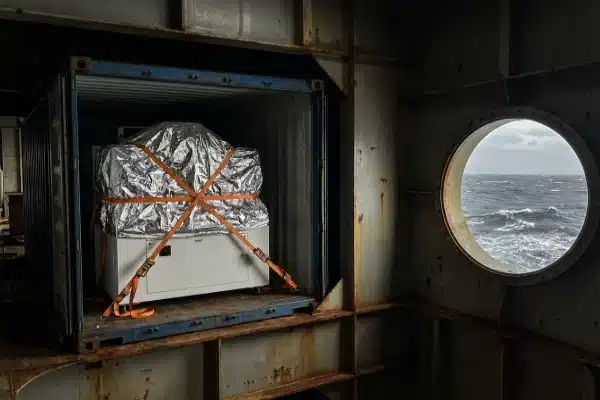
Under FOB, you can instruct your forwarder to request "Under Deck Stowage." This ensures the container is stored inside the ship’s hull, protected from the elements. In a CIF shipment, the seller usually books the cheapest slot, which is often on the weather deck, exposing your investment to harsh conditions.
Synchronizing Technician Schedules
Commissioning a blow molding line requires our engineers to travel to your facility. Visa approvals and flight bookings are expensive and time-sensitive.
- The CIF Problem: If the seller chooses a vessel that gets delayed by 2 weeks (common with cheap carriers), you might have engineers sitting in a hotel on your dime, waiting for a machine that hasn’t arrived.
- The FOB Solution: You book "Guaranteed Sailings." You align the arrival date with the technician’s schedule, minimizing the gap between delivery and startup.
Optimization Opportunities under FOB
| Optimization Strategy | Bénéfice |
|---|---|
| Buyer’s Consolidation | If you are buying molds or chillers from other vendors, you can combine them into one container to save thousands in LCL fees. |
| Green Tariff Coding | You control the entry documentation. You can ensure your broker applies specific energy-efficient HS codes for electric machinery, potentially lowering duties. |
| Real-Time Tracking | You get direct access to the carrier’s tracking portal, rather than waiting for the supplier to forward (or forge) updates. |
Who is responsible for transit insurance damage during ocean freight?
We build our machines to last, but ocean storms don’t care about build quality. We have seen too many clients struggle with claims because they didn’t hold the insurance policy themselves.
risk transfers to you 4
Under CIF, the seller holds the insurance policy, meaning you must rely on them to file claims if damage occurs. Since the seller has already been paid, they lack the incentive to navigate complex international claims, often leaving you with damaged equipment and no financial recourse.
There is a dangerous misconception regarding the "Risk of Loss" in international trade. Many buyers believe that because the seller pays for freight in CIF, the seller is responsible for the goods until they reach the destination port. This is false.
The Risk Transfer Point
In both FOB and CIF, the legal risk transfers to you, the buyer, the moment the machine is loaded onto the vessel at the origin port. If the ship sinks or the container is dropped, it is your loss, not the manufacturer’s.
The Problem with CIF Insurance
While CIF includes insurance, it is deeply flawed for machinery buyers:
- Beneficiary Issues: The policy is usually in the seller’s name. If damage occurs, the insurance company pays the seller. You have to hope the seller is honest enough to transfer the funds to you.
- Minimum Coverage: CIF usually only requires "Clause C" insurance. This covers major disasters like the ship sinking or burning. It does not typically cover rough handling, water damage from leaks, or theft—the most common causes of machinery damage.
- Claim Bureaucracy: If a servo motor arrives smashed, you cannot call the insurance company. You must ask the supplier to file the claim. If the supplier is busy or unhelpful, your claim stalls.
Why FOB Insurance is Superior
When you control the insurance (as you do with FOB), you can purchase Institute Cargo Clauses (A). This is "All-Risk" coverage.
- Direct Control: You file the claim directly with your local broker.
- Better Protection: It covers scratching, bending, wetting, and theft.
- Value Coverage: You can insure for 110% of the CIF value plus duty and imaginary profit, ensuring you are fully compensated for the replacement cost and lost time.
Insurance Comparison Table
| Fonctionnalité | CIF Insurance (Standard) | FOB Insurance (Buyer Purchased) |
|---|---|---|
| Policy Holder | Seller (Manufacturer) | Buyer (You) |
| Coverage Level | Clause C (Major Casualties Only) | Clause A (All Risks) |
| Claim Process | Buyer must beg Seller to file | Buyer files directly |
| Responsiveness | Slow / Low Incentive | Fast / High Incentive |
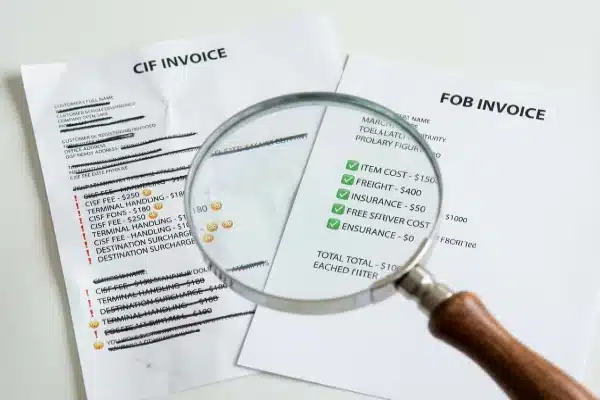
Our accounting team frequently helps customers decipher confusing invoices from port agents. The difference in final landed cost between these two shipping terms is often shocking to first-time importers.
freight forwarder 6
Hidden destination charges under CIF, such as CISF and inflated terminal fees, are arbitrary costs imposed by the seller’s forwarder to recoup low upfront freight rates. In contrast, FOB contracts provide transparent, pre-negotiated local charges, preventing surprise invoices that can add thousands of dollars to your final bill.
The most painful part of a CIF shipment often happens when the ship docks. You receive an "Arrival Notice" from a local logistics agent you have never heard of, and the fees are two or three times higher than market rates.
transshipment hub 7
The "Zero Freight" Trap Explained
If a supplier offers you a CIF price that seems too good to be true (e.g., shipping a 40ft container for $500 when the market rate is $3000), it is a trap. The forwarder offers the supplier a cheap rate to win the booking, knowing they will collect the difference from you via "Destination Handling Charges" (DHC).
Common Hidden CIF Fees
- CISF (China Import Service Fee): An arbitrary fee ranging from $300 to $1000 per container. It has no legal basis but is standard in predatory CIF contracts.
- Inflated DHC: Terminal Handling Charges might be $400 normally, but a CIF agent might charge $1200.
- Document Transfer Fees: They may charge $150 just to hand over the Bill of Lading.
The FOB Advantage: Transparency
With FOB, you ask your local freight forwarder for a quote avant you sign the contract. They will list every single cost:
- Ocean Freight
- Local Port Fees
- Trucking to your factory
- Customs Clearance
You lock these prices in. If the agent tries to add a mystery fee later, you have the contract to dispute it. Furthermore, because you are the client hiring the forwarder, they want your repeat business. The agent in a CIF shipment knows they will likely never deal with you again, so they maximize their one-time profit.
Delivery Order (DO) 8
Critical Thinking: The Landed Cost
Do not look at the invoice price of the machine; look at the Landed Cost.
- CIF: Machine Cost + Cheap Freight + Huge Unknown Destination Fees
- FOB: Machine Cost + Market Freight + Standard Destination Fees
In 90% of cases, FOB results in a lower total landed cost, even if the upfront freight quote looks higher than the supplier’s "discounted" CIF rate.
CIF (Cost, Insurance, and Freight) 9
Conclusion
Choosing FOB over CIF gives you control, transparency, and security. While CIF may look cheaper on the initial invoice, the hidden risks—from inflated destination fees to inadequate insurance—can cost you significantly more in the long run. By managing the freight yourself, you protect your investment and ensure your production line starts on time.
FOB (Free on Board) 10
notes de bas de page
- Federal Maritime Commission information relevant to forwarder charges. ↩︎
- ISO standard specification for freight containers. ↩︎
- Authoritative source for standard marine insurance clauses. ↩︎
- Major logistics company explaining the exact point of risk transfer. ↩︎
- Official U.S. Customs site regarding Harmonized Tariff Schedule classification. ↩︎
- Educational resource defining the role of intermediaries in supply chains. ↩︎
- Major shipping line explaining global logistics networks and hubs. ↩︎
- Definition of this specific legal logistics document. ↩︎
- U.S. International Trade Administration guide explaining CIF responsibilities. ↩︎
- Official definition of Incoterms rules from the International Chamber of Commerce. ↩︎




0 commentaires