
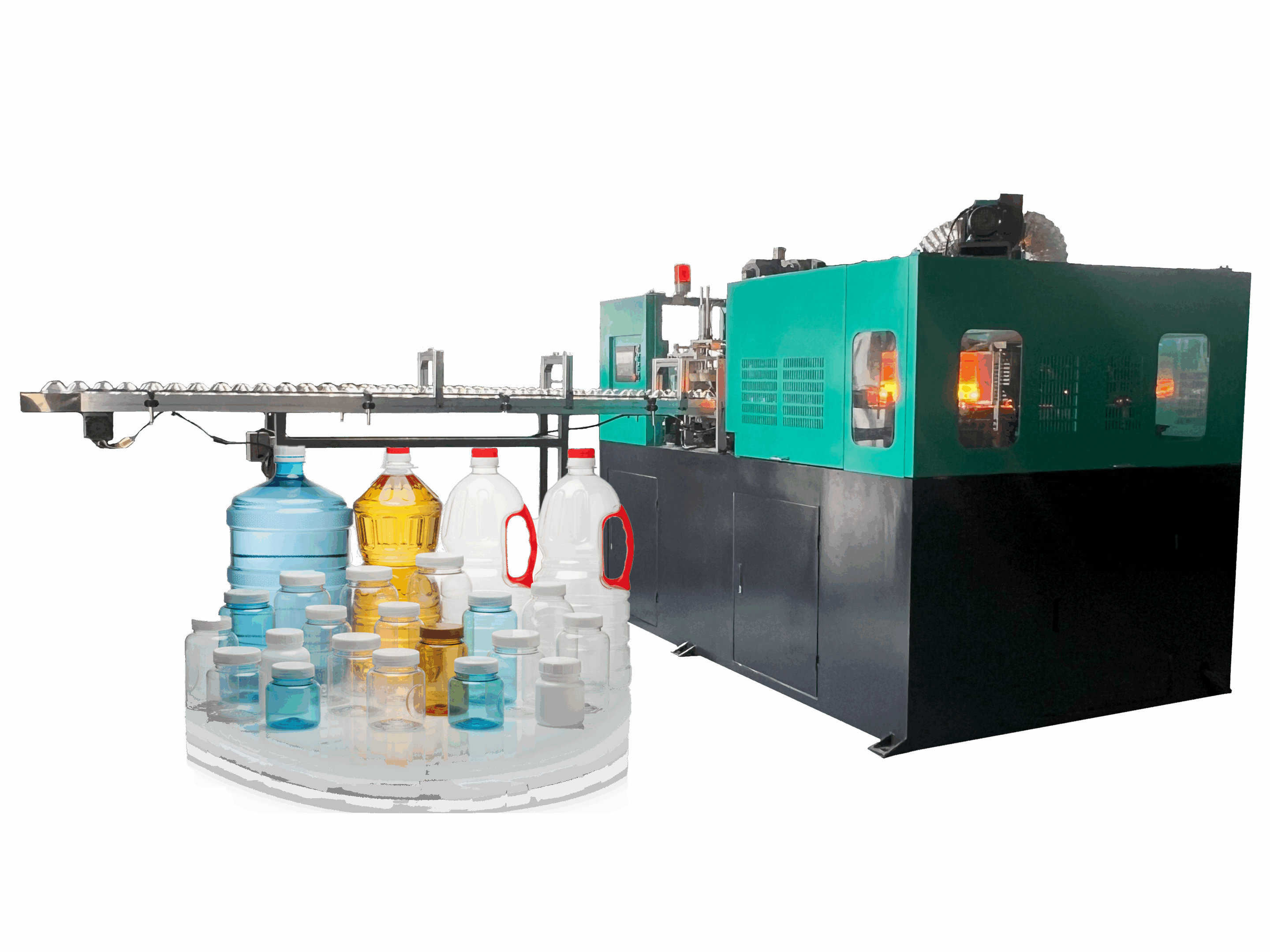
Extrusion Blow Molded Polyethylene Bottle Machine: Practical Guide for HDPE/PE Bottle Lines
If you are in the business of making plastic containers, you know that the machinery you choose makes or breaks your profit margin.
Specifically, if you are looking to produce milk jugs, detergent bottles, or industrial jerry cans, you are likely looking for an extrusion blow molded polyethylene bottle machine.
It’s a mouthful to say. But simply put, it is the industry standard for making durable, hollow plastic parts out of High-Density Polyethylene (HDPE) or standard Polyethylene (PE).
Whether you are a factory owner looking to upgrade your line or a brand owner bringing production in-house, this guide breaks down exactly what these machines do, the specs that matter, and how to pick the right one.
- What exactly is an extrusion blow molded polyethylene bottle machine?
- How extrusion blow molding works for polyethylene bottles (HDPE/PE)
- Why polyethylene (especially HDPE) is the workhorse
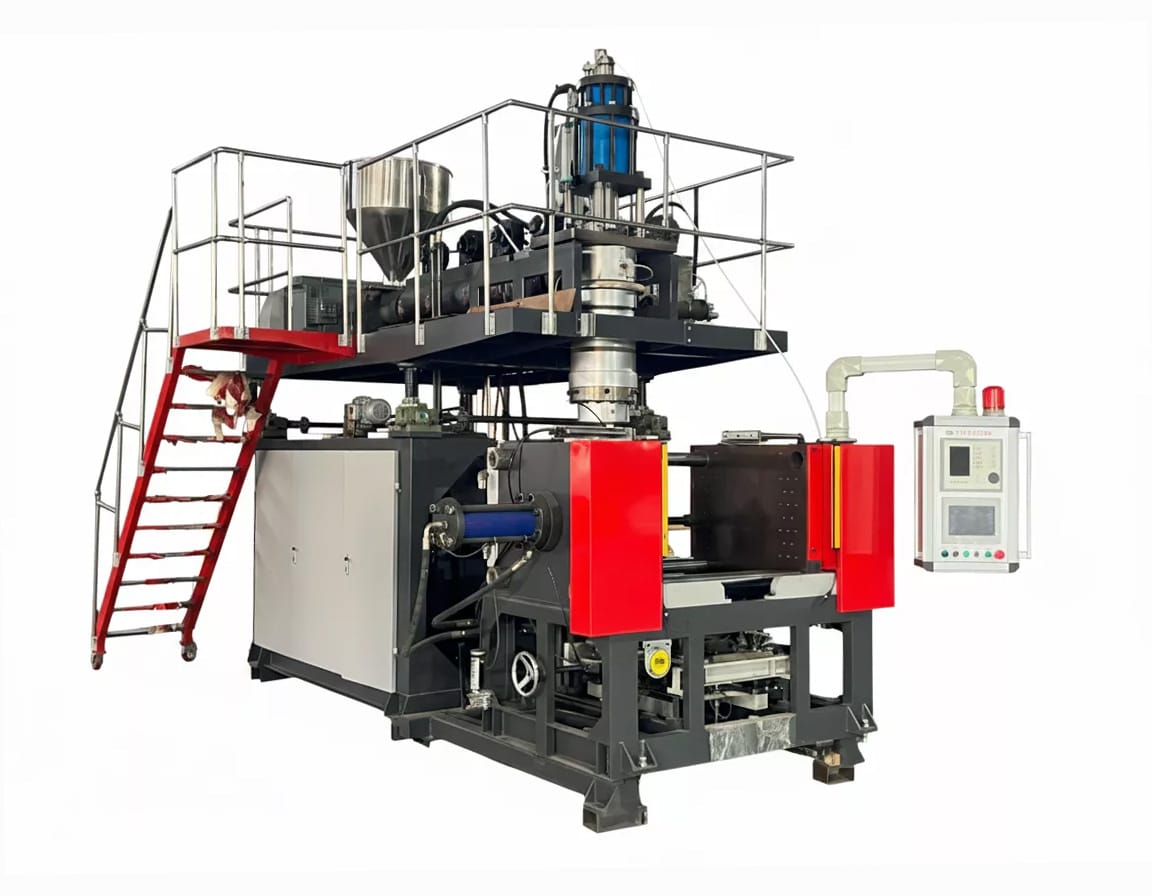
- Inside the machine: Key components
- Key specs that matter when buying
- Matching machine configuration to your bottles
- Automation and line layout
- Quality, safety, and compliance
- Cost and ROI considerations
- Real-world applications
- How to choose the right supplier
- Pre-order checklist
- FAQ
What exactly is an extrusion blow molded polyethylene bottle machine?
Let’s strip away the jargon.
This is a normes. unit that melts plastic pellets and forms them into hollow containers. It is different from the machines used to make clear water bottles (which use PET).
Cette machine is the “heavy lifter” of the packaging world. It is designed to handle tough materials like HDPE and PP.
How does it fit into your factory?
Usually, this machine sits right at the start of your line. It takes raw resin, shapes the bottle, and feeds it to your labelers and fillers.
If you currently outsource your bottles, buying your own machine gives you control. You stop paying supplier markups and you control your own inventory.
How extrusion blow molding works for polyethylene bottles (HDPE/PE)
The process is surprisingly straightforward. Here is the step-by-step flow:
- Melting: The machine takes plastic pellets (HDPE/PE) and melts them in a heated screw barrel.
- Parison Formation: The melted plastic is pushed out into a vertical tube shape. We call this tube a “parison.”
- Mold Closing: A metal mold clamps around the tube.
- Blowing: Air is blown into the tube, expanding it until it hits the cool walls of the mold.
- Refroidissement et Éjection : The plastic hardens instantly. The mold opens, and the bottle drops out.
Unlike le soufflage étiré (used for PET), extrusion blow molding doesn’t stretch the material lengthwise first. It just blows it outward. This makes it perfect for handles and complex shapes.
Why polyethylene (especially HDPE) is the workhorse for blow molded bottles
Why do we focus on Polyethylene (PE) et le Polyéthylène Haute Densité (PEHD)?
Because they are tough.
- Chemical Resistance: HDPE doesn’t react with bleach, shampoo, or motor oil.
- Durability: If you drop a pour bouteilles de shampooing, it bounces. It doesn’t shatter.
- Recyclability: HDPE is one of the easiest plastics to recycle.
Most of the bottles you see in a grocery store—from 1-liter detergent bottles to 5-liter water jugs—are made on an extrusion blow molded polyethylene bottle machine.
Inside an extrusion blow molded polyethylene bottle machine
When you are shopping for a machine, you need to know what you are looking at under the hood.
- The Extruder: This is the heart of the machine. It needs to plasticize (melt) the HDPE evenly.
- Die Head: This shapes the melted plastic into the tube (parison). Precision here determines if your bottle wall is even or thin.
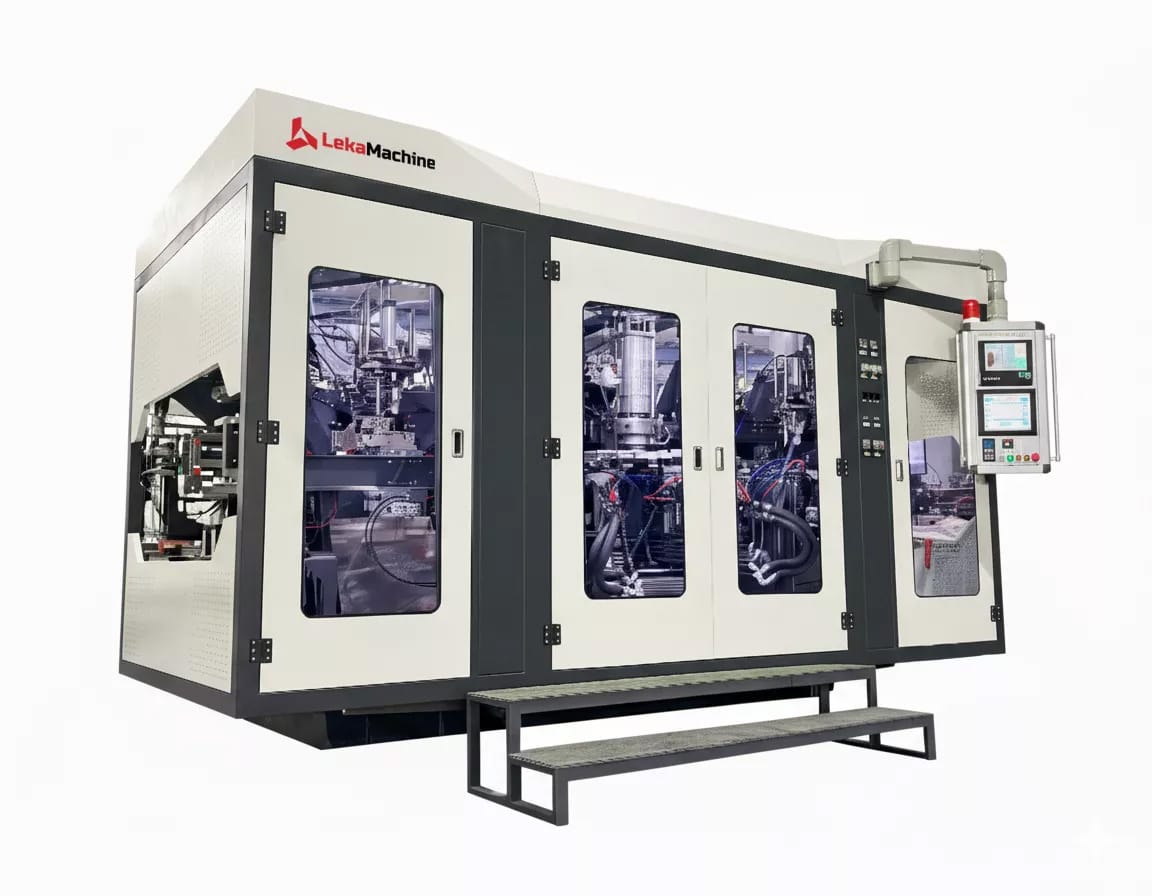
- Clamping Unit: This holds the mold shut against the blowing pressure. For example, our Série FORMA ranges from 40KN to 300KN of clamping force.
- Control System: Modern machines use a PLC (Programmable Logic Controller) to manage recipes. This lets you switch from making a 1L bottle to a 2L bottle by just changing settings and molds.
Key specs that matter for an HDPE/PE bottle extrusion blow molding machine
Don’t just look at the prix tag. Look at the specs.
1. Bottle Volume Window
You need a machine that fits your product size. Are you making small 100ml cosmetic bottles, or are you making 20L bidons d'essence?
Notre Série FORMA is versatile, capable of handling everything from small bottles up to medium stacking barrels.
2. Output (Bottles Per Hour)
How fast do you need to go? A single-station machine might give you 400 pieces per hour. A double-station machine can double that output.
3. Energy Consumption
This is a huge factor for your operating costs (OPEX). Look for machines with servo motors. They are precise and use significantly less electricity than old-school hydraulic systems.
Matching machine configuration to your polyethylene bottle portfolio
One size rarely fits all.
If you are producing lubricant bottles, you might need a “view stripe” (a thin clear line to see the oil level). This requires a specialized die head.
If you are running cosmetics, surface finish is everything. You need a machine with high-precision parison control to ensure a smooth look.
Pour fabricant bidons d'essence, you need strength. The machine must handle high-viscosity HDPE to pass drop tests.
We often help clients figure this out. For example, using a double-station machine to run two different molds at once if the cycle times match.
Automation and line layout for polyethylene bottle production
Buying the extrusion blow molded polyethylene bottle machine is step one. You also need to think about the rest of the line.
- Auto-Deflashing: The machine should automatically trim the excess plastic (flash) off the bottle.
- Test d'étanchéité : Never ship a bad bottle. An automated leak tester checks every single unit.
- Conveyors: You need to move the bottles to your filling station or packing area.
At Leka Machine, we provide full supply chain services, including order management and logistics, to help set this up.
Quality, safety and compliance for HDPE/PE bottle lines
If you are in the food or chemical industry, compliance is non-negotiable.
Your machine needs to produce clean, safe bottles. This means no oil leaks from the machine contaminating the product.
Modern machines also come with safety doors and sensors. If a door opens, the machine stops instantly. This keeps your operators safe.
Cost and ROI of an extrusion blow molded polyethylene bottle machine
Let’s talk money.
The initial purchase price is just one part of the equation. You need to look at the Coût Total de Propriété (TCO).
- Resin Cost: A machine with good parison control saves resin. If you save 2 grams per bottle, that adds up to tons of plastic over a year.
- Energy: As mentioned, servo motors can drastically cut your electric bill.
- Labor: Automated machines need fewer operators.
Many of our clients see a Return on Investment (ROI) much faster when they choose a new, efficient machine over a cheap, used one that breaks down constantly.
Real-world applications for extrusion blow molded polyethylene bottles
Where are these machines actually used?
- Home Care: Detergent bottles, bleach conteneurs.
- Personal Care: Shampoo bottles, lotion containers.
- Food & Beverage: Milk jugs, sauce bottles, edible oil jerry cans.
- Industrial: Motor bouteilles d'huile, chemical drums, and tool cases.
Notre Série FORMA is specifically born for this versatility, covering diverse production demands.
How to choose the right extrusion blow molded polyethylene bottle machine supplier
This is a partnership, not a one-time buy.
You need a supplier who does more than just ship a crate. You need:
- Factory Acceptance Testing (FAT): Run the machine at the factory before it ships.
- Training: Someone to teach your team how to use it.
- Spare Parts: Quick access to parts when things wear out.
At LEKAmachine, we assist customers in finding the best normes. solutions, assist with factory inspections, and manage the logistics from door to door.
Pre-order checklist for your HDPE/PE bottle machine project
Ready to move forward? Check these boxes first:
- Bottle Drawing: Do you have a 3D design or sample of the bottle you want to make?
- Output Goal: How many bottles do you need per day?
- Matériau : Are you using virgin HDPE, PCR (recycled), or PP?
- Utilités : Does your factory have the right power supply and cooling water?
- Space: Do you have room for the machine and the conveyors?
FAQ: common questions about extrusion blow molded polyethylene bottle machines
What is the difference between a polyethylene bottle machine and a PET machine?
A polyethylene (PE) machine uses Extrusion Soufflage. It melts plastic into a tube and blows it. A PET machine uses Stretch Blow Molding (moulage par soufflage), which stretches a pre-made test tube (preform) into a bottle. PE machines are for opaque, squeezable bottles. PET is for clear, rigid bottles.
Can one extrusion blow molded polyethylene bottle machine run multiple bottle sizes?
Yes. You can change the molds. However, the machine has a maximum volume limit. For example, a FORMA 5L machine can make bottles from 100ml up to 5 Liters.
How much space do I need?
It depends on the model. A small FORMA M2L is about 3.1 meters long. A larger FORMA H30L is nearly 5 meters long. You also need space for people to walk around it.
How long does installation take?
Typically, once the machine arrives, installation and training can take 1-2 weeks depending on the complexity of the line.
About LEKAmachine
My name is Slany Cheuang, the Technical Sales Manager at LEKAmachine. We have over 20 years of experience in the moulage par soufflage industry.
We specialize in providing Machines d'extrusion-soufflage (like our versatile FORMA and high-speed AERO series) and Machines de soufflage bi-étage.
We serve clients in Europe, the Americas, Russia, and beyond, helping them set up efficient, reliable production lines.
Need help planning your polyethylene bottle production?
Contact us today for a quote or email me directly at slany@lekamachine.com.


0 commentaires