

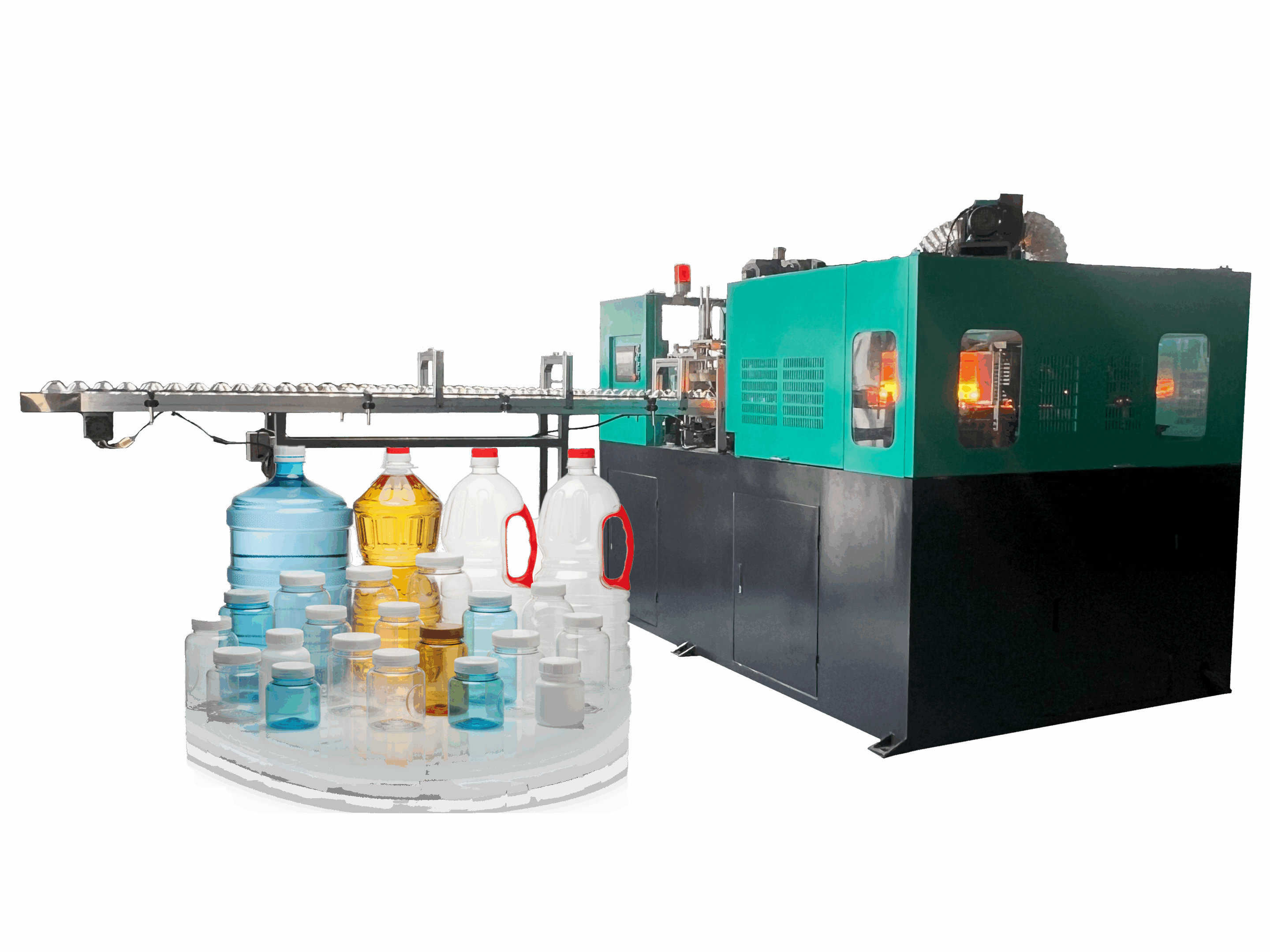
10 meilleurs fabricants de machines de moulage par soufflage d'extrusion en Grande-Bretagne (Angleterre)
Notre guide 2025 des 10 meilleurs fabricants de machines de moulage par soufflage d'extrusion en Grande-Bretagne (Angleterre). Comparez les fournisseurs en fonction du coût, du service et de l'efficacité énergétique.
Choosing the right Extrusion blow molding machine is a big decision. It’s a major capital investment that impacts your production speed, energy bills, and ability to keep up with customer demands. This guide gives you a straightforward look at the top manufacturers available in Britain, helping you understand the options so you can make a better choice for your factory.
Manufacturers At-a-Glance (with Official Sites)
Kautex Maschinenbau — https://www.kautex-group.com
lekamachine — https://lekamachine.com
Bekum — https://www.bekum.com
Uniloy — https://www.uniloy.com
Magic MP — https://www.magicmp.it
SMI Group — https://www.smigroup.it
ST Blow Moulding — https://www.st-blowmoulding.com
Hesta — https://www.hesta.de
Borche UK — https://www.borche.co.uk
Techne Graham — https://www.technesolutions.it
Why This Matters in 2025 (Extrusion blow molding machine trends, uptime, energy)
In 2025, the game is all about efficiency and reliability. With energy prices in the UK remaining a major concern, manufacturers are looking for machines that consume less power. At the same time, customers demand faster turnarounds, so you can’t afford downtime. The focus is shifting to all-electric machines that save on electricity and hybrid models that balance power with lower running costs. Quick mould changes and reliable local service are no longer nice-to-haves; they are essential for staying profitable.
Cost and Pricing Signals for 2025 (Extrusion blow molding machine pricing, cost drivers)
The price of an Extrusion blow molding machine in the UK can range from under £100,000 for a simple, smaller machine to well over £1 million for a high-speed, multilayer, fully automated line. Key cost drivers include the clamping force, the number of cavities, the type of machine (shuttle vs. rotary), and the complexity of the extrusion head, especially for multilayer bottles with barrier layers like EVOH. Remember to factor in costs for delivery, installation, UK import duties and VAT if buying from overseas, and any required automation like leak testers or conveyors.
Energy, Utilities, and Sustainability (all-electric Extrusion blow molding machine, energy efficiency)
Energy is a huge part of the Total Cost of Ownership (TCO). A modern all-electric Extrusion blow molding machine can use significantly less energy (measured in kWh per 1,000 bottles) than an older hydraulic machine. Look for features like servo-electric drives, insulated heating zones on the extrudeuse, and efficient compressed air systems. With the UK’s high electricity costs, the monthly savings can be substantial, leading to a much faster return on investment. Also, consider the push for recycled materials like rHDPE, and make sure your machine’s extruder is capable of handling it.
Throughput vs. Flexibility Trade-offs (rotary vs continuous vs accumulator head)
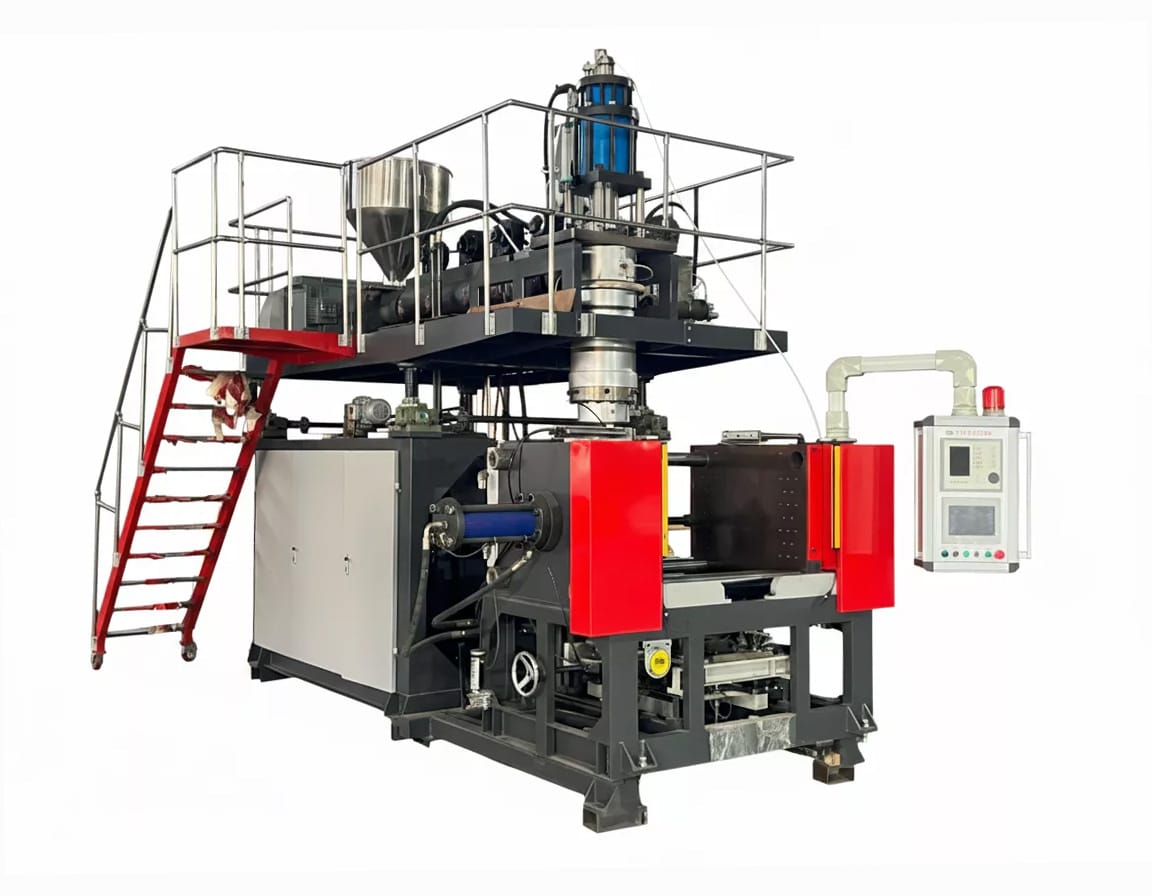
The right machine type depends entirely on what you make. If you’re producing millions of the same HDPE milk bottle, a high-speed rotary wheel machine might be the best fit. If you produce a wide variety of personal care bottles with frequent mould changes, a flexible continuous extrusion shuttle machine is likely a better choice. For large industrial parts like chemical drums or automotive components, you’ll need an accumulator head machine that can push out a large shot of plastic quickly. Don’t pay for speed you don’t need, and don’t sacrifice the flexibility your customers demand.
Mold, Tooling, and Quick-Change Strategy (quick changeover, parison control, in-mold labeling)
Your machine is only making money when it’s running. Long changeover times kill productivity, especially with smaller batch sizes. When getting quotes, ask manufacturers for video proof of their claimed changeover times. Systems that offer quick-release connections for water, air, and electricals can turn a multi-hour job into something that takes less than 30 minutes. This is crucial for keeping UK labour costs down and maximising your production schedule.
Process Control and Quality (wall thickness control, parison programming)
Modern process controls are essential for making good bottles consistently and reducing scrap. The most important feature is parison programming, which adjusts the wall thickness of the plastic tube (the parison) as it’s being extruded. This lets you put more plastic in areas that need strength, like the base and shoulder, and less in the body, saving material and weight on every bottle. A good system leads to stable production, less waste, and happier customers.
Materials and Multilayer Barriers (HDPE, PP, PETG, EVOH multilayer bottles)
Most Extrusion blow molding machine applications in the UK use HDPE (for milk, bleach, flacons de shampoing) and PP (for detergents and some food containers). If you’re making containers for sauces, chemicals, or other oxygen-sensitive products, you’ll need a multilayer machine. These machines co-extrude multiple layers of plastic, including a thin barrier layer like EVOH, to protect the contents. With the UK Plastic Packaging Tax, using recycled content (like rHDPE) is also a major factor, so ensure your machine is equipped to process it effectively.
Top 10 Extrusion Blow Molding Machine Manufacturers in Britain England
Kautex Maschinenbau (German OEM with UK service)

Kautex is a well-known German manufacturer often considered a leader in the industry, particularly for automotive and industrial applications. They have a strong reputation for building robust, high-performance machines. Their KBB series for packaging and KBS series for industrial parts are widely used. They have a UK-based service and sales presence, providing local support for their customers.
Principaux produits
Focuses on all-electric (KBB series) and hybrid shuttle machines for packaging, as well as accumulator head machines for automotive fuel tanks and industrial containers. Known for advanced multilayer technology and process control.
Avantages
Excellent machine qualité and reliability, strong local UK service, market leader in certain technologies, and good for complex applications.
Cons
Generally comes with a higher upfront cost, and lead times for highly customised machines can be long.
Official site: https://www.kautex-group.com
lekamachine (OEM mondial avec couverture en Asie)
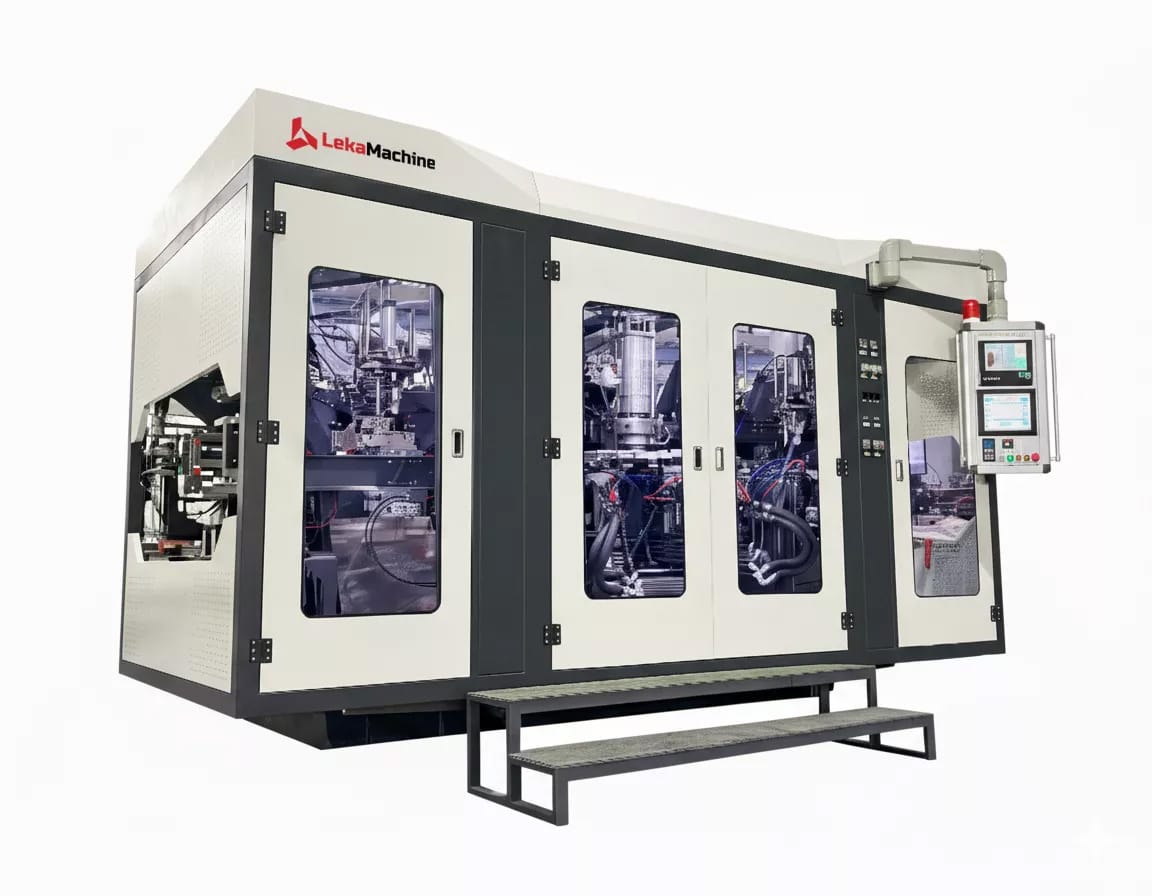
I represent LekaMachine, a global manufacturer providing a direct-to-factory model for the UK market. We focus on building reliable, energy-efficient machines that offer a strong balance of performance and value. Our approach helps UK businesses get the capacity they need without the long waits or high costs sometimes associated with European brands, and we manage the entire supply chain process for you.
Principaux produits
We offer three main series of extrusion blow moulding machines: the versatile FORMA Series for general-purpose containers, the high-speed AERO Series for mass production, and the powerful TITAN Series for large industrial drums and parts. Most of our models are energy-efficient hybrid systems.
Avantages
A key advantage is our 30–90 day delivery lead time, which is much faster than many competitors. Our machines are built with a focus on a low Total Cost of Ownership (TCO), featuring energy-saving designs and reliable components. We offer customisation based on your specific product needs.
Cons
As a global company with primary operations in Asia, direct engineer support in the UK is scheduled from regional hubs. Initial support often relies on our robust remote diagnostics and video conferencing, which can involve time zone differences.
Official site: https://lekamachine.com
Bekum (German OEM with UK support)

Bekum is another top-tier German manufacturer with a long history in blow moulding. They are known for their precision and high-quality machines, especially in the packaging sector for food, beverage, and personal care. They offer a wide range of shuttle machines, including both hydraulic and electric models, and have a service presence in the UK.
Principaux produits
Their portfolio includes single and double-station shuttle machines. The Eblow series is their all-electric offering, praised for its cleanliness and energy efficiency, making it suitable for food and pharmaceutical applications.
Avantages
High precision and repeatability, excellent reputation for qualité, strong focus on packaging applications, and good UK support network.
Cons
Premium pricing compared to some other brands. The machines are highly engineered, which can mean more complexity in maintenance.
Official site: https://www.bekum.com
Uniloy (Global manufacturer with European base)

Uniloy is a major global player with a diverse portfolio that includes shuttle machines, accumulator head machines, and industrial prolongé moulders. They have a strong history in the dairy industry with their reciprocating screw machines for lightweighted HDPE milk bottles. Their European operations provide support for the UK market.
Principaux produits
Offers a very wide range, from the UMS series of shuttle machines (both electric and hydraulic) to large accumulator head machines for parts up to 200 litres. They are also known for their reciprocating screw machines which are workhorses for high-volume, single-resin applications.
Avantages
Broad product range covering almost any application, strong expertise in the dairy sector, and a global service network.
Cons
As a very large company, navigating their product lines to find the right fit can sometimes be complex for new buyers.
Official site: https://www.uniloy.com
Magic MP (Italian specialist in all-electric)

Magic MP is an Italian company that has carved out a strong niche by focusing almost exclusively on all-electric Extrusion blow molding machines. They are known for innovation, speed, and energy efficiency. Their machines are popular for producing packaging for cosmetics, detergents, and food, where cleanliness and precision are key.
Principaux produits
Their core offering is a range of all-electric shuttle machines. They are known for compact footprints, extremely low energy consumption, and fast, smooth movements. They are a great option for companies focused on sustainability and reducing operating costs.
Avantages
Market leader in all-electric technology, exceptionally low energy use, quiet and clean operation, ideal for high-end packaging.
Cons
Their focus is primarily on small-to-medium sized containers; they are not the go-to for very large industrial parts. Upfront cost for all-electric technology can be higher.
Official site: https://www.magicmp.it
SMI Group (Italian packaging line integrator)

SMI Group, from Italy, is best known for providing complete packaging lines, from the blower to the palletiser. While they are very strong in stretch blow moulding, their range also includes Extrusion blow molding machine solutions, making them a potential partner for companies looking for a single-source supplier for an entire bottling line.
Principaux produits
Offers a range of Extrusion blow molding machine models designed to integrate smoothly with their downstream packaging equipment like fillers, labellers, and case packers.
Avantages
Ability to supply and integrate a full production line, strong in beverage and food applications, and single point of contact for a large project.
Cons
Extrusion blow molding is a smaller part of their overall business compared to stretch blow moulding. May not be the best fit for standalone machine purchases.
Official site: https://www.smigroup.it
ST Blow Moulding (Italian OEM with UK distribution)
ST Blow Moulding is an Italian manufacturer that produces a range of shuttle and accumulator head machines. They are known for their focus on suction blow moulding technology for producing 3D parts, particularly for the automotive industry. They are represented in the UK by distributors like Plastech Solutions, who provide sales and service.
Principaux produits
Their ASPI series of shuttle machines is their core offering for packaging. They are particularly strong in producing technical parts, pipes, and ducts with their suction blow moulding technology.
Avantages
Strong expertise in 3D and suction blow moulding for automotive applications. Solid, reliable machine construction. Local support through a UK distributor.
Cons
Less known for high-volume packaging compared to some other brands on this list. Relying on a distributor means service is not direct from the factory.
Official site: https://www.st-blowmoulding.com
Hesta (German manufacturer of smaller machines)

Hesta is a German company that specialises in smaller-sized Extrusion blow molding machines. They are an excellent choice for producing small bottles and containers, typically under 5 litres. Their machines are known for their reliability and precision, making them popular for cosmetics, pharmaceutical, and small chemical applications.
Principaux produits
Their range consists of compact single and double-station shuttle machines, available in both hybrid and all-electric configurations. They are designed for quick mould changes and flexible production of smaller items.
Avantages
Ideal for small bottle production, very high precision, compact machine footprint, and strong German engineering.
Cons
Limited to smaller container sizes. Not suitable for companies needing to produce jerry cans or larger industrial items.
Official site: https://www.hesta.de
Borche UK (Chinese OEM with direct UK subsidiary)
Borche is a large Chinese machine manufacturer that has established a direct subsidiary in the UK, Borche UK. This provides a direct sales, service, and spares channel, which is a significant advantage. They are known for offering machines that provide good performance at a very competitive price point, making them an attractive option for businesses looking for value.
Principaux produits
Borche offers a range of hydraulic and servo-hydraulic shuttle Extrusion blow molding machines. Their focus is on providing reliable, standard machines for general-purpose packaging like bottles, jerry cans, and small containers.
Avantages
Very competitive pricing, direct UK presence for service and parts, and a good option for companies entering the market or expanding on a budget.
Cons
May not offer the same level of advanced features or specialised technology as the premium German or Italian brands.
Official site: https://www.borche.co.uk
Techne Graham (Global industrial machine specialist)

Part of the Graham Engineering family, Techne is a brand with deep roots in industrial blow moulding. They build accumulator head and shuttle machines designed for long-term, heavy-duty production of large containers and industrial parts. They have a presence in Europe that serves the UK market.
Principaux produits
They offer a range of machines focused on industrial applications, including accumulator head machines for items like drums and IBCs (Intermediate Bulk Containers), as well as shuttle machines for items like large jerry cans.
Avantages
Extremely robust and durable machines built for 24/7 industrial use. Strong reputation in the chemical and lubricant packaging sectors.
Cons
Less focused on high-speed consumer packaging. Their heavy-duty engineering often comes with a higher price tag and larger footprint.
Official site: https://www.technesolutions.it
Factors to Consider When Choosing a Extrusion blow molding machine Manufacturer for a Startup
If you’re just starting out, your priorities are different. You need a machine that is reliable, easy to operate, and doesn’t have a massive lead time. A six-month wait for a machine means six months of no income. Look for manufacturers who offer shorter delivery times, straightforward controls, and good training programmes. Focus on the Total Cost of Ownership (TCO), not just the sticker price. A cheaper machine that constantly breaks down or uses a lot of energy will cost you more in the long run.
How to Find a Extrusion blow molding machine Manufacturer for Your Startup
The best way to start is to create a shortlist of 3-5 potential suppliers. Send them a request for quotation (RFQ) that includes a drawing or sample of the bottle you want to make, your required output per hour, and the material you’ll be using. A good supplier will help you choose the right machine configuration. Always ask for reference customers in the UK that you can speak to. If possible, visit a factory that has a similar machine to the one you’re considering to see it in action.
Domestic vs. Overseas Extrusion blow molding machine Manufacturers
The main trade-off is typically upfront cost versus local support. Buying from a UK-based or European manufacturer often means faster access to service engineers and spare parts. Buying from an overseas manufacturer, particularly from Asia, can often result in a lower initial investment. However, some overseas companies, like Borche, have set up direct UK bases, while others like us at LekaMachine offer a hybrid model with fast delivery and regional support hubs, giving you the best of both worlds.
Maintenance, Spare Parts, and SLAs (service coverage, spare parts, MTTR)
Before you buy, get a clear understanding of the after-sales support. Ask where their spare parts are warehoused. A part stored in Germany or Italy is better than one in China or the US if you need it tomorrow. Ask about their service level agreement (SLA) – how quickly will an engineer be on-site if you have a major breakdown? This is often defined as Mean Time To Respond (MTTR). Good remote diagnostics can also solve many problems quickly without needing an engineer visit.
Installation, Commissioning, and Ramp-Up (FAT/SAT, acceptance criteria)
The buying process includes a Factory Acceptance Test (FAT) at the manufacturer’s site and a Site Acceptance Test (SAT) at your factory. Define the success criteria for these tests in your purchase contract. This should include running your specific mould and material for a set number of hours at a target efficiency and scrap rate. Also, make sure a clear training plan for your operators and maintenance staff is included, and schedule it to account for any UK bank holidays.
Pilot Runs and Acceptance Criteria (OEE, kWh per 1,000 bottles)
For the SAT, insist on running the machine with your own production moulds and materials. This is the only true test. During this run, you should measure key performance indicators (KPIs) like Overall Equipment Effectiveness (OEE), energy consumption (kWh per 1,000 bottles), and the time it takes to do a full mould change. These numbers will tell you if the machine can perform as promised in your real-world environment.
Total Cost of Ownership and ROI Modeling (TCO calculator, payback model)
To calculate the true cost, you need to look beyond the purchase price. Build a simple TCO model that includes the machine cost, energy consumption (using your own rate in £ per kWh), routine spare parts, maintenance labour, and expected scrap rate. This will help you calculate the payback period and see which machine truly offers the best long-term value, not just the lowest initial price.
Operator Training and Change Management (HMI standardization, SOPs)
A new machine requires new skills. Good training is vital. Look for manufacturers that offer intuitive Human-Machine Interfaces (HMIs) and the ability to save recipes for different products, which makes setups faster and more consistent. Ensure the training is provided in English and that you get good documentation to create your own Standard Operating Procedures (SOPs). This helps ensure consistent quality across different shifts.
Digital Connectivity and Data (remote monitoring, MES/ERP integration)
Modern machines can connect to your factory’s network. This allows for remote monitoring by the manufacturer to help diagnose problems quickly. It also allows you to pull production data (cycle times, scrap rates, energy use) directly into your own MES or ERP systems. This data is incredibly valuable for understanding your true production costs and identifying areas for improvement.
Case Studies and Benchmarks (before/after energy savings, changeover, OEE)
Here are a few typical examples of what upgrading a machine can achieve:
A UK dairy replaced an old hydraulic machine with a new all-electric model for their HDPE milk bottle line. They reduced their energy consumption per bottle by over 40%, saving tens of thousands of pounds per year on electricity.
A personal care contract packer invested in a machine with a quick-change system. They reduced their average mould change time from 4 hours to just 25 minutes, allowing them to take on more small-batch jobs profitably.
A chemical company bought a new accumulator head machine with better parison control. They were able to reduce the weight of their 25-litre jerry cans by 8% while maintaining performance, saving a significant amount on raw material costs.
RFQ Checklist and Vendor Scorecard (RFQ template, vendor comparison)
When you send out your Request for Quotation (RFQ), make sure you ask for specific data, not just brochures. Key items to request include: guaranteed energy consumption in kWh per 1,000 bottles for your specific product; a video of a complete mould changeover on a similar machine; a recommended list of spare parts for the first two years; a map of their UK service engineer locations; and clear details on their warranty and SLA response times. Use this data to create a scorecard to compare suppliers objectively.
Other Options Than Extrusion blow molding machine Manufacturers (contract manufacturing, refurb, alternatives)
Buying a new machine isn’t the only option. You could use a UK-based contract manufacturer (or toll blower) to produce your bottles for you. This avoids the capital investment and is great for getting started. You could also look at buying a used or refurbished machine, which can be cheaper, but be sure to check the quality and availability of spare parts. Finally, for some applications like PET bottles, Stretch Blow Moulding is the correct technology, not Introduction au Moulage par Soufflage 3D.
FAQ
What’s the main difference between a shuttle and an accumulator head machine?
A shuttle machine extrudes the plastic parison continuously and is used for small-to-medium sized bottles and containers. An accumulator head machine gathers a large “shot” of melted plastic and then pushes it out all at once, which is necessary for large industrial parts like drums.
What are realistic delivery times to the UK in 2025?
For European manufacturers, lead times are often 4-8 months. For Asian manufacturers, it can be similar, but some, like us at LekaMachine, have streamlined production to offer lead times as short as 30-90 days.
Do I need a multilayer machine for sauce bottles?
Yes, for products like ketchup or sauces that are sensitive to oxygen, you’ll need a multilayer bottle with an EVOH barrier layer to provide adequate shelf life.
What is a good energy consumption figure for an all-electric machine?
It varies by bottle size and weight, but for a typical 1-litre bouteille en PEHD, a modern all-electric machine should be in the range of 0.25-0.40 kWh per kg of processed material.
What are the most important KPIs for acceptance testing?
The three most critical KPIs are Overall Equipment Effectiveness (OEE) of at least 80%, a stable and low scrap rate (e.g., under 2%), and meeting the quoted energy consumption targets.
What should a basic Service Level Agreement (SLA) include?
It should clearly state a guaranteed response time for technical phone support and a maximum time for an engineer to be on-site for a critical failure (e.g., 24 or 48 hours).
Can I use moulds from my old machine on a new one?
Sometimes, but it often requires adapter plates. The new machine may have different platen sizes, tie-bar spacing, or stack height (mould thickness) requirements. Always check this with the manufacturer.
Are financing or leasing options available in the UK?
Yes, most manufacturers have partnerships with UK-based financing companies that can offer leasing or hire purchase agreements, which can help manage cash flow for a large capital investment.
External links
British Plastics Federation (BPF) – https://www.bpf.co.uk
Plastics News Europe – https://www.plasticsnewseurope.com
UKCA Marking Guidance – https://www.gov.uk/guidance/using-the-ukca-marking
WRAP UK – Plastics – https://wrap.org.uk/resources/guide/understanding-plastic-packaging-and-food-waste
Conclusion (prochaines étapes, présélection, pilote, SLA)
Finding the right Extrusion blow molding machine in Britain comes down to three things: matching the machine’s capabilities to your products, verifying the manufacturer has reliable UK service, and calculating the Total Cost of Ownership. Use this guide to create a shortlist of potential suppliers. Ask them for the hard data on performance, energy use, and changeover times. Most importantly, talk to their existing UK customers. A thorough process now will ensure you get a machine that serves you well for many years to come.


0 commentaires