
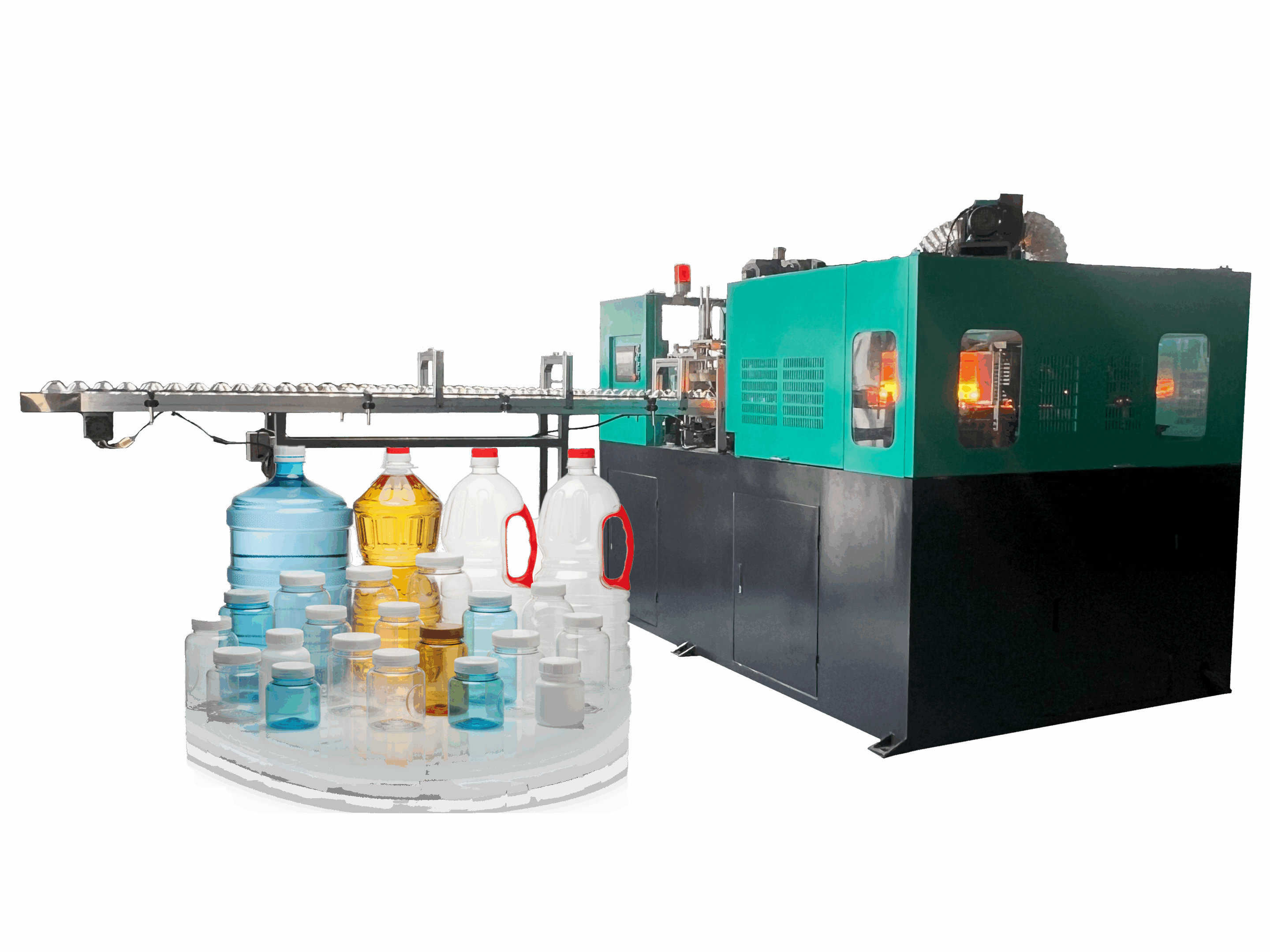
¿Qué requisitos específicos de certificación CE necesito saber al importar una máquina de moldeo por extrusión y soplado TOTALMENTE eléctrica?

When we ship our machinery from Shantou to Europe, we know that getting the engineering right is only half the battle; navigating the complex web of EU regulations is just as critical. Many buyers get excited about the efficiency of all-electric technology, but they often overlook the strict safety documentation required at the border. If you ignore these protocols, you risk expensive customs delays or having your equipment legally barred from operation.
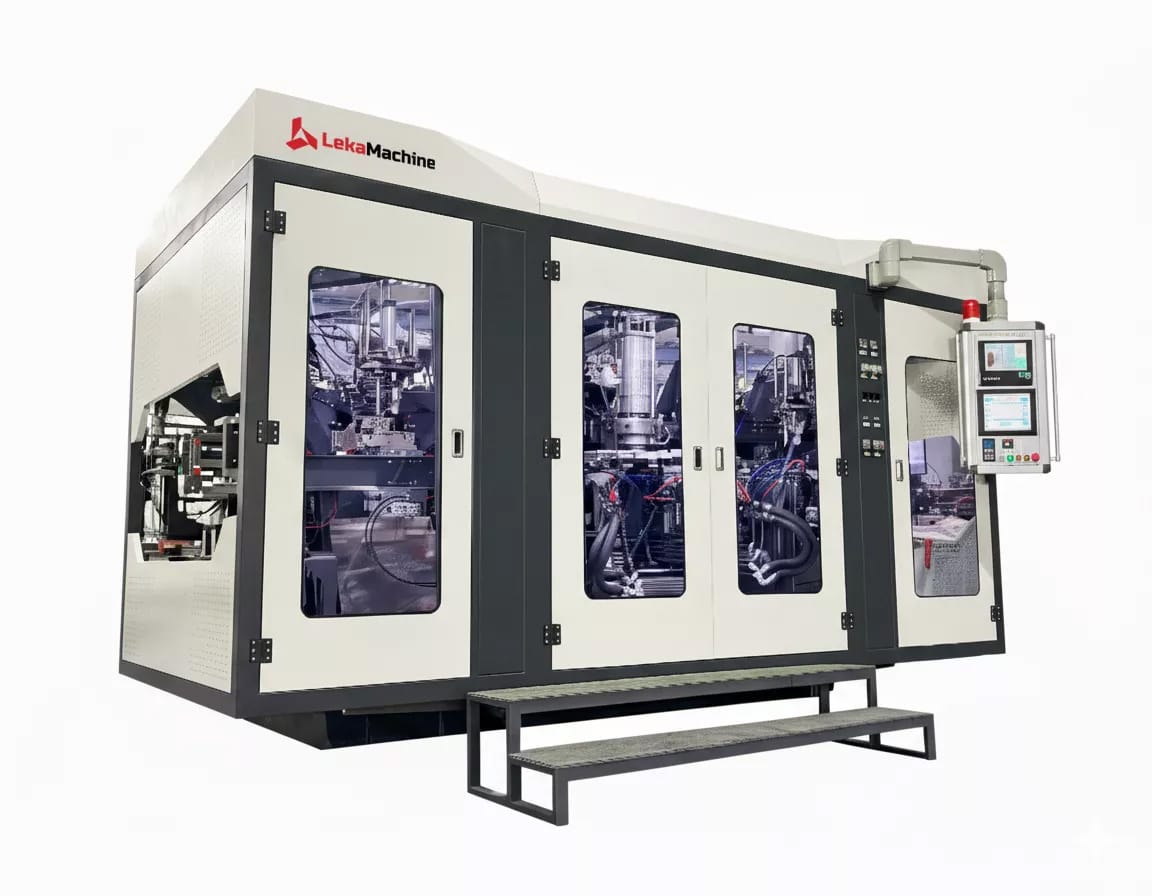
To import an all-electric extrusion blow molding machine safely, you must ensure compliance with three core EU Directives: the Machinery Directive (2006/42/EC), the Low Voltage Directive (2014/35/EU), and the EMC Directive (2014/30/EU). Crucially, the machine must meet the specific harmonized standard EN 422, which governs blow molding safety.
This article breaks down the exact standards, verification methods, and electrical requirements you need to secure your investment and ensure smooth customs clearance.
Which specific EN standards apply to electric blow molding machinery safety?
Our engineering team spends weeks ensuring every servo drive and guarding system aligns with European norms, because we know generic safety standards aren’t enough for high-speed molding. Relying on basic risk assessments without specific industry standards is a common mistake that leads to failed safety audits.
guarding system 1
You must verify that the manufacturer applies EN 422, the specific "Type C" standard for blow molding machines. Additionally, all-electric machines must strictly adhere to the EMC Directive (2014/30/EU) due to high-frequency noise from servo motors, alongside the standard electrical safety requirements of EN 60204-1.
Understanding the Hierarchy of Standards
When we design a machine for the European market, we don’t just pick standards at random. The EU system uses a hierarchy (Type A, B, and C standards), and understanding this helps you verify if a supplier knows what they are doing.
- Type A Standards: These are basic safety concepts (like ISO 12100) applicable to all machinery.
- Type B Standards: These cover specific safety aspects, such as safety distances (ISO 13857) or emergency stop functions (ISO 13850).
- Type C Standards: These are the most critical. They apply to specific machine types.
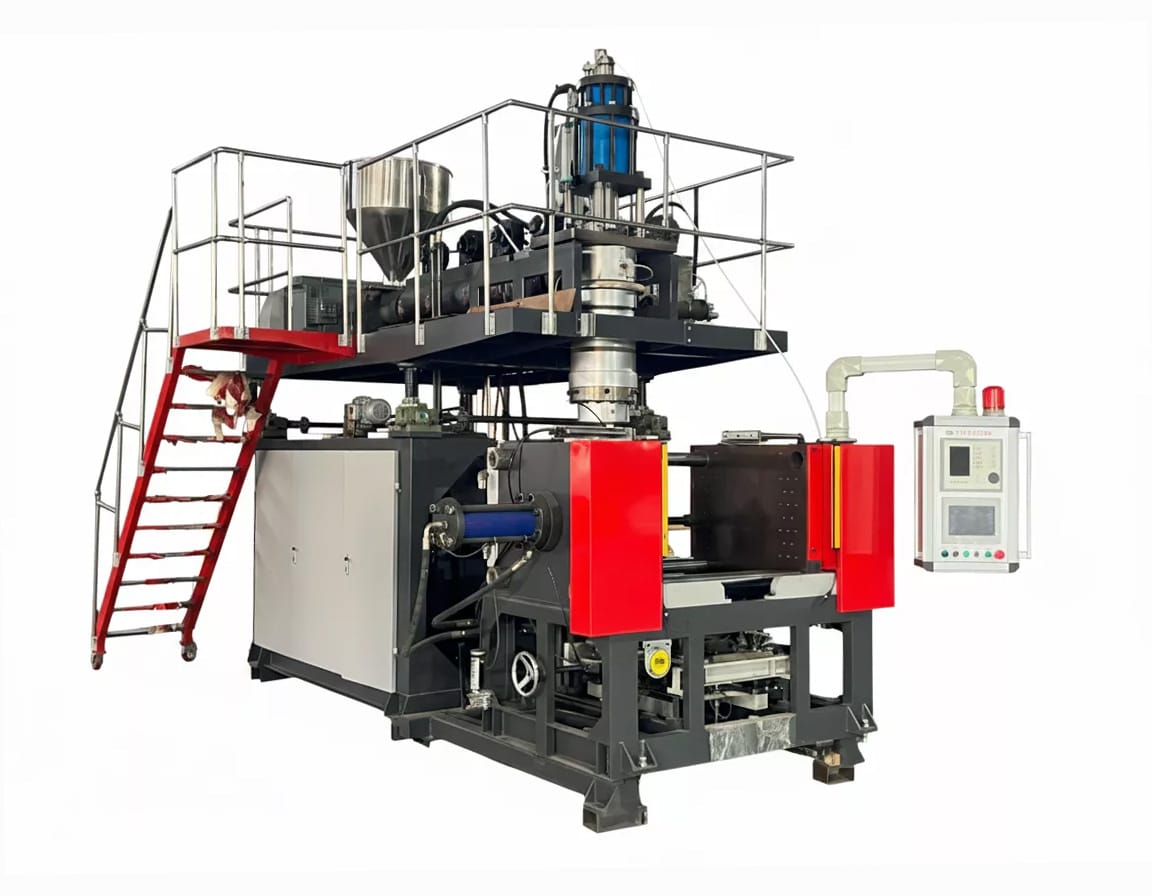
For your import, EN 422 (Plastics and rubber machines – Blow moulding machines – Safety requirements) is the non-negotiable Type C standard. It dictates specific requirements for the clamping unit, the parison head, and the take-out devices. If a supplier only lists ISO 12100 on their declaration, they have likely not performed the rigorous, machine-specific safety checks required for a blow molder.
The All-Electric Challenge: EMC and STO
Since you are importing an all-electric machine, you face stricter scrutiny regarding Electromagnetic Compatibility (EMC). Unlike hydraulic machines, all-electric models use powerful servo motors and drives that generate significant electrical noise.
If the machine does not comply with the EMC Directive (2014/30/EU), it could interfere with other electronics in your factory. Furthermore, unlike hydraulic safety valves, electric machines rely on Safe Torque Off (STO) functions within the drives to stop motion when a guard is opened. You must verify that the safety circuit performance level (usually PLd or PLe under ISO 13849-1) is validated specifically for these electronic drive inhibit functions.
Key Standards Checklist
| Estándar | Full Name | Why it is Critical for You |
|---|---|---|
| EN 422 | Safety requirements for Blow Moulding Machines | The "Type C" standard. Presumes conformity specifically for your machine type. |
| EN 60204-1 | Electrical Equipment of Machines | Governs the safety of the electrical cabinet, wiring, and grounding. |
| EN ISO 13849-1 | Safety-related parts of control systems | Defines the reliability (Performance Level) of safety circuits (e.g., E-stops, Door Interlocks). |
| EMC Directive | 2014/30/EU | Ensures servo drives do not cause electromagnetic interference. |
How do I verify the authenticity of the CE certificate provided by the manufacturer?
We frequently see competitors issue "Certificates of Compliance" that look impressive but hold no legal weight in the European Union. Buying a machine based on a fake or invalid certificate places the entire liability on you, the importer, effectively making you the manufacturer in the eyes of the law.
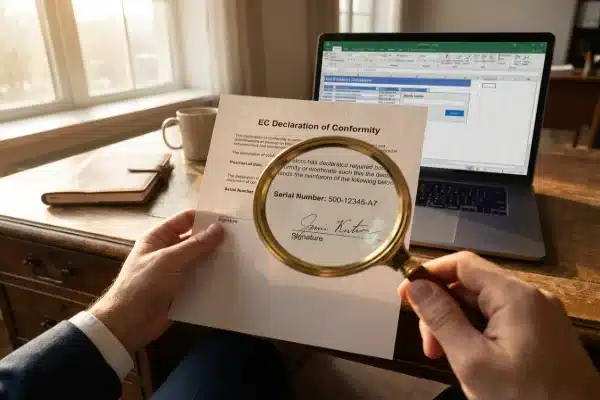
To verify authenticity, demand the original EC Declaration of Conformity (DoC), not just a generic certificate. The DoC must explicitly list your machine’s serial number, the specific standards applied (like EN 422), and be signed by a legal representative of the manufacturer.

The Difference Between a Certificate and a Declaration
Many buyers confuse a "CE Certificate" issued by a third-party lab with the "EC Declaration of Conformity" (DoC). The DoC is the only document that legally matters for customs and market surveillance.
A third-party certificate merely says, "We tested a sample machine on this date." It does not guarantee that su specific machine complies. The DoC, however, is a legally binding statement from the manufacturer (us) taking full responsibility for your specific unit.
The "Authorized Representative" Check
This is the fastest way to spot a fake or non-compliant document. If the manufacturer is located outside the EU (like we are in China), the Machinery Directive requires the DoC to list the name and address of a person established in the Community (EU) who is authorized to compile the technical file.
If the DoC only shows a Chinese address and no European contact for the technical file, strictly speaking, it is invalid. Customs authorities look for this specific line item.
The "Assembly" Certification Trap
Be careful if you are buying a "turnkey solution." If you import a blow molding machine, a separate conveyor, a granulator, and a leak tester, and you link them together into one control system, you have created a new "Assembly of Machinery."
In this scenario, the individual CE marks on each machine are no longer sufficient for the whole line. You, as the integrator/importer, become responsible for certifying the entire assembly as a new production line.
Verifying the Document
Use this table to audit the paperwork you receive before shipping:
| Document Feature | Authentic DoC | Suspicious / Invalid Document |
|---|---|---|
| Title | "EC Declaration of Conformity" | "Certificate of Compliance" or "Attestation of Compliance" |
| Machine ID | Lists specific Model & Serial Number | Lists only a model series (e.g., "AB-Series") generic to all machines. |
| Standards | Lists specific EN standards (EN 422, EN 60204-1) | Lists only generic directives (2006/42/EC) without specific EN standards. |
| Signatory | Signed by a Director/Manager of the Manufacturer | No signature, or signed by the third-party testing lab. |
| EU Representative | Name/Address of person in EU authorized to compile file | No EU address listed; only the factory address in Asia. |
Does the electrical cabinet design meet European low voltage directive requirements?
In our factory, we build cabinets for global markets, but European builds require different components and wiring practices compared to machines destined for Southeast Asia or domestic use. A CE sticker on the door means nothing if the breakers inside aren’t certified or the grounding is insufficient.
The electrical cabinet must comply with the Low Voltage Directive (2014/35/EU), usually verified via EN 60204-1. This requires internal components to bear their own CE or VDE marks, proper color-coding of wires, and verified protective earth (PE) continuity across all metal parts.
Component Level Compliance
European inspectors often open the electrical cabinet first. They are looking for "Component Level Compliance." This means that the individual parts inside—circuit breakers, contactors, relays, and especially the servo drives—must carry their own certification.
If we use a generic, unbranded circuit breaker that lacks a CE or VDE mark, the entire machine fails the inspection, regardless of how safe the mechanical guarding is. For all-electric machines, the servo drives are the heart of the system. We ensure that the drives used (often brands like Inovance, Delta, or Siemens) carry valid CE markings specifically for the Low Voltage and EMC directives.
Low Voltage 2
Safe Torque Off (STO) vs. Contactors
Old-school machines used big magnetic contactors to cut power to motors when a door opened. Modern all-electric machines use Safe Torque Off (STO).
STO is a safety function built into the servo drive that prevents the motor from generating torque without actually cutting the main power. This allows for faster restarts. However, for CE compliance, you cannot just trust the software. The STO function must be hardwired into a safety relay or safety PLC.
Critical Check: Ask your supplier for the electrical schematic. Look for the safety circuit. If the E-stop button runs directly into a standard PLC input rather than a dedicated Safety Relay or Safety Controller, the machine is no compliant.
Wiring and Color Coding
EN 60204-1 is very specific about wire colors to prevent electrocution during maintenance:
EN 60204-1 3
- Black: AC Power circuits.
- Light Blue: Neutral (and solo Neutral).
- Green/Yellow: Protective Earth (and debe be used for nothing else).
- Orange: Interlocking control circuits that remain live even when the main switch is off (e.g., cabinet lighting or service sockets).
If you open the cabinet and see a "rainbow" of random wire colors, it is a clear sign the manufacturer does not understand EU standards.
Machinery Directive 4
Electrical Safety Audit Points
| Checkpoint | Requirement (EN 60204-1) | Common Non-Compliance |
|---|---|---|
| Main Switch | Must be lockable in the "OFF" position. | Standard rotary switch without padlock holes. |
| Door Interlock | Cabinet doors cannot open while power is on (unless using a key). | Doors open freely without disengaging power. |
| Grounding | All doors and panels must have a PE bonding wire connected to the frame. | Metal doors rely on hinges for grounding (illegal). |
| Finger Safety | All live terminals (IP2X) must be covered. | Exposed copper on breaker terminals. |
What safety documentation must accompany the machine for customs clearance?
We have successfully exported machines to Germany, France, and Italy, and we have learned that missing a single piece of paper can leave a container stuck at the port for weeks. You are not required to have every engineering drawing in your hand, but you must have specific documents ready for immediate presentation.
performance level 5
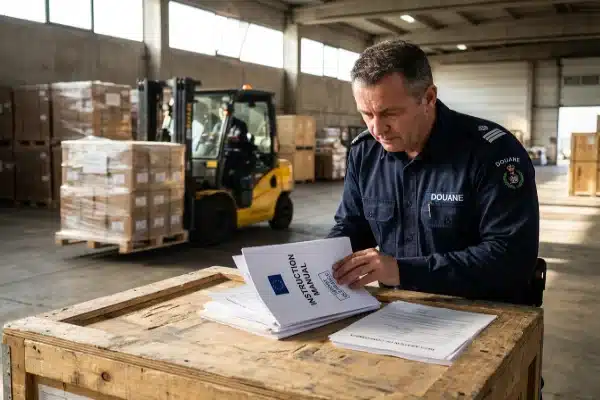
For customs clearance, the machine must be accompanied by the original signed EC Declaration of Conformity and the Instruction Manual in the official language of the destination country. You must also ensure the Technical Construction File (TCF) is available for compilation by your authorized representative within a reasonable time.

The Three Essential Documents
When the container doors open, customs agents or market surveillance authorities are looking for three things immediately:
EMC Directive (2014/30/EU) 7
- The Declaration of Conformity (DoC): As discussed, this must be the original, signed document. A photocopy is often rejected. It should be inside the packing list envelope or attached clearly to the machine.
- The CE Nameplate: This must be permanently fixed to the machine (riveted, not just a sticker). It must verify the manufacturer, the serial number, the year of construction, and the CE mark itself (which must be at least 5mm high).
- The Instruction Manual: This is where many importers get caught. The Machinery Directive strictly requires that the instructions (Safety, Operation, Maintenance) be translated into the official language of the Member State where the machine is placed. If you import to France, an English-only manual is a violation of the law.
The Technical Construction File (TCF)
You do no need to physically possess the full Technical Construction File (TCF) at the moment of import. The TCF contains your proprietary drawings, electrical schematics, risk assessment calculations, and test reports.
However, the DoC acts as a promise that this file exists. If authorities question the safety of the machine, they will issue a formal request to the "Authorized Representative" listed on your DoC. You usually have 24 to 48 hours to produce the relevant parts of the TCF.
Electromagnetic Compatibility (EMC) 8
Critical Tip: Before you pay the final balance to your supplier, ask them to show you the "Risk Assessment Report" (based on ISO 12100). You don’t need to keep it, but seeing it proves they actually did the engineering work rather than just buying a CE sticker.
Language Requirements for HMI
Don’t forget the machine’s interface (HMI). The requirement for local language extends to the warning messages on the screen.
If an operator in Spain sees an error message in English or Chinese, it is a safety hazard. We ensure our HMIs support multi-language switching, but you must confirm that the specific language for your region is pre-loaded and accurate, including all safety warnings and error logs.
Conclusión
Importing an all-electric blow molding machine into the EU requires diligence beyond comparing price and output. You must verify compliance with EN 422, ensure the Declaration of Conformity lists a European representative, and check that the electrical cabinet meets LVD standards with verified components. By auditing these documents and physical features before shipment, you protect your business from customs seizures and ensure a safe, legal production line.
Notas al pie
- Educational resource defining proper machine guarding principles. ↩︎
- Official legal text of the EU Low Voltage Directive. ↩︎
- Official IEC page for the international standard basis of EN 60204-1. ↩︎
- Official legal text of the EU Machinery Directive. ↩︎
- Industry expert explanation of Safety Performance Levels (PL) under ISO 13849-1. ↩︎
- Major drive manufacturer explaining the STO safety function. ↩︎
- Official European Commission guide to the EMC Directive. ↩︎
- General background definition of EMC concepts. ↩︎
- Official standard page for emergency stop function requirements. ↩︎
- Official standard page for general principles for design and risk assessment. ↩︎


0 Comentarios