

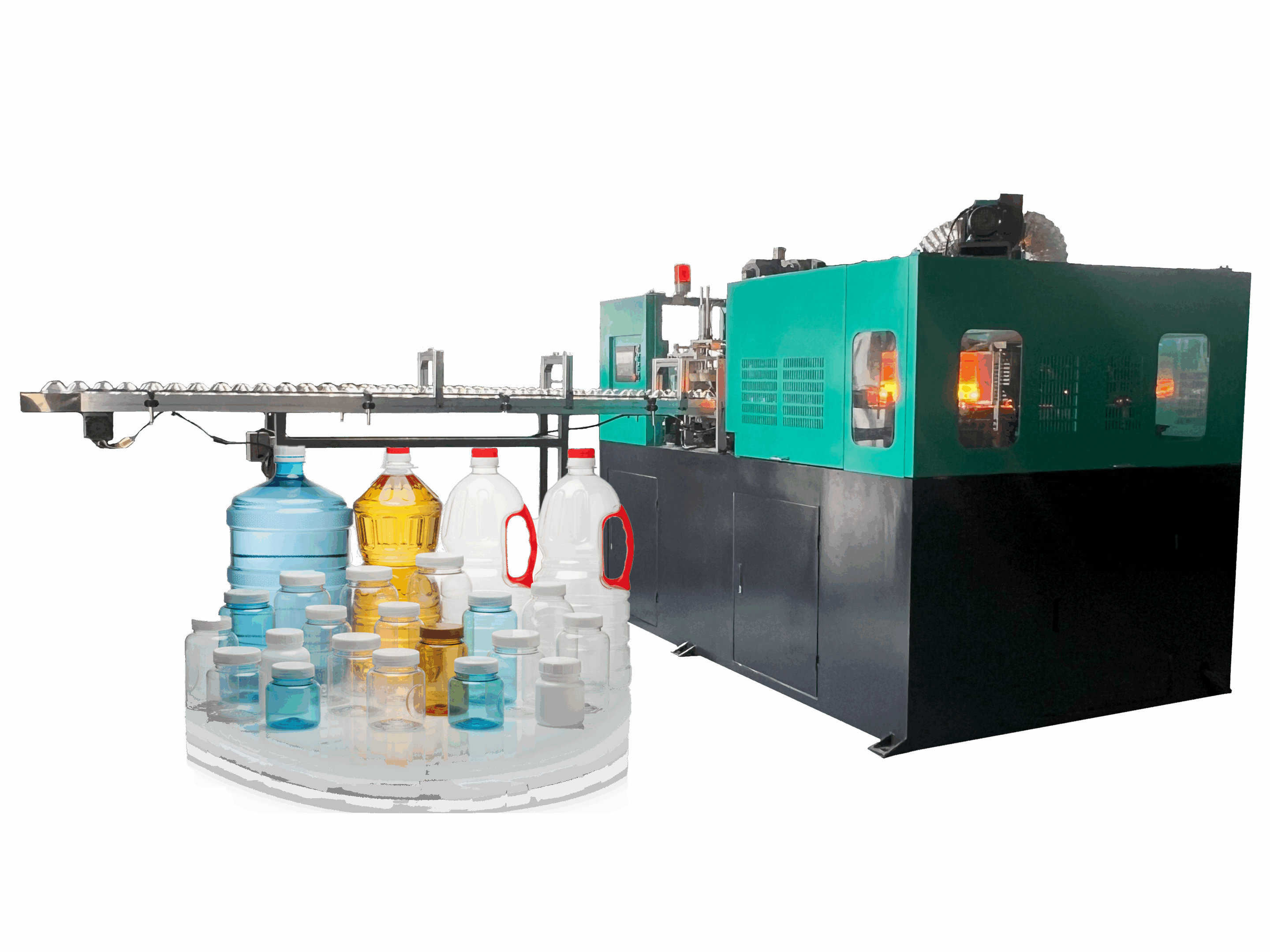
Guía Definitiva de Máquinas de Moldeo por Soplado de Extrusión: Los 10 Mejores Fabricantes para el Mercado Estadounidense en 2025
All-electric motion, faster changeovers, and verifiable U.S. service coverage are redefining how American plants select extrusion blow molding machines—because uptime, kWh per 1,000 bottles, and parts availability pay back faster than sticker discounts ever will. This guide distills the short list, adds plain‑English pros and cons, and shows exactly how to validate claims before signing a PO.
Quick Links: Manufacturer Summary
- Bekum America — bekumamerica.com
- Kautex — kautex.com
- Wilmington Machinery — wilmingtonmachinery.com
- Ingeniería Graham — grahamengineering.com
- R&B Plastics Machinery — rbplasticsmachinery.com
- Jomar — jomarcorp.com
- Mecanoplástica — meccanoplastica-group.com
- Bekum (Global) — bekum.com
- Kautex Group — kautex-group.com
Use these links to verify portfolios, service footprints, and current options; always request U.S. technician coverage maps, spare‑parts lists, and remote diagnostics details prior to RFQ.
What Is Extrusion Blow Molding?
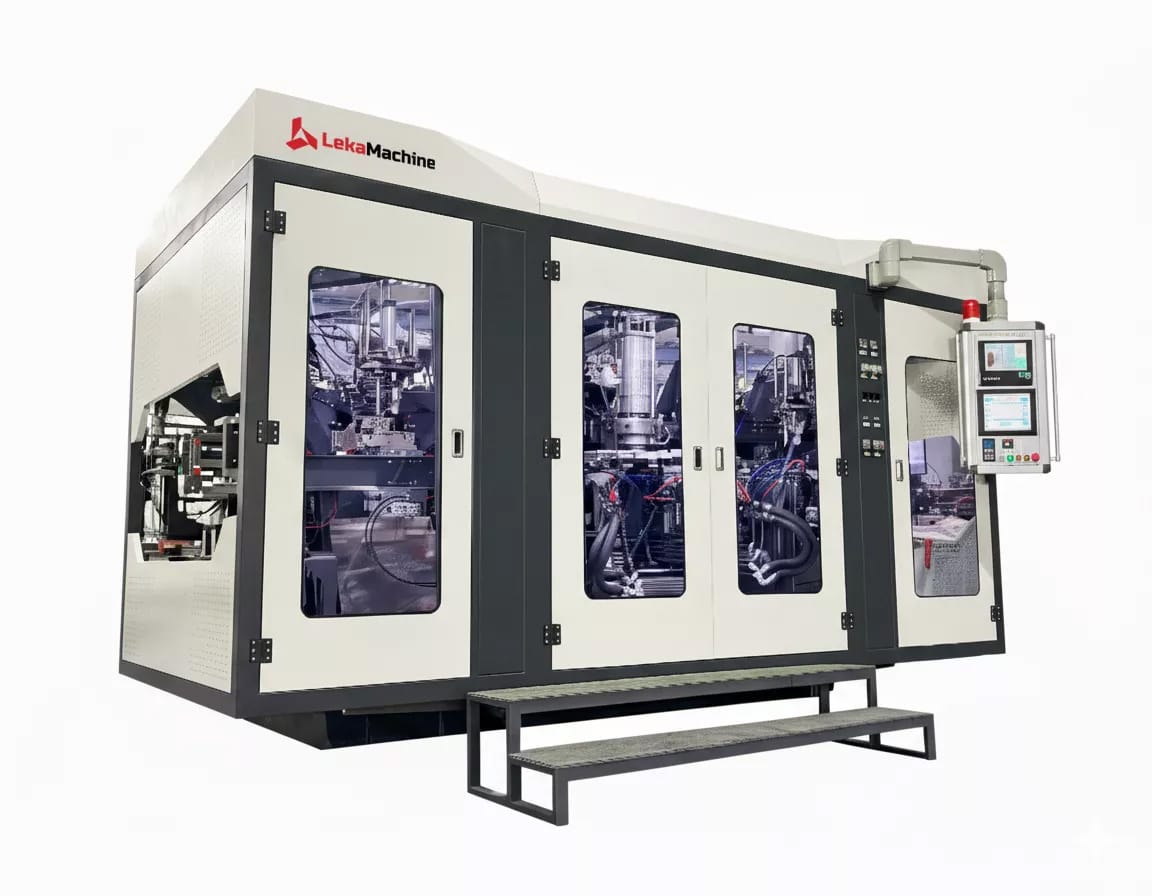
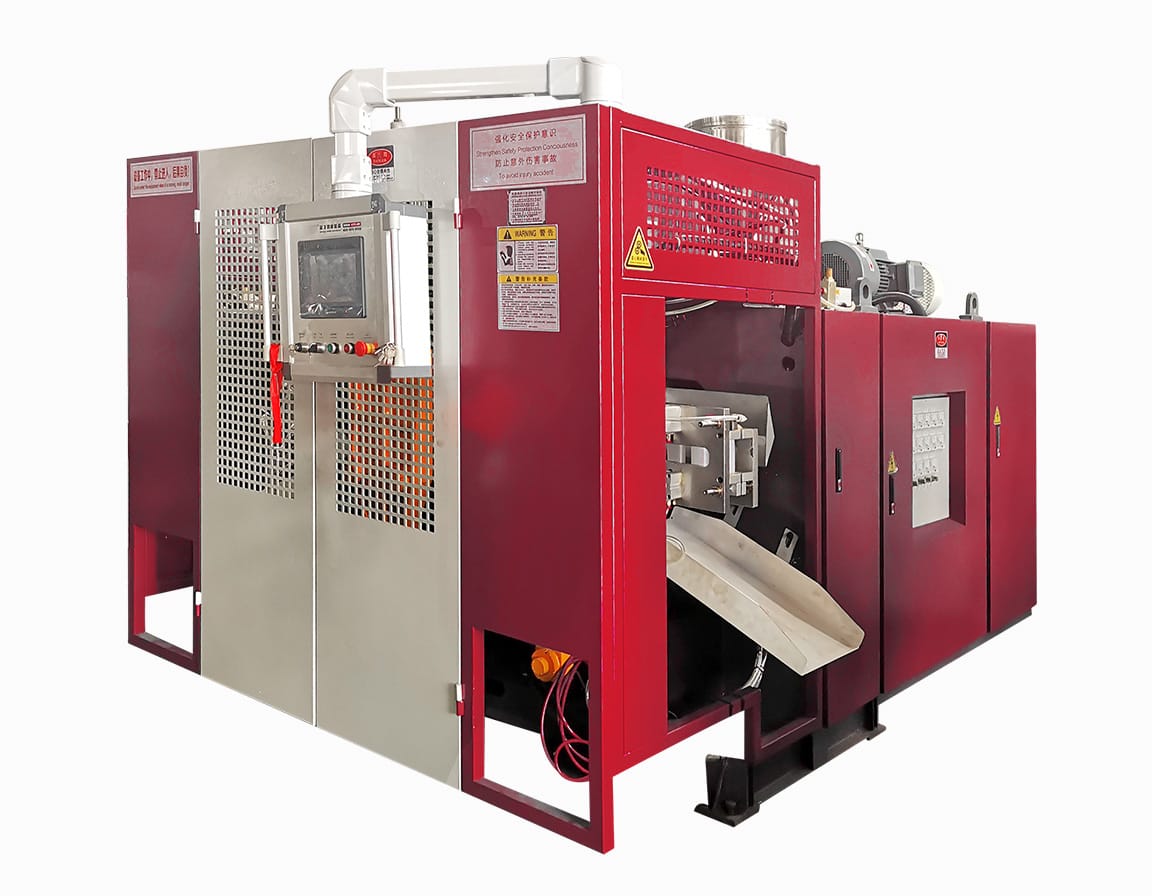
El moldeo por soplado de extrusión (EBM) extrudes a molten parison, closes a cooled mold, inflates with air, then cools and ejects—ideal for bottles, jerrycans, ducts, and technical parts where hollow geometry wins.
Compared with alternative processes, EBM scales well for larger parts and multilayer barrier structures, while producing more trim and requiring careful parison control to hit tight tolerances.
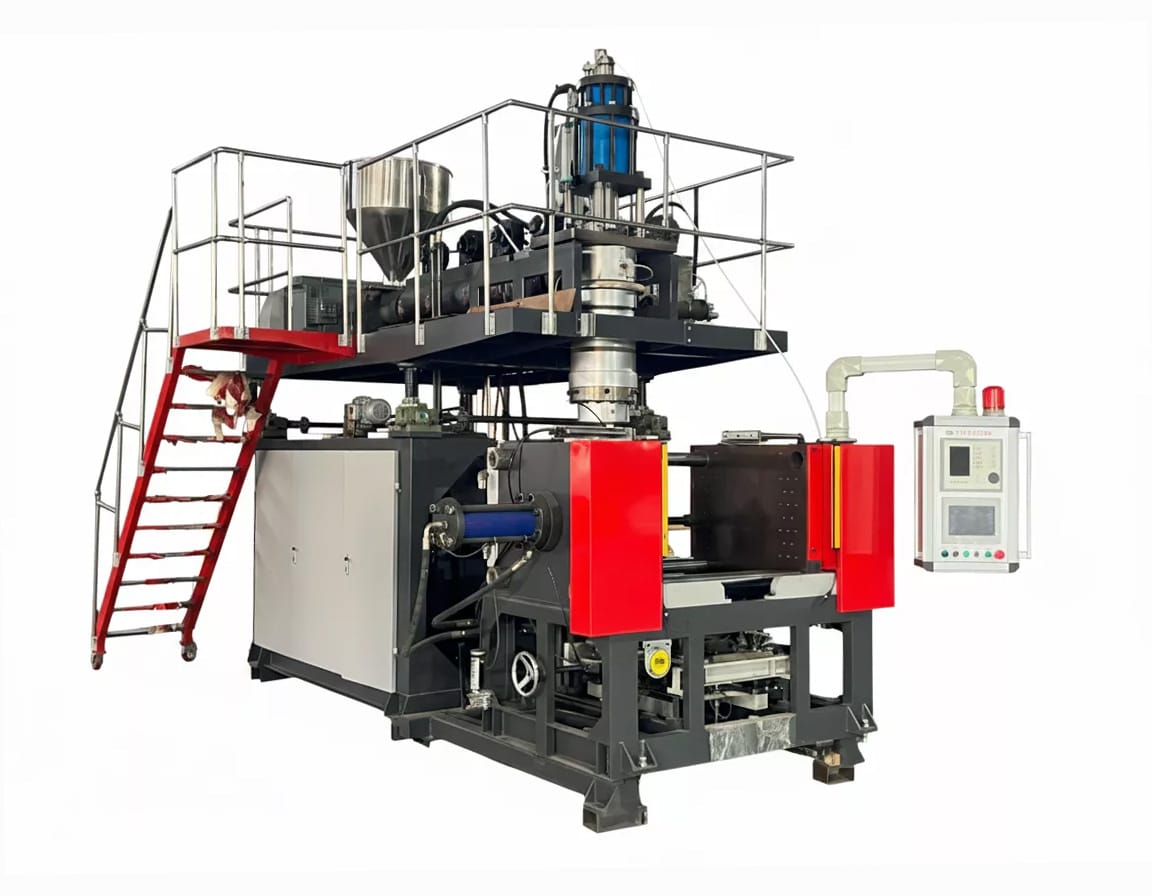
Common machine formats include continuous shuttle (high‑mix bottles), rotary wheel (high throughput), and accumulator head (large/thick‑wall parts and handleware).
Why EBM Matters in 2025
All‑electric platforms and smarter services shift buyer focus from capex to lifecycle ROI: lower kWh, tighter wall control, reduced maintenance, and faster changeovers.
Industry growth is steady, but competitive gains come from data‑backed choices: energy baselines, OEE, and guaranteed service/parts near the plant—not just brochure specs.
Shortlisting from credible roundups and moving quickly to a structured pilot often beats months of desk research and reduces decision risk.
How I Choose a Manufacturer
Platform fit first: continuous for high‑mix bottles, accumulator head for 5–30L jerrycans and thick walls, rotary when chasing maximum, repeatable throughput on uniform SKUs.
Model total cost of ownership—not just price—by including energy per cycle, PM schedules, changeover minutes, scrap, residual value, and service response time; then verify with a 2–4 week pilot.
Insist on U.S. readiness with technicians, parts depots, and remote diagnostics plus SLAs that tie to MTTR and escalation pathways.
Top 10 Extrusion Blow Molding Machine Manufacturers for U.S. Buyers
Bekum America (Michigan, USA)

Bekum America combines a U.S. service base and apprenticeship‑driven talent pipeline with expanded electric shuttle capabilities and retrofit/service programs highlighted heading into major 2025 shows.
Productos principales
EBLOW electric shuttle series, XBLOW large industrial machines (IBC/drums/tanks), mono/tri/co‑ex spiral heads, and quick‑change solutions documented in industrial brochures.
Ventajas
Strong multilayer consistency, faster color/material changeovers, high‑efficiency extrusion drives, and mature on‑site/retrofit services for uptime protection in the U.S.
Contras
Premium configurations and multilayer options sit in higher budget bands; lead times on large systems can track global demand cycles—plan capacity early.
Kautex (U.S. Subsidiary Coverage)

Kautex spans packaging and industrial parts with robust process control and remote support; it’s a fit when consistency and compliance drive the business case.
Productos principales
KEB GREY flexible platform and value‑oriented KCC series (single/double station), with multilayer, handleware, angled neck, and bottom‑blow options via modular kits.
Ventajas
Quick mold changes, compact cells, energy‑saving drives, lower air consumption, and modern HMI (BC6) for multilayer and technical parts.
Contras
Higher‑end flexibility carries cost; entry KCC hydraulic platforms trade cleanliness/energy for price—evaluate against all‑electric targets.
Wilmington Machinery (USA)

Known for rotary wheel EBM, Wilmington is commonly shortlisted for high‑throughput CPG bottle lines and multilayer capability where line speed rules.
Productos principales
Two‑wheel rotary platforms reported at very high bottle‑per‑minute rates across small formats, plus multilayer barrier bottle systems and modular wheel change.
Ventajas
Exceptional throughput, wheel service flexibility, energy benefits at scale, and modularity that helps long‑term line economics.
Contras
Best with standardized SKUs; high‑mix/small‑lot agility requires careful planning and cost modeling; initial cell layout is more complex.
Graham Engineering (USA)

Graham brings deep extrusion and custom system integration, frequently chosen in medical/industrial where process control and validation dominate.
Productos principales
Customized EBM systems with application‑specific controls and turnkey integration for regulated or technically demanding parts.
Ventajas
High customization depth, disciplined process control, and cross‑industry integration experience for complex compliance.
Contras
Customization increases budget and timeline; project management cadence is critical for success.
R&B Plastics Machinery (USA)
R&B’s fully electric shuttle introductions emphasize energy savings, multilayer capability, and servo wall‑thickness control, alongside strong retrofit/service options.
Productos principales
All‑electric RBS‑E shuttle, multilayer configurations, servo parison control, and upgrade packages for installed bases.
Ventajas
Lower energy consumption, improved thickness stability, and retrofit pathways that protect existing capital.
Contras
All‑electric systems carry higher upfront cost; advanced options may extend commissioning and tuning.
Jomar (USA)
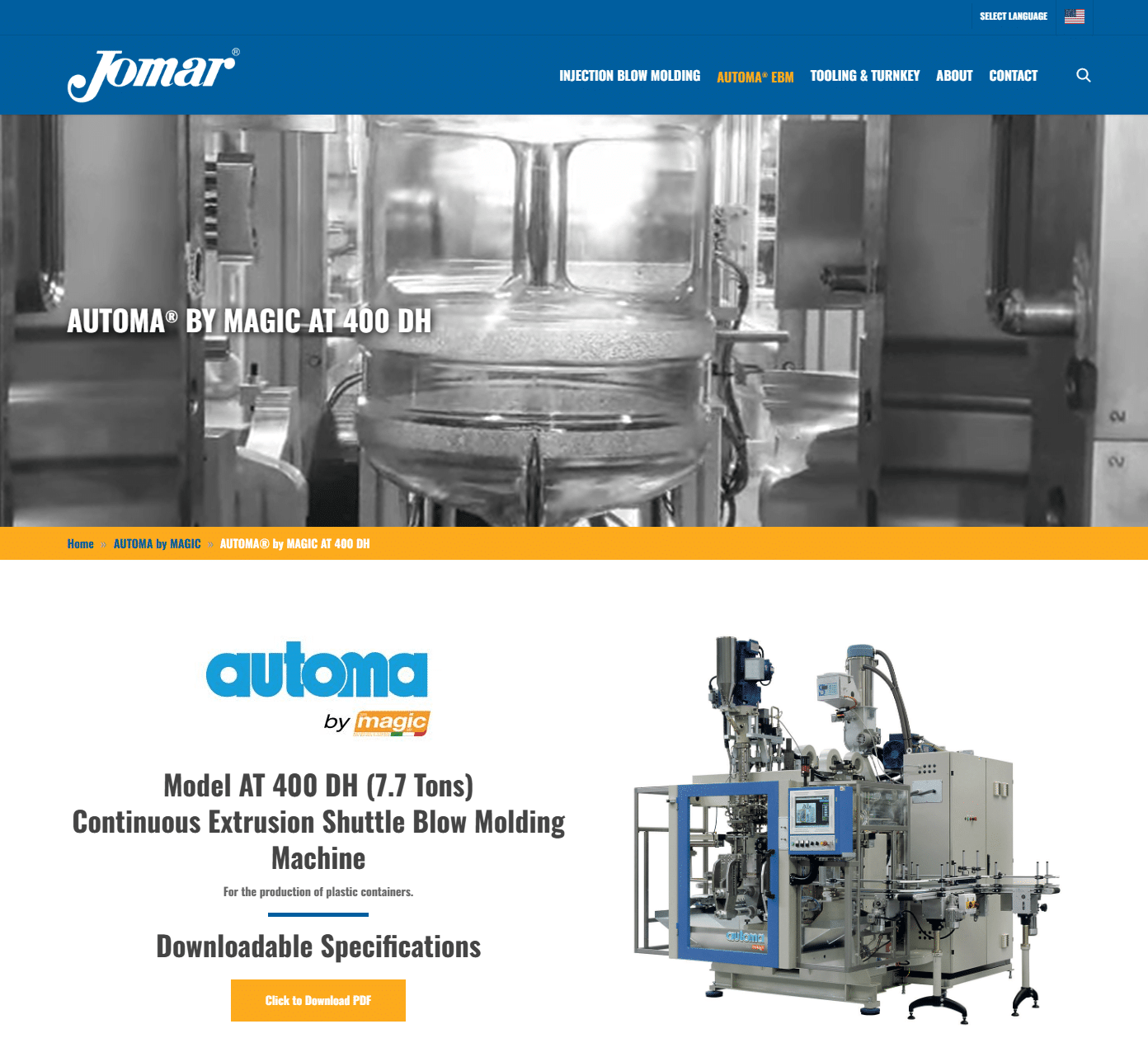
Jomar’s reputation centers on operator‑friendly, durable machines with widespread global installs—an option for reliability‑first operations.
Productos principales
Blow molding equipment and process packages emphasizing reliability and ease of operation for continuous production environments.
Ventajas
Fast ramp‑up, straightforward maintenance, and a reputation for dependable output across shifts.
Contras
For advanced multilayer barriers or extreme lightweighting, confirm specific model capabilities and potential third‑party integrations.
Magic North America

Magic’s all‑electric focus and North American presence make sense for energy‑sensitive and cleanliness‑critical personal care or household lines.
Productos principales
All‑electric EBM platforms such as the MTM line aimed at thin‑wall efficiency, plus cleanliness‑oriented production packages.
Ventajas
Strong energy efficiency, low maintenance, cleanliness benefits, and stable wall control during frequent changeovers.
Contras
Higher initial investment; for very large, thick‑wall parts or challenging melt indexes, run application‑specific trials.
Meccanoplastica (UE con alcance en EE. UU.)

Offering EBM/IBM/SBM under one roof, Meccanoplastica provides a one‑vendor approach for groups that want multiple processes aligned.
Productos principales
EBM, IBM, and SBM equipment covering PET/HDPE and additional materials across a broad application set.
Ventajas
Wide process coverage, flexible combinations, and cross‑process support to simplify supplier management.
Contras
Portfolio breadth raises selection complexity—plan extended sampling and commissioning.
Bekum (Global + U.S.)
Global platform depth combined with a U.S. service network supports multi‑plant standardization and harmonized maintenance strategies.
Productos principales
EBLOW electric shuttles, XBLOW industrial machines, multilayer heads, and energy‑efficient drive packages.
Ventajas
Noted multilayer uniformity and energy‑efficient extrusion; dual global/U.S. service reduces downtime risk.
Contras
Premium tiers impact budgets; delivery schedules require early coordination against global capacity.
Kautex Group (Global + U.S.)
Deep capability in industrial and packaging with process discipline and a mature support infrastructure for scale.
Productos principales
KEB GREY platform, KCC series, and modular options for technical parts, multilayer, handleware, and angled necks, coupled with remote‑support toolsets.
Ventajas
Flexible platforms, fast changeovers, energy and ergonomics focus—suited to multi‑line group deployments.
Contras
Hydraulic entry platforms differ materially from high‑end flexible systems; align energy/cleanliness targets with budget.
Factors to Consider When Choosing an Extrusion Blow Molding Machine Manufacturer for a Startup
Cash flow and risk tolerance dominate early phases: avoid overspecifying—start with the platform that matches the first 12–18 months of SKUs, then plan upgrade paths.
Demand transparent energy and OEE baselines; an all‑electric option may look pricier but can shorten payback via 20–50%+ energy savings and reduced maintenance.
Prioritize U.S. service readiness and SLAs—local technicians and parts depots are worth more than marginal capex savings if they prevent missed retail windows.
How to Find an Extrusion Blow Molding Machine Manufacturer for Your Startup
Start with vetted roundups and directories to build a short list, then go straight to pilots rather than endless brochure comparisons.
Use RFQs that require kWh per cycle at three rates, mold change minutes, OEE with SKU mix, spares lists, and commissioning scope, so quotes compare apples to apples.
Domestic vs. Overseas Extrusion Blow Molding Machine Manufacturers
Domestic partners often offer faster responses, easier logistics, and alignment with North American regulations, reducing compliance and continuity risks.
Overseas options can bring tooling or equipment cost advantages, but watch for longer transit, variable materials, and contractual risks that can erase upfront savings.
Case studies show firms switching back to U.S. manufacturing for reliability and time‑to‑market when offshore risks compound; evaluate total landed cost, risk, and speed.
Other Options Than Extrusion Blow Molding Machine Manufacturers
Consider contract blow molders to validate demand before capex—directories list numerous North American providers able to run early volumes.
Explore engineering and tooling partners for mold design and sampling to de‑risk early SKUs and shorten learning cycles before machine purchase.
If volumes or geometries don’t justify EBM, assess injection blow or stretch blow trade‑offs with specialized vendors before committing to one platform.
Practical Playbook: Pilots, Metrics, and SLA
Shortlist 3–5 vendors, request energy/uplift data and changeover timings for the exact bottles, and run a 2–4 week pilot with production molds.
Track OEE, scrap rate, cycle time, and kWh per 1,000 bottles; negotiate SLAs tied to MTTR and verify remote diagnostics during the pilot.
Decision rule: choose the platform that wins on power draw, uptime, and speed‑to‑change for the target SKU mix—let the numbers make the case.
Conclusión
In 2025, the smart buy pairs the right platform (continuous, accumulator, or rotary) with proven U.S. service and data‑backed TCO; that’s how a “cheap” machine stops being expensive.
Use the summaries and links above to engage vendors, force apples‑to‑apples RFQs, and pilot under a draft SLA before committing; momentum comes from clarity, not complexity.
external linkedin
Plastics Machinery & Manufacturing — Wilmington Machinery two-wheel rotary blow molding machine boosts efficiency: https://www.plasticsmachinerymanufacturing.com/blow-molding/article/21153904/wilmington-machinery-two-wheel-rotary-blow-molding-machine-boosts-efficiency
Verified Market Reports — Extrusion Blow Molding Machines Market Size, SWOT, Industry Outlook: https://www.verifiedmarketreports.com/product/extrusion-blow-molding-machines-market/
Dataintelo — Extrusion Blow Molding Machines Market Report: https://dataintelo.com/report/extrusion-blow-molding-machines-market
Wilmington Machinery — Debuts Series III B Rotary Blow Molding Machines (aka “Wheels”): https://wilmingtonmachinery.com/new-rotary-blow-molder-aka-wheel-debuts/
Wangbrand — Achieving Energy Efficiency in Extrusion Blow Molding Machines: https://www.wangbrand.com/en/faq_07.htm


0 Comentarios