
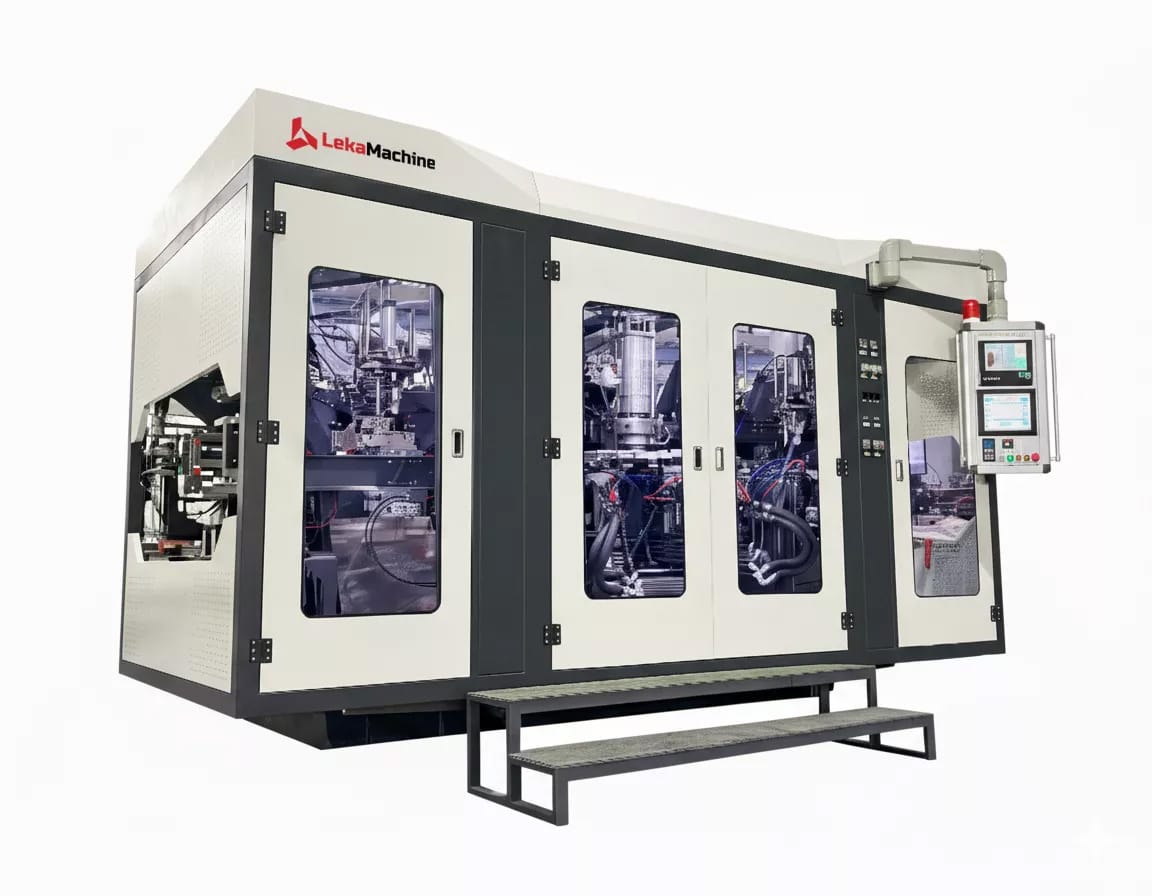
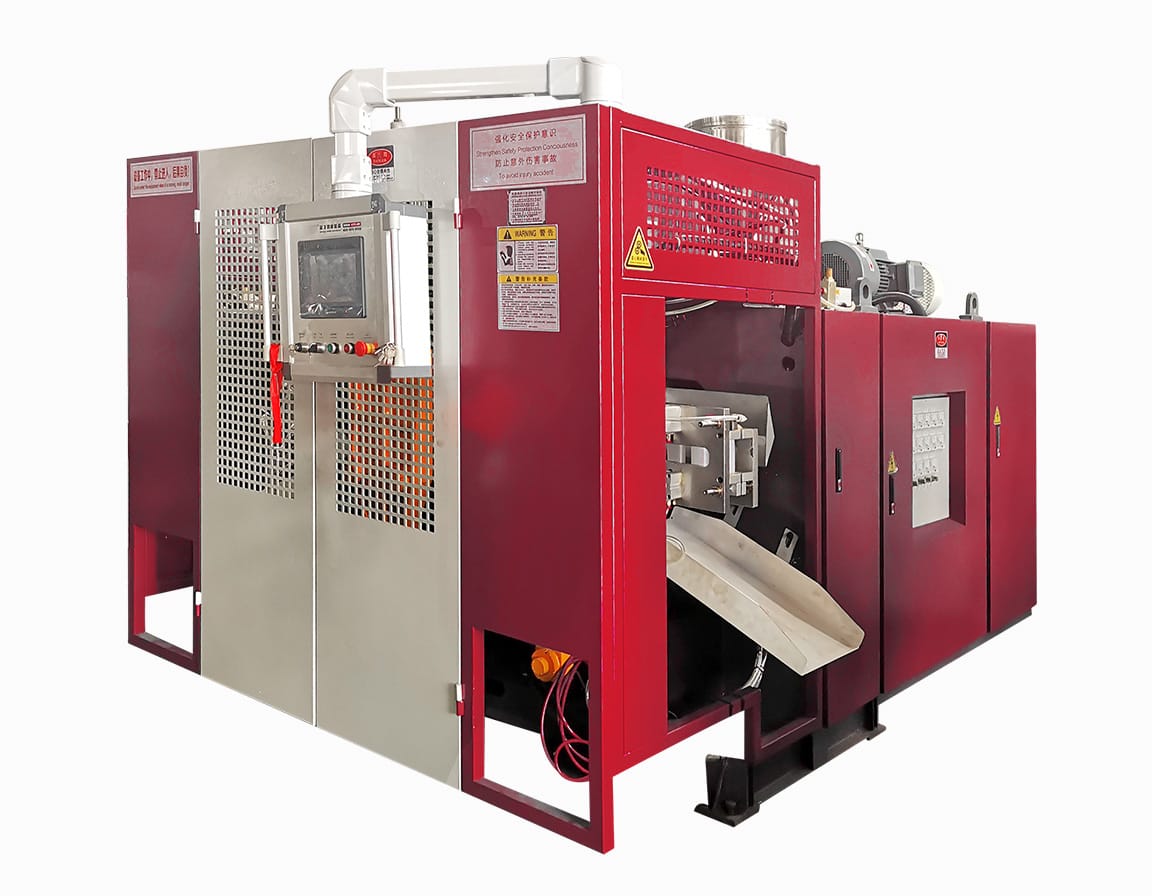
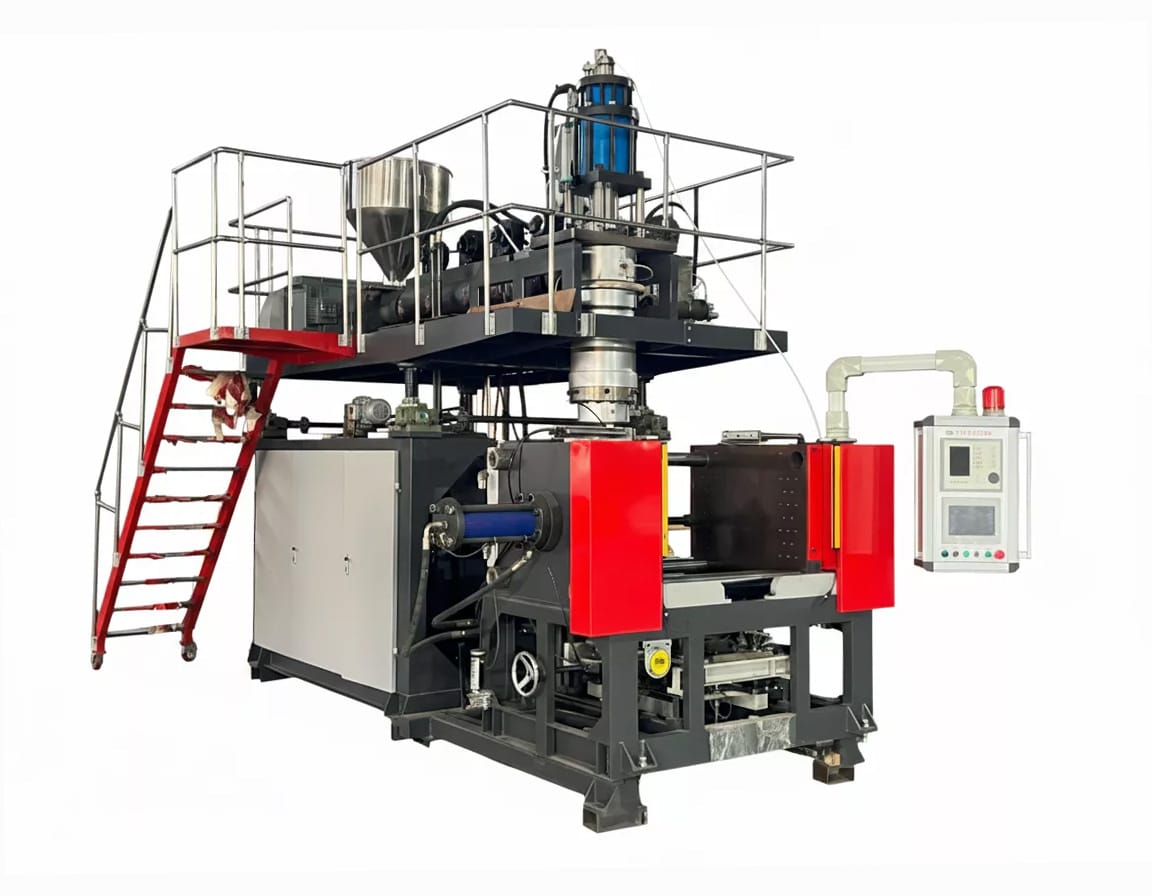
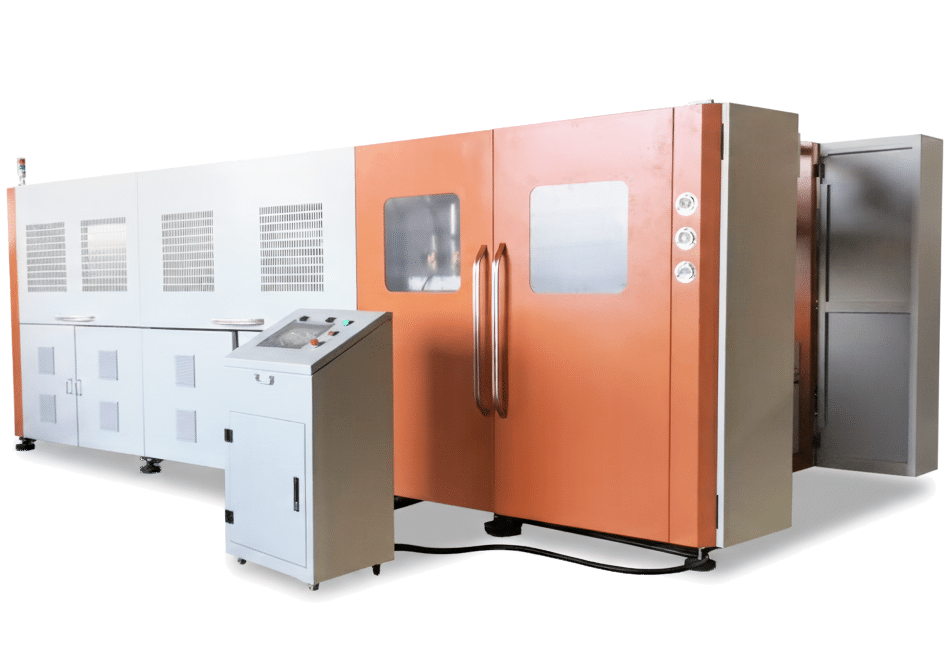
Beyond Monolayer Limits: How Multilayer Co-extrusion Blow Molding Is Revolutionizing the Industry
Meta Description: Struggling with raw material costs and PCR ratios in blow molding? Dive deep into Multilayer Co-extrusion Blow Molding technology to see how precise parison layering solves recycling challenges, high-barrier storage needs, and cost optimization without sacrificing aesthetics.
Tabla de contenido
- 1. Introduction: The “Sandwich” Revolution in Blow Molding
- 2. What is Multilayer Co-extrusion Blow Molding?
- 3. Core Application 1: Solving the PCR & Regrind Challenge
- 4. Core Application 2: Creating “The Iron Shield” – High Barrier Containers
- 5. Industry Trend: The View Stripe
- 6. Conclusion: From “Optional” to “Essential”
Introduction: The “Sandwich” Revolution in Blow Molding
Para modern hollow blow molding factories, the market environment is becoming unprecedentedly harsh. Brand owners and regulators have created a challenge akin to an “Impossible Triangle”: contenedores de plástico must now contain 30%-50% PCR (Post-Consumer Recycled) material to meet environmental compliance, yet they must maintain a flawless surface finish. Furthermore, if the containers are for food or chemicals, they require exceptional barrier properties.
Using traditional Monolayer Extrusion, this is nearly an impossible task. Once PCR or regrind is mixed in, the botella surface often suffers from black spots, gels, or discoloration. On the other hand, simply thickening the bottle wall to improve barrier properties results in massive raw material waste.
This is where Multilayer Co-extrusion Blow Molding emerges as the only viable solution. It is not just a technical upgrade; it is a revolution in material management. By structuring different functional materials like a precision-engineered “sandwich,” this technology has fundamentally changed the logic of socio de fabricación plastic containers.
What is Multilayer Co-extrusion Blow Molding?
Unlike simple monolayer molding, a multilayer co-extrusion system is equipped with multiple extruders. These extruders simultaneously feed different types of molten plastic into a precision Co-ex Die Head.
Inside this die head, different plastic fluid streams are layered on top of each other at a microscopic level, finally converging to form a concentric, multi-layered tubular tubular. This parison is then enclosed by the mold and blown into shape. The core of this technology lies in the precise control of rheology—ensuring uniform thickness of different layers upon convergence and maintaining sufficient physical strength at the pinch-off area of the bottle base.
Core Application 1: Solving the PCR & Regrind Challenge (Cost & Compliance)
This is currently the most widespread aplicación in the personal care and detergent industries, typically utilizing a 3-Layer Co-extrusion Structure.
In monolayer moldeo por soplado, the flash, spruce, and purchased PCR materials, if used directly, can severely impact the gloss and appearance of the bottle. Multilayer co-extrusion solves this perfectly through an “A/B/A” or “A/B/C” structure:
- Outer Layer: Uses virgin material and high-quality masterbatch. This layer is responsible for the “face” of the product, ensuring high gloss, a smooth touch, and pure color.
- Capa intermedia: This is the “hidden gold mine.” Factories can conceal up to 40%-60% of PCR material or internal production regrind (flash) in this layer.
- Inner Layer: Uses virgin material to ensure safety and chemical stability where the plastic contacts the content (especially crucial for cosmetics or sensitive liquids).
The Verdict: The customer sees a pristine, new-material look, but you are actually delivering an eco-friendly container containing a high percentage of low-cost recycled material—meeting regulations while significantly slashing raw material costs.
Core Application 2: Creating “The Iron Shield” – High Barrier Containers
For sectors like food (e.g., ketchup, jams), agrochemicals, and automotive fuel tanks, standard HDPE bottles cannot effectively block oxygen ingress or solvent evaporation.
Multilayer co-extrusion technology allows fabricantes to embed an ultra-thin functional layer within the parison, typically using a 6-Layer Structure (e.g., HDPE / Tie / EVOH / Tie / Regrind / HDPE).
- EVOH/PA Barrier Layer: Although expensive, its thickness in a co-extrusion structure may only account for 3%-5% of the total wall thickness. Yet, this thin layer can reduce the Oxygen Transmission Rate (OTR) by thousands of times, preventing oxidation and discoloration of the contents.
- Tie Layer: Since EVOH and PE are chemically incompatible, specialized tie resins (adhesives) are required to bind them tightly together, preventing delamination of the bottle structure.
This structure gives plastic bottles preservation capabilities comparable to glass, while retaining the advantages of being lightweight and shatterproof.
Industry Trend: The View Stripe
Beyond physical performance upgrades, advanced co-extrusion die heads offer a unique functional aesthetic: the View Stripe (or Visistripe).
By co-extruding a thin, transparent line onto an opaque bottle body (common in bidones, lubricant oil bottles, and agrochemical containers), users can clearly see the remaining liquid level inside. What was once considered a high-end feature is now becoming a standard configuration for many industrial containers. Achieving this via co-extrusion requires no additional post-processing and results in an extremely stable structure.
Conclusion: From “Optional” to “Essential”
Multilayer Co-extrusion Blow Molding technology is no longer a “black technology” exclusive to top-tier manufacturers. With the tightening of global “plastic reduction” policies, the enforcement of mandatory PCR usage, and the volatility of raw material prices, it has become a critical tool for the survival and profitability of moldeo por soplado factories.
Whether the goal is to digest internal flash waste to reduce costs through a “sandwich structure,” or to enter the high-margin barrier packaging market, embracing co-extrusion processes is the inevitable path for modern moldeo por soplado enterprises to enhance their core competitiveness.


0 Comentarios