
Extrusion Blow Molding: Where You’ll See It Used (And Which Machine You Need)
You probably touch a product made by extrusion blow molding (EBM) every single day. From the shampoo bottle in your shower to the jerry can in your garage, EBM is the standard method for making hollow plastic parts.
But if you are reading this, you probably aren’t just curious about plastic. You are looking for a manufacturing solution. You might be asking, “how do I make plastic jerry cans?” or “what is the right automotive parts blow molding machine?”
En Máquina Leka, we know that different products need different equipment. It’s not one-size-fits-all. Here is a breakdown of where EBM is used and which of our machine series handles the job best.
1. Consumer Packaging: High Speed & High Volume
This is likely the most common category. It includes shampoo bottles, cosmetic containers, detergent bottles, and yogurt drinks.
In this sector, margins are tight. If you are an OEM packaging factory, your biggest enemies are downtime and energy costs[cite: 147, 150]. You need a machine that runs fast and uses less power per bottle.
El desafío:
- You need to produce millions of units a year.
- You are under pressure to “lightweight” the bottles (use less plastic)[cite: 143].
- You might be using PCR (recycled material), which can be tricky to process[cite: 161].
The Solution: AERO Series
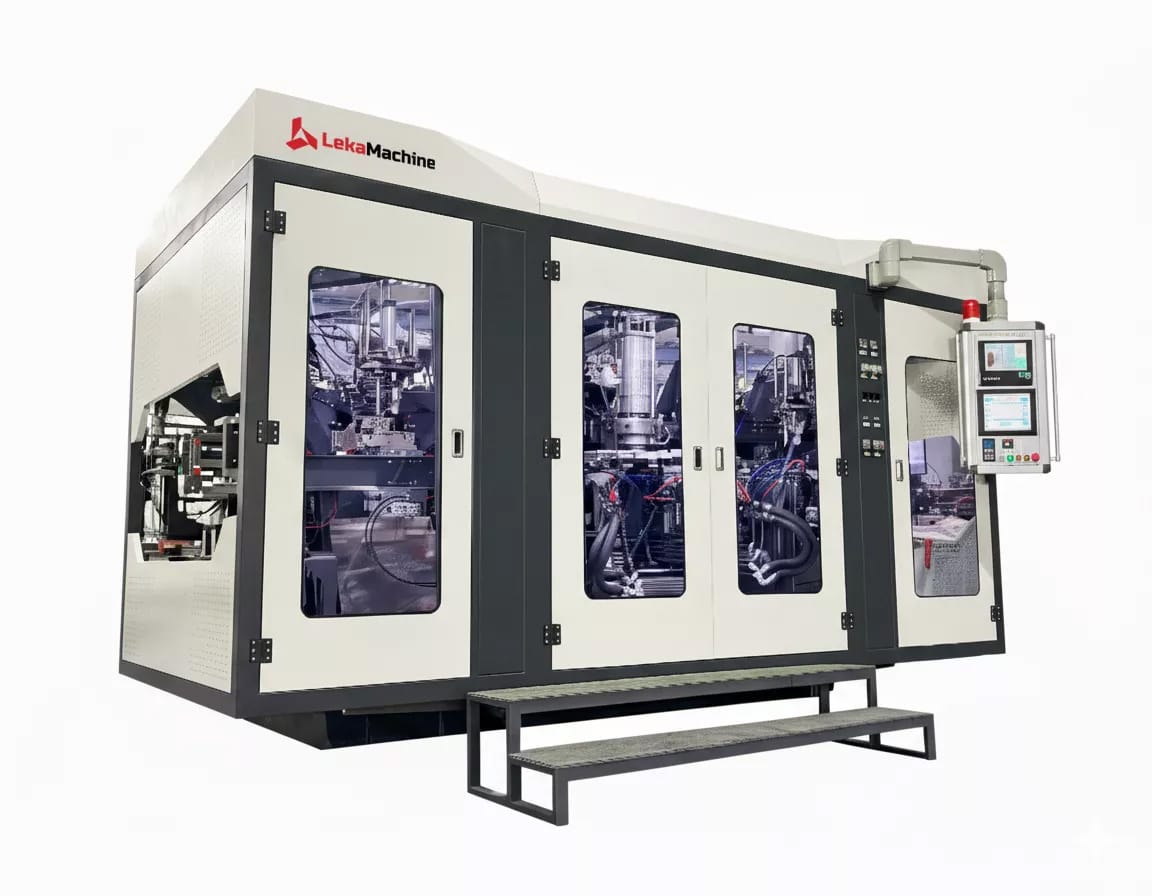
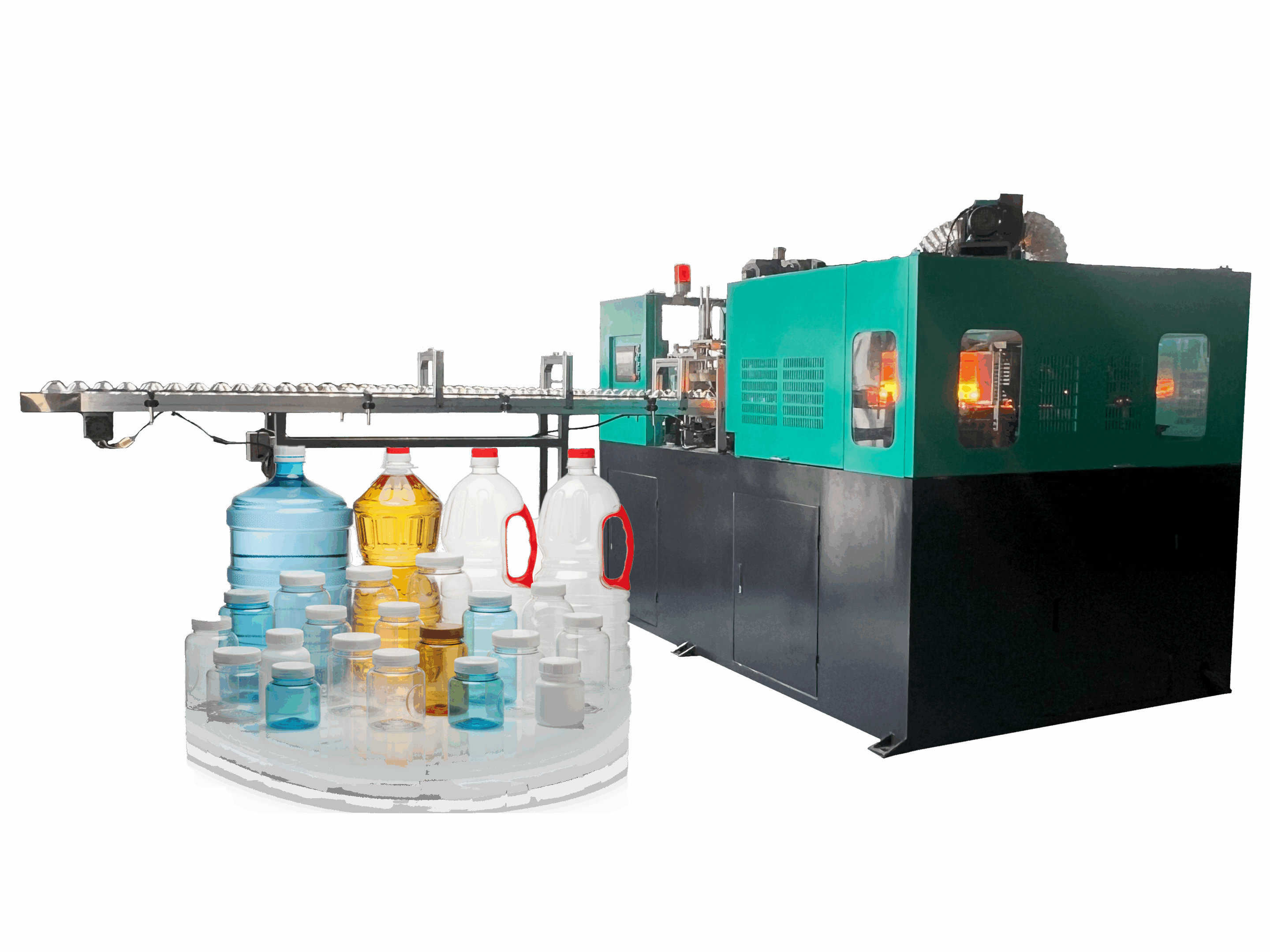
For these applications, we recommend the Serie AERO. It is designed specifically for high-volume, continuous production[cite: 26].
It sets a new benchmark for speed in extrusion blow molding[cite: 27]. Whether you are setting up a shampoo bottle production line or making small pharmaceutical bottles, the AERO series offers the rapid, fluid motion you need to keep your unit costs low[cite: 28].
Ideal for: HDPE bottles, cosmetic packaging, dairy bottles (Under 5 Liters).
2. Industrial Packaging: Jerry Cans & Drums
If you need to store chemicals, oil, or bulk food ingredients, you need something tougher than a shampoo bottle. This category covers stackable jerry cans, 5L oil jugs, and chemical drums.
El desafío:
- The container must pass drop tests and leak tests.
- You need handles formed perfectly every time.
- You often need to change molds to switch between different can sizes (e.g., 5L to 20L).
The Solution: FORMA Series
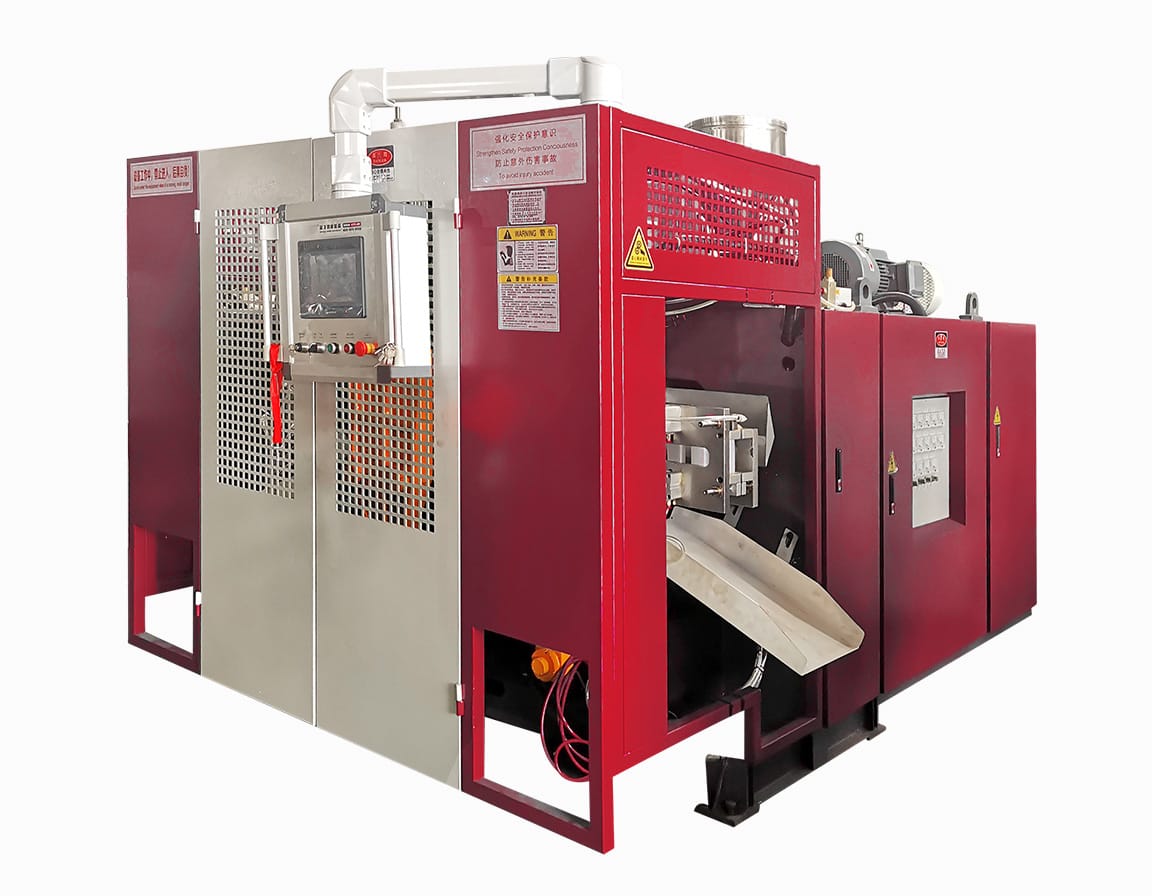
For these “workhorse” products, we use the Serie FORMA. We position this series as your stable, reliable production partner[cite: 16].
The FORMA is versatile. It is engineered to meet diverse production demands with a single machine[cite: 14]. If you are looking for a 5L water bottle manufacturing solution or need to produce medium-sized jerry cans, this is the flexible choice.
Ideal for: 5L-30L Jerry cans, stackable drums, edible oil containers.
3. Heavy Duty & Automotive: Big Parts
EBM isn’t just for bottles. It’s also used for massive industrial parts. This includes floating docks (floaters), road barriers, automotive air ducts, and large chemical barrels.
El desafío:
- The products are heavy and large.
- You need immense clamping force to keep the mold closed.
- Stability is more important than raw speed.
The Solution: TITAN Series
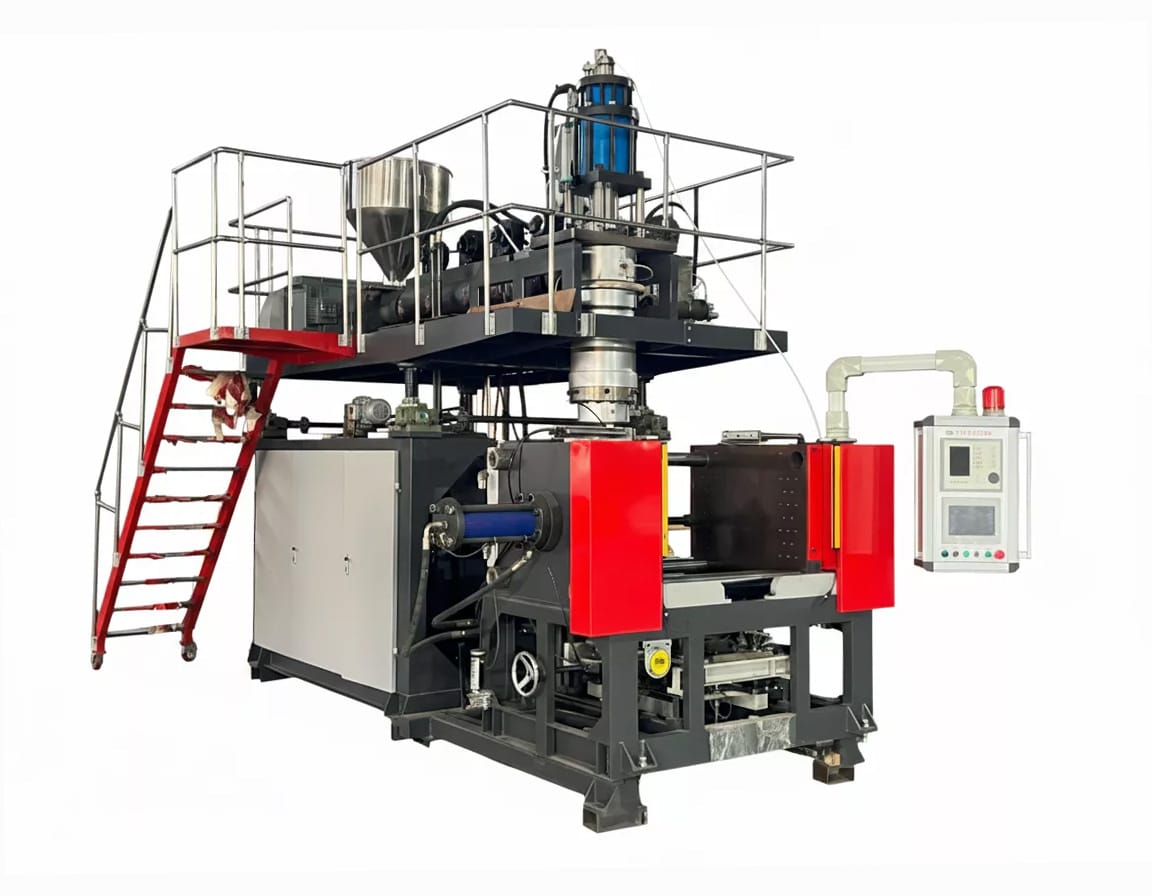
When size matters, you need the Serie TITAN. As the name suggests, it is synonymous with strength and scale[cite: 44].
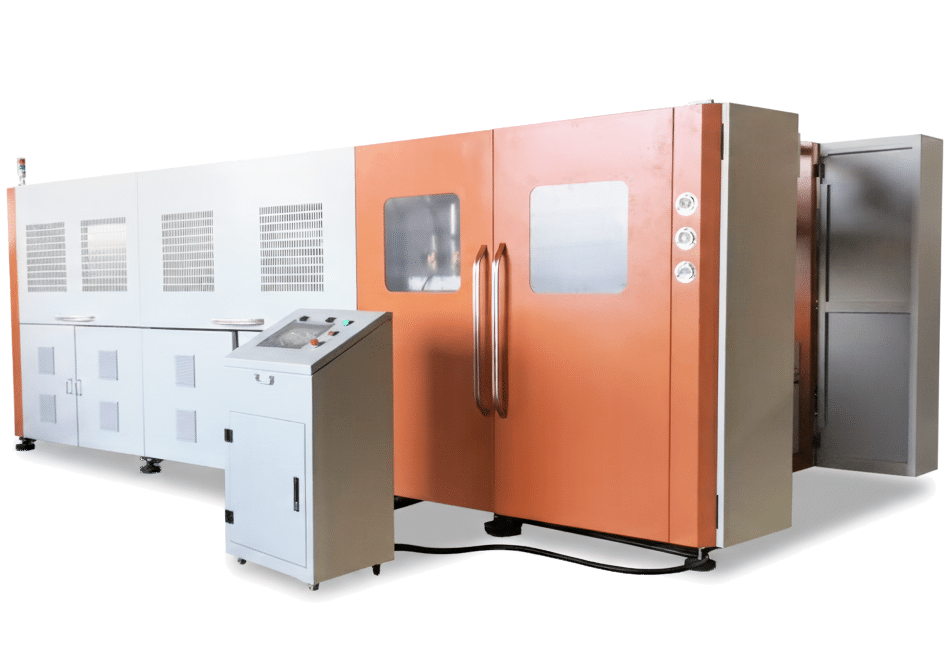
We designed the TITAN specifically for large-capacity, high-strength industrial-grade containers[cite: 44]. It delivers the power needed for heavy-duty blow molding, ensuring your large automotive parts or floaters are formed correctly without warping[cite: 45].
Ideal for: 200L Chemical drums, automotive ducts, toolboxes, floaters.
4. Bringing Production In-House?
We work with many growth-stage brands that are currently outsourcing their bottles[cite: 264].
You might feel like your current supplier is too slow, or you are worried you have no control over your supply chain[cite: 270, 271]. Buying your own machine is a big step, but it gives you that control back.
If this is your first time buying an EBM machine, you don’t just need hardware. You need support. At Leka Machine, we don’t just ship a crate and wish you luck. We offer:
- Turn-key solutions: We can source the molds and auxiliary equipment (like leak testers) for you[cite: 76].
- Training: We help your team learn how to run the line.
- Flexibilidad: Our machines handle quick mold changes, so you can run different product lines on one machine[cite: 185].
Ready to find the right machine?
Whether you need the speed of the AERO, the versatility of the FORMA, or the power of the TITAN, we can help you configure the right line for your budget.
Contact me directly:
Slany Cheuang
Gerente de Ventas Técnicas
Correo electrónico: slany@lekamachine.com
www.lekamachine.com


0 Comentarios