
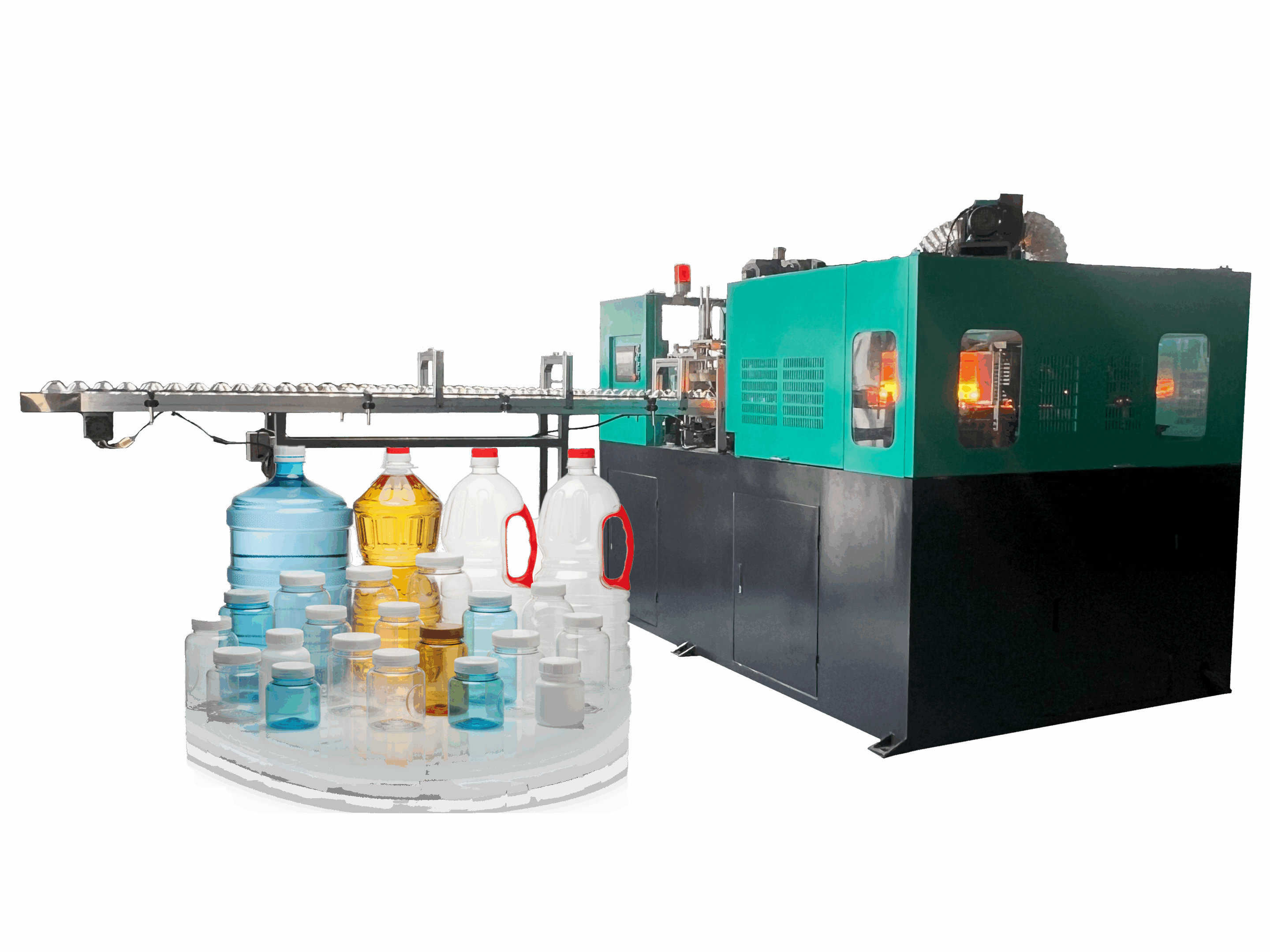
Extrusión vs. Moldeo por estirado-soplado: ¿Cuál necesitará realmente en 2025?
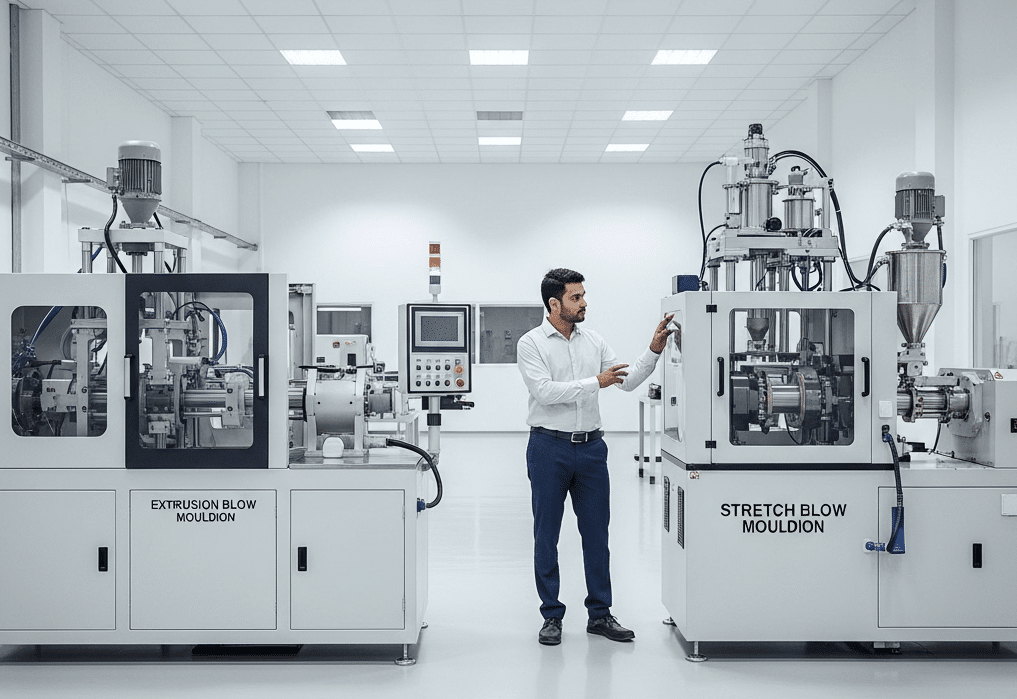
The man thinking how to choose which Extrusion vs. Stretch Blow Moulding machines
Introducción: Picking the right plastic manufacturing process can feel like a big deal. It is. The machine you choose—extrusion blow moulding or stretch blow moulding—changes everything from your upfront cost to the look and feel of your final product. Get it right, and you’re set up for efficient production. Get it wrong, and you could be dealing with headaches for years.
I’m Slany Cheuang, a technical sales manager at Leka Machine. I’ve spent years helping people navigate this exact decision. Let’s clear up the confusion and figure out which process makes sense for what you’re trying to make.

Key Takeaways No time for the full article? Here’s the bottom line.
- Extrusion Blow Moulding (EBM): Best for complex shapes, containers with handles (like jerry cans), and large industrial parts (like drums or automotive tanks). It’s versatile and works well with HDPE and PP plastic.
- Stretch Blow Moulding (SBM): The champion for high-clarity, high-strength beverage bottles (like for water and soda). It mainly uses PET plastic and creates containers that are lightweight yet durable.
- The Deciding Factor: Your choice depends almost entirely on the product you want to make. Don’t focus on the machine first; focus on your product’s requirements for shape, material, and appearance.
What is Extrusion Blow Moulding (EBM)?
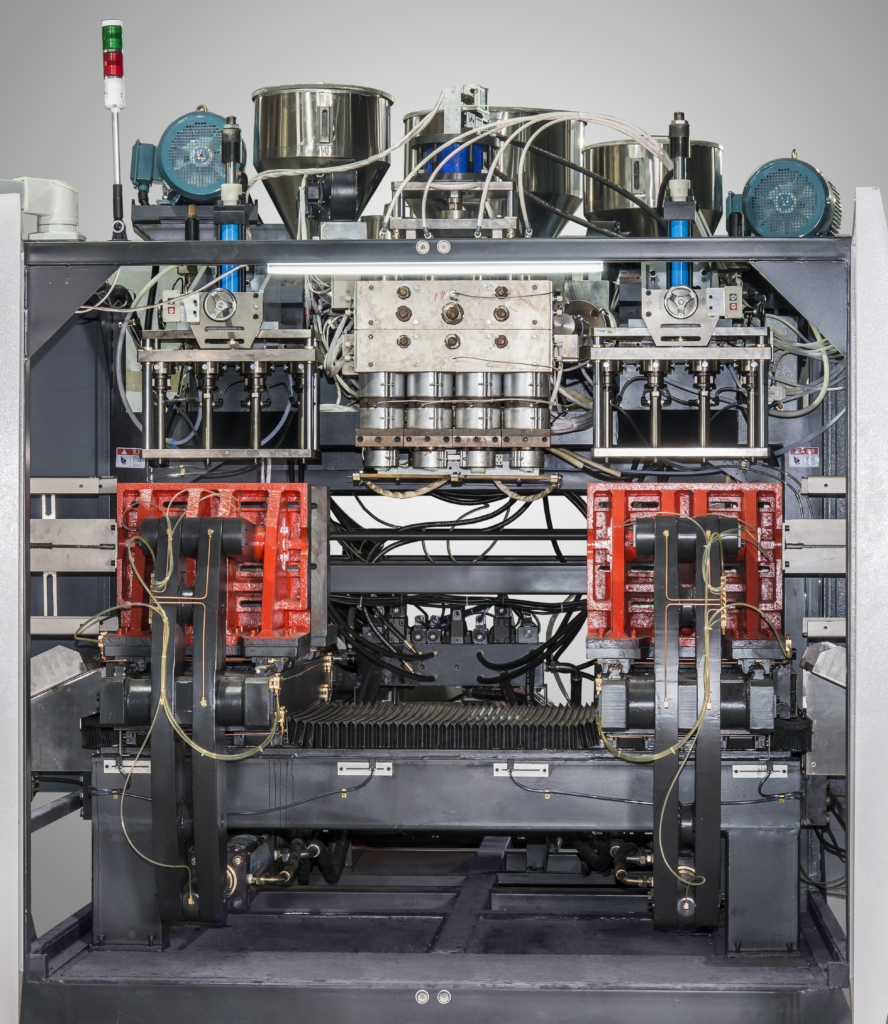
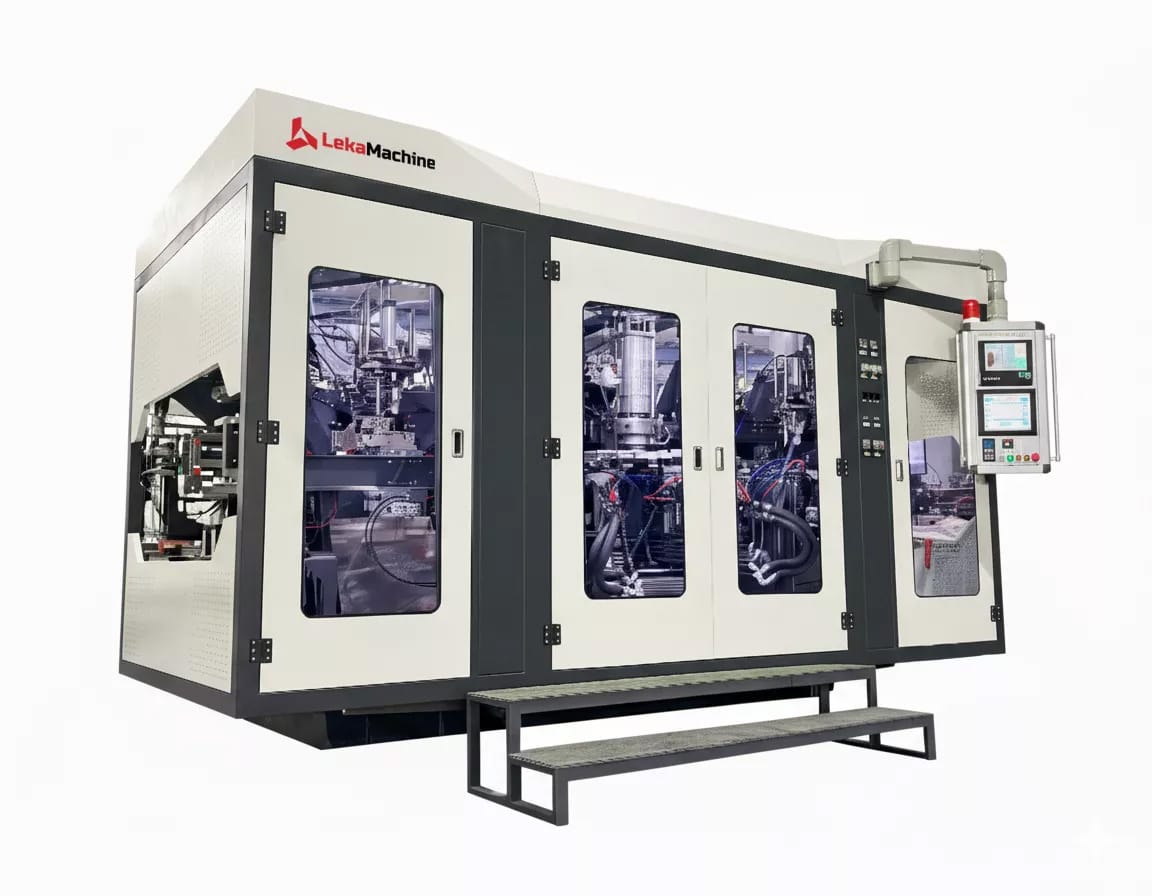
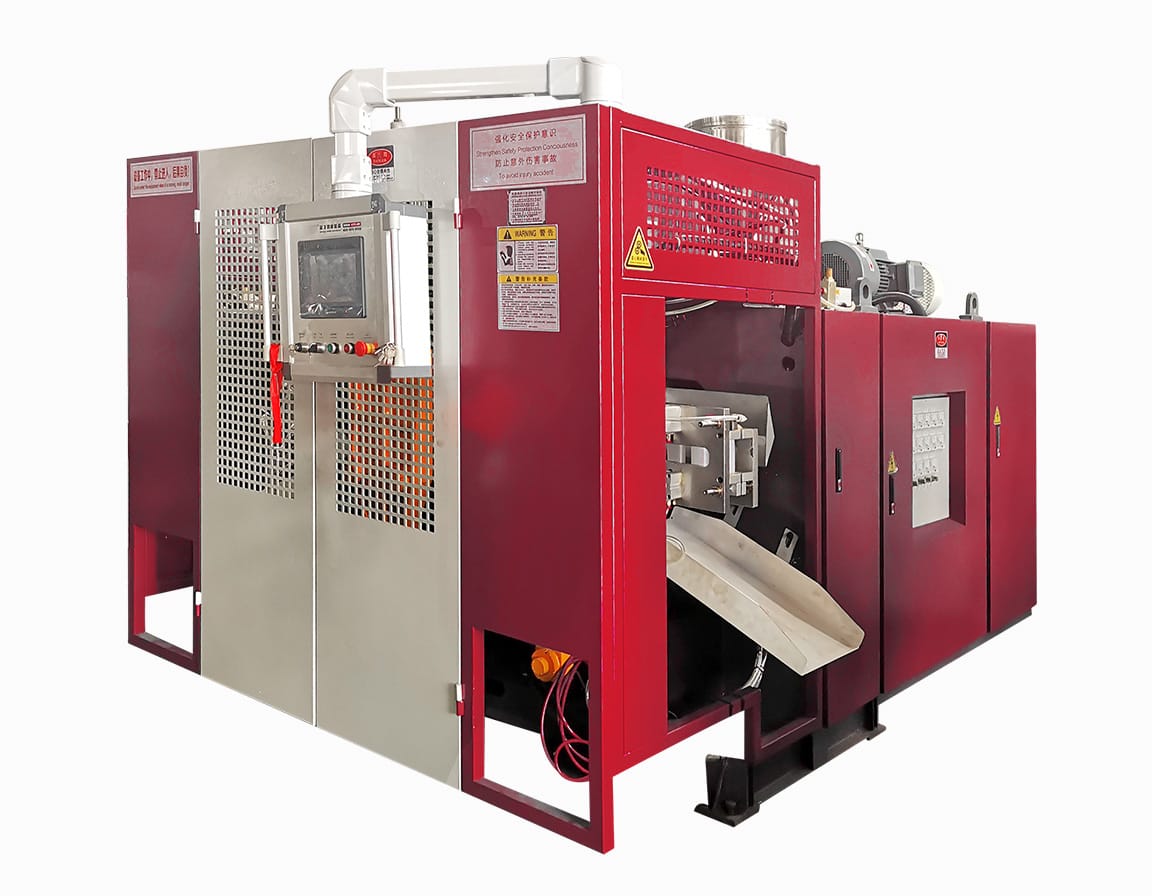
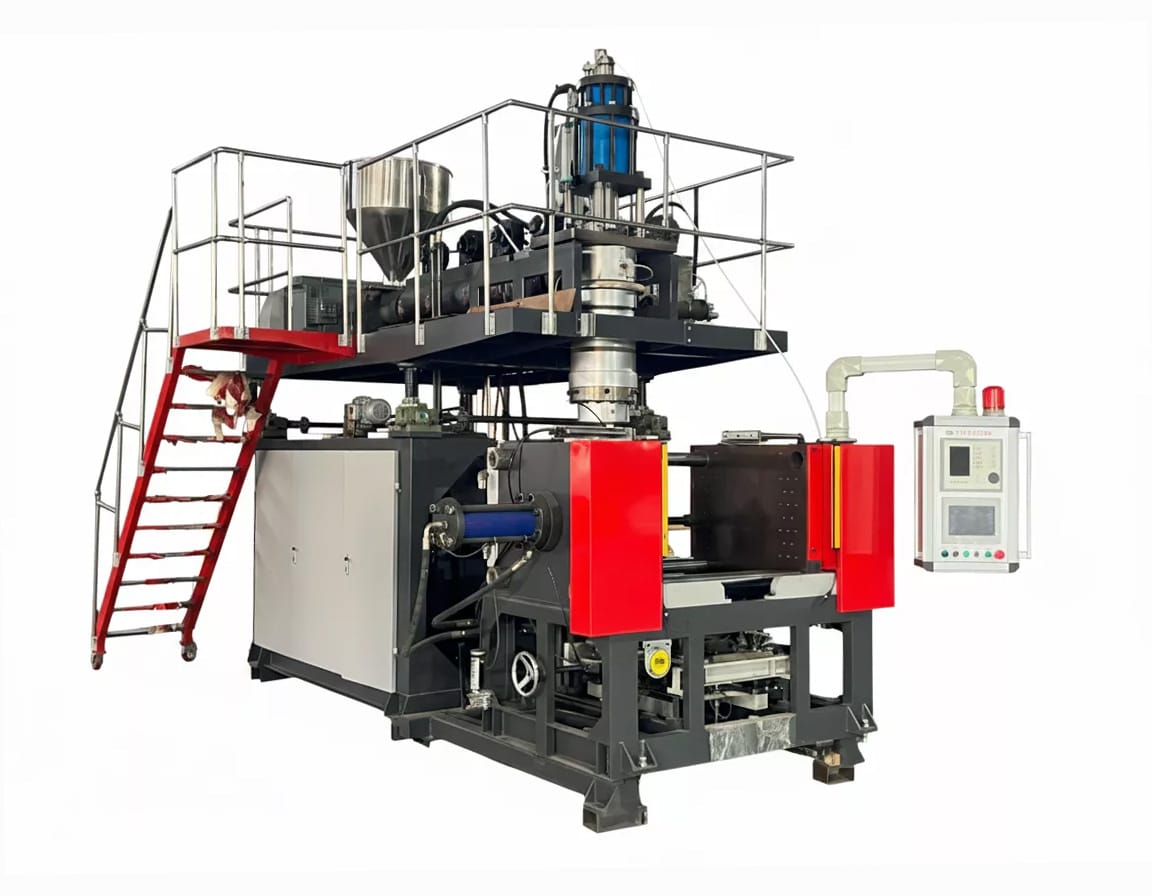
(Extrusion Blow Molding Machine form LEKAmachine)
This is your workhorse for a huge range of products.
Think of it like squeezing toothpaste. We start with raw plastic pellets, usually High-Density Polyethene (HDPE). The machine melts these pellets and pushes the molten plastic through a die to form a hollow tube. We call this tube a “parison.”
A mould then closes around the parison. Air is blown into it, pushing the soft plastic against the mould’s walls to create the final shape.
It’s a straightforward and highly flexible process.
This method is perfect for creating containers that aren’t perfectly symmetrical or need a handle. Think of a classic one-gallon milk jug or a 5-liter jerry can for lubricants. EBM handles these shapes easily. It’s also the go-to for large, heavy-duty items like chemical drums or even automotive fuel tanks.
At Leka Machine, our TITAN Series is built for these kinds of big, industrial-grade products. These machines provide the power and stability needed for making things like 250 L drums or large automotive parts.
And What is Stretch Blow Moulding (SBM)?
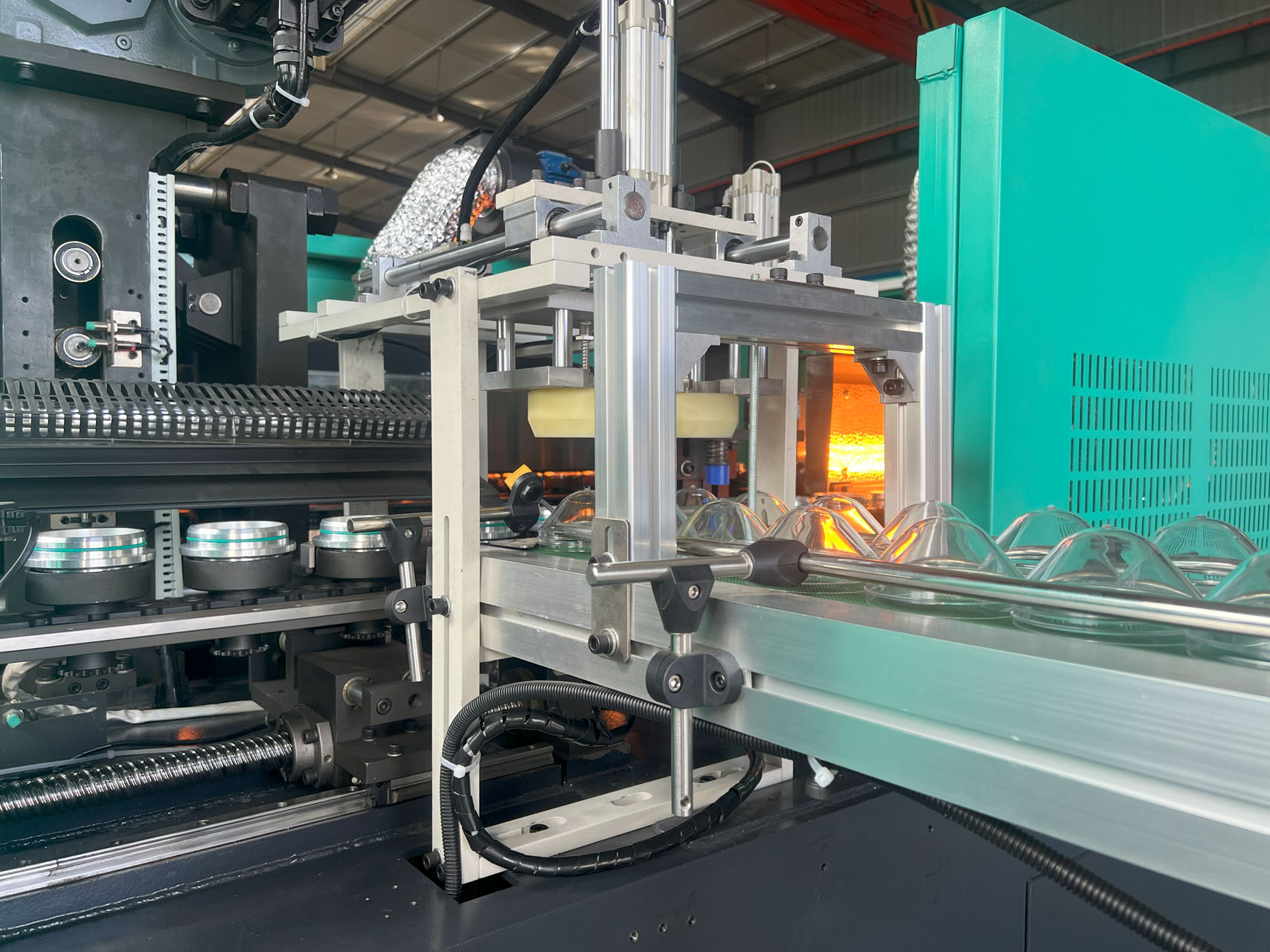
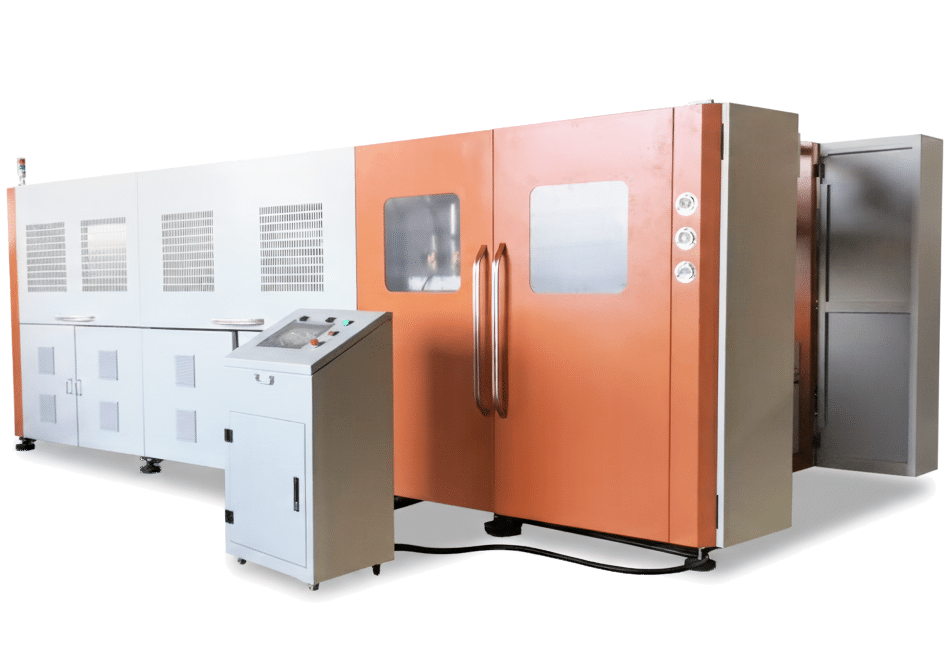
Stretch Blow Molding Machine from LEKAmachine
Now, let’s talk about Stretch Blow Moulding, or SBM. This one is all about clarity and strength, especially for bottles.
SBM is a two-step process. First, we create a “preform” using injection moulding. This preform looks like a thick test tube with the final bottle’s neck threads already formed.
In the second step, the preform is heated and placed into the final mould. A rod stretches the preform vertically while high-pressure air blows it outwards, stretching it in all directions. This biaxial stretching is what gives the final product its signature strength and clarity.
The primary material for SBM is Polyethene Terephthalate, or PET. It’s the reason your water and soda bottles are so clear, lightweight, and tough enough to handle carbonation.
While I specialize in extrusion blow moulding machines at Leka Machine, we also provide stretch blow moulding machines for these applications.
The Head-to-Head Comparison: EBM vs. SBM
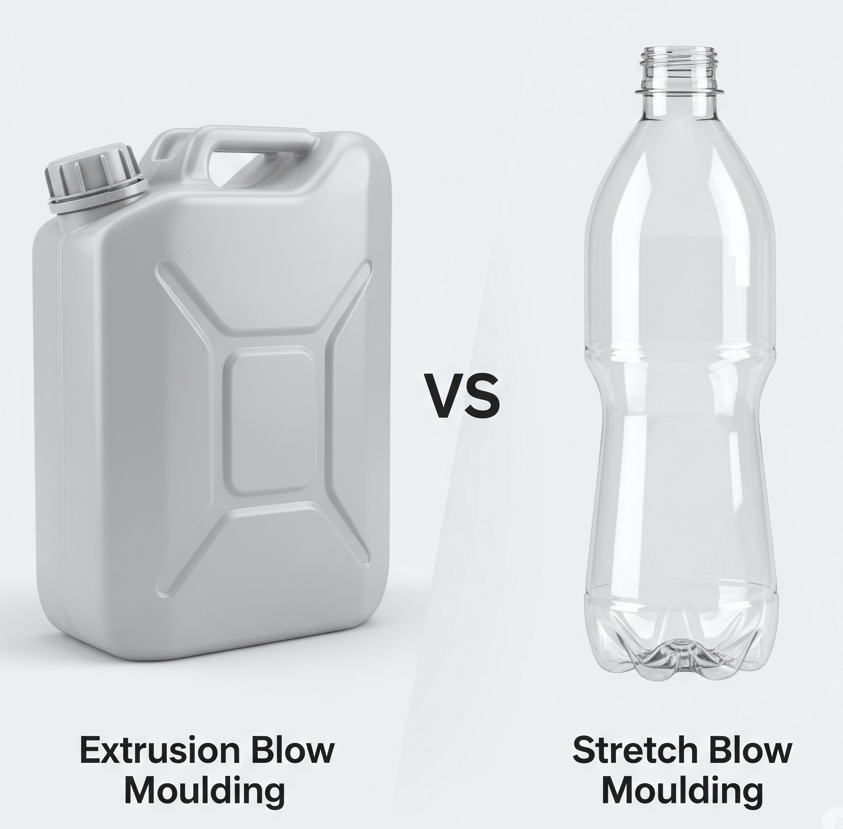
So, how do you choose? Let’s break it down by looking at what matters most.
Materials:
- EBM: This process is incredibly versatile with materials. It works great with HDPE, which is used for things like milk jugs, shampoo bottles, and chemical drums. It can also handle Polypropylene (PP), PETG for pharmaceutical bottles, and even recycled resins. Some of our customers are even using it for bioplastics.
- SBM: This process is more specialized. It’s almost exclusively used for PET. While some variations exist, if you’re not making de las botellas de PET, you’re probably not looking for an SBM machine.
Product Shape and Design:
- EBM: If your product has a complex shape, an offset neck, or needs a handle, EBM is your answer. It’s the only practical way to make items like Jerry cans or containers with integrated handles. It also excels at producing large industrial parts like 1,000 L inner bottles for Intermediate Bulk Containers (IBCs).
- SBM: SBM is best for round or symmetrical containers without handles. Think water bottles, soda bottles, and simple juice containers. The stretching process requires a relatively uniform shape to work effectively.
Clarity and Strength:
- EBM: Products made with EBM are typically translucent or opaque, like your standard laundry detergent bottle. They are strong, but the strength is different from SBM.
- SBM: This is where SBM shines. The biaxial stretching process aligns the plastic molecules, making the final product exceptionally clear and strong. It creates a great barrier against C02, which is why it’s the standard for carbonated drinks.
Production Speed and Cost:
- EBM: Machines can vary widely in output. You can have high-cavitation machines that produce small bottles quickly or massive machines that produce one large drum every few minutes. European machines can have lead times of over 10 months, whereas we can typically deliver a machine in 60-90 days.
- SBM: SBM lines, especially for high-volume beverage bottles, are designed for incredible speed, churning out thousands of bottles per hour.
Here’s a simple table to sum it up:
Característica Moldeo por Soplado por Extrusión (EBM) Stretch Blow Moulding (SBM)
Lo mejor para Containers with handles, complex shapes, and large industrial parts. High-volume beverage bottles.
Materiales Comunes: HDPE, PP, PVC, PETG, Recycled Resins, Primarily PET.
Ventaja clave: Design flexibility. Clarity and barrier strength.
Productos típicos: Jerry cans, chemical drums, automotive ducts, milk jugs, Water bottles, soda bottles, juice bottles.
Entonces, ¿Cuál Necesita Usted?
Vamos al grano. Deje de pensar en la máquina por un segundo y conteste esta pregunta:
¿Qué producto está fabricando?
Su respuesta lo guiará el 90% del camino.
- ¿Está fabricando botellas para agua, jugo o refrescos? Necesita una máquina de Soplado-Estiro-Soplado (SBM). La transparencia y resistencia requeridas para estos productos hacen del SBM la única opción real.
- ¿Está fabricando bidones, tambores químicos, piezas automotrices o botellas con asas? Necesita una máquina de Soplado por Extrusión (EBM). La capacidad de manejar formas complejas y materiales diferentes es esencial aquí.
- ¿Es usted un empacador por contrato que maneja muchas formas y tamaños de botellas diferentes para varios clientes? Probablemente necesite la flexibilidad de una máquina EBM, especialmente si necesita cambios rápidos de molde.
- ¿Se enfoca en la sostenibilidad y desea utilizar un alto porcentaje de resina postconsumo (PCR)? Una máquina EBM es probablemente su mejor opción, ya que pueden configurarse para manejar los desafíos específicos de los materiales reciclados.
No se enrede comparando especificaciones técnicas antes de haber definido su producto. El producto dicta el proceso.
Conclusión: Se Trata de la Herramienta Correcta para el Trabajo
Elegir entre soplado por extrusión y soplado-estirado-soplado no se trata de cuál es "mejor". Se trata de cuál es la herramienta correcta para su trabajo específico.
EBM ofrece una versatilidad inigualable para una amplia gama de formas y materiales. Es la solución para todo, desde pequeñas botellas de limpiadores domésticos hasta tambores industriales masivos. Nuestra Serie TITAN en Leka Machine es un ejemplo perfecto de este poder y flexibilidad.
SBM es el especialista, que domina la producción de botellas de PET transparentes, resistentes y ligeras a altas velocidades.
Su producto es la clave. Una vez que sepa exactamente qué quiere fabricar, la elección entre EBM y SBM se vuelve clara. Si aún no está seguro, para eso está la gente como yo. Comuníquese, y podemos hablar sobre su producto y encontrar la máquina que se ajuste a sus necesidades, y no al revés.
Publicaciones de Cómo Elegir la Máquina Correcta para Su Negocio
Vamos a facilitarlo. Su producto le dirá qué máquina necesita.
Está considerando dos tipos principales: Soplado por Extrusión y Soplado-Estiro-Soplado. Hacen cosas diferentes para productos diferentes.
Debería elegir una máquina de Soplado por Extrusión (EBM) si produce:
Botellas de HDPE y bidones para cosas como lubricantes o productos químicos domésticos.
Tambores químicos grandes o contenedores industriales (IBCs). Nuestra serie TITAN está construida para estos trabajos de alto rendimiento.
Piezas automotrices como tanques de combustible o conductos de aire.
Envases donde desee utilizar mucho material reciclado, también conocido como resina postconsumo (PCR).
Cualquier cosa que necesite un asa integrada.
Debería elegir una máquina de Soplado-Estiro-Soplado (SBM) si produce:
PET botellas de agua, contenedores de jugo o botellas de refresco.
Frasco
Any container where a very clear, glass-like look matters.
Bottles that need to be strong enough to hold carbonated drinks.
A Practical Buying Guide for Your Next Machine
Once you know the type of machine, the real work begins. As a buyer, you need to think like an investor.
Define Your Needs Clearly
Before you even talk to a supplier, have your specifications ready.
Product: What are you making? A small 100ml shampoo bottle is very different from a 220L chemical drum.
Material: Will you use new HDPE resin? Or are you planning to use recycled materials (PCR) or bioplastics? The material you choose affects the kind of machine you need.
Output: How many bottles do you need per hour or day? This helps determine the machine size and number of cavities (moulds) it needs.
Evaluating Suppliers
Not all manufacturers are the same.
Ask for a factory audit and to see sample runs. I always recommend this. You can even offer to send your resin to test how their machine handles it.
Look for turnkey packages, especially if you’re setting up a new factory. A turnkey solución includes the machine, moulds, utilities, and training, which is helpful if you have limited technical staff.
Think About the Total Cost of Ownership (TCO)
The price on the sticker is just the start.
Energy Consumption: Ask about energy-efficient motors, like IE4 motors. With energy prices going up, this can save you a lot of money over time.
Scrap Rate: How much plastic does the machine waste when you change colours or start it up? Esto is a hidden cost that adds up.
Lead Time: How long will it take to get your machine? Some European machines can have a lead time of more than 10 months. Here at Leka Machine, our delivery time is usually 60-90 days, which helps you start production much faster.
A Practical Buying Guide for Your Next Machine Once you know the type of machine you need, the real work begins. As a buyer, you need to think like an investor.
Define Your Needs Clearly. Before you even talk to a supplier, have your specs ready.
- Product: What exactly are you making? Is it a 100ml shampoo bottle or a 220L chemical drum?
- Material: Will you be using virgin HDPE, a high percentage of post-consumer resin (PCR), or bioplastics? Your material choice heavily influences the required screw design.
- Output: How many bottles or parts do you need to make per hour? This determines the machine size and cavitation.
Evaluating Suppliers: Not all manufacturers are created equal.
- Ask for a factory audit and sample runs. The best way to judge calidad is to see it for yourself. Offer to send your resin to test.
- Look for turnkey packages, especially for new plants. If you’re just starting, you’ll want a supplier who can provide the machine, moulds, training, and support.
- Check for local service and spare parts availability. A great machine is useless if you can’t get parts or service when it’s down.
Think About the Total Cost of Ownership (TCO). The sticker price is just the beginning.
- Consumo de Energía: Ask about energy-efficient motors (like IE4) that can lower your operating costs, especially with rising energy prices.
- Scrap Rate: How much waste does the machine produce during colour changes or startups? Esto is a hidden cost.
- Lead Time: European machines can have lead times of over 10 months. At Leka Machine, our delivery time is 60-90 days, which can get you into production faster.
Pro Tips from a Technical Sales Manager: I talk to buyers every day. Here are a few things that experienced buyers always ask about.
- Ask about multi-layer capabilities. A multi-layer machine can allow you to put recycled material in the middle layers and virgin material on the outside, which saves resin costs and improves barrier properties.
- Discuss scrap recycling. Can the machine easily process its own regrind? This is critical for keeping costs down and reducing waste.
- Request remote diagnostics. The ability for a technician to log into your machine remotely to troubleshoot a problem can save you days of downtime, especially if you are in an emerging market.
- Don’t forget training. A machine is only as good as the person running it. Make sure comprehensive operator training is part of the deal.
Future Trends in Blow Moulding (The 2025 Perspective)
- Sustainability & Recycled Materials (PCR)
- Automation & Industry 4.0
- Advanced Capabilities
Preguntas Frecuentes (FAQ)
- What is the main cost difference between EBM and SBM tooling?
- Can you use recycled HDPE in an extrusion blow moulding machine?
- Why can’t you make a bottle with a handle using Stretch Blow Moulding?
- What is the difference between an accumulator head and continuous extrusion?
Conclusión: There’s no “better” or “worse” machine here. Extrusion blow moulding and stretch blow moulding are simply different tools for different jobs. EBM offers flexibility for complex shapes and industrial products, while SBM provides the clarity and strength needed for beverage bottles. The right choice depends entirely on what you plan to make.
If you’re still weighing your options, let’s talk. I’m Slany Cheuang at Leka Machine, and I can help you analyze your product needs to find the most effective solution. We can get a machine delivered to you in 60-90 days.
Palabras Clave Semánticas extrusion blow moulding machine stretch blow moulding machine EBM machine PET blowing machine how to make plastic jerry cans 5L water bottle manufacturing solution shampoo bottle production line blow moulding machine manufacturer EBM machine supplier in China stretch blow moulding machine price Leka Machine factory fully automatic blow moulding machine 5 litre blowing machine HDPE bottle machine automotive parts blow molding semi-automatic vs fully automatic blowing machine plastic packaging manufacturers HDPE bottle demand cycle time vs European peers multi-layer capability reducing bottle weight pharmaceutical packaging automotive blow-moulded parts 3D suction-blow capability parison programming industrial containers chemical drums in-mould labelling (IML) parison control accumulator head blow moulding continuous extrusion blow moulding shot size mould change high cavitation bottle manufacturing process plastic bottle making machine blow moulding process steps types of blow moulding PET preform parison swell HDPE vs PET blow molding applications plastic container production hollow plastic parts manufacturing bottle design limitations tooling cost blow moulding material selection for blow moulding single-stage vs two-stage blow moulding blow molding cycle time industrial blow moulding machine
Enlaces externos :
Jerrycan: https://en.wikipedia.org/wiki/Jerrycan
The Plastic Recycling Process: https://plasticsrecycling.org/how-recycling-works/the-plastic-recycling-process/
Codes & Standards – (PLASTICS): https://www.plasticsindustry.org/advocacy/codes-standards/
What is High Density Polyethylene (HDPE)? – Xometry: https://www.xometry.com/resources/materials/high-density-polyethylene-hdpe/
Polietileno de alta densidad: https://en.wikipedia.org/wiki/High-density_polyethylene


0 Comentarios