
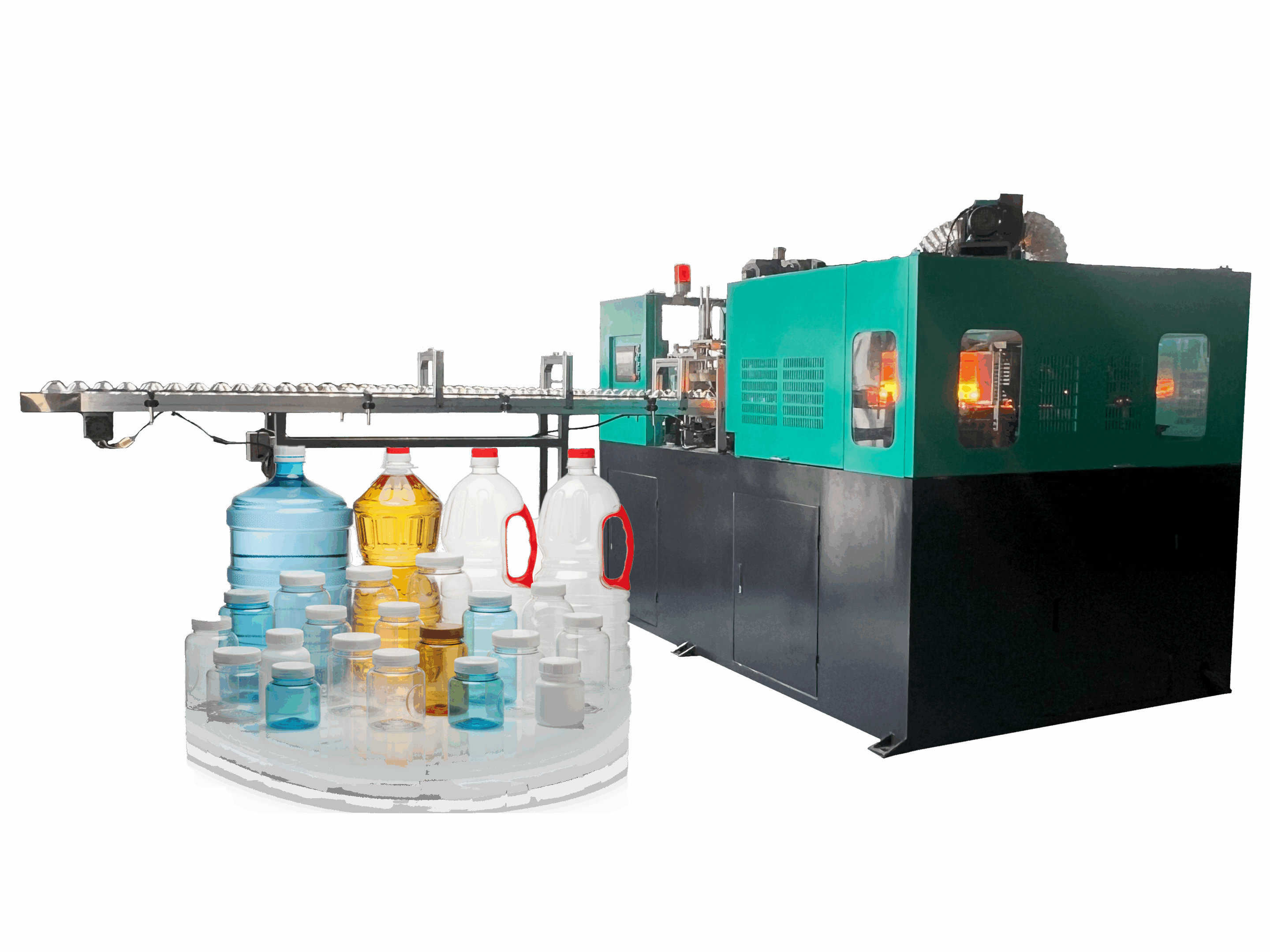
¿Cómo puedo asegurarme de que las etiquetas de mi máquina de moldeo por soplado totalmente eléctrica estén en inglés correcto?
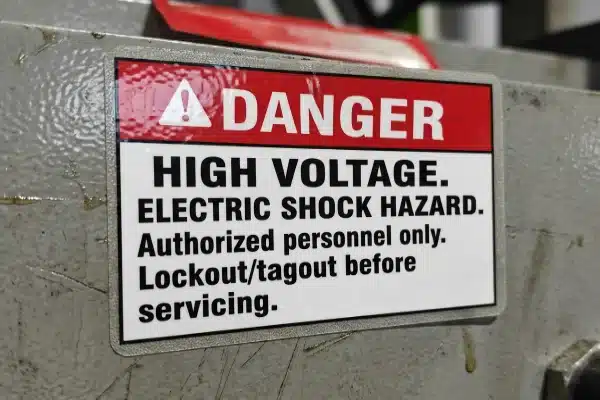
At our factory, we know that confusing labels on high-voltage all-electric machinery are not just an annoyance—they are a significant safety hazard ANSI Z535.4 1. Misinterpreted warnings or unclear buttons often lead to costly operational errors and extended downtime. We focus on linguistic precision to prevent these risks before the machine ever leaves the floor OSHA 1910 2.
To confirm all labels are in English, verify compliance with ANSI Z535.4 or OSHA 1910 during the contract phase. Request digital proofs of all safety stickers and HMI screens for grammatical review before production. Finally, mandate a rigorous Factory Acceptance Test (FAT) to cross-reference physical tags against English schematics.
Let’s explore the specific steps you must take to guarantee linguistic safety and regulatory compliance for your equipment ISO 3864-2 3.
Will All Safety Warnings and Operational Stickers Be Printed in Grammatically Correct English?
We have found that relying solely on translation software often results in dangerous “Chinglish” that confuses operators during emergencies Piping and Instrumentation Diagrams (P&IDs) 4. In our export experience, even minor grammatical errors can obscure critical safety instructions. We proactively tackle this by treating language as a vital engineering component, not an afterthought Augmented Reality (AR) 5.
Ensure grammatically correct English by specifying “Original Instructions” standards in your purchase agreement. Demand pre-production vector files for every warning decal to audit syntax and clarity yourself. Do not rely on auto-translation; requiring a third-party linguistic audit during the design phase prevents dangerous misunderstandings later.
The Risk of Poor Translation in High-Stakes Environments
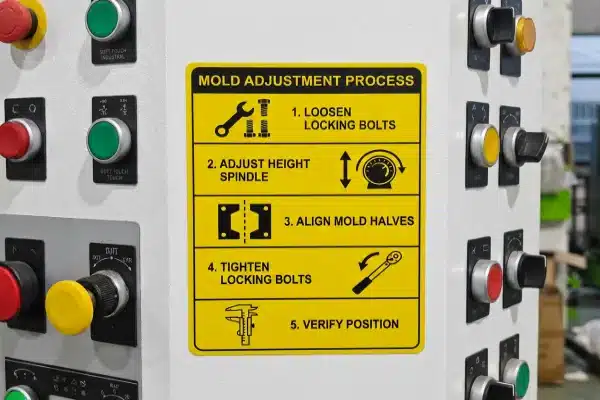
When dealing with all-electric extrusion blow molding machines, the stakes are incredibly high. These machines operate with high tonnage clamping force and high-voltage servo systems. A label that is grammatically incorrect is not just unprofessional; it is a liability. We often see competitors use direct translation tools that strip context from the warnings. For example, translating “Emergency Stop” into a phrase that implies “Pause” can lead to catastrophic operator error.
To ensure your machine is safe, you must move beyond basic translation and look for context-driven terminology.
Laser Etching for High-Temperature Zones
Standard adhesive stickers often fail in the harsh environments of blow molding. The continuous thermal output of the parison extrusion die and heater bands frequently exceeds the thermal degradation limits of industrial glues.
In our production process, we recommend—and you should request—permanent laser etching for these critical zones. Because stickers peel and fade, etching ensures that the English warning remains legible for the life of the machine. This is particularly important for:
- Extruder barrel covers.
- Die head adjustment zones.
- Mold temperature controller manifolds.
Comparative Label Analysis
Below is a comparison of common translation errors versus the standard required for safe operation.
| Label Type | Common Poor Translation (Avoid) | Professional Standard (Require) | Reason for Importance |
|---|---|---|---|
| High Voltage | “Careful Electricity Danger” | DANGER: High Voltage. Arc Flash Hazard. | Must imply immediate threat to life per ANSI standards. |
| Pinch Point | “Hand Hurt Zone” | WARNING: Crush Hazard. Keep Hands Clear. | Needs specific action (Keep Clear) and hazard type. |
| Hot Surface | “No Touch Hot” | CAUTION: Hot Surface. Do Not Touch. | Clear instruction regarding interaction limits. |
| Mantenimiento | “Stop Machine Fix” | LOTO: Lock Out / Tag Out Before Servicing. | Direct reference to safety procedures (LOTO). |
By auditing these specific phrases, you protect your staff and ensure that your insurance and safety inspections proceed smoothly.
Can I Approve the Label Proofs to Ensure They Meet Local OSHA or CE Safety Regulations?
When we prepare a machine for a client in North America or Europe, we treat the label approval process as a critical milestone, similar to approving the mold design. We understand that local regulations like OSHA and CE differ, and a generic label set is rarely sufficient for full compliance.
You absolutely can and must approve label proofs. Include a “Proof-Approval Gateway” clause in your contract that halts manufacturing until digital designs of nameplates and hazard signs are signed off. This step ensures alignment with local regulations like OSHA 1910.145 or CE/EN 983 before any permanent printing occurs.
Implementing a Proof-Approval Gateway
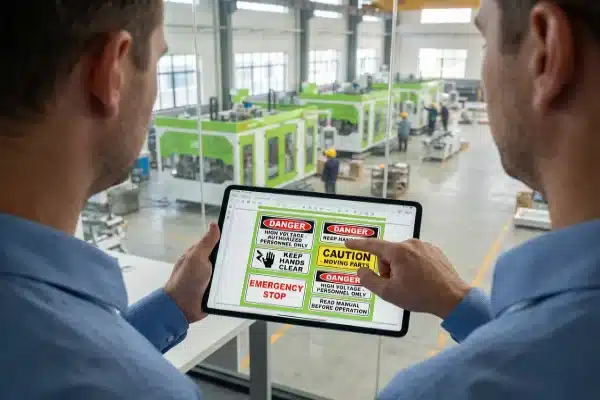
To effectively manage this, you need to establish a formal “Proof-Approval Gateway.” This is a contractual hold point where manufacturing cannot proceed to the labeling stage until you have signed off on the digital files.
This process involves:
- Digital Submission: The supplier sends PDF or vector files of all nameplates, danger signs, and caution decals.
- Regulatory Audit: You or your safety officer reviews these against OSHA 1910.145 (for the US) or ISO 3864-2 (for Europe).
- Correction Cycle: Any ambiguous terms are corrected before a single sticker is printed.
Independent Third-Party Engineering Audits
For many of our clients who lack an in-house safety expert, we recommend engaging an independent third-party auditor. Original equipment manufacturers may have native language biases. An auditor can objectively evaluate the physical labeling against recognized engineering practices.
They verify specific compliance nuances, such as:
- Signal Words: Ensuring “DANGER,” “WARNING,” and “CAUTION” are used correctly based on risk severity.
- Color Coding: Red for danger, orange for warning, and yellow for caution.
- Symbols: Verifying the use of standardized ISO hazard pictograms that are universally understood, supplementing the English text.
Mandatory Label Elements for Compliance
Your audit should specifically look for the following data on the main machine nameplate to satisfy NFPA 79 Chapter 16 requirements.
| Data Point | Requirement Description | Compliance Standard |
|---|---|---|
| Manufacturer ID | Full legal name and address. | NFPA 79 / CE |
| Electrical Specs | Voltage, Frequency, Phase, Full-load Current. | NEC / IEC 60204 |
| Protection | SCCR Rating and Overcurrent Protection Size. | UL 508A |
| Schematic Ref | Reference number matching the electrical drawings. | ISO 12100 |
Ensuring these elements are present and in English prevents issues during electrical inspections at your facility.
Is the Touchscreen Interface Fully Localized to English Without Confusing Abbreviations?
Our engineers spend hours refining servo algorithms, but we know that if the Human-Machine Interface (HMI) 6 is unintelligible, the machine’s performance is irrelevant. A confusing interface leads to frustration and mistakes. We prioritize clear, full-text descriptions over cryptic codes to ensure smooth operation.
Verify interface localization by demanding a “Storyboarding” review of all HMI screens prior to software compilation. Reject generic abbreviations like “Cur” for current or “T.Out” for timeout. Require a live video simulation of alarm states to ensure dynamic error messages appear in coherent, complete English sentences.
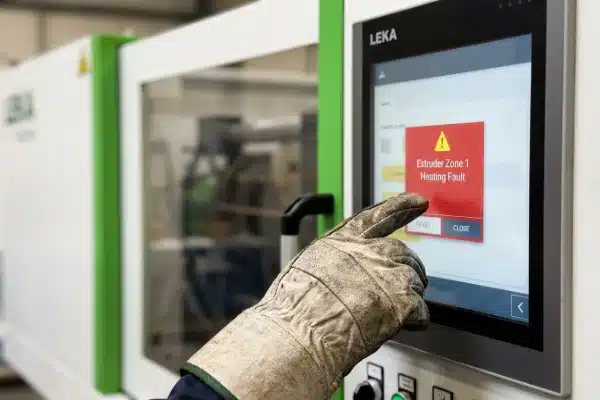
The Danger of Context-Less Translation
A common issue in HMI localization is extracting text strings from the code and translating them in a spreadsheet without context. This leads to errors where “Current” (electricity) is translated as “Current” (time/now), or “Fan” (cooling) is translated as “Fan” (enthusiast).
To prevent this, you must demand a project-specific industrial automation glossary. This ensures that complex operations, such as parison profile programming and extruder heat zones, are described using standard industry terminology.
Simulating Power-Loss Localization States
A critical test we advise all buyers to perform is the Power-Loss Restart Test.
Frequently, automated control systems will boot up in the manufacturer’s native language and only load the English overlay strictly when the main software runs. If the machine crashes or loses power, the BIOS or low-level system alarms might revert to Chinese.
- The Test: During the FAT, pull the main power.
- The Check: Watch the reboot sequence. Ensure that BIOS checks, system recovery prompts, and hardware initialization logs are all presented in English.
- El resultado: This prevents operator “blindness” during critical emergency recovery phases when the main HMI software might not be fully loaded.
Dynamic Alarm Concatenation
Modern PLCs often build sentences dynamically. They take a phrase like “Error in…” and insert a variable like “Zone 1 Heater.” In many languages, the sentence structure differs from English.
If the logic isn’t adjusted for English syntax, you get alarms like “Zone 1 Heater Error in.” You must simulate faults (e.g., trip a breaker, disconnect a sensor) to see how the system constructs these dynamic sentences. Ensure they read as coherent English warnings, not fragmented code.
Do the Pneumatic and Hydraulic Schematic Labels Match the Physical Tags on the Machine?
In our assembly process, we emphasize that a machine is only as good as its documentation. We know that when a solenoid valve fails three years from now, your maintenance team needs to find it instantly. Mismatched tags between the diagram and the physical part are a nightmare we work hard to eliminate.
Matching schematics to physical tags requires a systematic audit during the Factory Acceptance Test (FAT). Trace specific component identifiers, such as “PV-101,” from the Piping and Instrumentation Diagrams (P&IDs) to the engraved metal tags on the machine. Any discrepancy between the paper plan and the physical part must be corrected immediately.
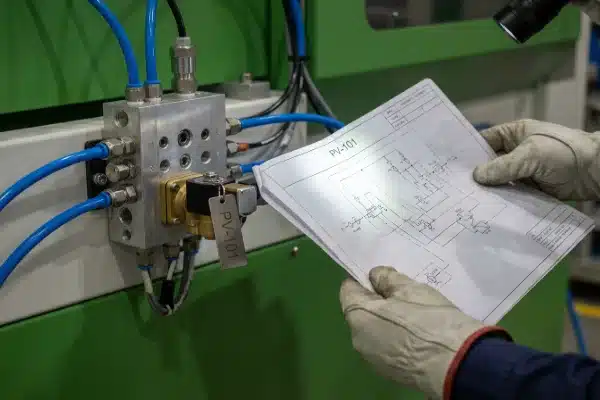
The Importance of the FAT Audit
El Factory Acceptance Test (FAT) 7 is your only leverage point. Once the machine ships, getting new tags or updated drawings is difficult. We suggest a “Tag-to-Drawing” mapping exercise.
Auditors must physically walk around the machine with the P&IDs (Piping and Instrumentation Diagrams) and electrical schematics. You are looking for nomenclatural alignment. If the schematic says the blow-pin solenoid is “YV-202,” the physical tag on the manifold must read “YV-202,” not “Solenoid 4” or a Chinese character equivalent.
Augmented Reality (AR) for Verification
Advanced verification now includes using Augmented Reality (AR) overlays. While not every factory uses this, it is a growing standard for high-end verification. By superimposing the approved English engineering schematics onto the camera feed of a tablet, engineers can instantly detect spatial and naming mismatches.
Even without AR, you can use digital maintenance labeling. We recommend requesting QR codes next to critical valves and motors. When scanned, these codes should link directly to the specific English manual page or datasheet for that component, integrated with your CMMS (Computerized Maintenance Management System).
Common Tagging Discrepancies to Watch For
Here is a breakdown of common areas where labeling mismatches occur and what to check for.
| Component System | Schematic Identifier (P&ID) Example | Physical Tag Location | Verification Requirement |
|---|---|---|---|
| Pneumatic | PV-101 (Proportional Valve) | Engraved metal tag on the valve manifold. | Tag must be permanently attached, not handwritten. |
| Eléctrico | CR-502 (Control Relay) | Durable label inside the electrical cabinet. | Label must be visible without moving wires. |
| Hydraulic | P-01 (Main Pump) | Riveted plate on the pump housing. | Must match the hydraulic circuit diagram exactly. |
| Safety | LS-04 (Safety Gate Limit Switch) | Yellow safety tag near the switch body. | Must include LOTO identifier if applicable. |
Synchronization ensures that when a schematic indicates a fault at “CR-502,” the technician goes exactly to that component, reducing troubleshooting time from hours to minutes.
Conclusión
Verifying that your extrusion blow molding machine uses proper English labeling is a critical investment in safety and efficiency. By enforcing strict proof approvals, conducting rigorous FAT audits, and demanding context-aware translations, you ensure your equipment is compliant and ready for production from day one.
Notas al pie
- Authoritative guide to product safety signs and labels standard. ↩︎
- Official source for Occupational Safety and Health Administration general industry standards. ↩︎
- Direct international standard for design principles of product safety labels. ↩︎
- Detailed explanation of Piping and Instrumentation Diagrams in process systems. ↩︎
- Highly authoritative source providing a comprehensive definition of AR. ↩︎
- Comprehensive guide explaining the concept and importance of Human-Machine Interfaces. ↩︎
- Clear and comprehensive explanation of Factory Acceptance Tests. ↩︎


0 Comentarios