
Introducción
Choosing the wrong plastic manufacturing process can cost manufacturers thousands in wasted materials, delayed timelines, and subpar product quality. With blow molding and thermoforming each excelling in different scenarios, selecting the right method comes down to three critical factors: production volume, material requirements, and budget constraints.
At Lekamachine, we’ve helped hundreds of manufacturers navigate this exact decision. While blow molding dominates for high-volume hollow containers like bottles, thermoforming offers unbeatable flexibility for custom-shaped trays and prototypes. This guide will break down the key differences in cost, speed, and material compatibility to help you make the optimal choice for your product line.
Fundamentals of Blow Molding and Thermoforming
Blow molding and thermoforming are two essential plastic manufacturing processes, each offering unique advantages for creating hollow containers and shaped products.
When comparing blow molding vs thermoforming, it’s important to understand their core mechanisms. Blow molding involves inflating heated plastic into a mold cavity, while thermoforming uses vacuum or pressure to shape heated plastic sheets over a mold.
¿Qué es el moldeo por soplado?
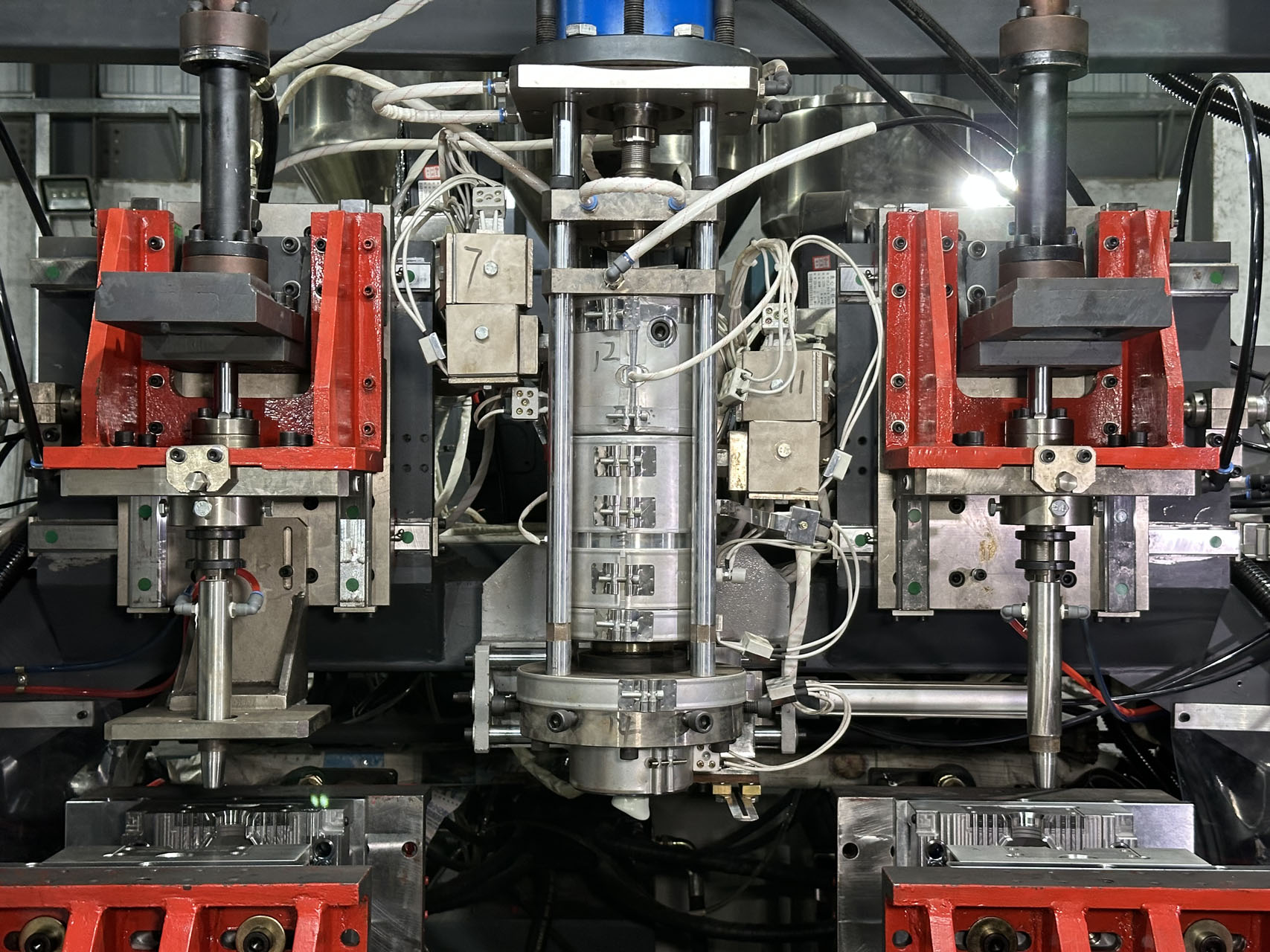
The blow molding process begins with melting plastic and forming it into a parison (hollow tube). This tube is then clamped into a mold and inflated with air pressure until it takes the mold’s shape. Common applications include plastic bottles, containers, and automotive parts. Companies like Lekamachine specialize in advanced extrusion blow molding machines that deliver precision for industries ranging from cosmetics to industrial packaging.
¿Qué es el termoconformado?
Thermoforming applications typically involve heating a plastic sheet until pliable, then using vacuum or pressure to form it over a mold. This method is ideal for creating food packaging, medical trays, and consumer product shells. Vacuum forming has emerged as a cost-effective alternative for certain applications where high-volume production isn’t required.
Key Historical Developments
Both technologies have evolved significantly since their inception. Blow molding dates back to the 1930s with early glass-blowing techniques, while modern thermoforming gained popularity in the 1950s with advancements in plastic sheet production. Today’s automated systems represent decades of refinement in both processes.
Industry Adoption Trends
El blow molding vs thermoforming debate often comes down to production needs. Blow molding dominates for high-volume, hollow containers, while thermoforming excels at lower-cost, moderate-volume production of thinner-walled items. Recent years show growing interest in vacuum forming for its lower tooling costs and faster setup times.
Blow Molding Machine Performance Comparison
| Característica | Manual Blow Molding | Semi-Automatic | Fully Automatic | Referencia del sector |
|---|---|---|---|---|
| Cycle Time (seconds) | 45 | 25 | 12 | 15 |
| Output (units/hour) | 80 | 144 | 300 | 240 |
| Energy Consumption (kWh) | 8.5 | 6.2 | 4.8 | 5.5 |
| Material Wastage (%) | 12 | 7 | 3 | 5 |
| Operator Skill Required | Alta | Medio | Bajo | Medio |
Understanding how does blow molding work for plastic bottles helps manufacturers choose the right process. While thermoforming offers quicker turnaround for prototypes, blow molding provides superior strength for high-pressure containers. Lekamachine’s expertise in custom blow molding solutions demonstrates how specialized equipment can optimize production for specific applications.

Technical Comparison: Process Capabilities
Understanding the technical differences between blow molding and thermoforming helps manufacturers select the optimal process for their specific product requirements.
Al evaluar blow molding vs thermoforming for plastic manufacturing methods, wall thickness control emerges as a key differentiator. Blow molding typically achieves more uniform wall distribution, especially in complex geometries, while thermoforming often results in thinner walls at corners and thicker sections in flat areas.
Control del Grosor de Pared
Lekamachine’s advanced blow molding machines utilize precision parison programming to maintain consistent wall thickness within ±0.1mm tolerance, crucial for medical device packaging. In contrast, thermoforming typically varies by ±0.3mm due to material stretching during forming. This makes blow molding preferable for applications with strict precision requirements.
Tolerance Levels and Precision
The comparison of plastic forming techniques reveals blow molding maintains tighter tolerances (±0.05mm) compared to thermoforming (±0.15mm). This precision advantage makes blow molding the preferred choice for pharmaceutical containers and technical components where exact dimensions are critical.
Maximum Part Size Limitations
Thermoforming generally accommodates larger parts (up to 4m x 2.5m) than blow molding (typically under 1.5m). However, blow molding excels at producing complete hollow shapes without secondary assembly, while thermoforming often requires joining multiple formed pieces for complex geometries.
Surface Finish Quality
Both processes can achieve high-quality finishes, but thermoforming provides superior surface detail reproduction from mold textures. Blow molding offers better structural integrity for pressurized containers, making it ideal for carbonated beverage bottles and technical fluid containers.
Process Capability Comparison
| Característica | Moldeo por soplado | Termoformado | Norma del sector | Notas |
|---|---|---|---|---|
| Wall Thickness Tolerance | ±0.1mm | ±0.3mm | ±0,2 mm | Critical for medical applications |
| Precisión dimensional | ±0,05 mm | ±0,15 mm | ±0.1mm | Blow molding preferred for precision parts |
| Maximum Part Size | 1.5m | 4m x 2.5m | 2m | Thermoforming better for large panels |
| Surface Detail | Bien | Excelente | Bien | Thermoforming reproduces textures better |
| Tasa de Producción | 300-500/hr | 200-400/hr | 350/hr | Varies by part complexity |
The growing trend towards vacuum forming reflects its cost advantages for prototyping and short production runs. However, for high-volume production with precision requirements for medical device packaging, blow molding remains the superior choice. Lekamachine’s expertise in custom blow molding solutions demonstrates how specialized equipment can optimize production for specific technical requirements.

Cost Analysis and Production Economics
Understanding the cost structures of blow molding and thermoforming is crucial for manufacturers to make informed financial decisions about their plastic production processes.
When comparing blow molding vs thermoforming, the initial tooling costs present a significant difference. Blow molds typically require higher upfront investment ($20,000-$100,000) compared to thermoforming dies ($5,000-$30,000). However, blow molding’s superior material utilization often leads to long-term savings, especially for high-volume production.
Tooling Cost Comparison
Blow molds are generally more expensive due to their complex internal cooling channels and higher precision requirements. Thermoforming dies, being simpler in design, offer lower entry costs but may require more frequent replacement for high-volume production. Lekamachine’s automated blow molding lines demonstrate how higher initial investments can yield faster ROI through increased production efficiency.
Material Utilization and Waste
The cost of blow molding includes material savings from better utilization rates (85-95%) compared to thermoforming (70-85%). This difference becomes significant when producing cost-effective packaging solutions using blow molding at scale, where material costs dominate the production economics.
Labor and Automation
Modern blow molding machines like those from Lekamachine require minimal operator intervention, with some fully automated lines running with just 1-2 technicians. Thermoforming typically needs more manual handling, though automated systems are becoming more common in both processes.
Break-even Analysis
When comparing thermoforming vs injection molding or blow molding, production volume determines the most economical choice. Blow molding becomes cost-effective at around 50,000 units due to lower per-part costs, while thermoforming may be preferable for runs under 20,000 units.
Production Cost Comparison
| Factor de coste | Moldeo por soplado | Termoformado | Media del sector | Notas |
|---|---|---|---|---|
| Coste de utillaje | $20k-$100k | $5k-$30k | $15k-$50k | Blow molds last longer |
| Utilización del material | 85-95% | 70-85% | 80-90% | Critical for large runs |
| Labor per Unit | $0.02-$0.05 | $0.05-$0.10 | $0.03-$0.08 | Automation reduces costs |
| Break-even Volume | 50,000+ | Under 20,000 | 30,000 | Depends on part complexity |
| Energy Cost/Unit | $0.03 | $0.02 | $0.025 | Modern machines more efficient |
The growing trend towards vacuum forming reflects its cost advantages for prototyping and short runs, but for high-volume production, blow molding’s efficiency often provides better long-term economics. Lekamachine’s case studies show clients achieving 12-18 month ROI on automated blow molding lines through reduced labor and material costs.

Material Selection and Product Applications
The choice between blow molding and thermoforming often depends on material requirements and intended product applications, with each process offering distinct advantages for different industries.
When considering blow molding vs thermoforming, material compatibility plays a crucial role. Blow molding excels with PET, HDPE, and PP materials, making it ideal for beverage containers and pharmaceutical bottles. Thermoforming production typically uses ABS, PVC, and Polystyrene, which offer excellent formability for custom shapes and medical device trays.
Optimal Materials for Each Process
El blow molding advantages include superior material strength and barrier properties, particularly important for carbonated drinks and chemical containers. Lekamachine’s pharmaceutical-grade blow molding machines demonstrate how PET can be precisely formed to meet strict medical packaging standards. Meanwhile, thermoforming’s ability to handle thicker-gauge materials makes it preferable for durable consumer product casings.
Industry-Specific Applications
Beverage packaging remains dominated by blow molding due to its ability to create lightweight, leak-proof containers. The advantages of thermoforming for custom shapes are evident in medical device packaging, where complex tray designs with multiple compartments are required. Both processes are finding new applications in automotive components and electronics housings.
Emerging Trends
The growing trend towards vacuum forming reflects its cost advantages for prototyping and short runs in automotive interiors. However, for high-volume production of technical parts, blow molding maintains its position as the more economical choice.
Material and Application Comparison
| Material | Blow Molding Applications | Thermoforming Applications | Notas |
|---|---|---|---|
| PET | Botellas de bebidas | Display packaging | Blow molding preferred for carbonated drinks |
| HDPE | Chemical containers | Industrial parts | Superior chemical resistance |
| PP | Pharmaceutical bottles | Food containers | Excellent sterilization properties |
| ABS | Limited use | Carcasas electrónicas | Thermoforming preferred for complex shapes |
| PVC | Envases especiales | Medical trays | Clear visibility important for medical use |
Lekamachine’s experience in pharmaceutical blow molding demonstrates how material selection impacts product performance. Their machines achieve precise wall thickness control critical for medical applications, while thermoforming continues to dominate in custom tray designs where complex geometries are required.
Decision Matrix: Choosing the Right Process
Selecting between blow molding and thermoforming requires careful evaluation of production needs, design complexity, and long-term business goals.
When determining which is better blow molding or thermoforming for my product, production volume serves as the primary deciding factor. Blow molding becomes cost-effective above 50,000 units annually, while thermoforming excels for smaller batches and prototypes. The growing trend towards vacuum forming offers a middle ground for certain applications.
Production Volume Considerations
For high-volume production, blow molding vs thermoforming Las comparaciones favorecen consistentemente la eficiencia del moldeo por soplado. Las líneas automatizadas de Lekamachine demuestran cómo las operaciones a gran escala se benefician de los tiempos de ciclo más rápidos y los costos unitarios más bajos del moldeo por soplado. El termoformado sigue siendo competitivo para series cortas y diseños personalizados.
Evaluación de la Complejidad del Diseño
Los diseños huecos complejos favorecen el moldeo por soplado, mientras que los detalles superficiales intrincados y los calados poco profundos funcionan mejor con el termoformado. Nuestra técnicas de conformado de plásticos matriz de decisión ayuda a los clientes a evaluar sus requisitos de diseño específicos frente a las capacidades de cada proceso.
Environmental and Future Considerations
Ambos procesos pueden utilizar materiales reciclados, aunque el moldeo por soplado suele lograr una mejor utilización del material. La futura adaptación de su selección del proceso de fabricación requiere considerar las posibles expansiones de la línea de productos y las innovaciones en materiales.
Process Selection Matrix
| Factor de Decisión | Moldeo por soplado | Termoformado | Enfoque Híbrido |
|---|---|---|---|
| Volumen de producción | 50,000+ unidades | Under 20,000 | 20,000-50,000 |
| Complejidad de las piezas | Formas huecas | Superficies detalladas | Piezas combinadas |
| Opciones de Material | PET, HDPE, PP | ABS, PVC, PS | Multimaterial |
| Coste de utillaje | Alta | Bajo | Medio |
| Plazos de entrega | 4-8 semanas | 2-4 semanas | 3-6 semanas |
Para obtener orientación personalizada sobre blow molding vs thermoforming, aproveche los 12 años de experiencia en la industria de Lekamachine a través de nuestros servicios de consultoría. Nuestros expertos pueden ayudarle a navegar estas decisiones para optimizar su estrategia de producción.

Conclusión
Después de 12 años en la industria del moldeo por soplado, he visto de primera mano cómo elegir entre termoformado y moldeo por soplado puede hacer o deshacer una línea de producción. No se trata solo de elegir un proceso, sino de adaptar las necesidades de su producto a la tecnología correcta. El moldeo por soplado es ideal para envases de alta precisión y gran volumen, mientras que el termoformado ofrece una flexibilidad inmejorable para formas personalizadas y prototipos.
Según mi experiencia en Lekamachine, la elección correcta se reduce a tres cosas: su volumen de producción, los requisitos de materiales y los objetivos a largo plazo. Si está produciendo miles de botellas, el moldeo por soplado es una "no-brainer". Pero si necesita prototipos de entrega rápida o bandejas intrincadas, el termoformado podría ser su mejor opción.
Al final del día, ambos procesos tienen sus fortalezas; la clave es entender cuál se alinea con las demandas de su producto. En caso de duda, apóyese en la experiencia. Una consulta rápida puede ahorrarle meses de dolores de cabeza y recursos desperdiciados.
PREGUNTAS FRECUENTES
Q1: What is the main difference between blow molding and thermoforming?
A1: La diferencia principal es que el moldeo por soplado se utiliza para crear objetos plásticos huecos inflando un tubo de plástico calentado, mientras que el termoformado implica calentar una lámina de plástico y formarla sobre un molde.
Q2: Which method is more cost-effective: blow molding or thermoforming?
A2: El termoformado es generalmente más rentable para la producción de bajo volumen debido a los moldes más baratos; el moldeo por soplado es preferido para la producción grande de artículos huecos.
Q3: What types of products are best suited for blow molding?
A3: El moldeo por soplado es ideal para productos huecos como botellas, contenedores y otros artículos que requieren un espesor de pared uniforme y constante.
Q4: What applications is thermoforming commonly used for?
A4: El termoformado se utiliza comúnmente en aplicaciones como envases, productos desechables, componentes automotrices y la creación de formas personalizadas.
Q5: Is blow molding or thermoforming better for complex designs?
A5: El termoformado tiende a ser mejor para diseños complejos, ya que permite formas más intrincadas, mientras que el moldeo por soplado se limita a formas más simples.
Q6: ¿Qué factores deben considerarse al elegir entre moldeo por soplado y termoformado?
A6: Los factores incluyen el volumen de producción, la complejidad del diseño del producto, los costos de tooling y los requisitos de materiales, ya que ambos procesos atienden necesidades diferentes.
Q7: ¿Pueden el moldeo por soplado y el termoformado producir los mismos productos?
A7: Ambos procesos pueden producir productos similares, pero la elección depende de la complejidad y funcionalidad requeridas; el moldeo por soplado es mejor para estructuras huecas, mientras que el termoformado sobresale en formas planas y detalladas.
Q8: ¿Cuál es la diferencia en el costo de herramientización entre moldeo por soplado y termoformado?
A8: Los costos de tooling para el moldeo por soplado son típicamente más altos debido a la complejidad de los moldes, mientras que el termoformado utiliza moldes más simples que son menos costosos.
Enlaces externos
- Moldeo por Soplado vs. Moldeo Rotacional: ¿Cuál es la Diferencia?
- Moldeo por Inyección vs. Termoformado: Diferencias y Comparaciones
- Líneas de Termoformado vs. Moldeo por Soplado
- ¿Cuál es la Diferencia entre Termoformado y Moldeo por Soplado?
- Termoformado vs Moldeo por Inyección vs Moldeo por Soplado
- Moldeo por soplado y termoformado – SKZ
- Termoformado vs. Moldeo por Inyección: Diferencias Explicadas Sencillamente
- Moldeo por Inyección vs. Termoformado, ¿Cuál es la Diferencia?

0 Comentarios