
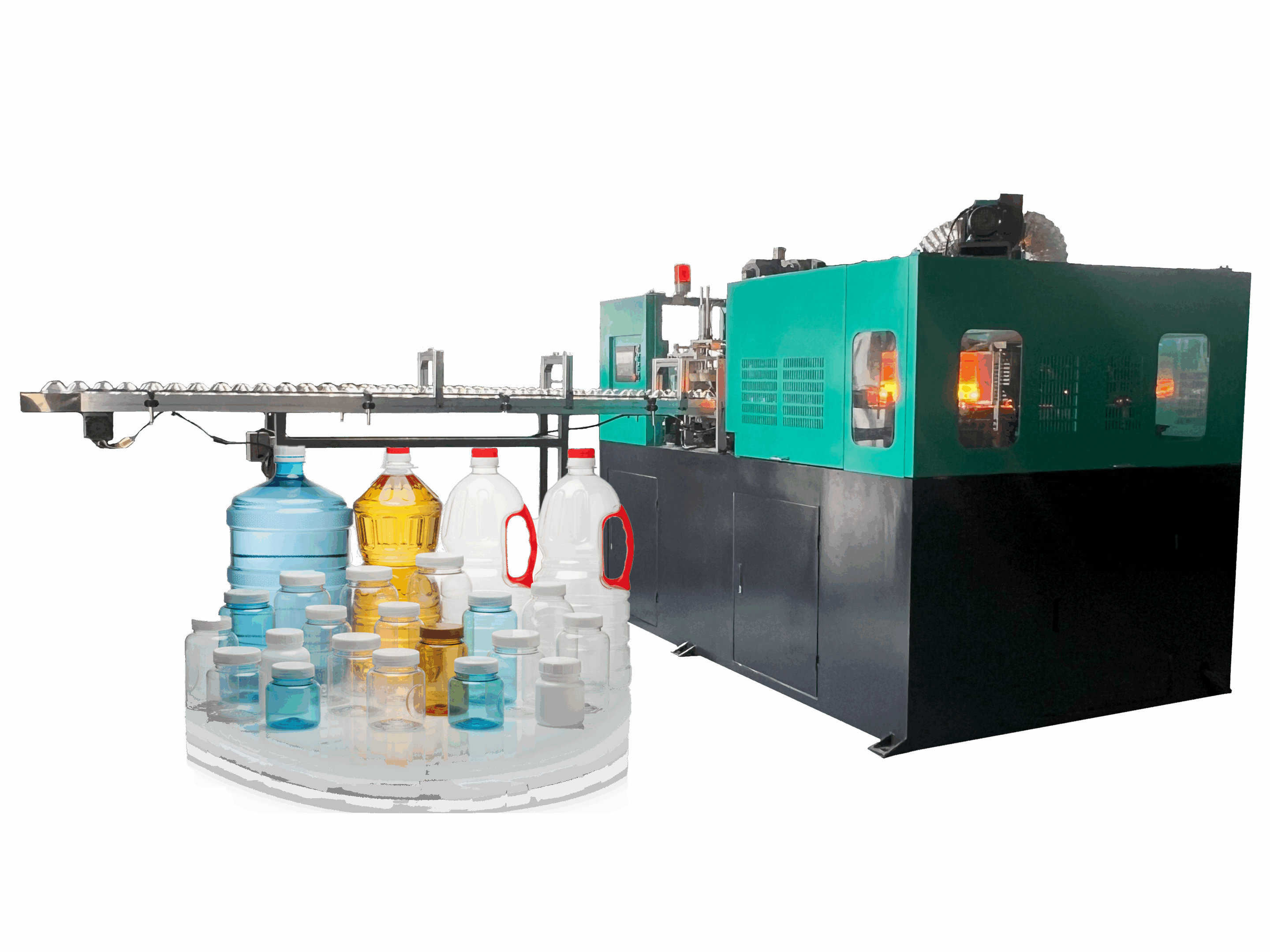
What is blow molding and how is it different from injection molding?
If you are in the business of making bottles, jars, or industrial containers, you know that the manufacturing process you choose defines your profit margins.
I talk to factory owners every day who are worried about their supply chain or high energy costs. They often ask me: “Why can’t I just use one machine for everything?”
The truth is, choosing between blow molding and injection molding isn’t just a technical choice. It determines your cost per bottle, your quality, and how fast you can scale. Let’s break it down simply so you can make the right call for your production line.
Tabla de contenido
- 1. Understanding blow molding in simple terms
- 2. The main blow molding processes used in packaging
- 3. What is injection molding?
- 4. How blow molding works, step by step
- 5. Blow molding vs injection molding: the core technical differences
- 6. How they work together in a bottle project
- 7. When should you choose blow molding?
- 8. Choosing the right blow molding technology
- 9. Quick comparison guide
- 10. FAQ: Common questions
- 11. Summary and next steps
Understanding blow molding in simple terms
What is blow molding?
Imagine blowing up a balloon inside a box.
That is blow molding in a nutshell. You take hot, soft plastic, place it inside a metal mold, and blow air into it. The plastic expands until it hits the walls of the mold, taking its shape. Once it cools down, you open the mold, and you have a hollow part.
It is the standard method for creating hollow plastic objects. Unlike other methods that result in a solid block of plastic, blow molding creates a container with a specific internal volume.
Typical products made by blow molding
You see these products every time you walk through a supermarket or a hardware store:
- Bottles: Shampoo, laundry detergent, and milk bottles.
- Jerry cans: 5L to 20L containers for oil or chemicals.
- Drums: Large industrial drums, like 120L or 200L chemical barrels.
- Technical parts: Automotive ducts, floaters, and even toys.
Common materials in blow molding
The material often dictates the machine you need:
- HDPE (Polietileno de Alta Densidad): This is the workhorse. It’s tough, chemical-resistant, and opaque. It is used for shampoo bottles, motor oil containers, and industrial drums.
- PET (Tereftalato de Polietileno): Clear, lightweight, and strong. This is what water bottles and soda bottles are made of.
- PP (Polipropileno): Often used for sauces or heat-resistant bottles.
The main blow molding processes used in packaging
At Leka Machine, we specialize in the two most critical technologies for the packaging industry: Extrusion Blow Molding (EBM) and Stretch Blow Molding (SBM).
Extrusion blow molding (EBM)
This is for your HDPE and PP products. If you need a handle on your bottle (like a milk jug) or a complex shape, this is the process you use.
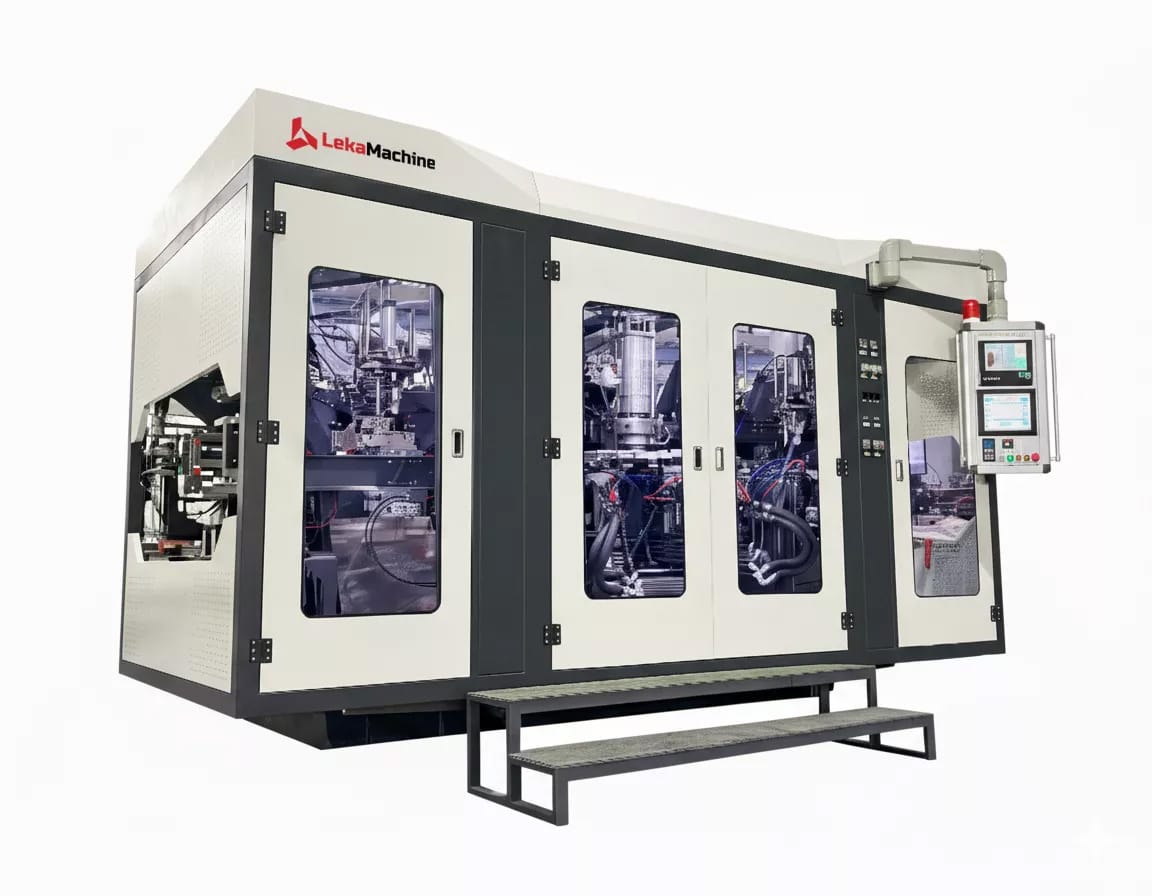
In EBM, the machine pushes melted plastic down in a tube shape (called a tubular). The mold closes around it, cuts it, and blows it up. Our Serie FORMA is a classic example of this technology, designed for versatility from small bottles to jerry cans.
You can learn more about our Extrusion blow molding machines here.
Stretch blow molding (SBM)
This is strictly for PET. If you want crystal-clear bottles for water or juice, you need SBM.
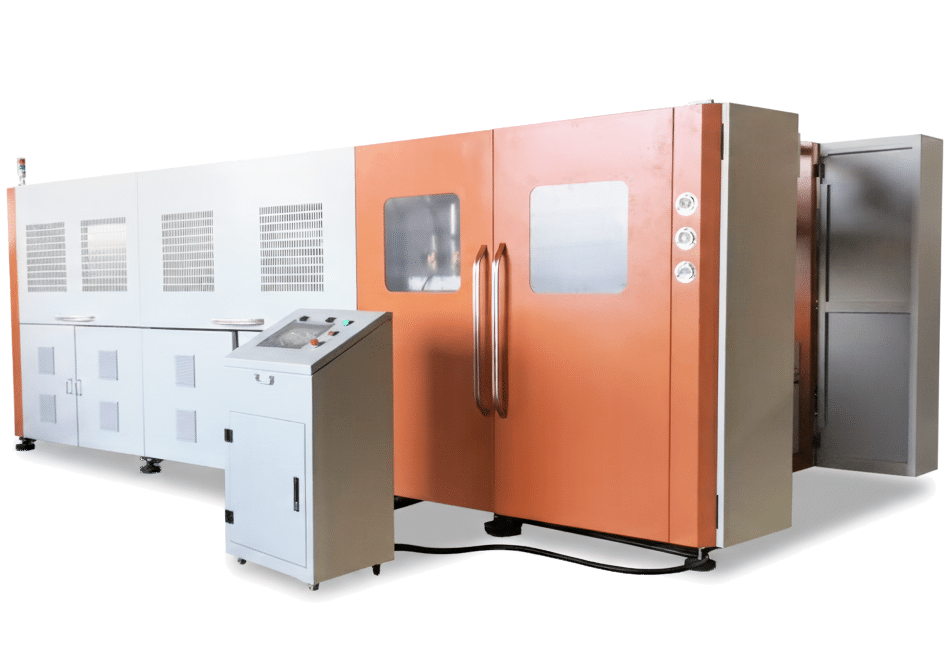
Here, you start with a “preform” (which looks like a test tube). The machine heats the preform and stretches it with a rod while blowing air. This stretching aligns the molecules, making the bottle strong and clear. Our Serie AQUA handles this for high-speed beverage lines.
You can view our Stretch blow molding machines here.
Where “injection blow molding” fits
You might hear about Injection Blow Molding (IBM). This is often used for very small medicine bottles. It gives great precision for the neck, but it is not efficient for larger containers. Nota: We focus on EBM and SBM solutions at Leka Machine and do not sell IBM machines.
What is injection molding?
Basic definition
Injection molding is like filling a jelly mold. You inject molten plastic under high pressure into a closed metal cavity until it is completely full. There is no air blowing involved. The plastic fills the space, cools, and becomes a solid part.
Typical parts made by injection molding
- Caps and closures: The lids for your bottles.
- Preforms: The “test tubes” that later become PET bottles.
- Crates and Pallets: Solid, heavy items.
- Thick solid parts: Like Lego bricks or phone cases.
Why injection molding is not used for large bottles
You cannot easily injection mold a bottle because you would need a solid metal core inside to create the empty space. Getting that metal core out of a bottle with a narrow neck is physically impossible without breaking the bottle. That is why we need blow molding—air is the only “core” that can escape a narrow neck.
How blow molding works, step by step
Extrusion blow molding process (HDPE)
- Extrusion: Plastic pellets are melted and pushed through a die head to form a hollow tube called a tubular.
- Clamping: A mold closes around the parison.
- Soplo: Compressed air inflates the parison against the mold walls.
- Enfriamiento y Expulsión: The part cools, the mold opens, and the bottle is removed.
- Trimming: Excess plastic (flash) is trimmed off the top and bottom.
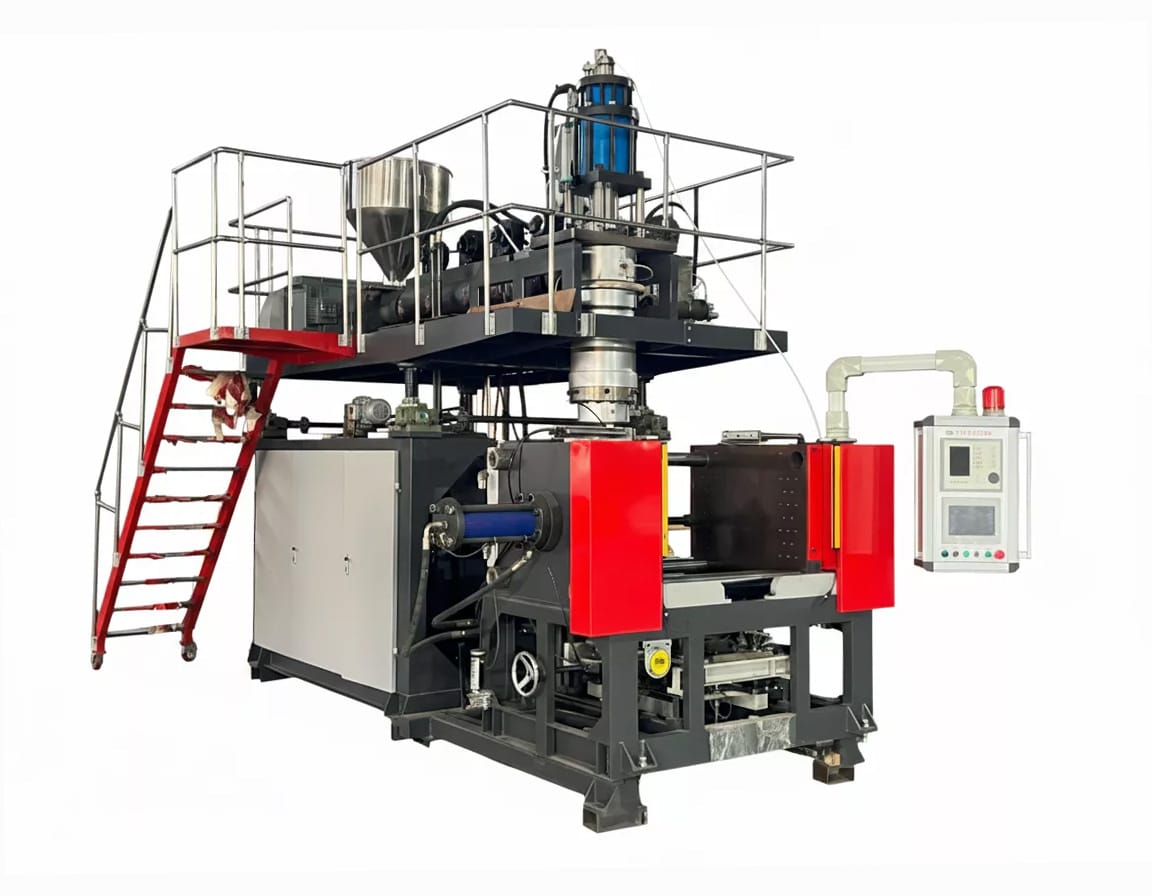
Machine note: Machines like our Serie TITAN use this process but on a massive scale for heavy-duty drums.
Stretch blow molding process (PET)
- Calefacción: A pre-made PET preform runs through an oven to soften.
- Insertion: The hot preform moves into the mold.
- Stretching & Blowing: A stretch rod pushes down to lengthen the preform, while high-pressure air expands it outward.
- Ejection: The finished bottle is released.
Machine note: Our Serie BOTTLER excels here for creating high-value cosmetic shapes.
Key machine components
Whether EBM or SBM, modern lines rely on specific components:
- Extruder: Melts and mixes the resin.
- Cabezal de matriz: Shapes the melted plastic into a parison (crucial for wall thickness control).
- Clamp: Holds the mold shut against the blowing pressure.
- HMI: The screen where operators control the machine. We use intuitive interfaces because experienced operators are retiring, and new staff need easy-to-use systems.
Blow molding vs injection molding: the core technical differences
Part geometry: Hollow vs. Solid
This is the biggest differentiator.
- Injection Molding: Creates solid objects or open shapes (like a tub). It offers high precision for complex details but struggles with undercuts.
- Blow Molding: Creates hollow volumes. It allows for “undercuts” (like handles) that injection molding generally cannot do easily.
Tooling and molds
- Injection Molds: These must withstand massive pressure. They are made of hardened steel and are very expensive.
- Blow Molds: The pressure is lower (air pressure vs. hydraulic injection pressure). These molds can often be made of aluminum or softer alloys, making them cheaper and faster to produce—often ready in 4–6 weeks.
Cycle time and cost per unit
Injection molding cycles can be fast, but for thick parts, cooling takes time. Blow molding cycles depend on cooling the thin wall of the bottle. High-speed SBM machines (like the Serie AQUA) can produce tens of thousands of bottles per hour, significantly lowering the cost per unit at scale.
How blow molding and injection molding work together
Rarely do you see a bottle factory with only one type of technology. They work in tandem.
The typical PET workflow
To make a PET water bottle, you first need an Moldeo por inyección machine to make the “preform” (the test tube shape). Then, you move that preform to a Moldeo por soplado y estirado machine to blow it into a bottle.
The typical HDPE workflow
For a shampoo bottle, you use an Extrusión Soplado machine to make the bottle itself. Then, you use an Moldeo por inyección machine to make the flip-top cap.
Why OEMs invest in blow molding
Most OEM packaging factories invest heavily in blow molding because the bottle is the bulkiest part of the product. Shipping empty bottles from a supplier is expensive because you are mostly shipping air. Bringing blow molding in-house saves massive logistics costs.
When should you choose blow molding instead of injection molding?
Clear signs for blow molding
- It creates a volume: You need to hold liquid or powder.
- Narrow neck: The opening is smaller than the body.
- Handles: You need an integrated handle (EBM is the only choice here).
- Multi-layer: You need barrier layers to protect food from oxygen (EBM allows multi-layer die heads).
Cases where injection molding makes sense
- Solid parts: Caps, preforms, handles that are clipped on later.
- Open containers: Like yogurt cups or tubs (though thermoforming is also used here).
- Precision closures: Flip-tops or pumps with moving parts.
Choosing the right blow molding technology for your bottles
Once you decide on blow molding, you must choose between EBM and SBM.
When Extrusion Blow Molding (EBM) is better
Choose EBM if you use HDPE, PP, or PVC. This is for opaque bottles, jerry cans, and industrial drums. If you need a handle, you need EBM.
- Recommended Leka Machine: Serie FORMA for versatility or Serie TITAN for large drums.
- Explore: EBM Machine Catalog
When Stretch Blow Molding (SBM) is better
Choose SBM if you use PET. This is for transparent, glossy bottles for water, soda, oil, or cosmetics.
- Recommended Leka Machine: Serie AQUA for high-speed beverages or Serie BOTTLER for unique cosmetic shapes.
- Explore: SBM Machine Catalog
Key questions to ask your supplier
Before you invest, ask these questions to ensure you get the best ROI:
- Consumo de energía: Can you guarantee ≤0.22 kWh/kg? Energy costs are rising, and efficiency is key.
- Change-over time: How long does it take to swap molds? Our machines are designed for quick changes to handle SKU proliferation.
- Local support: Do you have engineers who can reach my factory in 72 hours?
Quick comparison guide: blow molding vs injection molding
| Característica | Moldeo por soplado | Moldeo por inyección |
|---|---|---|
| Primary Product | Hollow containers (Bottles, Drums) | Solid parts (Caps, Preforms) |
| Material | HDPE, PP, PET, PVC | PP, PE, ABS, Nylon, PC |
| Coste de utillaje | Moderate (Aluminum/Steel) | High (Hardened Steel) |
| Tooling Lead Time | Faster (4–6 weeks) | Slower (8–12 weeks) |
| Design Freedom | Handles, undercuts, variable volumes | Precision details, no hollows |
| Espesor de pared | Variable (controlled by parison) | Fixed (defined by mold) |
FAQ: common questions from project owners
Can I use injection molding to make very small bottles?
Technically, yes, if the neck is wide enough to pull the core out, or if you use “Injection Blow Molding” (IBM). But for standard bottles, standard blow molding is typically faster and lighter.
Is blow molding cheaper than injection molding?
For the machine? Often yes. For the molds? Definitely yes. Blow molds undergo less stress, so they are cheaper to build and maintain compared to high-pressure injection molds.
If I already have injection molding machines, can I add blow molding later?
Absolutely. This is a common growth path. Many factories start making caps (injection) and then realize they can double their revenue by making the bottles (blow molding) too.
Summary and next steps
If you are manufacturing packaging, you likely need both technologies eventually. But if your goal is to produce bottles, jerry cans, or drums, moldeo por soplado is your engine for growth.
- Use Moldeo por Soplado por Extrusión (EBM) for HDPE/PP bottles and handled jugs.
- Use Moldeo por Soplado Estirado (SBM) for clear PET bottles.
- Use Moldeo por inyección for your caps and preforms.
Starting a new production line is a big capital investment. You need a partner who understands not just the machine, but the entire process—from mold design to the final product quality.
Are you ready to calculate the ROI for your bottle line? Contact us today to discuss your project specifics, and we will help you select the exact machine series that fits your budget and capacity needs.


0 Comentarios