
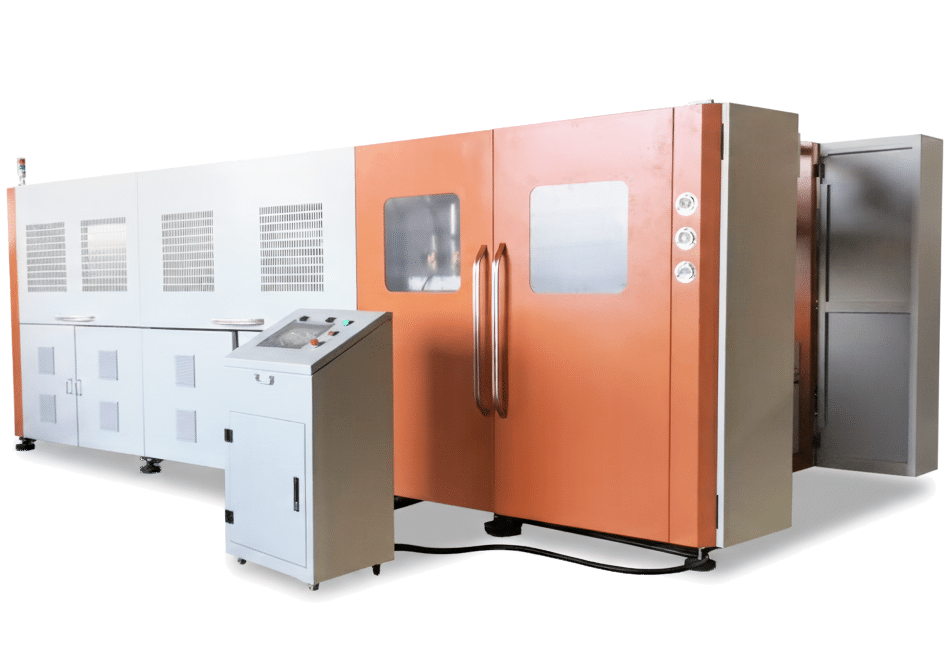
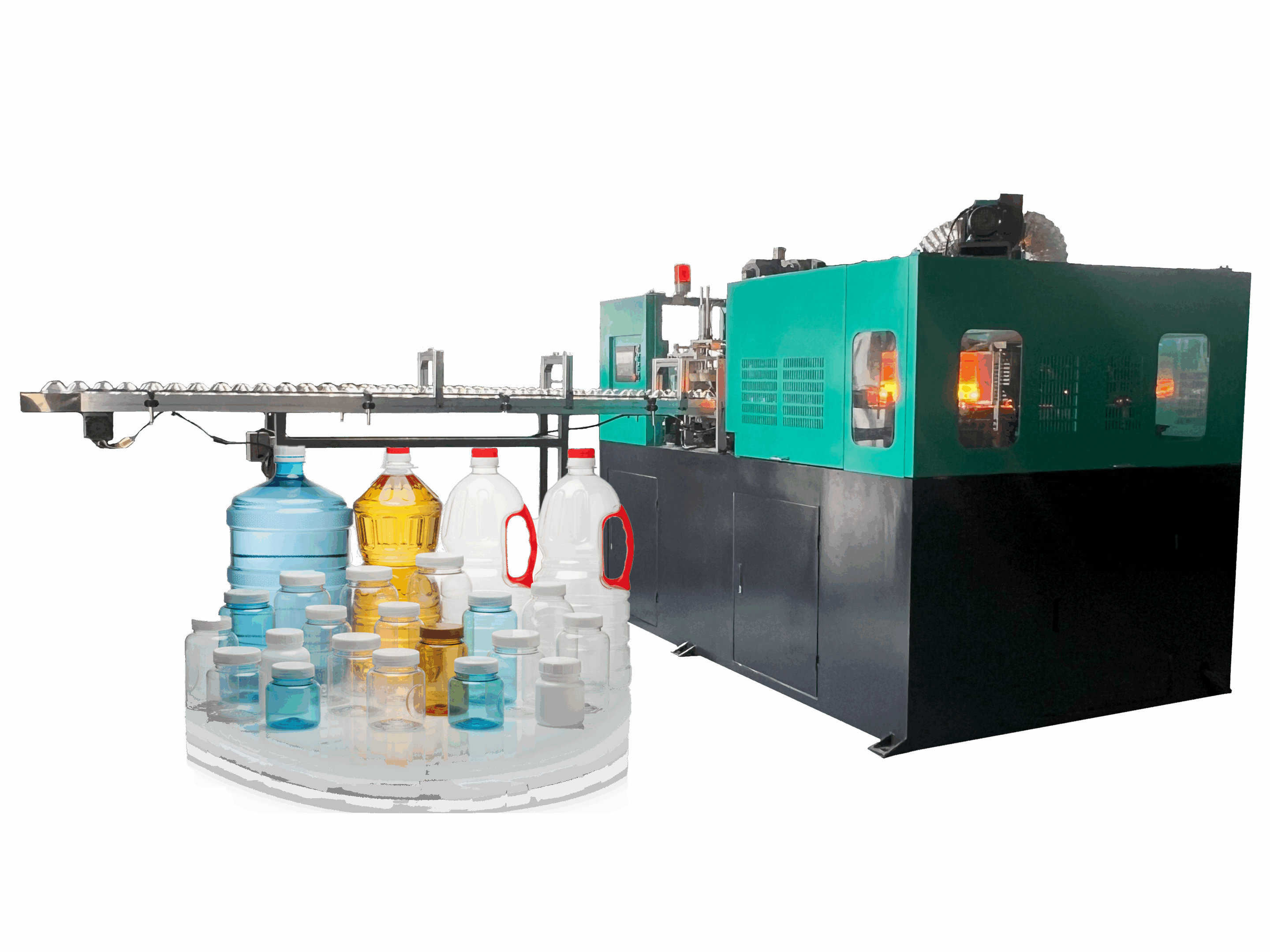
Best Stretch Blow Molding Machine Manufacturers in Italy – An Engineer’s Buying Guide
Author: Slany Cheuang, Technical Sales Manager at LEKA Machine (extrusion & stretch blow molding equipment)
Choosing a stretch blow molding (SBM) machine is not just about buying a piece of equipment. For a PET bottle factory in Italy, it is a 10–15 year decision that will affect preform weight, energy costs, labour efficiency and your ability to win or keep OEM contracts.
This guide is written from the perspective of a machinery supplier who talks daily with PET bottle makers in Europe, the Middle East and Asia. It combines:
- Hands-on experience configuring SBM lines for different bottle sizes and markets
- Feedback from factories comparing Italian, wider European and imported machines
- Publicly available information from well-known equipment manufacturers
The goal is simple: to help you ask better questions and choose the machine that fits your real business, whether it is Italian, European or imported.
How This Guide Was Created (Transparency & Disclaimer)
Before we look at any names, it is important to be clear about how this article was put together.
- No paid ranking: The manufacturers mentioned below are listed in alphabetical order and are not sponsored. Inclusion does not mean endorsement and absence does not mean a brand is “bad”.
- Experience-based, not academic: The perspectives here come from project discussions, technical evaluations and real production challenges shared by bottle makers, not from theoretical marketing claims.
- Focused on PET stretch blow molding: This article looks specifically at SBM equipment for PET bottles. Extrusion blow molding (HDPE / PP) is a different process and is not ranked here.
You should always verify specifications and commercial conditions directly with each supplier. Use this guide as a starting point for your internal discussion and RFQ process.
What Italian PET Bottle Factories Really Care About
When Italian customers send us their first RFQ for a stretch blow molding machine, the questions almost always fall into the same groups:
- Product mix: Still water, CSD, juice, dairy, edible oil and household products all require different neck finishes, bottle geometries and cycle times.
- Output per cavity: A regional water brand may need 12–20 cavities for 0.5–1.5 L bottles, while a converter producing special shapes might focus on 4–6 cavities but higher flexibility.
- Energy and air consumption: With European energy prices, oven efficiency and air recovery can decide whether a project is profitable.
- Hora de cambio: Many Italian OEM factories run multiple SKUs and private labels. Fast mould and neck changeovers matter as much as raw speed.
- Service & spare parts: Distance is less important than response time. Factories want clear service commitments and realistic spare part availability.
- Total cost of ownership: Operators are increasingly asking about €/bottle over 5–10 years, not just the purchase price.
Any evaluation of “the best manufacturer” only makes sense when connected back to these very practical concerns.
Key Technical Criteria for Evaluating SBM Manufacturers
Regardless of brand or country, use the same engineering lens when you compare machines:
- Bottle & preform window
Check the supported neck finishes, preform weights and bottle volumes. Make sure the machine comfortably covers your current and planned portfolio, not just a single flagship bottle. - Oven design & energy profile
Ask for real kWh/kg figures from similar projects, not just theoretical numbers. Look at IR lamp control, insulation, and whether an air recovery system is included or optional. - Blow station & cooling
Study the clamp design, stretch rod guidance and cooling layout. Stable, repeatable mechanics matter more for long-term quality than brochure speed. - Changeover concept
How many tasks are tool-free? How much of the job can be prepared offline? A few minutes saved at every changeover add up quickly over the year. - Controls & operator interface
Look for clear recipes, guided changeover steps and alarm diagnostics that your team can understand without calling the OEM every time. - Service model & references
Request contact with factories running comparable bottles. Ask how start-up went, and how the supplier handled the first year of production issues.
Keep these criteria in front of you when talking to any manufacturer named below.
Overview of Stretch Blow Molding Suppliers Active in the Italian Market
The following companies are listed in alphabetical order and are mentioned because their equipment is commonly seen in Italian or wider European PET plants. This is not an exhaustive list.
SMI Group

SMI is an Italian company known for complete bottling and packaging lines, including rotary stretch blow molding machines for PET containers.
- Profile: Strong focus on water and CSD lines, often combined with SMI packaging and palletizing equipment.
- Strengths: Integration into full lines, established service network, many references in Italy and abroad.
- Typical users: Beverage producers who prefer a single supplier for blowing, filling and packaging.
SACMI

SACMI is a large Italian industrial group with technology in caps, preforms, inspection and PET stretch blow molding.
- Profile: Solutions that combine closures, preforms and bottles, plus quality control.
- Strengths: Strong R&D background and inspection know-how, attractive for companies building integrated PET and closure operations.
- Typical users: Groups that want long-term standardisation across plants and processes.
SIPA

SIPA offers both linear and rotary SBM, along with preform and bottle design services.
- Profile: Broad portfolio from small converters to high-speed beverage lines.
- Strengths: Deep experience in lightweighting, special applications (hot-fill, large containers) and turnkey PET projects.
- Typical users: Converters and brand owners who need strong engineering support on container development.
Other European Brands Used in Italian Plants
Besides Italian manufacturers, many facilities in Italy also operate stretch blow molding machines from broader European suppliers, such as:
- KHS – German supplier with high-end rotary SBM and complete filling lines.
- Krones – German company with the well-known Contiform SBM series.
These brands are often selected by multinational beverage groups who standardise technology across multiple countries.
Real-World Buying Scenarios (Based on Factory Conversations)
To make this more concrete, here are simplified versions of situations we regularly hear from PET bottle producers:
- Scenario 1 – Large beverage group: Several plants across Europe, strong in-house engineering, strict corporate standards. They usually stay with a small number of large European OEMs for easy standardisation and group-level support.
- Scenario 2 – Regional OEM converter: Produces water, CSD and private-label bottles for local brands. They compare Italian and German machines but also ask about imported solutions to balance investment level and performance.
- Scenario 3 – Growing family-owned factory: Currently buying bottles from outside, planning its first in-house PET line. Their priority is a robust, user-friendly machine with clear training and support, not the highest possible speed.
In Scenarios 2 and 3, it is common for buyers to compare at least one Italian or European offer with an imported alternative.
When an Imported SBM Machine Becomes a Rational Choice
From our experience, importing a machine from Asia (for example from China) starts to make sense when:
- You are a small or mid-size PET bottle factory or OEM converter, not a multinational beverage group.
- Investment budget is limited but you still need serious industrial performance.
- You are ready to work with English documentation and online support.
- You have either in-house maintenance capability or a trusted local technician.
In these cases, a well-engineered imported line can offer:
- Lower €/cavity investment and faster payback
- Reasonable output and energy performance for mainstream bottle sizes
- The ability to start with one machine and add more as orders grow
How LEKA Machine Positions Itself as an Alternative

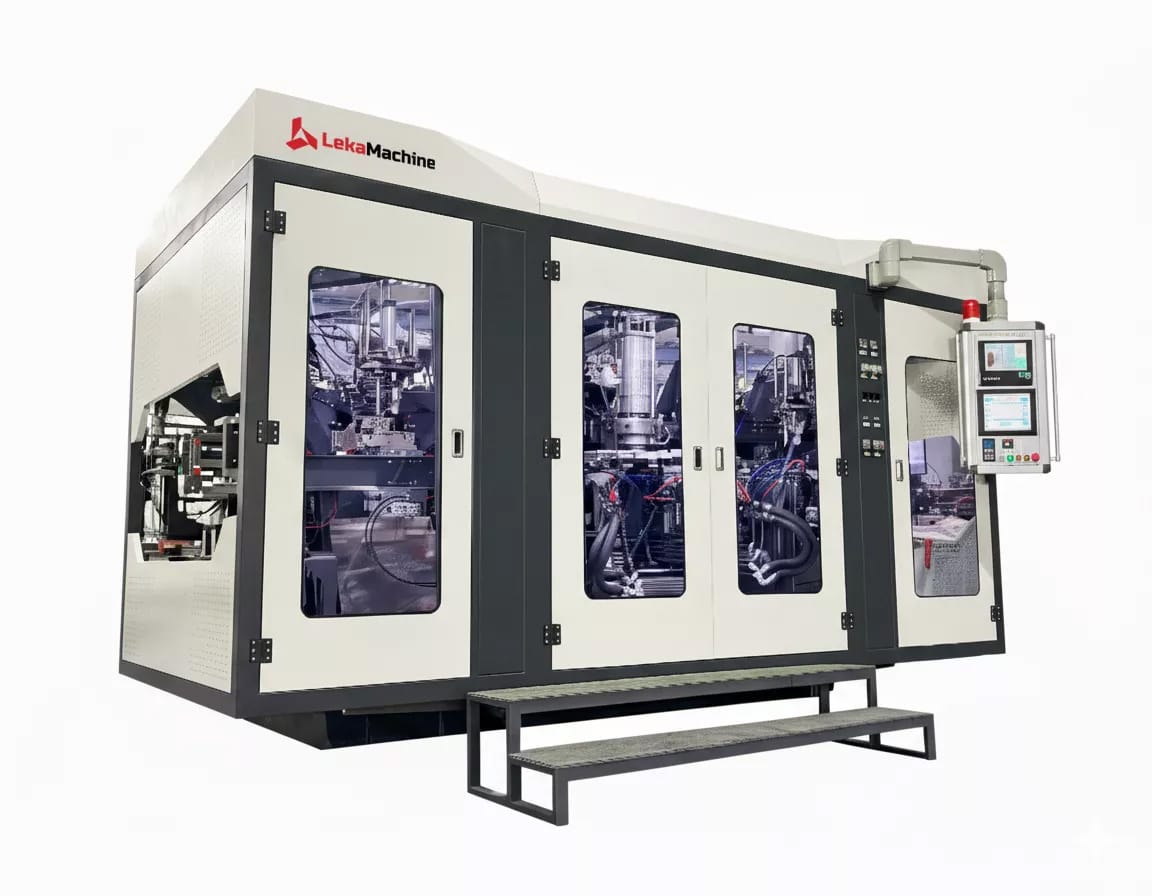
Who we are: LEKA Machine is a Chinese manufacturer specialised in blow molding equipment:
- Extrusion blow molding machines (EBM) for HDPE / PP bottles and jerrycans
- Stretch blow molding machines (SBM) for PET bottles in water, edible oil and home-care markets
Typical projects we support:
- 0.3–5 L PET bottles for drinking water, edible oil and household products
- OEM bottle factories that need stable capacity for long-term contracts
- Existing HDPE bottle producers adding PET lines to serve the same customers
Key points buyers usually ask us about:
- Engineering support: We review bottle drawings, preform specifications and target output to suggest a realistic configuration.
- Compliance & documentation: Machines are supplied with CE-related documentation and safety features suitable for installation in regulated markets.
- Training & remote service: We provide operator training and online diagnostics, and we work with local partners where possible.
- Total cost-of-ownership view: We discuss not only price, but also preform weight, scrap rate and energy use to calculate expected €/bottle.
We do not claim to replace every Italian or European manufacturer. Our role is to provide a cost-effective, technically sound option for factories whose priorities match the scenarios described above.
Checklist: Questions to Ask Any SBM Supplier
To keep the buying process objective, ask these questions to every potential partner, including LEKA Machine:
- References – Can you show working lines with similar bottle sizes, preform weights and outputs?
- Energy & air data – What are the typical kWh/kg and Nm³/bottle figures for comparable projects?
- Changeover case – How long does it take (with real numbers) to change from Bottle A to Bottle B, including neck and mould changes?
- Service response – Who is my first contact for technical issues, and what is the typical response time?
- Spare parts strategy – Which components are stocked locally or regionally, and what are the lead times for critical parts?
- Upgrade path – If my volume doubles, what is the recommended way to scale up – more cavities, more machines, or a different platform?
Suppliers who answer these questions clearly and transparently are usually the ones you can build a long-term partnership with.
Final Thoughts: “Best Manufacturer” Depends on Your Strategy
Italy and the wider European market offer several strong choices for stretch blow molding equipment. For large beverage groups, a traditional European supplier with a dense service network may remain the most logical option.
For small and mid-size PET bottle factories and OEM converters, however, the “best” solution is often a balance between:
- Technical reliability and energy performance
- Service access and training quality
- Investment level and payback time
If you are currently planning a new PET bottle project or reviewing your existing blowing capacity, you are welcome to share your bottle drawings and volume targets with us. LEKA Machine can provide a configuration proposal so you can compare it fairly with Italian and European offers.
Sobre el Autor
Slany Cheuang is the Technical Sales Manager at LEKA Machine. With a background in extrusion and stretch blow molding projects for food, beverage and home-care packaging, Slany helps OEM bottle manufacturers and brand owners translate technical requirements into practical machine configurations.
If you would like to discuss a specific project or ask follow-up questions about this guide, you can reach out through the contact form on the LEKA Machine website.


0 Comentarios