
Los 10 Mejores Fabricantes de Máquinas de Moldeo por Soplado por Estirado en Sudán

Tiempo de lectura: ( Word Count: )

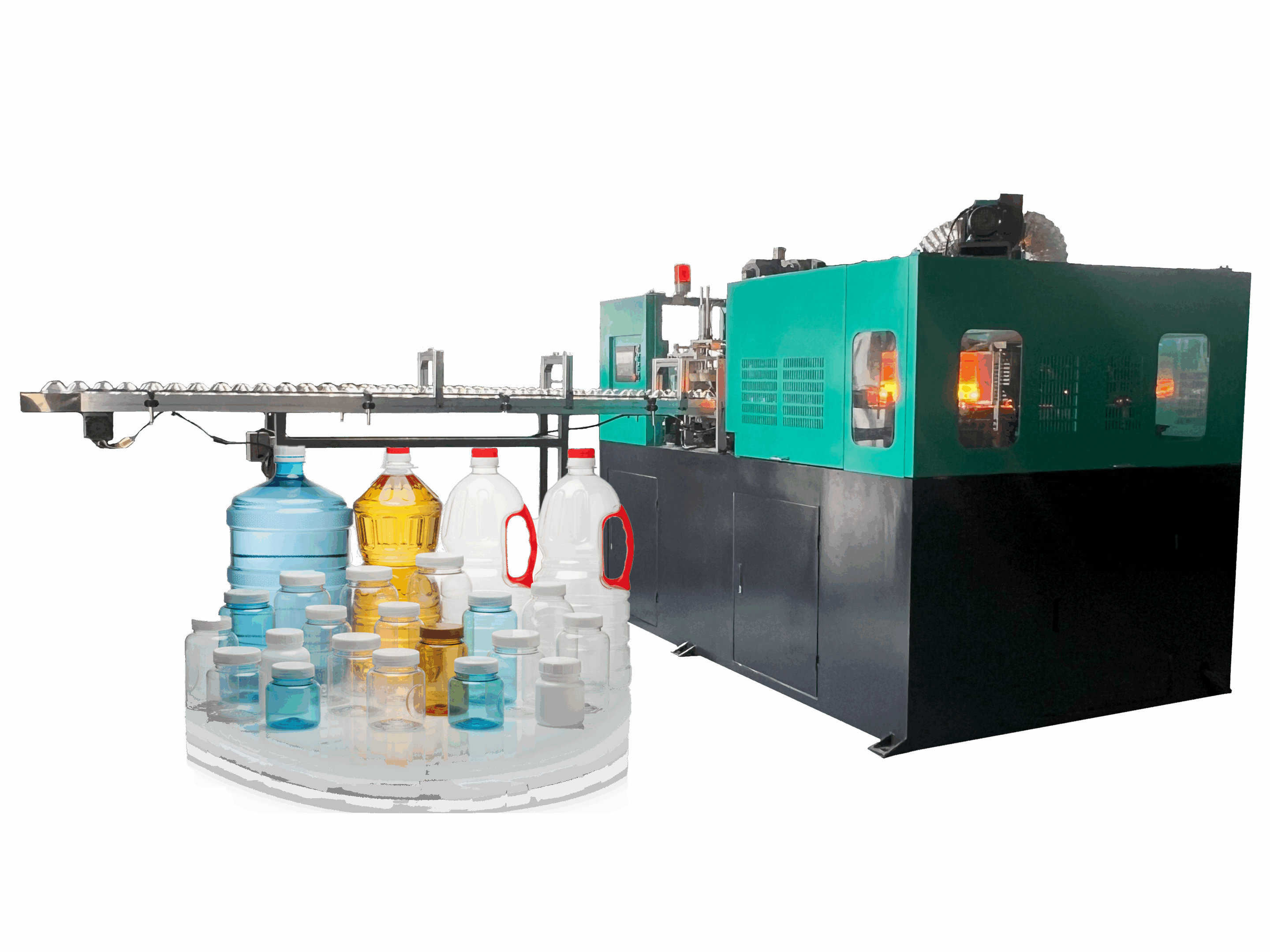
Varios bidones y botellas de plástico con tapones de rosca, bombas y un pico sobre un fondo blanco

octubre 15, 2025

The Ultimate Guide to Sudan Top 10 Stretch Blow Molding Machine Manufacturers

Discover the top 10 Stretch blow molding machine manufacturers for buyers in Sudan. This guide covers costs, performance, and local service options.

If you’re looking to produce PET bottles for water, juice, edible oil, or other products in Sudan, choosing the right Stretch blow molding machine is one of the most important decisions you’ll make. This guide breaks down the top manufacturers available to the Sudanese market, what to look for, and how to make a smart investment. We’ll help you find a partner who understands the unique opportunities and challenges of operating in the region.


Why This Matters in 2025 — energy efficiency, uptime, fast changeover, local service coverage in Sudan

In Sudan, where energy costs can be high and grid stability is a concern, machine efficiency isn’t just a bonus; it’s a core business requirement. Modern all-electric machines use significantly less power than older hydraulic designs. Uptime is everything. A machine that is down is a factory that is losing money, so reliable equipment and responsive service are critical.

The market also demands flexibility. Being able to change bottle formats quickly—a fast changeover—means you can serve more customers with less downtime. Finally, service matters. While many global brands may not have an office in Khartoum, they often serve Sudan from regional hubs like Dubai, Cairo, or Nairobi. You need to verify their service model and ability to get parts and technicians to you when needed.

Cost and Pricing Signals for 2025 — one-stage vs two-stage, cavities, automation, FAT/SAT, import duties in Sudan

Machine prices, usually quoted in USD or EUR, can range from under $100,000 for a basic semi-automatic machine to over $1 million for a high-speed, fully automated line. The biggest driver is platform: a one-stage Injection Stretch Blow Molding machine (great for specialty containers) has a different cost structure than a two-stage Stretch blow molding machine (ideal for high-volume beverage bottles).

Other factors include the number of cavities in the mold (more cavities equals higher output and cost), level of automation for preforms and finished bottles, and the scope of testing. A Factory Acceptance Test (FAT) is done at the manufacturer’s site, while a Site Acceptance Test (SAT) is done at your facility in Sudan. Be sure to budget for shipping, insurance, import duties, and local taxes, which can add a significant percentage to the final cost.

Energy, Utilities, and Sustainability — kWh per 1,000 bottles, compressed air recovery, IR oven zoning, servo drives

Energy is a top three operating cost, after raw materials and labor. Ask every manufacturer for the ‘kWh per 1,000 bottles’ for your specific container. Modern machines use efficient servo-electric drives instead of power-hungry hydraulics. Look for smart infrared (IR) oven designs with precise zoning to heat preforms perfectly with minimal wasted energy.

Compressed air is another huge utility cost. The machine needs high-pressure air (around 40 bar) to stretch and blow the bottle. Many new machines feature air recovery systems that can recycle a portion of this air, saving up to 50% on electricity for your compressor. Given Sudan’s energy landscape, this feature can deliver a very fast return on investment.

Throughput vs Flexibility Trade-offs — high-speed PET lines vs premium Injection Stretch Blow Molding small runs

You need to match the machine to your business. High-speed two-stage Stretch blow molding machine platforms are built for one thing: making millions of standard bottles (like for water or carbonated soft drinks) at the lowest possible cost per unit. They are the workhorses of the beverage industry.

In contrast, one-stage Injection Stretch Blow Molding machines offer incredible flexibility and premium quality. They go from raw resin to finished bottle in a single process, ideal for cosmetic jars, pharmaceutical bottles, or unique shapes where a flawless finish is essential. Their output is lower, but they allow for much more creativity and are perfect for smaller, more diverse production runs.

Mold, Tooling, and Quick-Change Strategy — preform molds, neck rings, EOAT, vision QC, changeover minutes

The mold determines your bottle’s final shape and calidad. It’s a precision-engineered piece of tooling. Your tooling set includes the blow mold itself, stretch rods, and neck rings. If you plan to produce multiple bottle types, ask manufacturers about their quick-change strategy. This involves features that make swapping molds faster and easier, minimizing downtime.

Modern lines also use automation like end-of-arm tooling (EOAT) to handle finished bottles and vision systems for calidad control (QC) to automatically inspect for defects. When you write your request for quotation (RFQ), demand video proof of the claimed changeover time. This is a key performance indicator.

Process Control and Quality — oven profile, preform temperature window, stretch ratios, blow/counter-pressure, Cp/Cpk

A stable process is key to making good bottles consistently and with low scrap rates. The machine’s control system manages hundreds of variables. Key among them is the oven profile (how the preform is heated), the stretching ratio (how much the preform is elongated), and the blow pressure profiles. A good machine maintains a wide processing window, meaning it can handle small variations in preform quality or ambient temperature without producing bad bottles.

Ask about the machine’s ability to track process capability, often measured by statistics like Cp and Cpk. This proves the machine can hold tight tolerances shift after shift.

Materials and Barriers — PET, rPET, PETG, multilayer (EVOH/nylon) and recycling in Sudan

The vast majority of bottles are made from PET (Polyethylene terephthalate). As sustainability becomes more important globally, many producers are using rPET, which is recycled PET. You should confirm that any machine you buy can process rPET blends. For products that need extra clarity or have different chemical resistance, PETG is an option.

For oxygen-sensitive products like certain juices or sauces, you might need a multilayer barrier bottle. These use preforms with a thin layer of a barrier material like EVOH or nylon. While effective, these can complicate recycling, so it’s important to understand the local recycling infrastructure and packaging norms in Sudan.

Top 10 Stretch blow molding machine Manufacturers in Sudan

Sidel (global leader with strong Middle East & Africa presence)

The web of sidel for blow molding machine factory/manufactures

Sidel is a global giant in beverage packaging lines, serving Sudan from its regional hubs. They are known for extremely high-speed rotary machines that are the standard in major bottling plants worldwide. Their focus is on performance, efficiency, and complete line solutions, from blowing to filling and labeling. Sidel’s technology is premium and often represents the highest capital investment, but it delivers unmatched Overall Equipment Effectiveness (OEE) for large-scale producers.

Main products

Their flagship EvoBLOW series is a modular platform available in high-speed rotary configurations. They are leaders in integrated blow-fill-cap “Combi” systems and offer specialized solutions for hot-fill, aseptic, and complex bottle shapes. Their process control and oven technology are considered top-tier.

Pros

Unmatched speed and reliability for high-volume production. Excellent process stability and energy efficiency. Strong regional service and support network. Leaders in lightweighting and sustainable packaging solutions.

Cons

Highest initial capital investment. Long lead times for new machines. May be overly complex for smaller startups without dedicated engineering teams.

Official site: https://www.sidel.com

Krones (major German supplier with service from regional hubs)

The web of pet krones for blow molding machine factory/manufactures

Krones is another top-tier German manufacturer providing complete factory solutions. They compete directly with Sidel, offering high-speed Contiform series rotary machines. They are highly regarded for their robust engineering, longevity, and integration capabilities. Krones serves the Sudanese market through its African and Middle Eastern service network, providing support for major beverage and food producers.

Main products

The Contiform 3 series is their main platform, known for its high output and efficiency. Like Sidel, they are experts in integrated “Bloc” systems for blowing, filling, and labeling. They also offer smaller linear machines for lower output needs.

Pros

Exceptional build quality and long machine life. Strong focus on reducing total cost of ownership. Comprehensive portfolio covering the entire production line. Well-established regional service presence.

Cons

Premium pricing. Can have long delivery times. The technology is advanced and requires skilled operators and maintenance staff.

Official site: https://www.krones.com

lekamachine (global OEM with Asia coverage)

The web of lekamachine for blow molding machine factory/manufactures

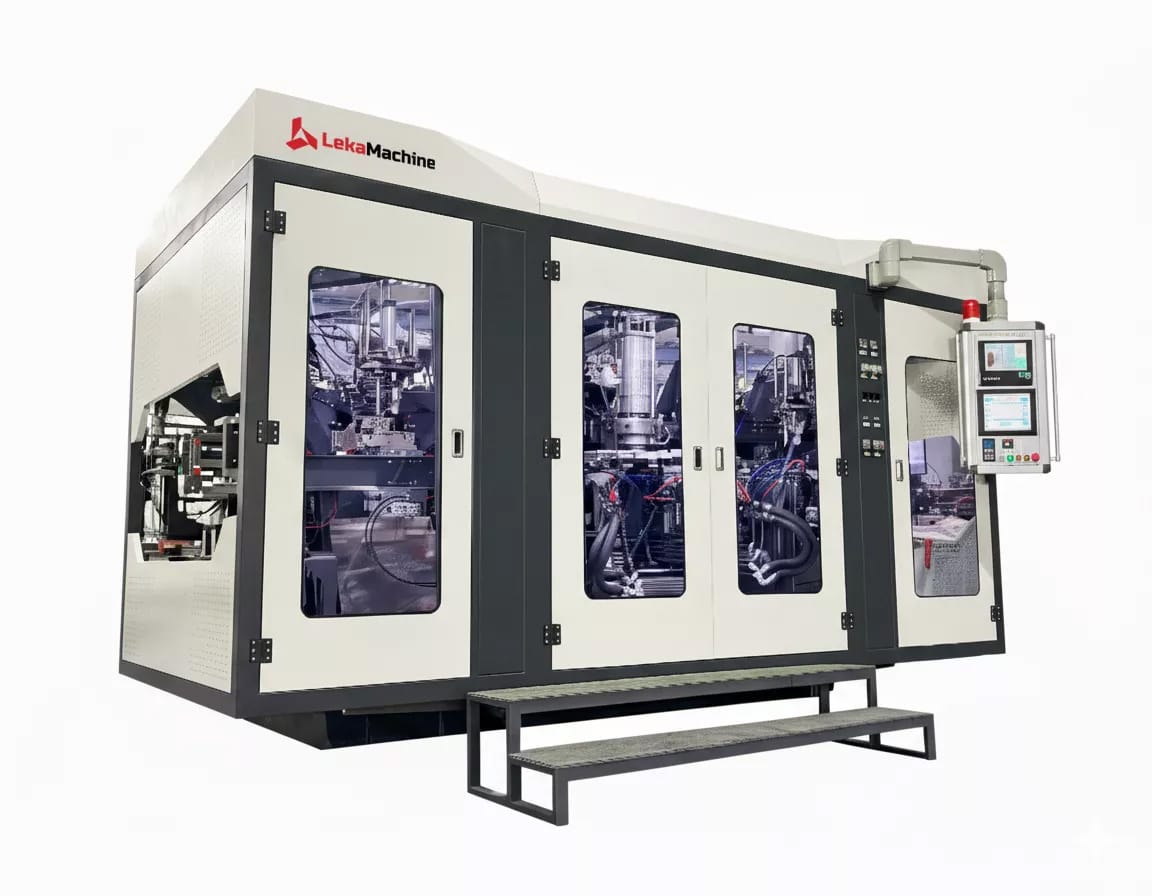
We, Lekamachine, provide a powerful value proposition for the Sudanese market: an excellent balance of modern technology, robust performance, and strong price-performance. Our key advantage is a very short delivery lead time of 30-90 days, which is a major benefit compared to the 6-12+ month waits from many European manufacturers. This allows new businesses to get to market faster and existing ones to scale up production quickly to meet demand. We serve Sudan directly from our manufacturing base, providing remote diagnostics and dispatching engineers for installation and support.

Main products

Our portfolio includes the AQUA series, a Stretch blow molding machine optimized for high-speed, stable production of PET water and beverage bottles. [cite: 79, 80] We focus on reliable, energy-efficient designs that are easy to operate and maintain, making them ideal for companies that need performance without unnecessary complexity. [cite_start]The AQUA F22 can produce 18,000-20,000 BPH. [cite: 88]

Pros

Excellent price-performance, lowering the barrier to entry. [cite: 8, 126] [cite_start]Fast 30-90 day delivery lead time is a huge competitive advantage. [cite: 8] Reliable and energy-efficient machines with modern controls. [cite_start]Straightforward designs are easy to operate and maintain. [cite: 89]

Cons

Service is provided by fly-in technicians, not a local office. Brand is less established than the major European players. Best suited for standard aplicaciones rather than highly specialized niche technologies.

Official site: https://lekamachine.com

SIPA (Italian specialist with strong focus on Africa)

The web of SIPA for blow molding machine factory/manufactures

SIPA is an Italian manufacturer with a very strong reputation and presence across Africa. They offer a uniquely broad portfolio, covering everything from preform injection molding to one-stage and two-stage blowing machines, plus mold making. This makes them a versatile partner, able to provide solutions for both standard high-volume and custom specialty containers. They are known for their flexibility and innovative engineering.

Main products

SIPA offers the SFL series of linear blowers and the SFR series of high-speed rotary machines. They are also a leader in one-stage Injection Moldeo por soplado y estirado with their ECS platform. Their ability to provide molds and preform solutions is a significant advantage.

Pros

Very flexible and innovative solutions. Strong expertise in both one-stage and two-stage processes. Good balance of performance and cost. Active and established presence in the African market.

Cons

May not match the extreme high speeds of the top German/French competitors. Service response in remote areas needs verification.

Official site: https://www.sipa.it

KHS (German engineering for high-demand applications)

The web of KHS asb for blow molding machine factory/manufactures

KHS is a well-respected German manufacturer and a direct competitor to Krones and Sidel. They offer a full range of packaging equipment with a focus on efficiency and sustainability. Their InnoPET Blomax series of el moldeo por estirado-soplado molders are known for their performance and low energy consumption, often used by major multinational brands. They typically support the Sudanese market from a regional office in the Middle East or Africa.

Main products

The InnoPET Blomax is their core platform, praised for its preferential heating technology and low TCO. They offer a range of sizes to fit different output needs and are strong in integrated, turnkey solutions for the beverage industry.

Pros

High-end German engineering. Very energy-efficient machines. Strong focus on sustainability and lightweighting bottles. Established global service network.

Cons

High initial investment. Long lead times are common. May be over-specified for businesses not focused on squeezing out every last percentage of performance.

Official site: https://www.khs.com

Tech-Long (major Chinese manufacturer with global reach)

Armario de colector de válvulas neumáticas inoxidables con manómetros y tubería inoxidable para control de procesos

Stainless control cabinet with pneumatic valves, filters, and gauges for air and water distribution on blow molding lines

Tech-Long is one of the largest and most established Chinese packaging machinery manufacturers. They have a significant global footprint and offer a credible, cost-effective alternative to European machines. They produce a wide range of equipment, including Stretch blow molding machines, and have experience working with customers across Africa. Their machines are known to be robust and reliable.

Main products

Tech-Long’s 6th generation of rotary PET Stretch blow molding machines focuses on high speeds and efficiency. They are also strong in Combi-block systems and have developed a reputation for providing complete, integrated lines at a competitive price point.

Pros

Very competitive pricing compared to European brands. Proven reliability with a large number of global installations. Broad portfolio of equipment for full-line solutions.

Cons

Service and support model for Sudan needs to be clearly defined. May not have the most cutting-edge features of the top-tier German brands.

Official site: https://www.tech-long.com

Nissei ASB Machine (Japanese one-stage specialist)

The web of NISSEI asb for blow molding machine factory/manufactures

Nissei ASB is a Japanese company that is a global leader in one-stage Injection Moldeo por soplado y estirado technology. They are the go-to choice for producers who need to make high-quality, blemish-free containers in a variety of shapes and resins beyond just PET. For cosmetics, pharmaceuticals, food jars, or any application where appearance is paramount, ASB is a top contender.

Main products

The ASB series is their iconic one-stage, four-station platform. They offer a huge range of machine sizes, from small lab-scale models to large machines for gallon jars. They are constantly innovating with options for handling complex shapes and new materials.

Pros

Superb container quality with no defects on the neck finish. Incredible flexibility in bottle shape, size, and material. Lower tooling costs for low-to-medium volume production. Strong and reliable Japanese engineering.

Cons

Lower output rates compared to two-stage systems. Higher cost per bottle for simple, high-volume containers like water bottles. Process requires more technical skill to master.

Official site: https://www.nisseiasb.co.jp/en/

Chumpower (Taiwanese manufacturer with a reputation for reliability)

the WEB of chunpower for Stretch blow molding machine manufactures/factory

Chumpower is a leading Taiwanese manufacturer of Stretch blow molding machines with a solid global reputation. They are known for building robust, reliable, and user-friendly linear machines. They offer a great balance of quality, performance, and price, making them a popular choice for small and medium-sized enterprises that need flexibility and dependability without the high cost of European rotary systems.

Main products

Their LSS series of high-speed linear machines is their most popular line. They offer machines with a wide range of cavitation and output capabilities, praised for their stable performance and ease of maintenance.

Pros

Excellent reliability and long machine life. Very good value for money. Machines are generally easier to operate and maintain than complex rotary systems. Flexible for handling different bottle formats.

Cons

Cannot achieve the ultra-high outputs of large rotary machines. Service support in Sudan would likely be remote or from a regional agent.

Official site: https://www.chumpower.com

Aoki Technical Laboratory (pioneering Japanese one-stage technology)

The web of AOKI for blow molding machine factory/manufactures

Aoki is another top-tier Japanese specialist in one-stage Injection Stretch Blow Molding machines, competing with Nissei ASB. They are known for their innovative direct-clamp and three-station designs, which focus on saving energy and floor space. Their machines are used to produce high-value containers for a wide range of industries where precision and quality are non-negotiable.

Main products

Aoki’s AL series of machines are known for their efficiency and compact footprint. They are pioneers in direct gate molding into the preform base, which can save material and improve the final product’s appearance.

Pros

Highly energy-efficient designs. Compact machine layout saves valuable factory space. Produces exceptional quality containers. Known for precision and reliability.

Cons

Not suitable for high-volume, low-cost beverage bottles. Requires a higher level of technical expertise to run effectively. Support is highly specialized.

Official site: https://www.aokitech.co.jp/en/

Husky Technologies (leader in preforms with machine solutions)

Assorted plastic containers, bottles, buckets, and syringes on white background

Assorted plastic packaging illustrating outputs from extrusion blow molding machine and stretch blow molding machine lines

While Husky is most famous for its world-class preform moldeo por inyección systems, they also offer the HyPET HPP line of integrated preform and bottle production systems. They are a premium choice, focusing on high quality, consistency, and process control. For a producer who wants a single, highly integrated system from a top-tier supplier, Husky is a strong candidate, supported by a global service network.

Main products

The HyPET HPP (High Performance Package) is an integrated system that combines their leading preform injection technology with a blowing station. This approach gives them total control over the process, delivering excellent bottle quality and consistency.

Pros

Single-source supplier for both preform and bottle production. Unmatched process control and consistency. Backed by a world-class global service organization. Excellent for high-quality, high-volume applications.

Cons

Very high capital investment. Less flexible than separate preform and blowing machines. Primarily focused on high-volume beverage applications.

Official site: https://www.husky.co

Factors to Consider When Choosing a Stretch blow molding machine Manufacturer for a Startup — delivery time, training, TCO in Sudan

For a startup in Sudan, speed to market is critical. A machine with a short delivery time, like the 30-90 days we offer, means you can start generating revenue months earlier than if you wait for a European machine. Simplicity is also key. Choose a machine that is easy to operate and doesn’t require a PhD to maintain. Comprehensive training for your team is not optional—it is essential.

Finally, look beyond the purchase price. Model the Total Cost of Ownership (TCO) based on Sudan’s reality. Factor in energy consumption, spare parts costs, shipping, and the cost of downtime. A slightly cheaper machine that is inefficient or unreliable will cost you much more in the long run.

How to Find a Stretch blow molding machine Manufacturer for Your Startup — shortlist, pilot, OEE, SLA, references in Sudan

Start by creating a shortlist of 3-5 potential suppliers that fit your budget and application. Don’t just rely on brochures. If possible, send them your preforms and resin to run a pilot test on a machine. You want to measure the real-world Overall Equipment Effectiveness (OEE), scrap rate, and energy use.

Insist on seeing a draft Service Level Agreement (SLA) that defines their support commitments. Most importantly, ask for references. Speaking to another company, ideally in Sudan or a neighboring country, who uses their machine is the best way to understand the real-world performance and support quality.

Domestic vs Overseas Stretch blow molding machine Manufacturers — responsiveness, cost, hybrid model in Sudan

Currently, there are no domestic manufacturers of these complex machines in Sudan, so you will be working with an overseas supplier. The choice is between premium European/Japanese brands and cost-effective Asian manufacturers. European brands often have a stronger regional service presence but come with a higher price tag and longer lead times. Asian manufacturers like us offer a significant cost and delivery speed advantage.

The best approach is often a hybrid model: source a high-value machine from an overseas OEM that has a proven model for supporting customers in Sudan through remote diagnostics and fly-in servicio technicians. This gives you access to modern technology without the full cost of a locally-based multinational.

Maintenance, Spare Parts, and Service Level Agreements — PM intervals, spares kit, MTTR, remote diagnostics

Good maintenance is the key to machine longevity. The manufacturer must provide a clear preventive maintenance (PM) schedule. You should also purchase a critical spares kit with the machine, containing items like heater lamps, seals, and sensors that are essential to keep you running. This is vital in Sudan, where shipping replacement parts can take time.

Your service agreement should define key metrics like Mean Time To Repair (MTTR) and technician dispatch times. Modern machines with remote diagnostic capabilities are a huge advantage, as an engineer overseas can often log into your machine to troubleshoot problems in minutes, saving you from waiting days for a service visit.

Installation, Commissioning, and Ramp-Up — FAT/SAT checklists, training plans, ramp KPIs in Sudan

The journey isn’t over when the machine arrives at Port Sudan. A successful project requires a detailed plan for installation and commissioning. This starts with a clear FAT/SAT checklist to verify the machine performs as promised. The manufacturer should provide a comprehensive training plan for your operators and maintenance staff.

Agree on Key Performance Indicators (KPIs) for the ramp-up phase to ensure the machine reaches its target efficiency and output on schedule. Remember to account for local holidays and customs in Sudan when creating your project timeline.

Pilot Runs and Acceptance Criteria — pilot with production molds, OEE, energy, changeover

The best way to de-risk your investment is with a pilot run. This means testing the exact machine you’re buying (or an identical one) using your actual production molds, preforms, and resin. This isn’t just about making a few good bottles; it’s about running the machine for an extended period.

You need to measure everything under real conditions: OEE, energy consumption, scrap rate, and the time it takes to do a full changeover. This data, documented in a draft SLA, forms the basis of your final acceptance criteria.

Total Cost of Ownership and ROI Modeling — energy rates, labor, logistics, residual value in Sudan

A simple payback calculation isn’t enough. You need to build a practical Total Cost of Ownership (TCO) model. Use your actual local energy rates from SEECO, your labor costs, and the logistics costs for getting spare parts to your facility. A good TCO model also includes factors like the cost of compressed air, planned maintenance, and even the machine’s potential residual value after 5 or 10 years. This comprehensive view will help you understand the true financial impact of your decision.

Operator Training and Change Management — HMI, recipes, SOPs, cross-shift audits in Sudan

The best machine in the world is useless without trained operators. The Human-Machine Interface (HMI) should be intuitive and available in a language your team understands (Arabic or English). The system should allow you to save “recipes” for each bottle format, so operators can recall all settings with the push of a button.

Develop clear Standard Operating Procedures (SOPs) for running the machine, performing changeovers, and doing basic maintenance. Consistency is key, so implement cross-shift audits to ensure everyone is following the same procedures to maintain quality and efficiency.

Digital Connectivity and Data — remote monitoring, alarms, MES/ERP links, predictive maintenance

Modern machines are data hubs. They should offer remote monitoring so you can check production status from your phone or office. The system should be able to send alarms via email or SMS if there’s a problem. For larger operations, ask about the ability to link the machine to your factory’s Manufacturing Execution System (MES) or Enterprise Recursos Planning (ERP) software.

The ultimate goal is to use this data for predictive maintenance—analyzing trends to predict when a component might fail and replacing it during planned downtime, rather than waiting for it to break and stop production.

Case Studies and Benchmarks — energy reduction, changeover time, OEE gains in Sudan sectors

When talking to vendors, ask for real-world casos prácticos relevant to Sudan. For example, show me data from a beverage bottler who cut energy use by 40% after switching to your all-electric machine. Show me a report from a cooking oil producer who reduced their changeover times from four hours to 45 minutes.

Seeing verified “before and after” benchmarks for OEE, energy savings, and efficiency gains from companies in similar markets provides powerful proof of a manufacturer’s claims.

RFQ Checklist and Vendor Scorecard — energy (kWh), changeover minutes, coverage map in Sudan

Your Request for Quotation (RFQ) should be very specific. Don’t just ask for a price. Demand key performance data: kWh per 1,000 bottles, video-verified changeover time in minutes, a detailed PM schedule, and the cost of a two-year critical spares kit. Ask for a technician coverage map for the region and their specific SLA response targets for Sudan. Define your FAT and SAT criteria clearly, and make providing at least two customer references in the region a mandatory requirement.

Otras Opciones Adicionales a los Fabricantes de Máquinas de Soplado de Estirado — soplado por contrato (toll), reacondicionamiento/modernizaciones, procesos alternativos

Buying a new machine isn’t the only option. You could use a “toll blow molder” or contract manufacturer who makes the bottles for you. This avoids the capital expense and is a great way to test a market. Another option is buying a refurbished machine or retrofitting an older one with new controls and an efficient oven. For certain applications, alternative processes like injection blow molding (for small, high-precision bottles) or Máquina de moldeo por soplado por extrusión (for containers with handles like for milk or chemicals) might be more suitable.

Preguntas frecuentes — Preguntas para la compra de máquinas de soplado de estirado-soplado

Should I choose a one-stage or two-stage machine?
Choose a one-stage machine for lower volumes, high-value containers like cosmetics, or complex shapes where perfect neck and body finish is critical. Choose a two-stage Stretch blow molding machine for high-volume, standardized containers like water and beverage bottles, where maximum output and low cost per bottle are the primary goals.

What is a good energy consumption benchmark?
Modern all-electric two-stage machines aim for 0.20 to 0.35 kWh per 1,000 standard 0.5L water bottles. Older hydraulic or less efficient models can be significantly higher. Always ask for specific kWh data for your bottle size and weight during the RFQ process.

How much compressed air do I need?
Compressed air is a major operational cost. A high-pressure system (around 40 bar) is needed for the final blowing stage, while a low-pressure system (around 10 bar) runs pneumatic components. Many modern machines have air recovery systems that can cut high-pressure air consumption by 30-50%, a crucial feature for lowering operational costs.

What do I need for hot-fill applications?
Hot-filling requires a specialized process to create heat-set PET bottles that can withstand temperatures of 85-95°C without deforming. This involves specific preform designs, a different heating profile in the oven, and often a thermally conditioned mold. Not all standard machines can do this, so you must specify hot-fill capability to the manufacturer.

How long should a mold changeover take?
For a modern machine with quick-change features, a complete mold changeover should take between 30 to 60 minutes. High-performance systems can achieve this in under 30 minutes. Older or more basic machines could take several hours. Ask for a video of a changeover to verify manufacturer claims.

What is a typical warranty and service agreement (SLA)?
A standard warranty is typically 12 months from installation or around 2,000 operating hours. A good Service Level Agreement (SLA) should define response times for remote support (e.g., within 2 hours) and on-site technician dispatch (e.g., within 48-72 hours), especially important for regions served by regional hubs.

Conclusión — Adecuación de la plataforma, servicio verificado, TCO medido, próximos pasos

Choosing the right Stretch blow molding machine for your operations in Sudan comes down to three things: finding the right platform fit for your products, verifying the manufacturer’s ability to service your location, and doing the hard work to measure the true total cost of ownership. A cheap machine with poor efficiency and no support is a liability, not an asset.

Use this guide to build your shortlist, ask tough questions, and demand performance data. Your next steps are to send out a detailed RFQ, schedule pilot tests if possible, and negotiate a strong service agreement. By focusing on value over just the initial price, you will build a foundation for a profitable and successful bottling operation.


Desbloquee ahora el proceso de adquisición profesional de máquinas de moldeo por soplado

    Slany Cheung

    Slany Cheung

    Autor

    Hola, soy Slany Cheung, Directora de Ventas de Lekamachine. Con 12 años de experiencia en el sector de la maquinaria de moldeo por soplado, conozco a fondo los retos y las oportunidades a los que se enfrentan las empresas a la hora de optimizar la producción y mejorar la eficiencia. En Lekamachine, estamos especializados en ofrecer soluciones de moldeo por soplado integradas y totalmente automatizadas, al servicio de industrias que van desde la cosmética y la farmacéutica hasta los grandes contenedores industriales.

    A través de esta plataforma, pretendo compartir información valiosa sobre las tecnologías de moldeo por soplado, las tendencias del mercado y las mejores prácticas. Mi objetivo es ayudar a las empresas a tomar decisiones informadas, mejorar sus procesos de fabricación y seguir siendo competitivas en un sector en constante evolución. Acompáñeme mientras exploramos las últimas innovaciones y estrategias que están dando forma al futuro del moldeo por soplado.

    También te puede gustar...

    0 Comentarios

    Enviar un comentario

    Tu dirección de correo electrónico no será publicada. Los campos obligatorios están marcados con *