
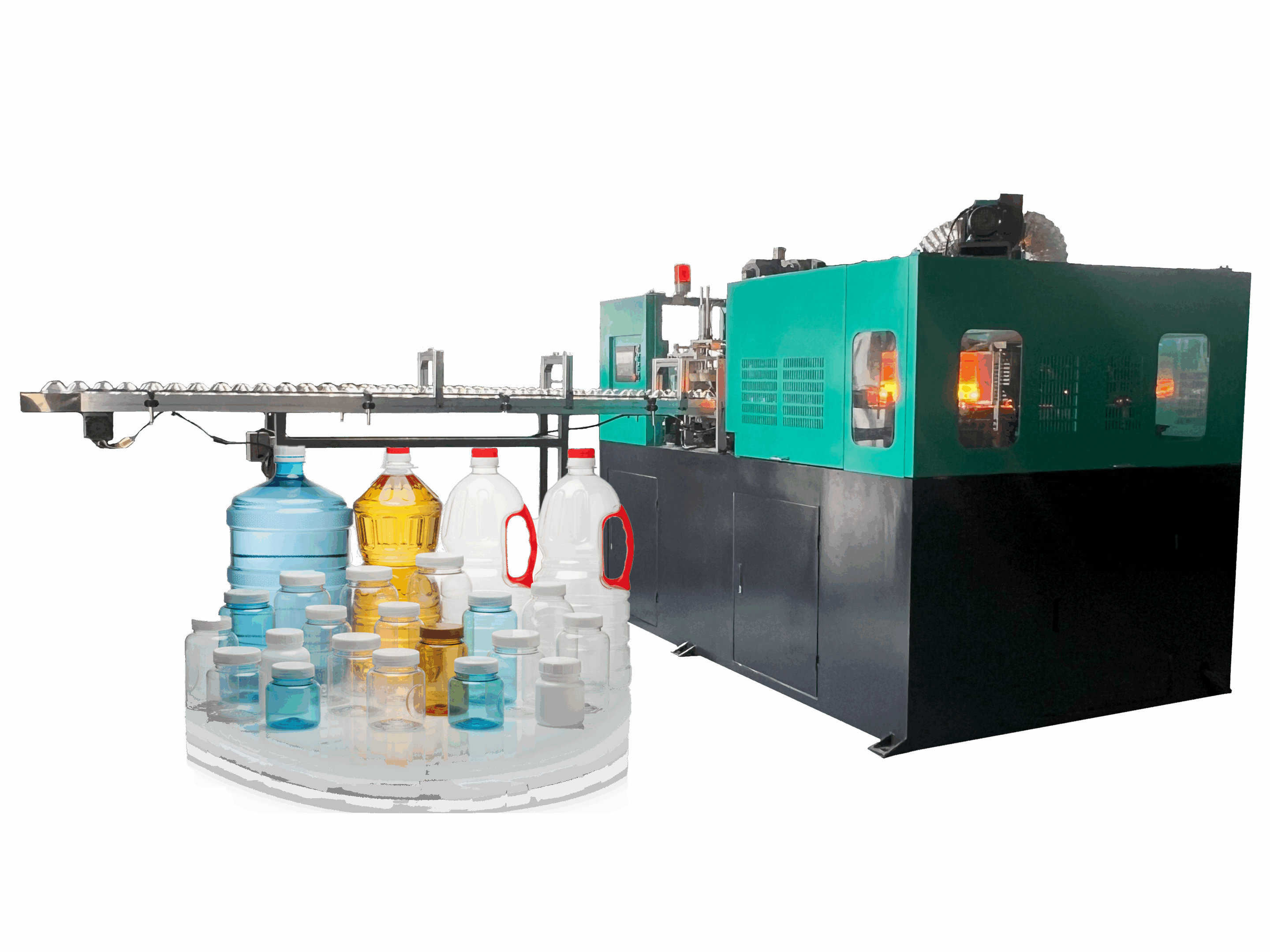
What kind of trial run report for the all-electric extrusion blow molding machine should I request from the supplier before receiving the machine?

At our factory, we often see buyers frustrated because they received a machine that looked good on a video call but failed under real production loads. This usually happens when the pre-shipment inspection 1 is superficial. You need to push beyond basic video verification and demand data that proves the stability of the servo motors and the software logic.
A comprehensive trial run report for an all-electric machine must include a Euromap 46 energy efficiency certificate, a statistical CPK study based on at least 50 consecutive bottles, and a functional safety matrix checklist. These documents verify that the servo systems deliver precise, repeatable performance rather than just theoretical speed.
Once you receive this report, do not just file it away. You must compare the data against your contract specifications immediately. A detailed report reveals hidden issues like servo overheating or software bugs that simple visual inspections miss. It acts as your final safety net before the equipment leaves the supplier’s floor.
Does the report include real-time data on energy consumption during the test?
In our experience developing energy-saving solutions for European markets, many suppliers simply use a clamp meter to take a snapshot of the current and call it "energy data." This is misleading because it ignores the fluctuations typical in a molding cycle. If you want true cost predictability, you need a standardized protocol that accounts for the entire process.
The report must refuse generic average power readings and instead follow the Euromap 46.1 protocol. This breaks down energy usage into specific Class ratings (1–10) for both Idling and Production states, providing a legally binding efficiency baseline that reveals the true electrical cost per bottle produced.
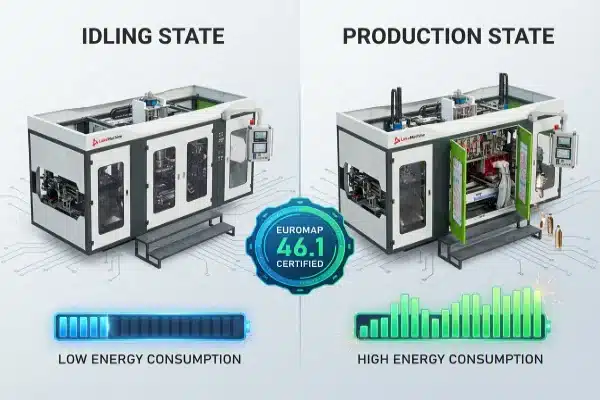
The Importance of Euromap 46.1
When we build all-electric machines at LEKA Machine, we know that the primary selling point is energy efficiency. However, without granular data, you cannot verify if the servo drives are tuned correctly. A standard "average" reading hides peaks that could trigger demand charges on your electricity bill.
You should insist on a report that categorizes energy usage into two distinct phases:
- Idling State: The energy consumed when the machine is at operating temperature but not moving. This reveals the efficiency of the heater bands and the standby power of the servo drives.
- Production State: The specific energy required (kWh/kg of material) during active molding.
Checking for "Dirty" Power
Beyond just consumption, you must ask for an analysis of Current Ripple and Harmonics. All-electric machines rely heavily on inverters and servo drives. If the machine lacks proper EMC filtering, it will generate high Total Harmonic Distortion (THD).
Our engineers always check for "noisy" current ripples in the test data. If the report shows high THD, this machine might interfere with other sensitive electronics in your facility, such as leak testers or vision inspection systems.
safety audit 3
Data Comparison Table
Use the table below to determine if the supplier’s energy report is sufficient.
| Data Point | Basic/Poor Report | Professional/Required Report |
|---|---|---|
| Método de Medición | Single snapshot using a handheld amp meter. | Continuous logging over 4+ hours per Euromap 46.1. |
| State Distinction | Lumps everything into one "average" number. | Separates Idling (Ready) vs. Producción (Active). |
| Metric Used | Total Amps or Volts. | Specific Energy Consumption (kWh/kg of plastic). |
| Power Quality | Ignored. | Includes Harmonics (THD) and current ripple analysis. |
Can I see the CPK analysis for bottle weight and wall thickness stability?
When we calibrate our flight controllers and servo systems, we know that hitting a target weight 4 once is luck; hitting it 50 times in a row is engineering. Many buyers accept five random samples as proof of quality, but this fails to detect the drift caused by heat buildup in the mechanical components over time.
You must demand a Process Capability Index (Cpk) study based on at least 50 consecutive bottles rather than random picks. For high-precision electric machines, require a Cpk score of ≥1.33 for bottle weight and neck dimensions to prove the servo systems are mechanically stable and repeatable.
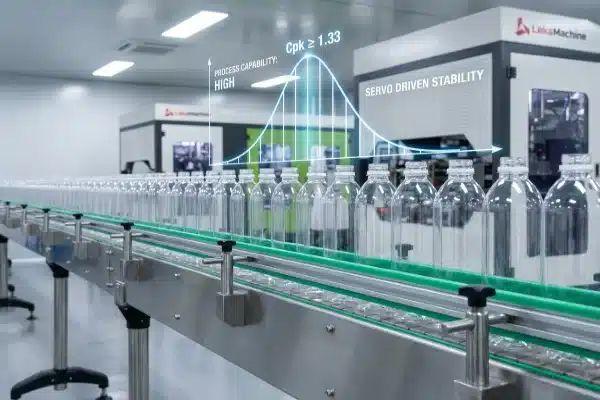
energy efficiency certificate 5
Why "Consecutive" Samples Matter
A common trick in the industry is to pick the best 10 bottles out of a run of 100. This hides the outliers. In our testing protocols, we insist on 50 consecutive bottles. If the machine is truly stable, every single one of those 50 bottles will fall within the tolerance range.
Thermal Stability and Servo Drift
All-electric machines use ball screws for movement. As these run, they generate heat, which can cause slight expansion and friction changes.
- The 4-Hour Rule: Do not accept a report based on a 15-minute run.
- The Test: Document critical dimensions (neck diameter, bottle height) at Hour 1 and compare them to Hour 4.
- The Goal: The report must prove that heat saturation in the ball screws does not cause the mold closing position to drift, which would alter the bottle height or flash.
Sectional Weight Distribution
Total weight is not enough. The parison controller might be dumping extra plastic into the scrap flash to hide a thin wall in the bottle body.
We recommend asking for a Sectional Weight Analysis. This involves cutting the trial bottles into three sections (top, middle, bottom) and weighing them individually. This data proves that the Parison Control System is accurately distributing material thickness according to your profile, ensuring structural integrity without wasting resin.
Understanding Cpk Scores
Here is how to interpret the Cpk data provided in the report:
| Cpk Value | Interpretation | Manufacturer Insight |
|---|---|---|
| < 1.0 | Unstable Process | The machine cannot consistently meet specs. High reject rates are guaranteed. |
| 1.0 – 1.33 | Marginal | The machine is okay, but any variation in resin or temperature will cause defects. |
| ≥ 1.33 | Good / Capable | Standard requirement. The servo process is robust and reliable. |
| ≥ 1.67 | Excelente | The machine is highly precise; ideal for pharmaceutical or high-speed lines. |
Will the report document the actual cycle time achieved versus the quoted speed?
We frequently encounter clients who are disappointed because their previous supplier promised a fast cycle time that was physically impossible to achieve with the required cooling. A quote is just a promise; the trial report is the proof. You must separate the machine’s mechanical speed from the thermodynamic limits of the plastic.
functional safety matrix 6
The report must verify two distinct metrics: the Dry Cycle Time (mechanics only, per Euromap 6) to confirm servo speed, and the Wet Cycle Time (production with plastic) to verify cooling capacity. This distinction prevents suppliers from masking slow cooling limitations with theoretical dry cycle figures.

Dry vs. Wet Cycle: The Critical Distinction
- Dry Cycle (Euromap 6): This measures how fast the machine can open, close, and move the carriage without plastic. It validates the motor power and mechanical design.
- Wet Cycle: This includes the cooling time. If the report only shows Dry Cycle, the supplier might be hiding an inefficient cooling design or poor airflow.
Servo Following Error
This is a metric unique to all-electric machines. In our engineering logs, we look at the Following Error.
- Definition: The difference between the position the computer commanded the motor to go to, and the position the motor actually reached.
- El riesgo: If the Following Error plot shows high variance during mold clamping or parison push-out, it means the drives are undersized or the mechanical friction is too high. The machine is "struggling" to keep up with its own software.
The Golden Parameter Backup
Finally, the speed achieved in the report is useless if you cannot replicate it.
The final deliverable of the trial report must include a digital backup of the Golden Parameter Set. This includes:
- Recipes
- PID temperature settings
- Servo tuning values
Crucial Step: Request a file checksum or hash. This ensures that the software file you receive is identical to the one used during the successful trial, preventing accidental changes before shipping.
Verification Checklist for Speed & Motion
| Métrica | What to Look For in the Report |
|---|---|
| Dry Cycle | Must cite Euromap 6 standard. Measures pure mechanical speed. |
| Wet Cycle | Must list the specific cooling time used to achieve the cycle. |
| Following Error | Graphs showing near-zero error during rapid acceleration. |
| Parameter Backup | Digital file included with a Checksum to verify integrity. |
Do you include a checklist of all safety alarms tested during the trial?
Before we ship any machine to Europe or North America, we treat the safety audit as the most critical part of the FAT (Factory Acceptance Test). It is not enough to simply see that the emergency stop button works; you need to verify the logic behind the safety systems, especially for high-torque electric servo motors.
primary selling point 8
The report requires a signed functional safety matrix that tests every device, confirming that protocols like Safe Torque Off (STO) function correctly. It must verify that opening a gate cuts motor torque immediately and that the system logs these events accurately.
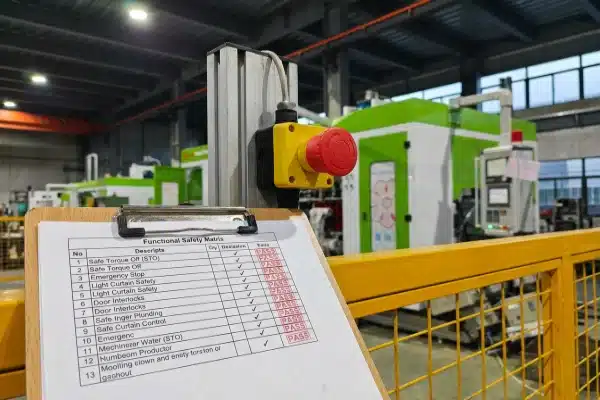
The Functional Safety Matrix
A simple "Safety OK" checkmark is unacceptable. You need a matrix that lists:
- Input: (e.g., Front Gate Opened)
- Expected Outcome: (e.g., Mold Close Inhibited, Motor Torque Off)
- Actual Result: (Pass/Fail)
- Response Time: (e.g., 0ms)
For electric machines, verify Safe Torque Off (STO). Unlike hydraulic machines where valves close, electric motors must be electrically disconnected from generating torque while keeping the drive powered for communication. The report must prove this wiring is correct.
The "Challenge Test" (Rejection Verification)
If your machine has auto-deflashing or leak detection, how do you know it actually rejects bad bottles?
Our internal protocols require a Challenge Test. We deliberately introduce a "bad" bottle (e.g., one with a blocked neck or a hole) into the line.
- Requirement: The report must document that the machine recognized the defect, rejected the specific bottle, and—most importantly—recorded the failure in the alarm history.
- Why: This proves the software logic is robust and won’t let defective products pass through to your customer.
Alarm History Analysis
Ask for a printout of the alarm log generated during the 8+ hour trial run.
- Clean Run: Ideally, there should be no critical alarms.
- Warning Signs: Frequent "Servo Overload" or "Position Error" alarms during the trial indicate the machine is operating at its limit and will likely fail prematurely in your factory.
Conclusión
To ensure you receive a reliable machine, demand a report with Euromap 46.1 energy data, a CPK > 1.33 study on consecutive bottles, and a verified safety matrix.
video call 10
Notas al pie
- Defines the standard verification process before equipment is delivered to the buyer. ↩︎
- Reference for high-precision manufacturing and material quality control standards. ↩︎
- Industry leader example for high-performance electric motor safety and testing. ↩︎
- Relates the concept of precision to the statistical Cpk study discussed. ↩︎
- Context for energy efficiency standards and industrial certification. ↩︎
- Reference for international safety standards used in industrial machinery audits. ↩︎
- Technical term for electrical fluctuations that can affect machine performance. ↩︎
- Business terminology for the main competitive advantage of all-electric machines. ↩︎
- Explains the power conversion components used in all-electric machinery. ↩︎
- Context for remote inspection methods mentioned in the article. ↩︎


0 Comentarios