


How Can I Verify All-Electric Extrusion Blow Molding Machine Quality Through Third-Party Organizations?
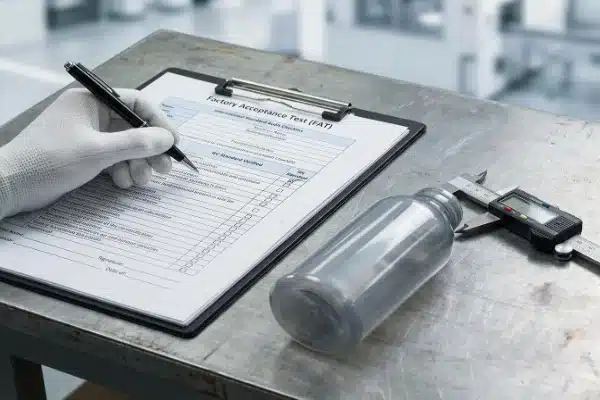
At our factory, we encourage independent audits because purchasing overseas equipment without independent verification is a gamble that often leads to costly downtime and safety liabilities. We find that clients who formalize inspection protocols early in the negotiation process avoid the "theoretical output" trap and ensure their production lines launch smoothly.
To verify quality, hire accredited agencies like SGS or TÜV to conduct a Factory Acceptance Test (FAT) based on IEC 60204-1 standards. Mandate a pre-approved protocol to check Euromap 46 energy ratings, verify "Bill of Materials" component authenticity, and measure Cpk stability before releasing final payment.
Securing a high-end all-electric machine requires more than a handshake; it demands a structured verification process.
What Specific Electrical and Safety Standards Should the Auditor Check?
When we wire our electrical cabinets, we strictly follow global codes, but we frequently see budget competitors cut corners that result in fire hazards or rejected customs entries. We know that safety compliance is not just about avoiding fines; it is about protecting your operators and your facility.
Festo automation technology 1
Your auditor must inspect against IEC 60204-1 for general electrical safety, ensuring proper grounding and conductor color-coding. For US markets, insist on ANSI/SPI B151.15 to verify platen safety ratchets. Additionally, demand an EMC analysis to confirm the machine’s harmonics won’t disrupt your existing plant electronics.

To ensure your all-electric extrusion blow molding machine is safe and legally compliant, you must be specific with your third-party agency. Simply asking for a "safety check" is insufficient. You need to reference specific industrial standards.
Siemens 3
The "Big Three" and Specialized Protocols
We strongly recommend engaging the "Industrial Machinery" divisions of SGS, TÜV SÜD/Nord, or Bureau Veritas. Unlike generalist inspectors who check consumer goods, these specialists understand the high-voltage risks and mechanical forces involved in plastics processing.
Critical Electrical Safety Checks (IEC 60204-1)
The backbone of your audit should be IEC 60204-1. This standard governs the safety of electrical equipment in machinery. Your auditor needs to perform the following physical checks:
- Grounding Continuity: The resistance must be less than 0.1 ohms to prevent shock hazards.
- Insulation Resistance: Testing to ensure no current leakage occurs between phases and the ground.
- Color-Coding Compliance: This is often overlooked. Conductors must follow strict color codes (e.g., orange for circuits that remain live after the main switch is off, utilized for interlocks).
Safe Torque Off (STO) Verification
For all-electric machines driven by servos, the Emergency Stop (E-Stop) mechanism is critical. It is not enough for the software to tell the motor to stop. The auditor must verify Safe Torque Off (STO) functionality on the servo drives. This ensures that when a safety gate is opened, power is physically cut to the motor’s output stage (complying with SIL 3 / PL e standards), making involuntary movement impossible.
EMC and Harmonic Distortion
All-electric machines act as large inverters. If poorly filtered, they can pollute your factory’s power grid. We advise having the inspector use a power analyzer to measure Total Harmonic Distortion (THD) at the machine’s main disconnect. This ensures compliance with IEEE 519 standards, preventing your new machine from crashing other sensitive electronics in your plant.
Safety Standards Comparison Table
| Estándar | Target Region | Key Inspection Focus |
|---|---|---|
| IEC 60204-1 | Global / Europe | Electrical safety, grounding, insulation, and conductor coding. |
| ANSI/SPI B151.15 | América del Norte | Mechanical guarding, high-speed clamp protection, and platen safety ratchets (jam bars). |
| IEEE 519 | Global | Power quality, harmonic distortion limits, and grid compatibility for servo systems. |
How Do We Validate Performance Claims and Energy Efficiency?
We test every machine’s cycle time before shipping, yet many buyers complain about other suppliers delivering "theoretical" speeds that fail in real-world production. Real verification requires objective data, not just watching the machine open and close for five minutes.
statistical Cpk capability study 4
Instruct inspectors to perform a Euromap 46.1 energy test to certify the machine’s efficiency class. Furthermore, require a statistical Cpk capability study by weighing 50 consecutive bottles; a Cpk score above 1.33 objectively proves the servo system’s stability and validates the manufacturer’s marketing claims.

Marketing brochures often claim high speeds and low energy consumption, but these are often based on ideal conditions—running dry (without plastic) or with lightweight molds. To protect your ROI, you must demand empirical evidence of performance.
Safe Torque Off 6
Statistical Process Control (Cpk)
An all-electric machine is purchased for precision. To verify this, do not just accept a "visual check" of the bottle. Require the inspector to run the machine continuously for 1–2 hours.
- The Procedure: Collect 50 consecutive bottles produced during stable operation.
- The Measurement: Weigh each bottle to the nearest 0.1 gram.
- The Calculation: Calculate the Cpk (Process Capability Index).
A Cpk value greater than 1.33 indicates that the process is statistically capable and stable. If the machine cannot hold a stable weight during the FAT, it will result in thousands of dollars in wasted resin (giveaway) once it reaches your factory. This objectively proves the stability of the servo system and the parison control.
Euromap 46.1 Energy Testing
Since energy savings are a primary reason for choosing electric over hydraulic, you should verify the savings. Mapa europeo 46 is the industry standard for determining the energy efficiency of plastics machinery. The auditor should measure energy usage in two states:
- Idle Power: Machine heating on, motors ready, but not cycling.
- Specific Energy Consumption: Energy used per kg of plastic processed during active cycling.
This results in a certified "Class" rating (1–10). This data helps you calculate exact ROI and determine if the premium you paid for "all-electric" technology is justified.
Performance Validation Metrics
| Métrica | Test Method | Success Criteria | Por qué es importante |
|---|---|---|---|
| Process Capability | Weigh 50 consecutive bottles | Cpk ≥ 1.33 | Ensures consistent wall thickness and minimizes resin waste. |
| Eficiencia energética | Euromap 46.1 Protocol | Class rating ≤ 4 (depending on size) | Validates ongoing operational cost savings. |
| Duración del ciclo | Average of 100 cycles | Within 5% of quoted speed | Confirms production capacity meets business targets. |
How Do We Handle Discrepancies and Manage the Factory Acceptance Test (FAT)?
Our project managers often see confusion when expectations aren’t written down, leading to disputes over what constitutes a "pass" or "fail" during inspection. We believe that clarity benefits both the manufacturer and the buyer by removing ambiguity from the sign-off process.
SGS 7
Never let an inspector improvise; attach a detailed FAT protocol to your contract requiring them to initial specific function checks. Create a "Punch List" categorizing defects as major or minor, and link your final 20% payment to the resolution of all major issues found during the audit.
The biggest mistake buyers make is sending an inspector without a map. If the inspector doesn’t know what you ordered, they can only check general workmanship. You must drive the inspection process.
Lista de materiales 9
The Pre-Approved FAT Protocol
Do not rely on the inspector’s standard checklist. Append a custom Factory Acceptance Test (FAT) protocol to your purchase contract. This document should list every critical function you need verified.
- Initialing Steps: Require the inspector to physically initial each test step, such as "Manual Mode Function," "Safety Gate Trip," "Heater Ramp Check," and "Parison Profiler Response."
- Documenting Failure: If a step fails, it must be recorded immediately with photos.
Auditing the Bill of Materials (BOM)
Unscrupulous suppliers may swap premium components for domestic equivalents to save cost. Provide your inspector with the technical annex of your contract. They must cross-reference major components:
- Drives: Are they the Phasium o Siemens drives you paid for, or a generic brand?
- Transducers: Are the melt pressure sensors Gefran, or an unmarked copy?
- Valves: Verification of pneumatic brands (e.g., SMC/Festo) is crucial for long-term reliability.
If the model numbers do not match the contract, this is a major discrepancy.
The "Punch List" and Conditional Acceptance
Discrepancies will happen. The goal is to manage them without halting the project entirely. Establish a "Punch List" system that categorizes findings:
- Major Defects: Issues that prevent the machine from operating safely or meeting capacity (e.g., Cpk < 1.33, safety gate failure, wrong component brand).
- Consequence: Shipment is held. Final payment is frozen.
- Minor Defects: Cosmetic issues or small missing items (e.g., a scratched panel, a missing label, a delay in a spare part).
- Consequence: "Conditional Acceptance." You may allow shipment, provided the supplier signs a commitment to ship the replacement parts via air freight at their expense.
Defect Classification Strategy
| Defect Category | Definition | Action Required | Payment Status |
|---|---|---|---|
| Crítica | Safety hazard (e.g., failed E-stop, grounding issue). | STOP. Fix immediately. Re-inspect. | 100% Frozen. |
| Major | Functional failure (e.g., low output, wrong PLC). | HOLD. Fix before crating. | Frozen until photo proof of fix. |
| Minor | Cosmetic/Non-functional (e.g., paint scratch, label). | SHIP. Supplier sends fix later. | Released (with written guarantee). |
Conclusión
Third-party verification transforms a risky import into a secure investment. By enforcing strict standards like IEC 60204-1 and using financial leverage via a Punch List, you ensure the machine arriving at your dock matches the high-performance asset you purchased.
Factory Acceptance Test 10
Notas al pie
- Replaced broken corporate link with stable Wikipedia profile ↩︎
- Link to the manufacturer of the sensors mentioned. ↩︎
- Link to the manufacturer of the drives mentioned. ↩︎
- Explanation of the statistical method for quality control. ↩︎
- Technical definition of the power quality metric. ↩︎
- Explains the safety function for servo drives. ↩︎
- Link to the accredited inspection agency mentioned. ↩︎
- Link to the specific safety standard required. ↩︎
- Explains the document used for component verification. ↩︎
- Definition of the specific testing procedure mentioned. ↩︎


0 Comentarios