
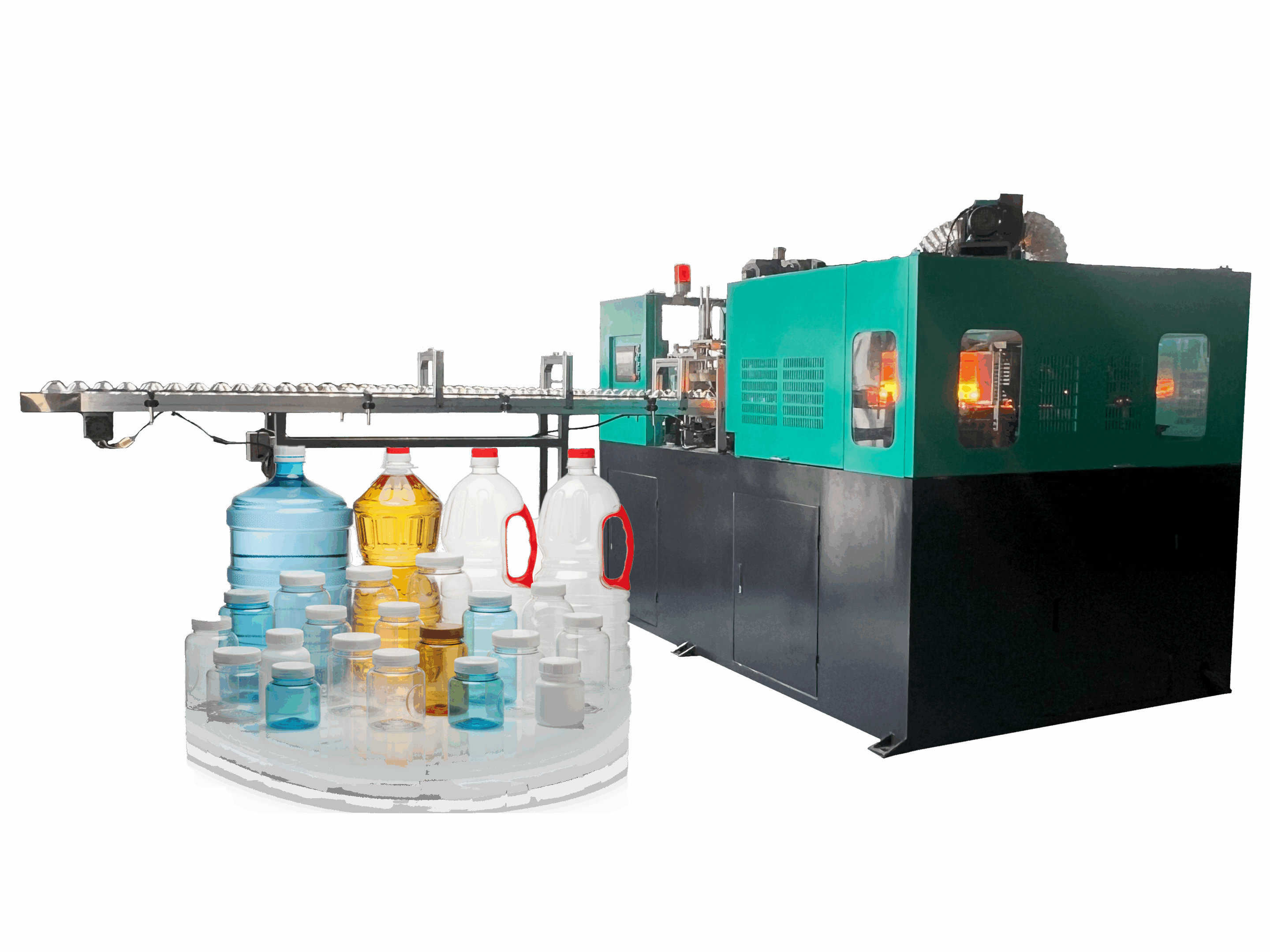
How to Justify the Higher Cost of All-Electric Blow Molding Machines to Your Boss?

At LEKA Machine, we often see production managers struggle to get budget approval for premium equipment. You know the electric technology is superior, but can you prove the financial benefits to a CFO who only looks at the initial price tag?
To present the ROI effectively, calculate the Total Cost of Ownership rather than just the purchase price. Focus on the 60% energy reduction (kWh/kg), elimination of hydraulic maintenance costs, and a 2–5% reduction in material waste, which typically yields a break-even point within 18 to 24 months.
Here is the data-driven breakdown you need to build a winning business case for your management team.
How much energy and maintenance money will I actually save?
When we analyze power consumption for our clients in Europe, the difference on the meter is often shocking. Is your current hydraulic machinery eating up your profits through wasted electricity and oil changes, even when the machine isn’t effectively producing bottles?
All-electric machines reduce specific energy consumption to 0.25–0.32 kWh/kg, saving roughly 40–60% compared to hydraulic systems. Additionally, you eliminate $2,000–$5,000 in annual fluid management costs by removing oil changes, filter replacements, and hazardous waste disposal fees from your operating budget.
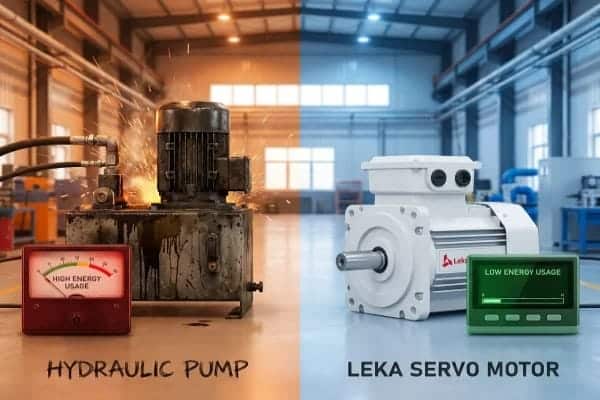
To win this argument, you must move away from vague percentages. Management needs hard numbers. At our facility, we advise clients to calculate "Specific Energy Consumption 1" (SEC). This measures exactly how many kilowatts are required to process one kilogram of plastic.
The Hidden Cost of "Idle Load"
The biggest thief of energy in a hydraulic system is the idle load. In a standard hydraulic blow molding machine, the pump motor runs constantly to keep the oil pressure up, even during cooling phases or part take-out. It consumes 30–40% of its peak power just "waiting."
In contrast, the servo motors on our all-electric machines draw zero power when they are not moving. If your cycle time includes a significant cooling period—common for thick-walled containers—this silence translates directly to cash savings.
Eliminating Fluid Management OpEx
One of the most persuasive arguments for your maintenance manager is the elimination of "Fluid Management." Hydraulic machines are messy and expensive to maintain. By switching to electric, you remove entire line items from your annual budget.
Consider the costs you avoid:
- Oil Replacement: No need to buy 2,000 liters of hydraulic oil every three years.
- Disposal Fees: No paying for hazardous waste removal of used oil.
- Leak Repairs: No labor hours spent fixing seal leaks or cleaning slippery floors.
- Cooling Infrastructure: A hydraulic machine turns roughly 30% of its energy into heat, which your cooling tower must remove. Electric machines run cool, potentially saving you the capital expense of upgrading your central chiller system.
Table: Estimated Annual Operational Savings (Based on 6,000 Operating Hours)
| Cost Category | Hydraulic Machine (Standard) | All-Electric Machine | Estimated Savings |
|---|---|---|---|
| Electricity (SEC) | 0.70 kWh/kg | 0.30 kWh/kg | 57% Reduction |
| Oil Changes | $1,500 (amortized/yr) | $0 | 100% Reduction |
| Cooling Load | High (Oil + Mold) | Low (Mold Only) | Reducción 30% |
| Maintenance Labor | 100 hours/year | 20 hours/year | 80% Reduction |
Finally, do not forget to look for "Scope 2 2" Carbon Incentives. Many local governments offer "Green CapEx" grants or accelerated tax depreciation for replacing energy-inefficient machinery. This can instantly offset 10–20% of the purchase price.
Will faster cycle times and "cold starts" boost my daily output?
We frequently hear from factory owners who lose valuable production hours simply waiting for machine oil to reach the right temperature. Does your daily production target suffer from sluggish start-ups and the slow, sequential movements of hydraulic valve systems?
Electric drives allow for overlapping motions, such as shuttling the carriage while the mold opens, shaving 1.5–2 seconds off dry cycle times. Furthermore, they eliminate the 30–60 minute warm-up period required for hydraulic oil stability, allowing you to produce saleable bottles immediately upon startup.
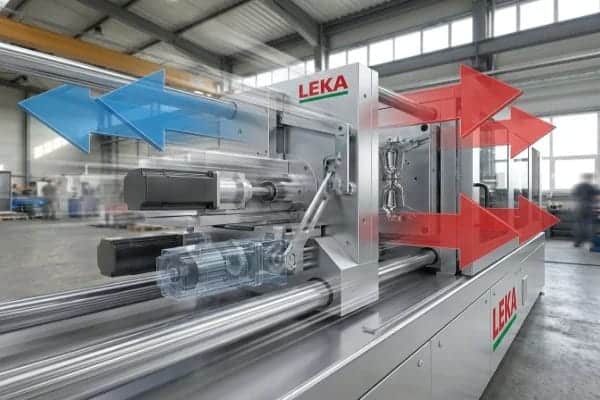
Speed is not just about moving faster; it is about moving smarter. In our engineering experience, the primary throughput advantage of electric machines comes from "Overlapping Motion."
Parallel vs. Sequential Movement
Hydraulic systems often rely on valve sequencing. This means one action must often finish before the pressure is diverted to the next action. For example, the mold must fully open before the carriage moves.
Electric machines use independent servo motors for each axis. This allows for simultaneous actions:
- The mold begins to open.
- At the same exact moment, the carriage shuttles back to the extrusion head.
- The parison is extruded continuously without interruption.
This capability reduces the "dry cycle" time by 1.5 to 2 seconds. Over a 24-hour shift, this 2-second saving can result in a 10–15% increase in total bottles produced, without adding a single extra worker to the shift.
Monetizing "Cold Start" Consistency
Every plant manager knows the pain of Monday mornings. Hydraulic oil changes viscosity 3 as it warms up. Cold oil makes the machine sluggish; hot oil makes it fast. This inconsistency leads to 30–60 minutes of "warm-up scrap" every time you start the machine. Operators have to constantly tweak settings until the oil stabilizes.
Electric machines do not care about temperature. The servo motor performs exactly the same way at 8:00 AM as it does at 5:00 PM. You get saleable bottles from the very first shot.
Table: Production Efficiency Gains
| Característica | Hydraulic Impact | All-Electric Impact | ROI Value |
|---|---|---|---|
| Motion Logic | Sequential (Wait for valves) | Parallel (Independent axes) | +10-15% Output |
| Startup Time | 45 mins warm-up needed | Instant start | +200 hrs/year |
| Consistency | Drifts with oil temp | Micron-level repeatability | Reduced scrap |
By presenting these numbers, you show management that the machine is not just an expense, but a tool to unlock "hidden capacity" in your factory.
How does precision reduce scrap and increase long-term asset value?
Our engineers spend countless hours helping clients troubleshoot uneven wall thickness caused by unstable hydraulic pressure. Are you tired of throwing away money on resin because you have to make bottles heavier just to meet minimum safety standards?
HACCP 4
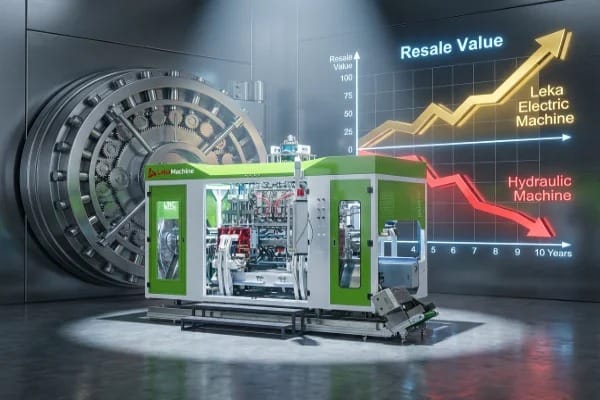
Servo-driven parison control offers micron-level repeatability, allowing you to reduce safety weight buffers by 2–5% without compromising bottle integrity. This material savings, combined with a 20–30% higher resale value after ten years, significantly boosts the machine’s total lifecycle return on investment.
Resin is usually the single largest cost in moldeo por soplado 6, often representing 60-70% of the total product cost. This is where the precision of electric drives pays for the machine fastest.
Projecting "Material Weight Optimization" Savings
In a hydraulic system, pressure fluctuations are inevitable. To prevent thin spots in the bottle corners (which would cause quality failures), operators often increase the overall weight of the bottle. This is called a "safety buffer."
chiller system 7
With LEKA Machine’s electric parison control, the movement is repeatable to within microns. You can trust the machine to place the plastic exactly where it is needed, every single time. This allows you to "lightweight" the product.
hazardous waste 8
- Scenario: You produce a 100g bottle.
- Hydraulic Reality: Weight fluctuates ±2g. You target 102g to ensure no bottle falls below 100g.
- Electric Reality: Weight fluctuates ±0.2g. You target 100.5g.
- The Saving: You save 1.5g of resin per bottle. On a run of 1 million bottles, that is 1,500 kg of free material.
Risk-Adjusted Revenue and Resale Value
When you present the budget, frame the "Oil-Free" nature of the machine as a revenue generator, not just a cleaner floor.
- New Markets: An oil-free machine qualifies your plant for high-margin cleanroom, medical, or food-grade contracts (HACCP/FDA). Hydraulic fluid contamination risks often disqualify older machines from these bids.
- Asset Residual Value: Hydraulic machines are becoming "depreciating technology." As global regulations favor energy efficiency, the resale value of used hydraulic gear is dropping. All-electric machines retain 20–30% higher resale value after 10 years.
Table: Long-Term Financial Impact
| Financial Metric | Hydraulic Expectation | All-Electric Expectation |
|---|---|---|
| Material Scrap Rate | 2-3% due to instability | < 0.5% |
| Market Access | General Industrial | Medical / Food / Cleanroom |
| Resale Value (10 yrs) | 10-15% of original price | 30-40% of original price |
Using this critical thinking, you demonstrate that buying cheap now is actually more expensive in the long run.
hydraulic oil 9
Conclusión
Switching to all-electric is a strategic financial decision, not just a technical upgrade. The energy savings, material reduction, and increased output typically deliver a full ROI in under two years.
servomotores 10
Notas al pie
- Defines the industry standard (Euromap 46) for measuring energy efficiency in plastics machinery. ↩︎
- Official EPA guidance defining indirect greenhouse gas emissions from purchased electricity. ↩︎
- Educational resource explaining the fluid dynamics concept affecting machine performance. ↩︎
- Official FDA page explaining the food safety management system mentioned. ↩︎
- Links to ISO 14644 standards for cleanroom environments. ↩︎
- General background information on the manufacturing process. ↩︎
- Reference to industrial cooling infrastructure equipment. ↩︎
- Official government regulations regarding the disposal of industrial waste. ↩︎
- Provides technical specifications for the industrial fluid being discussed. ↩︎
- Links to a major manufacturer of servo technology to explain the component driving efficiency. ↩︎


0 Comentarios