

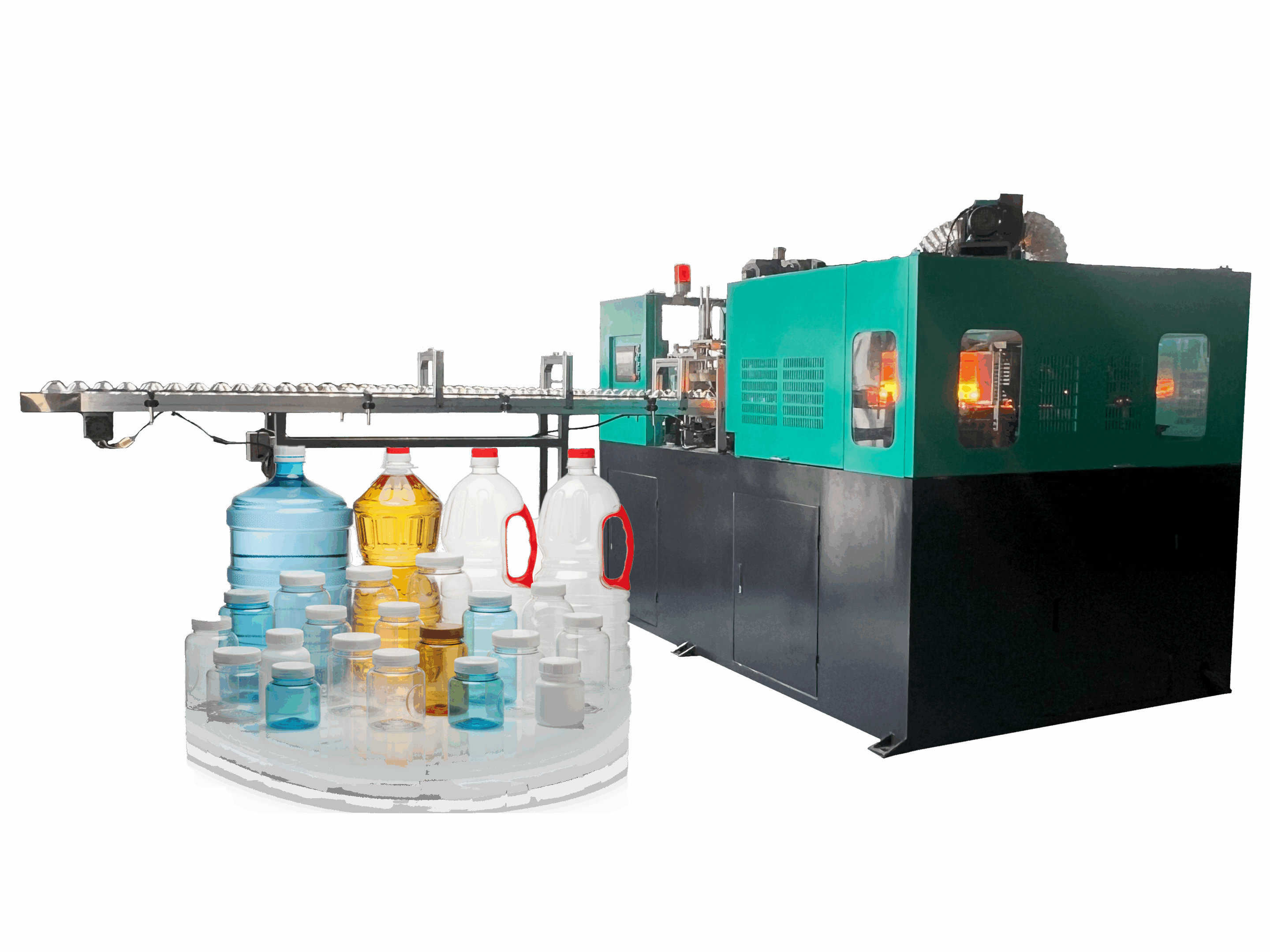
Guía Definitiva de Máquinas de Soplado-Estiración: Los 10 Mejores Fabricantes en Australia (2025)

Find the best Stretch blow molding machine for your Australian factory. This guide reviews the top 10 manufacturers, comparing cost, energy use, and local service.
Picking the right Stretch blow molding machine is a big decision. With energy prices in Australia being what they are, efficiency is more important than ever. You also need a machine that can handle the growing demand for recycled PET (rPET) and offer the flexibility to change products without hours of downtime. I’ve put this guide together to help you cut through the noise, understand the key trade-offs, and find a reliable partner for your business.
Fabricantes de un vistazo (con sitios oficiales)
Krones — https://www.krones.com
Sidel — https://www.sidel.com
SIPA — https://www.sipa.it
KHS — https://www.khs.com
Nissei ASB — https://www.nisseiasb.co.jp
Sacmi — https://www.sacmi.com
Aoki — https://www.aokitech.co.jp
SMF — https://smfgermany.com
Bekum — https://www.bekum.com
lekamachine — https://lekamachine.com
Why This Matters in 2025 — energy efficiency, uptime, quick changeover, local service in Australia
In 2025, Australian manufacturers are facing a few key pressures. First, electricity costs continue to be a major factor in operational budgets, so an energy-efficient machine isn’t a luxury, it’s a necessity. Second, skilled labour is expensive, which means you need machines that are reliable (high uptime) and can be changed over to a new product quickly by your existing team. Finally, given the distances, you can’t afford to wait weeks for a technician or a spare part to arrive from overseas. Strong local servicio and parts availability in Australia is critical.
Cost and Pricing Signals for 2025 — one-stage vs two-stage, cavities, automation, FAT/SAT, import duties
The upfront cost of a Stretch blow molding machine in Australia can range from under $250,000 AUD for a simple two-stage machine to well over $3 million AUD for a high-speed, automated line. Key cost drivers include the platform (one-stage injection stretch blow vs. two-stage reheat stretch blow), the number of cavities in the mould, and the level of automation for preform handling and bottle takeoff. Remember to budget for shipping, insurance, import duties, and GST. Also, be clear about the costs for a Factory Acceptance Test (FAT) at the manufacturer’s site and the Site Acceptance Test (SAT) and commissioning at your facility in Australia.
Energy, Utilities, and Sustainability — kWh per 1,000 bottles, compressed air, IR ovens, servo drives
Energy is a huge part of the Total Cost of Ownership (TCO). Ask potential suppliers for the machine’s energy consumption, specifically in kWh per 1,000 bottles produced. This is a great way to compare apples with apples. All-electric machines using servo drives instead of hydraulics typically offer the lowest energy use. Also, look at the efficiency of the infrared (IR) ovens for heating preforms and the machine’s high-pressure compressed air consumption, as compressors are very power-hungry. A modern, efficient machine can significantly lower your factory’s power bill.
You need to match the machine type to your business. High-speed two-stage Stretch blow molding machine lines are the standard for the beverage industry in Australia, churning out thousands of water, soft drink, or juice bottles per hour. They are built for efficiency at scale. On the other hand, one-stage Injection El Moldeo por Soplado Moulding (ISBM) machines offer incredible precision and are perfect for lower-volume, high-value products like cosmetic jars, pharmaceutical bottles, or containers with complex shapes. They give you flexibility but at a lower overall output.
Mold, Tooling, and Quick-Change Strategy — preforms, neck rings, EOAT, vision QC
Your mould and tooling are just as important as the machine itself. A well-designed mould is key to a high-quality bottle with low scrap rates. When you’re talking to suppliers, discuss the “quick-change” strategy. How long does it really take to switch from one bottle format to another? This includes changing the blow moulds, neck rings, and end-of-arm tooling (EOAT). In a high-cost labour environment like Australia, a machine that can be changed over in 30 minutes versus three hours makes a huge difference to your bottom line. Ask for video proof of changeover times.
Process Control and Quality — oven profile, stretch ratios, blow/counter-pressure, Cp/Cpk
A modern machine gives you tight control over the production process. This means precise temperature control in the oven to get the preform just right, accurate control over the stretch ratios, and managed blow and counter-pressures. This level of control is what allows you to reduce material use (lightweighting), cut down on scrap, and maintain consistent calidad across shifts. Ask suppliers about the machine’s process capability, often measured by Cp/Cpk values, to ensure it can reliably meet your calidad .
Materials and Barriers — PET, rPET, PETG, multilayer (EVOH/nylon), recycling
Today, it’s not just about standard PET. Your machine needs to be able to handle blends with recycled PET (rPET), which is crucial for meeting sustainability targets and the expectations of Australian consumers. Some products, like sauces, UHT milk, or some chemicals, need an oxygen barrier. For this, you’ll need a machine capable of processing multilayer preforms containing materials like EVOH or nylon. It’s important to consider how these barrier materials impact the recyclability of the final bottle within Australia’s recycling streams.
Top 10 Stretch blow molding machine Manufacturers in Australia
Krones (strong local presence in Australia)
Krones is a German powerhouse, especially dominant in the high-speed beverage and dairy sectors in Australia. With Krones Pacific Pty. Ltd. based in Melbourne, they offer a comprehensive local sales, service, and spare parts network. Their Contiform series is a benchmark for reliability and performance in high-output PET bottling lines.
Productos principales
The Contiform 3 series is their flagship, known for high throughput and energy efficiency. They offer soluciones for standard PET, hot-fill applications, and aseptic filling lines, often delivered as fully integrated, turnkey systems.
Ventajas
Excellent local service and support network in Australia. High reliability and machine uptime. Strong integration with fillers and other downstream equipment. Good energy efficiency on newer models.
Contras
Premium pricing means a high initial investment. Best suited for high-volume producers, may be overkill for smaller operations. Lead times can be long.
Official site: https://www.krones.com
Sidel (strong local presence in Australia)

Sidel is another top-tier global player with a direct presence in Australia through Sidel Oceania Pty Ltd. They have a massive installed base globally and are known for their innovation in lightweighting PET bottles and packaging design. They are a direct competitor to Krones in the high-speed beverage market.
Productos principales
The EvoBLOW series is their core offering, available in regular, aseptic, and hot-fill configurations. They are known for their process control and ability to produce complex and lightweight bottle designs at very high speeds.
Ventajas
Strong local sales and service team. Industry-leading expertise in packaging design and optimisation. Highly efficient and reliable machines. Excellent choice for large-scale beverage operations.
Contras
High capital investment. Complex systems that require skilled operators. Like Krones, they are focused on the high-end, high-volume market.
Official site: https://www.sidel.com
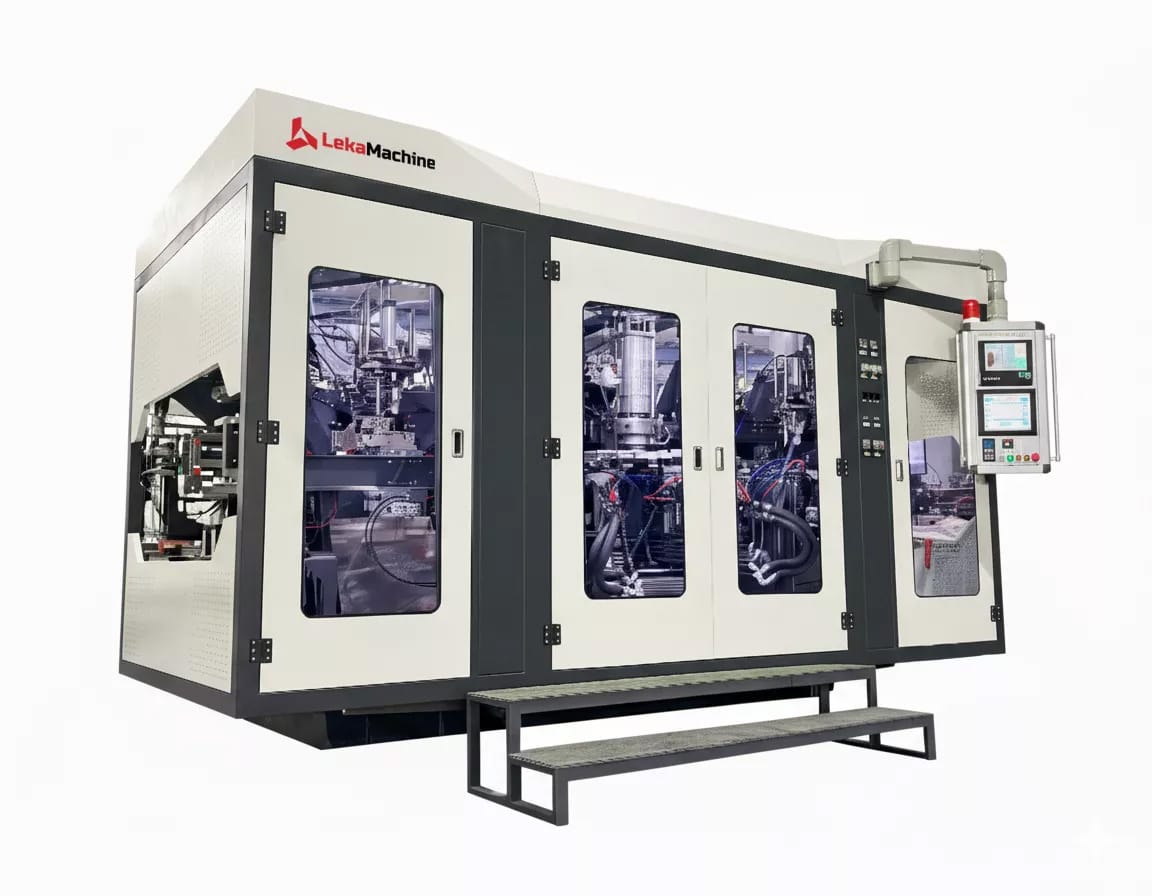
lekamachine (OEM global con cobertura en Asia)

LEKAmachine operates as a B2B project management and supply chain partner, connecting international clients with manufacturers in Asia. For an Australian buyer, they offer a managed procurement process, from sourcing the right machine to quality control and logistics. Their proximity to Australia from their Asian manufacturing base can be an advantage for shipping times and regional support.
Productos principales
They offer two main series for PET bottles: the AQUA Series, focused on high-speed, stable production for water and beverage bottles, and the BOTTLER Series, designed for precision moulding of high-value containers like cosmetic bottles, food jars, and other formas personalizadas.
Ventajas
Cost-effective solutions with a focus on Total Cost of Ownership. Full project management service, which is helpful for companies without a large engineering team. Potentially shorter delivery times compared to European manufacturers. Good for both standard beverage bottles and custom containers.
Contras
No direct physical office or service centre in Australia; support relies on remote diagnostics and regional service dispatch from Asia. The business model is different, acting as an intermediary rather than a direct manufacturer.
Official site: https://lekamachine.com
SIPA (established distribution in Australia)
SIPA, an Italian company, offers one of the broadest portfolios in the industry, covering both one-stage and two-stage machines, as well as mould making. They have a strong presence in the Australian market through dedicated agents and offer a good balance of performance and flexibility for various applications beyond just beverages.
Productos principales
Their XTRA series is a high-speed rotary platform, while the SFL line offers versatile linear machines. They are also a major player in one-stage (ISBM) systems with their ECS range, ideal for specialty containers.
Ventajas
Wide range of machines for different applications and budgets. Strong expertise in preform and bottle design. Good option for companies needing both high throughput and flexibility. Competitive pricing compared to top German rivals.
Contras
Local support is through distributors, which can vary in responsiveness compared to a direct subsidiary. Some users report the control interface is less intuitive than competitors.
Official site: https://www.sipa.it
KHS (strong local presence in Australia)

https://www.khs.com/
KHS is a well-respected German manufacturer with a focus on complete beverage lines. Through KHS Pacific Pty Ltd, they have a solid footprint in Australia for sales and service. Their InnoPET Blomax series is known for its robust engineering and energy efficiency, particularly in the beverage sector.
Productos principales
The InnoPET Blomax Series V is their latest generation of Stretch blow molding machines. They emphasise low energy and air consumption and offer features for quick mould changes. They are often sold as part of a complete KHS filling and packaging line.
Ventajas
Established local presence and service infrastructure. Machines are known for being robust and durable. Excellent energy efficiency. Seamless integration with their own filling equipment.
Contras
Primarily focused on the beverage market. Can be less flexible for custom or non-beverage applications. Premium pricing.
Official site: https://www.khs.com
Nissei ASB (direct subsidiary in Australia)
https://www.nisseiasb.co.jp/en/
Nissei ASB is a Japanese pioneer and world leader in one-stage Injection El Moldeo por Soplado Moulding (ISBM) technology. They have a direct subsidiary, Nissei ASB Pty Ltd, providing local support in Australia. Their machines are the go-to choice for applications requiring exceptional clarity, precision, and blemish-free surfaces, like cosmetics, pharmaceuticals, and wide-mouth food jars.
Productos principales
The ASB series is their core product line, with models ranging from small lab machines to large-scale production systems. They are known for their ability to process a wide range of resins beyond just PET, including PETG and polypropylene.
Ventajas
Superb container quality, clarity, and precision. Excellent for non-standard shapes and wide-mouth jars. Direct local support from their Australian office. Machines are highly reliable.
Contras
Lower output compared to two-stage systems. Higher tooling costs. Not suitable for standard high-volume beverage bottle production.
Official site: https://www.nisseiasb.co.jp
Sacmi (established distribution in Australia)
Sacmi is a large Italian industrial group that produces a wide range of machinery, including Stretch blow molding machines for the beverage industry. They are represented in Australia by local agents and are known for building very reliable, heavy-duty equipment that is designed to last.
Productos principales
Their SBF series of rotary blowers is well-regarded for its durability and consistent performance. They also offer integrated blow-fill-cap solutions, particularly for the beverage and wine industries.
Ventajas
Robust and durable machine construction. Good process stability. Often competitively priced. Strong in the wine and water bottling sectors.
Contras
Technology and features can be more conservative than the market leaders. Support is via local distributors, not a direct subsidiary.
Official site: https://www.sacmi.com
Aoki (supported via regional network)

Aoki, from Japan, is another specialist in one-stage ISBM machines and a direct competitor to Nissei ASB. They are known for compact, energy-efficient machines that deliver high-quality containers. Their support in Australia is typically handled through a regional network or a dedicated distributor.
Productos principales
Their AL series offers direct-acting clamp designs that are highly energy efficient. They are capable of producing a vast range of bottle shapes, sizes, and neck finishes with excellent precision.
Ventajas
Very energy-efficient designs. Compact machine footprint. High-quality and precise bottle manufacturing. Good for custom designs and specialty resins.
Contras
Support in Australia may be less direct than some competitors. Like all one-stage machines, output is lower than two-stage systems.
Official site: https://www.aokitech.co.jp
SMF (supported via distributors)
SMF is a European manufacturer (based in Poland with German engineering) that has gained a reputation for producing reliable and cost-effective linear and rotary Stretch blow molding machines. They are a strong contender in the small to mid-sized market, offering good performance without the price tag of the premium German brands. They are supported in Australia via distributors.
Productos principales
They offer a wide range of linear machines (HS series) and rotary machines (Optima series) suitable for various outputs. They also produce machines for large containers and preferential heating for oval bottles.
Ventajas
Excellent price-to-performance ratio. Good flexibility for a wide range of bottle types. Lower initial investment cost. Often shorter lead times.
Contras
Not a direct presence in Australia, relying on agents for service. Not typically used for the highest-speed, 24/7 beverage lines.
Official site: https://smfgermany.com
Bekum (supported via distributors)

While Bekum is world-famous for extrusion blow moulding, the German company also has a strong offering in Stretch moldeo por soplado, particularly for single-serve dairy and juice containers. They are represented in Australia by well-established local distributors like HBM Plastics Technologies, who provide sales and service.
Productos principales
Their stretch blow machines are often tailored for specific applications requiring high performance and hygiene, such as UHT milk bottles or juice containers, often with a focus on handleware.
Ventajas
Renowned German engineering and quality. Strong local support through experienced distributors. Excellent for specialty applications, especially with handles.
Contras
Their range in el moldeo por estirado-soplado is not as broad as other specialists. Can be more expensive than other options for standard applications.
Official site: https://www.bekum.com
Factors to Consider When Choosing a Stretch blow molding machine Manufacturer for a Startup — delivery time, training, TCO
If you’re a startup, cash flow and speed to market are everything. Look for a manufacturer with a shorter delivery time. A machine that is simple to operate and maintain will lower your reliance on expensive specialists. Pay close attention to the Total Cost of Ownership (TCO), not just the purchase price. A cheaper machine that uses a lot of energy or has high scrap rates can cost you more in the long run, especially with Australian utility prices.
How to Find a Stretch blow molding machine Manufacturer for Your Startup — shortlist, pilot, OEE, SLA
Start by shortlisting three to five potential suppliers who fit your budget and application. Don’t just rely on brochures. If possible, arrange a pilot run using your actual preforms and resins to see how the machine performs. Measure the key metrics: Overall Equipment Effectiveness (OEE), scrap rate, energy use, and changeover time. When you get serious, insist on a Service Level Agreement (SLA) that defines response times for service and parts. Ask to speak with their existing customers in Australia.
Domestic vs Overseas Stretch blow molding machine Manufacturers — responsiveness, cost, hybrid model
The reality for Australia is that almost all Stretch blow molding machines are imported. There are no major domestic manufacturers. The key difference is how overseas brands support the Australian market. Some have a direct subsidiary (like Krones or Sidel), which usually offers the most responsive service. Others use a hybrid model with a trusted local distributor. This can also be very effective, provided the distributor has well-trained technicians and holds critical spare parts locally.
Maintenance, Spare Parts, and SLAs — PM intervals, spares kit, MTTR, remote diagnostics
A machine is only as good as its maintenance plan. Discuss the recommended preventive maintenance (PM) intervals and ask for a critical spares kit list with your quote. Your Service Level Agreement (SLA) should include targets for Mean Time To Repair (MTTR). Modern machines also offer remote diagnostics, where a technician can log in from overseas to troubleshoot problems. This can save you a lot of time and money by avoiding an expensive service call for a simple issue.
Installation, Commissioning, and Ramp-Up — FAT/SAT checklists, training, ramp KPIs
The final stage of buying is just as important as the first. Have a detailed checklist for the Factory Acceptance Test (FAT) and Site Acceptance Test (SAT). The agreement should include a clear training plan for your operators and maintenance team. Define Key Performance Indicators (KPIs) for the production ramp-up to ensure the machine is handed over only when it’s meeting the agreed-upon standards for speed, efficiency, and quality. Remember to factor in Australian public holidays when planning your project timeline.
Pilot Runs and Acceptance Criteria — time-boxed pilots, OEE, energy, changeover
Before signing the final cheque, a proper pilot run is your best insurance policy. This should be a time-boxed test using your real-world moulds, preforms, and resins. This is your chance to verify the manufacturer’s claims. Record the OEE, energy consumption per 1,000 bottles, and physically time a full mould changeover. Use this data to confirm your business case and to finalise the acceptance criteria in your contract.
Total Cost of Ownership and ROI Modeling — energy rates, labor, spares logistics
To calculate your real Return on Investment (ROI), you need to model the Total Cost of Ownership (TCO) using local numbers. Use your actual electricity rate from your Australian power provider, your loaded labour rates for operators and technicians, and the cost of shipping spare parts to your location. A TCO model will often show that a more expensive but highly efficient machine can have a much faster payback period than a cheaper, less efficient alternative.
Capacitación de Operadores y Gestión del Cambio — HMI, POE, auditorías entre turnos
Una Interfaz Hombre-Máquina (HMI) fácil de usar es vital. Si sus operadores pueden comprender fácilmente la máquina, podrán operarla de manera más efectiva. Colabore con el proveedor para desarrollar Procedimientos Operativos Estándar (POE) claros para las corridas de producción y los cambios de formato. Implemente auditorías sencillas entre turnos para garantizar la coherencia. Asegúrese de que la capacitación proporcionada por el fabricante sea exhaustiva y, si es necesario, esté disponible en varios idiomas para adaptarse a su fuerza laboral.
Conectividad Digital y Datos — monitoreo remoto, enlaces MES/ERP, mantenimiento predictivo
Las máquinas modernas son centros de datos. Pueden conectarse a su red para monitoreo remoto, enviando alarmas a su teléfono. También pueden vincularse a su Sistema de Ejecución de Manufactura (MES) o software de Planificación de Recursos Empresariales (ERP) para proporcionar datos de producción en tiempo real. Algunos sistemas avanzados utilizan estos datos para el mantenimiento predictivo, alertándole que un componente necesita atención antes de que falle. Verifique las opciones de conectividad y considere la confiabilidad del servicio de internet en la ubicación de su fábrica, especialmente si se encuentra en una zona regional. Recursos Estudios de Caso y Puntos de Referencia — reducción de energía, tiempo de cambio de formato, ganancias en OEE.
He aquí algunos escenarios comunes en Australia. Una empresa de bebidas en Queensland reemplaza una vieja máquina hidráulica con un nuevo modelo totalmente eléctrico y reduce el consumo de energía de esa línea en un 40%. Una empresa de productos para el cuidado personal en Sídney invierte en una máquina con un sistema de cambio rápido, reduciendo su cambio promedio de molde de cuatro horas a solo 25 minutos, permitiéndoles realizar más corridas cortas de manera rentable. Una lechería en Victoria instala una máquina nueva y confiable y ve cómo su OEE salta del 70% al 88%, resultando en un enorme aumento de la producción sin agregar turnos extras.
Lista de Verificación para Solicitud de Cotización y Tarjeta de Puntuación de Proveedores — kWh, minutos de cambio de formato, mapa de cobertura Cuando envíe su Solicitud de Cotización (RFQ), sea específico. Solicite el consumo de energía en kWh por cada 1,000 botellas a su velocidad de producción objetivo. Exija un video de un cambio de molde completo y anote el tiempo en minutos. Solicite un mapa de cobertura de técnicos para Australia y los tiempos de respuesta garantizados en su SLA. Su tarjeta de puntuación de proveedores debe ponderar en gran medida estas métricas de rendimiento práctico, la calidad del soporte local y las referencias comprobadas en el mercado australiano, no solo el precio de compra inicial. Otras Opciones Además de los Fabricantes de Máquinas de Soplado de Estirado — tercerización, reacondicionado, alternativas.
Comprar una máquina nueva no es su única opción. Para nuevas empresas o lanzamientos de productos, usar un fabricante por contrato (moldeador por soplado bajo tarifa) en Australia puede ser una forma de bajo riesgo para comenzar. También puede buscar en el mercado máquinas reacondicionadas o de segunda mano, que pueden ofrecer ahorros significativos de costos, pero asegúrese de verificar la calidad y la disponibilidad de soporte. Finalmente, dependiendo de los requisitos de forma y claridad de su producto, otros procesos como el moldeo por soplado de inyección o el moldeo por soplado por extrusión podrían ser más adecuados.
Conclusión — adecuación de la plataforma, servicio local, Costo Total de Propiedad medido, próximos pasos.
Elegir la máquina de soplado de estirado correcta se reduce a tres cosas: encontrar la plataforma adecuada para sus productos, verificar la calidad y capacidad de respuesta del servicio local australiano y calcular un Costo Total de Propiedad realista. Utilice esta guía para crear una lista corta de socios potenciales. Sus próximos pasos deben ser contactarlos, hacer las preguntas difíciles y exigir datos que respalden sus afirmaciones. Una prueba piloto y una visita a un sitio de referencia en Australia son las mejores maneras de tomar una decisión final con confianza.
Enlace externo: Plastics Technology – Moldeo por Soplado Packaging World – PET.
The Association of Plastic Recyclers – Recuperación de PET
Society of Plastics Engineers – División de Moldeo por Soplado póngase en contacto con O.Berk – Moldeo por Soplado de Estirado 101.
External link:
Plastics Technology – Blow Molding https://www.ptonline.com/zones/blow-molding
Packaging World – PET https://www.packworld.com/topic/pet
The Association of Plastic Recyclers – PET Reclaim https://plasticsrecycling.org/pet-reclaim
Society of Plastics Engineers – Blow Molding Division https://www.4spe.org/i4a/pages/index.cfm?pageid=3324
O.Berk – Stretch Blow Molding 101 https://www.oberk.com/packaging-crash-course/stretch-blow-molding-101


0 Comentarios