
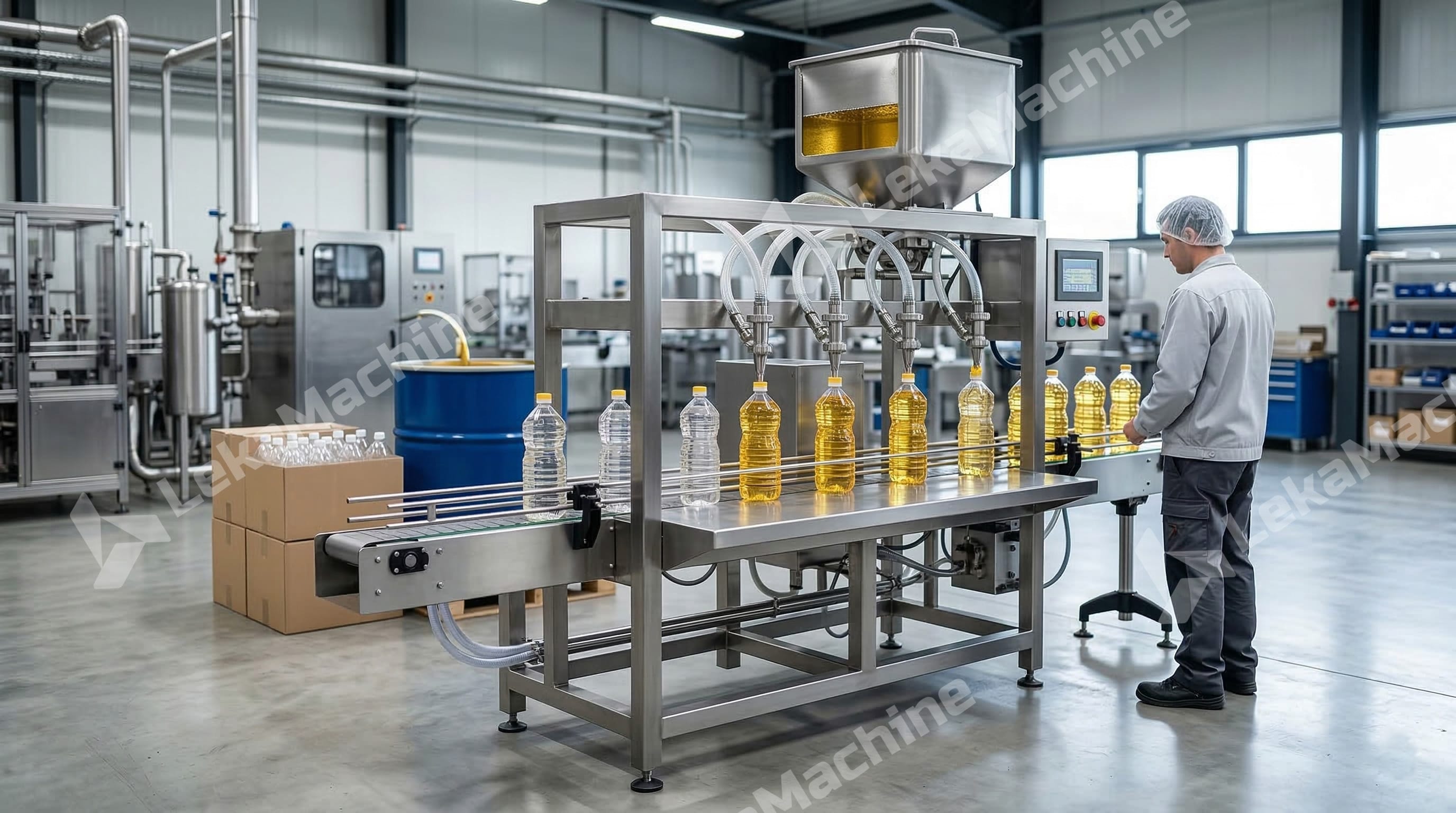
Edible Oil Filling Machine: How to Choose the Right System for Your Bottling Line
An edible oil filling machine is a food-grade system that fills cooking oil into PET, glass, or other bottles with high accuracy, low dripping, and clean cap sealing. In most modern projects, net weight filling is often the best choice because it stays more stable when oil temperature, density, or aeration changes.
So, if a buyer wants the short answer first, here it is: choose the machine by oil type, bottle size, target speed, and accuracy goal. Then, build the rest of the line around that choice. In other words, the filler is the heart of the project, but the full line still matters.
Net weight filling is usually the safest pick for edible oil because it helps control giveaway and stays accurate.
A good edible oil line can handle common retail packs like 500 ml, 1 L, 2 L, 3 L, and 5 L.
Do not buy on speed alone. Also check hygiene, bottle-neck cleanliness, cap sealing, and future line expansion.
| Filling Option | Best For | Main Advantage | Possible Limitation |
|---|---|---|---|
| Net Weight Filling | Most edible oil bottling lines, especially where accuracy matters | Less sensitive to temperature, density, and aeration changes | Usually costs more than a simple low-speed system |
| Flow Meter Filling | Stable, high-speed, standard bottle projects | Fast and efficient when product conditions stay controlled | Can be more sensitive if the process changes often |
| Piston Filling | Lower-speed lines and flexible multi-SKU projects | Simple structure and practical changeover for many factories | Usually not the first choice for big high-speed edible oil lines |
| Complete Line Planning | Factories that want fewer startup problems | Better line matching from filling to capping, labeling, and packing | Needs stronger up-front project planning |
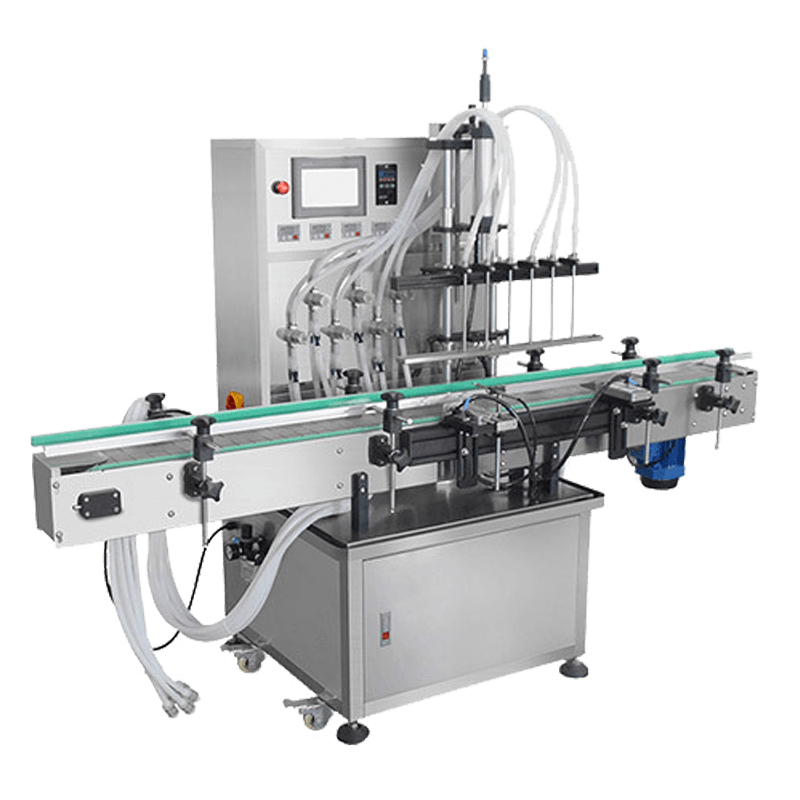
High-precision automatic liquid filling system with PLC control.
Use this slot for your main filler image. A front-angle machine photo works best here.
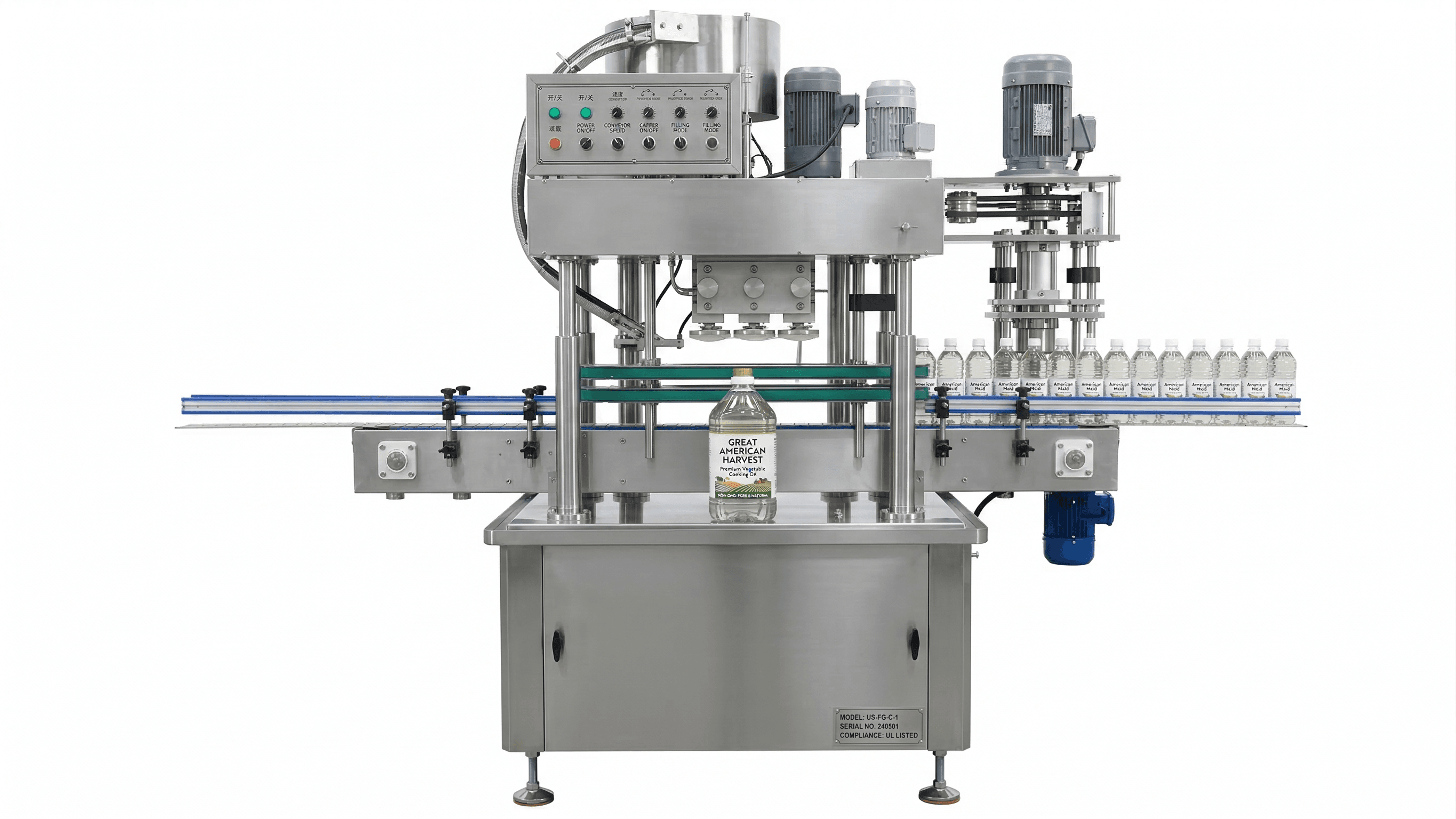
LK-FXZ automatic inline screw capping machine for plastic bottle packaging lines.
Use this slot for cap sorting, cap feeding, or torque capping to show that the line is more than a filler.
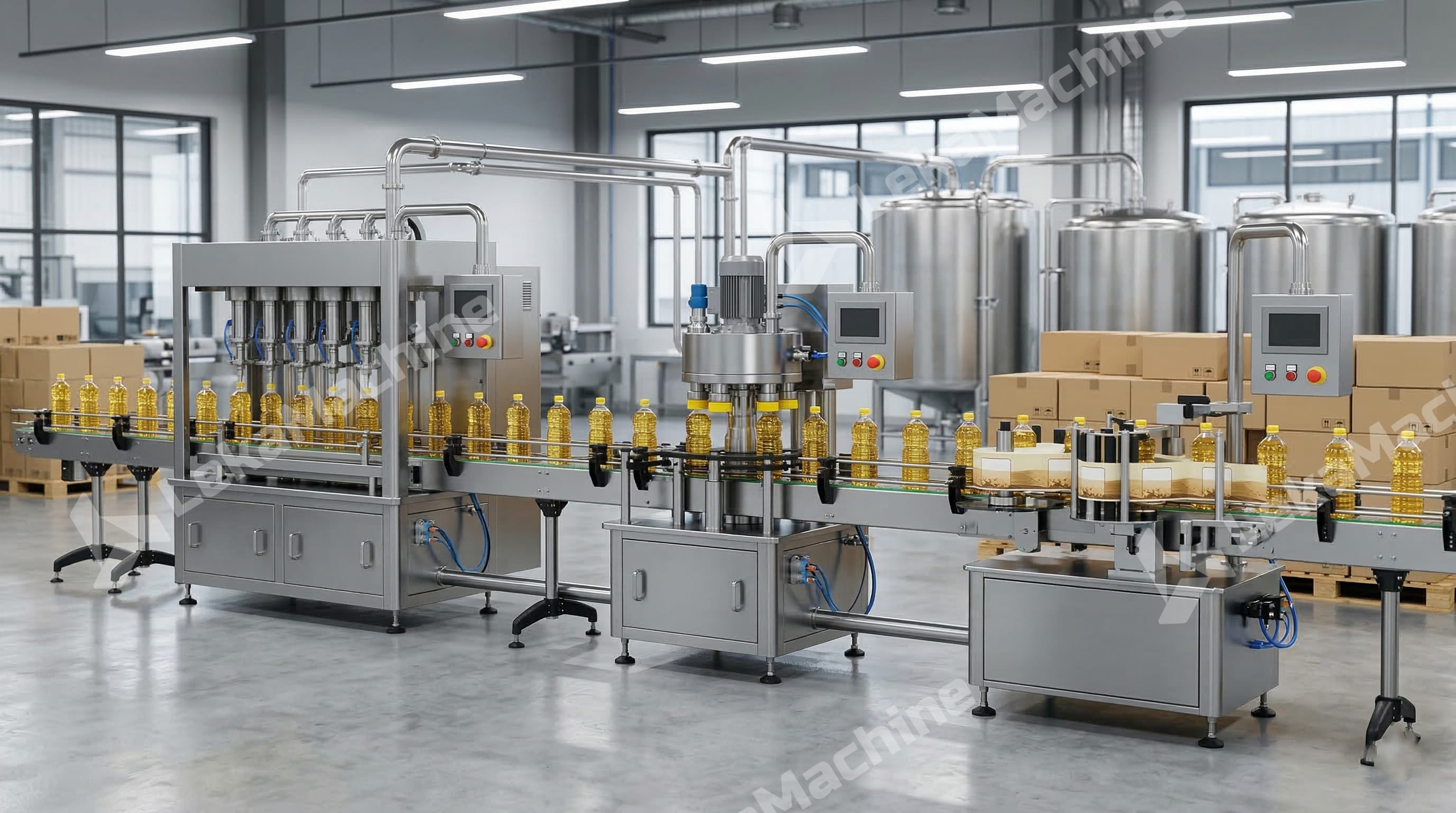
When your production grows, this complete, linked-together automated system is the goal.
Use this slot for a full-line photo so buyers can quickly see blowing, filling, capping, labeling, and packing together.
What Is an Edible Oil Filling Machine?
A Simple Definition That Buyers Can Use Fast
An edible oil filling machine is a machine that puts cooking oil into bottles or containers at a set amount. However, that simple definition only tells part of the story. In real factory work, this machine must do much more than just move liquid from a tank into a bottle. It must also fill the right amount, keep the bottle neck clean, reduce dripping, and help the cap seal correctly. Otherwise, the factory may lose product, waste labels, or face leakage in transport.
That is why experienced buyers do not ask only, “Can this machine fill oil?” Instead, they ask smarter questions. For example, they ask, “Can it fill soybean oil and sunflower oil with stable accuracy?” They also ask, “Can it handle 1-liter and 5-liter bottles on the same line?” In addition, they ask, “Can it keep the bottle mouth clean before capping?” Those questions matter because edible oil is not as forgiving as water. If the filler is not well matched, small problems show up very quickly.
So, the best way to understand an edible oil filling machine is this: it is the core dosing unit inside an edible oil bottling system. In many projects, it works together with cap feeding, capping, labeling, coding, inspection, and end-of-line packing. As a result, buyers should think about the machine as part of a process, not as a lonely box on the floor.
It Is Usually Part of a Bigger Bottling System
In real production, the filler usually connects with other stations. Therefore, a strong article on edible oil filling machines should make that clear early. A complete line may include:
- Filling machines for accurate liquid dosing
- Capping machines for secure sealing and lower leak risk
- Labeling machines for clean and stable label application
- Shrink wrapping systems for secondary packaging and transport protection
- Services and after-sales support for installation, training, spare parts, and troubleshooting
Because of this, the buyer who searches for an edible oil filling machine often needs help with the whole line. Sometimes that buyer already has bottles and caps. However, sometimes the buyer needs a supplier that can help coordinate everything from bottle handling to final pack-out. This is where line thinking becomes very valuable.
Why This Keyword Usually Signals Real Buying Intent
The keyword edible oil filling machine is not just an information keyword. Very often, it is a buying keyword. The person searching may be starting a new edible oil plant, adding a second shift, replacing an old filler, or expanding from one bottle size to several. So, they are usually looking for answers that help them act.
That is why the best content for this topic should explain the machine in plain English and still answer practical factory questions. For example, buyers want to know which filling method is best, which bottles are common, what speed is realistic, and how to avoid dripping. If the article explains those points clearly, it becomes useful. Then, it can also lead readers naturally to a more detailed edible oil filling machine solution page when they are ready to compare real equipment.
In short, an edible oil filling machine is not just a liquid filler. It is a precision machine for a high-value food product. Therefore, it must balance accuracy, hygiene, flexibility, and line compatibility at the same time.
Which Filling Technology Is Best for Edible Oil?
Start With the Real Goal, Not the Machine Name
Before a buyer chooses a filling method, they should first define the real goal of the line. Do they want the highest possible accuracy? Do they want easy product changeover? Do they want the lowest starting cost? Or do they want a high-speed retail line that runs every day with a narrow bottle range? These questions come first because the “best” edible oil filling machine depends on what the factory needs to protect.
For most edible oil projects, the three common choices are net weight filling, flow meter filling, and piston filling. All three can fill liquid products. However, they do not behave the same way in daily work. That difference matters because edible oil responds to process changes more than many first-time buyers expect.
Net Weight Filling: Usually the Best Choice for Accuracy
In many edible oil projects, net weight filling is the top choice. The reason is simple. Edible oil can change with temperature, density, and aeration. So, if the product condition moves up or down during production, a weight-based system often stays more stable than a simple volume-based approach.
This is also why many industry references point back to weight filling when edible oil buyers care about giveaway control. If a factory overfills every bottle by a small amount, that small amount becomes a large loss over time. On the other hand, if it underfills, the factory may face compliance or customer trust problems. Therefore, stable fill control is not just a quality issue. It is also a profit issue.
Industry benchmarks also support this direction. Public edible oil references from major OEMs show that net weight systems are widely used for modern oil bottling lines because they aim to keep the nominal quantity more stable, even when conditions change. For many factories, that makes net weight filling the safest long-term answer.
“We believe this will give us higher filling accuracy, irrespective of the product’s filling temperature and viscosity.”
Milan Kunciř, NT GmbH, in a Krones edible-oil bottling reference
That quote matters because it says the quiet part out loud. In edible oil filling, temperature and viscosity are not small details. They are big buying factors. Therefore, when a buyer wants a machine that can protect net content more consistently, net weight filling often becomes the first method to evaluate.
Flow Meter Filling: Strong for Stable, High-Speed Projects
Flow meter filling can also be a strong choice, especially for standard, high-speed lines where product conditions are well controlled. In those cases, it can be efficient and fast. So, buyers should not assume that only one technology works. Instead, they should match the technology to the project.
Flow meter systems are often attractive when a factory runs a narrower group of products and wants higher throughput with a predictable setup. However, if product conditions change often, or if the buyer is very focused on tight net content control, then the comparison with net weight filling becomes more important.
Piston Filling: Practical for Lower-Speed and Flexible Projects
Piston filling is usually more common in lower-speed or more flexible projects. For example, it can make sense when a factory handles many SKUs, wants a simple inline structure, or needs a lower starting investment. It can also be useful where speed demand is moderate and changeover flexibility matters more than maximum output.
That said, piston filling is usually not the first answer for a large retail edible oil line aiming for high speed and tight giveaway control. So, it should be treated as a project-specific option, not as the default choice for every plant.
Choose net weight filling if your main goal is accurate edible oil filling with better protection against process variation. Choose flow meter filling if your product conditions are stable and speed is a major driver. Choose piston filling if your project is lower speed, budget-sensitive, or SKU-flexible.
Need a practical starting point?
If you already know your bottle size, oil type, and target output, you can compare LEKA’s filling machine range and then review the dedicated edible oil filling machine page for a more direct project discussion.
Why Is Edible Oil Filling Different From Water Filling?
Oil Reacts Differently During Filling
At first glance, water and edible oil both look like simple liquids. So, a new buyer may assume they can be filled in almost the same way. However, that is not how production works in real life. Edible oil behaves differently in the filler, and those differences show up in accuracy, bottle cleanliness, cap sealing, and label quality.
The first reason is that edible oil is more sensitive to temperature and viscosity. When the process changes, the way the product moves can change too. As a result, the filling method that looks fine on paper may become less stable on the factory floor. This is one reason why so many edible oil projects pay close attention to filling principle, not just machine speed.
Water filling is usually more forgiving. If a plant fills water, small process shifts often cause fewer visible problems. However, with edible oil, even a small mismatch can create bottle-neck residue, drip after fill, or more variation in net content. Therefore, the engineering logic must be tighter from the start.
Dripping and Bottle-Neck Cleanliness Matter Much More
One of the biggest differences is the risk of dripping. After filling, edible oil can leave residue around the bottle mouth if the valve closes poorly or if the nozzle design is not well matched. Then, that residue can create several new problems. First, it can affect cap sealing. Second, it can dirty the bottle shoulder. Third, it can cause label contamination later in the line.
That is why buyers often ask for anti-drip nozzles, better valve control, and a cleaner bottle transfer path. These details are not luxury features. Instead, they help protect the whole line. A clean fill supports better capping. Better capping supports lower leakage. Lower leakage supports cleaner labels and stronger shelf appearance. So, one small design choice can affect the whole project.
This is also why a real edible oil line should be planned as a system. Even if the filler is the main machine, the buyer should still think ahead to capping, labeling, and final pack-out. If the bottle neck is not clean, the next machines pay the price.
Accuracy Is More Important Than Many Buyers Expect
Edible oil is a higher-value product than water in many packaging projects. Therefore, overfilling is expensive. If every bottle carries only a little extra oil, the factory quietly loses profit all day. Yet underfilling is risky too, because net content compliance still matters. So, edible oil filling is really a balance between product giveaway, legal control, and production stability.
Because of that, many edible oil producers focus more on net content discipline than new buyers first expect. They do not just want bottles that “look full enough.” Instead, they want bottles that hit the target more reliably over long runs. This is one reason why net weight filling is often favored in edible oil projects.
Some Oils May Need Heat Support or Special Flow Planning
There is another difference too. Some edible oils stay easy to handle at room temperature. However, some projects may need heat support or product conditioning to keep flow stable. For example, if a product becomes thicker in cooler conditions, the line may need a heated tank, heated pipeline, or heated valve area. Without that support, filling can slow down or become less consistent.
So, edible oil filling is different from water filling because the process is less forgiving. In simple words, oil makes small machine mistakes more visible. Therefore, buyers should choose a system built for clean filling, good control, and dependable sealing, not just fast filling.
Which Oils, Bottles, and Pack Sizes Can One Line Handle?
Many Edible Oils Can Run on One Well-Planned Line
A well-designed edible oil filling machine can often handle more than one oil type. In many factories, the same line may fill soybean oil, sunflower oil, palm oil, olive oil, peanut oil, and blended cooking oil. However, that does not mean every line should be expected to run every oil without planning. The right answer depends on how wide the product range is and how different those products behave.
For example, if the line will run several oils with similar flow behavior, the project may stay simple. On the other hand, if the line needs to switch between oils with different handling needs, then the tank design, seals, valves, and changeover plan become more important. Therefore, buyers should not ask only, “Can this filler run oil?” They should ask, “Which oils, at which temperatures, and with which cleaning routine?”
This matters because flexibility only helps when it is real flexibility. A machine that can technically run many products but changes slowly or cleans poorly may still create daily problems. So, smart buyers think about total operating logic, not just brochure range.
PET Bottles Are Common, but They Are Not the Only Option
For many retail edible oil projects, PET bottles are the most common choice. They are widely used for formats like 500 ml, 1 L, 2 L, and 3 L, and they work well for many modern retail lines. Public OEM references also show that PET remains a very common packaging format in edible oil applications. That is why many edible oil filling machine projects are designed around PET bottle handling from the start.
However, PET is not the only option. Some projects still use glass bottles, especially where shelf image or premium positioning matters. In other cases, rigid plastic formats with handles are preferred for larger sizes. So, the line should always be matched to the real package plan. Bottle material affects handling, gripping, filling stability, capping, labeling, and transport. As a result, the bottle choice should be discussed early, not after the filler is already selected.
Common Pack Sizes Range From Small Retail Bottles to Large Family Packs
One edible oil line may handle a narrow size range or a broad one. Common retail sizes include 500 ml, 1 L, 1.8 L, 2 L, 3 L, and 5 L. Some projects also move into larger handled containers. Public industry references show realistic edible oil line examples from 0.5 L to 3 L at strong speeds, and some large-PET systems also reach up to 8 L or 10 L in broader food and edible-oil applications.
Still, wider range is not always better. If a factory wants one machine to cover many bottle sizes, it should also ask about changeover time, format parts, cap compatibility, and line efficiency after change. Otherwise, the “flexible” line may become slow and hard to run.
What Buyers Should Confirm Before They Say Yes
To make sure the edible oil filling machine fits the job, buyers should confirm these points before ordering:
- Which oils will run now, and which oils may be added later
- Which bottle materials will be used, especially PET, glass, or handled rigid containers
- Which pack sizes matter most for daily production
- Whether the oil needs heating, circulation, or special flow support
- How often bottle, cap, or label changeovers will happen
If those answers are clear, the supplier can recommend a better machine and a better line path. That is also why many buyers prefer working with a supplier that can discuss not only the filler, but also the connected machines and the project service side. For example, LEKA can support the discussion from edible oil filling equipment into broader coordination, installation, and after-sales service. In practice, that makes line planning easier and helps reduce startup mistakes.
So, yes, one line can often handle many oils, bottles, and pack sizes. However, it works best when that flexibility is designed in from the beginning, not assumed at the end.