
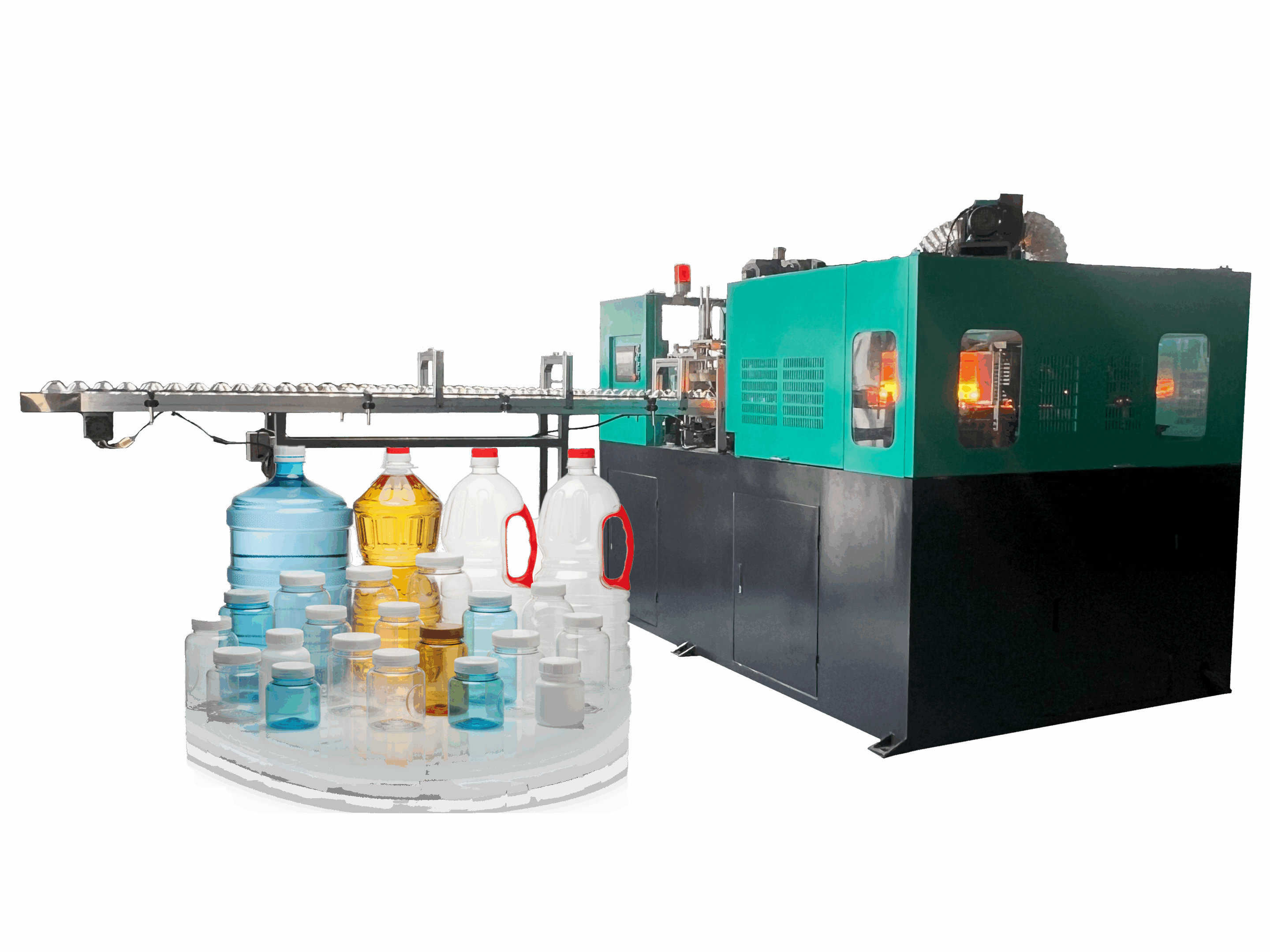
As a purchasing novice, how can I avoid being misled by extrusion blow molding machine suppliers?
Buying your first industrial machine is terrifying. You are afraid of losing your budget, buying a machine that does not work, or getting scammed by a company thousands of miles away. I talk to clients every day who feel this stress.
To avoid traps, you must stop looking at just the price tag and start looking at the “Total Solution.” You need to verify the supplier is a real factory via live video, demand a detailed breakdown of auxiliary equipment costs, and insist on a “wet run” test with your specific molds before paying the final balance.

It is easy for suppliers to put big numbers and promises on a piece of paper. It is much harder for them to prove those numbers in real life. If you do not know the right questions to ask, you might end up with a machine that looks good in the catalog but causes you headaches on the factory floor. In this guide, I will share the secrets that honest manufacturers wish you knew, so you can buy with confidence.
How can I confirm if a supplier is a real manufacturer or just a middleman?
You think you are talking to a big factory, but you might be talking to a guy sitting in a small apartment. In China, trading companies often pretend to be factories. This is the first trap you must avoid.
Ask for an immediate, unscripted live video call during their working hours. If they are a real manufacturer, they will be happy to walk you onto the production floor to show you the CNC machines and the assembly line. If they make excuses or say “it is not convenient,” run away.
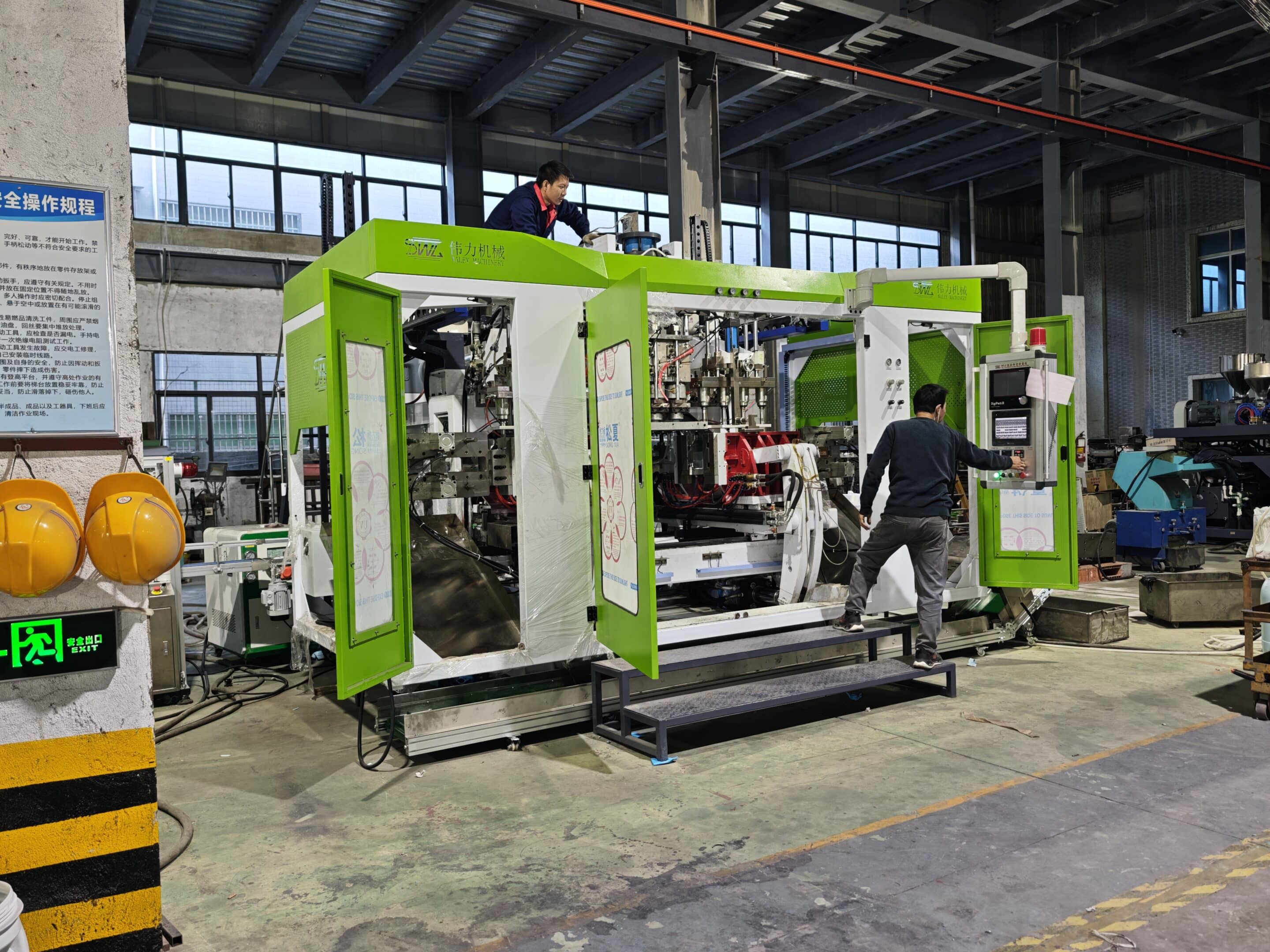
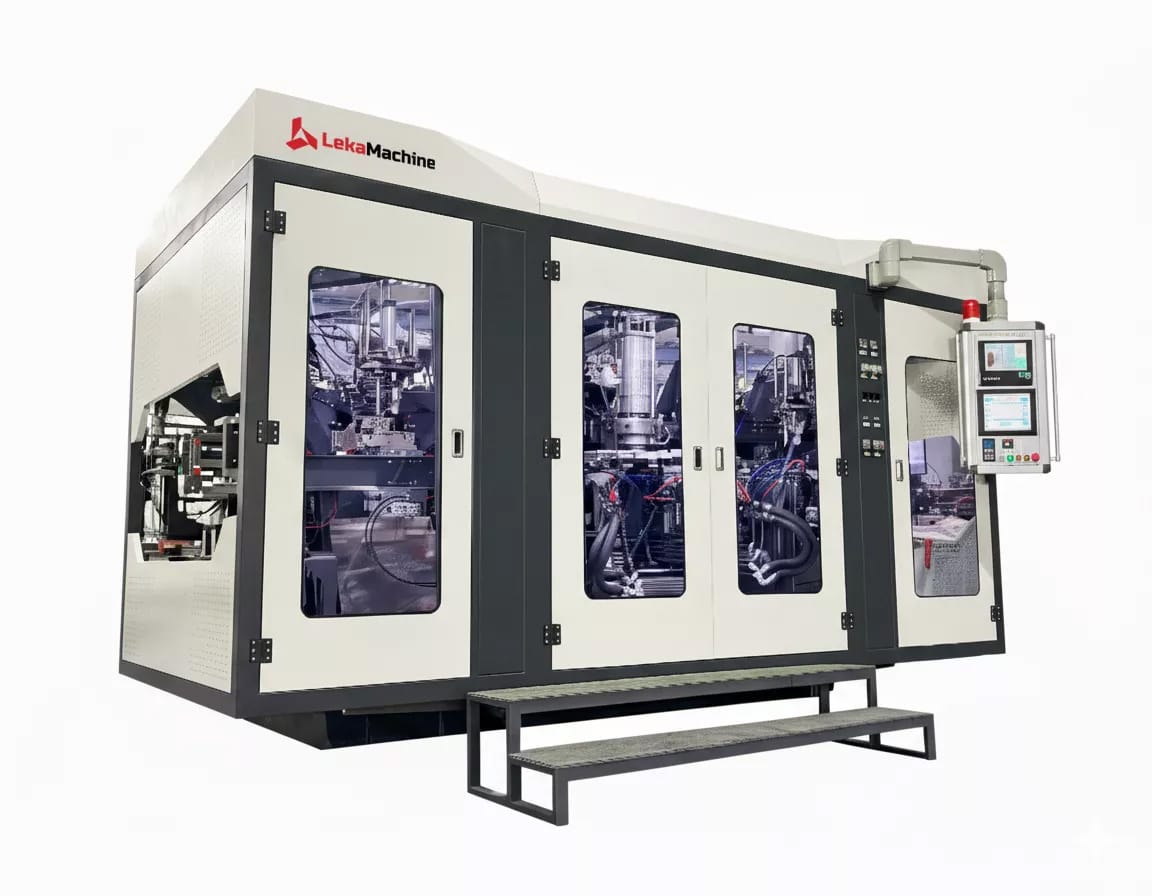
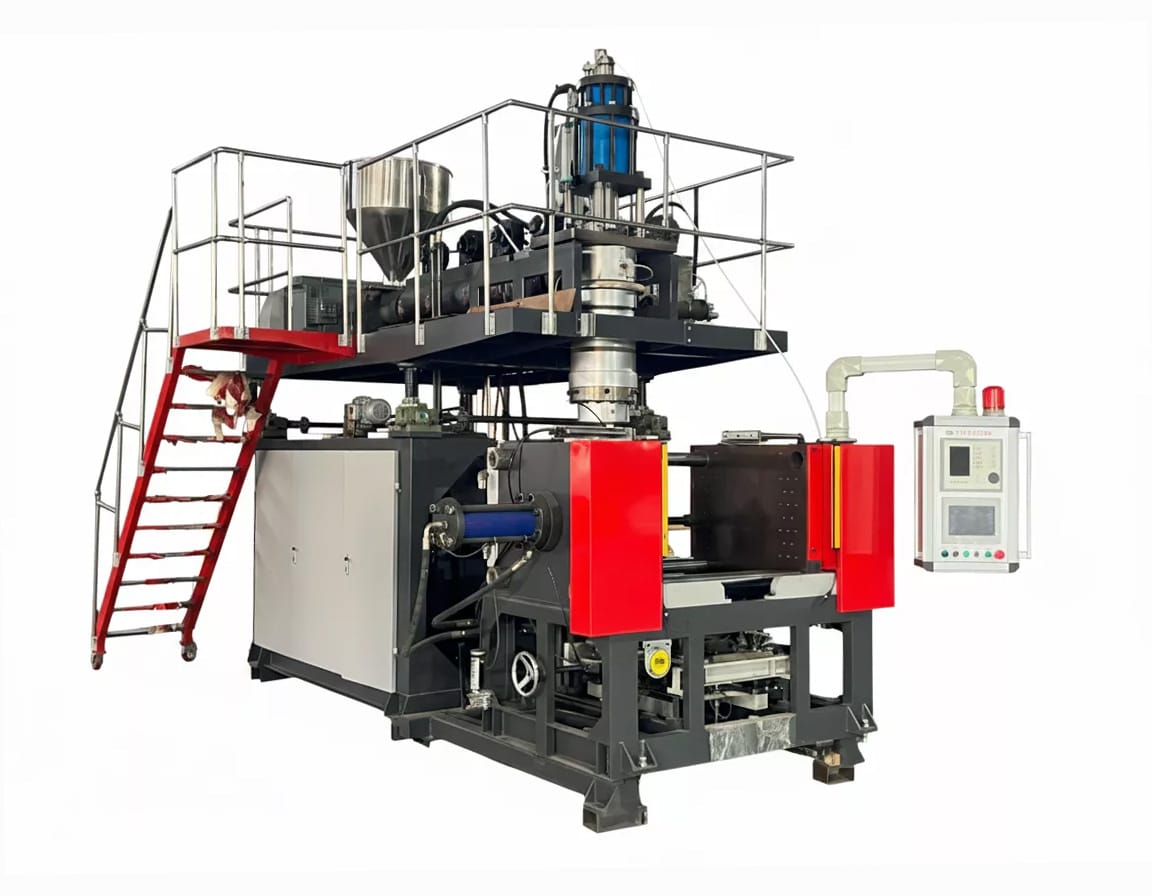
A large extrusion blow molding machine is being assembled and tested by technicians on a production factory floor.
Digging Deeper: The Middleman Problem
Why does it matter if you buy from a middleman (a trading company) or a factory? After all, if the machine arrives, isn’t that enough? No, it is not. When you buy a complex machine like an extrusion blow molding machine, you are not just buying steel and wires. You are buying technical support.
I have seen this happen many times. A customer buys a machine from a “supplier” on Alibaba. Six months later, a hydraulic valve breaks. The customer contacts the supplier. The supplier (who is just a trader) has to contact the real factory. The real factory is busy and does not care because they did not sell to you directly. The trader does not understand the technical issue. You wait three weeks for a part that should take three days. Meanwhile, your production stops.
At LEKA Machine, when my customers have a problem, they talk to me or my engineers directly. We know how the machine was built because we built it. To spot a middleman, look at their product list. A real factory usually focuses on one or two types of technology (like EBM and Stretch Blow). A trader will sell everything: injection machines, extruders, mixers, and maybe even shoes. Also, check their address. If their address is in a residential building or a pure office tower far from an industrial zone, be suspicious.
| Feature | Real Manufacturer | Trading Company |
|---|---|---|
| Video Call | Eager to show the workshop and noise of machines. | Makes excuses or shows a quiet showroom only. |
| Technical Answers | Can answer complex questions immediately. | “I will check with the engineer and get back to you.” |
| Customization | Can change the design to fit your needs. | Tries to force you to buy a standard model. |
| Price | Factory direct price. | Factory price + 15% to 30% margin. |
What specific questions should I ask to verify actual production capabilities?
Every catalog I see claims “High Speed” and “High Output.” But writing a number on a PDF is free. Delivering that speed in a real factory environment is very expensive and difficult.
Do not ask “What is the output?” Instead, ask “What is the cooling time calculated for my specific bottle weight?” and “What is the dry cycle time versus the production cycle time?” If they cannot give you the math behind the numbers, they are guessing.
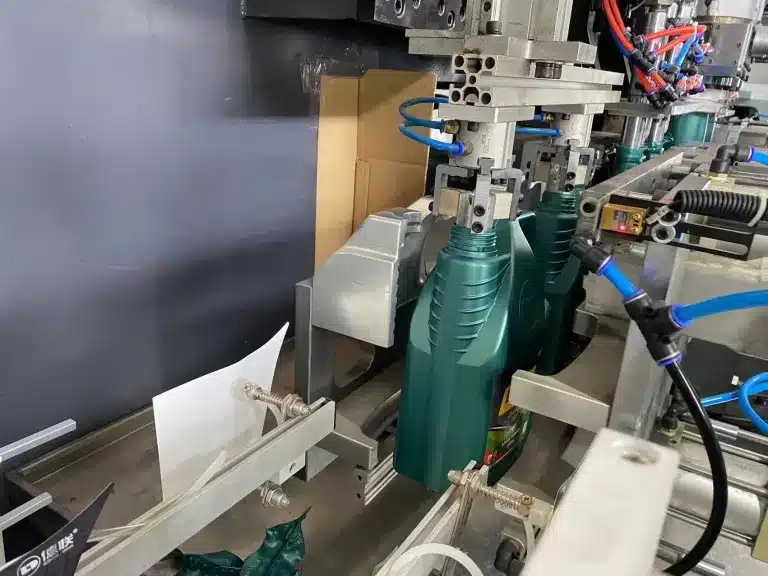
10 Best Extrusion blow molding machine manufactures in Italy
Digging Deeper: The “Dry Cycle” Trick
Let me explain a common trick. A supplier might tell you a machine can do 600 cycles per hour. This sounds great. But this is often the “Dry Cycle.” This means the machine opens and closes without any plastic inside. It is just the speed of the hydraulics moving air.
In real production, plastic needs time to cool down. If you take the bottle out too hot, it will shrink or warp. The thicker your bottle, the longer the cooling time. For a standard HDPE jerry can, the cooling time is the boss. It dictates your speed.
Here is a real example. If you are making a 5-liter jerry can, the cooling time might be 15 seconds. The machine movement takes 4 seconds. Total cycle is 19 seconds.
3600 seconds (1 hour) ÷ 19 seconds = approx 189 bottles per cavity.
If a supplier promises you 300 bottles per cavity for a thick 5L can, they are lying, or they are assuming you have a magical cooling system that does not exist.
When I calculate output for my clients, I ask for the bottle weight and wall thickness first. Then I be honest. I say, “Look, physics is physics. To go faster, you need a machine with a double station (carriage) or more cavities, not just a ‘faster’ machine.” Always ask the supplier to show you a video of a machine running a similar bottle and hold a stopwatch to the screen. Count the seconds yourself.
The price of the machine is only about 60% of the money you will spend to get your factory running. Many novices look at the bottom line of the quote and think, “Okay, this fits my budget.” They are wrong.
You must ask for a “Turnkey Project” estimate. This includes the auxiliary equipment (chiller, compressor, crusher), the cost of the molds, shipping fees (freight is high!), and the installation costs (engineer flights and visa). Without these, your machine is just a statue.

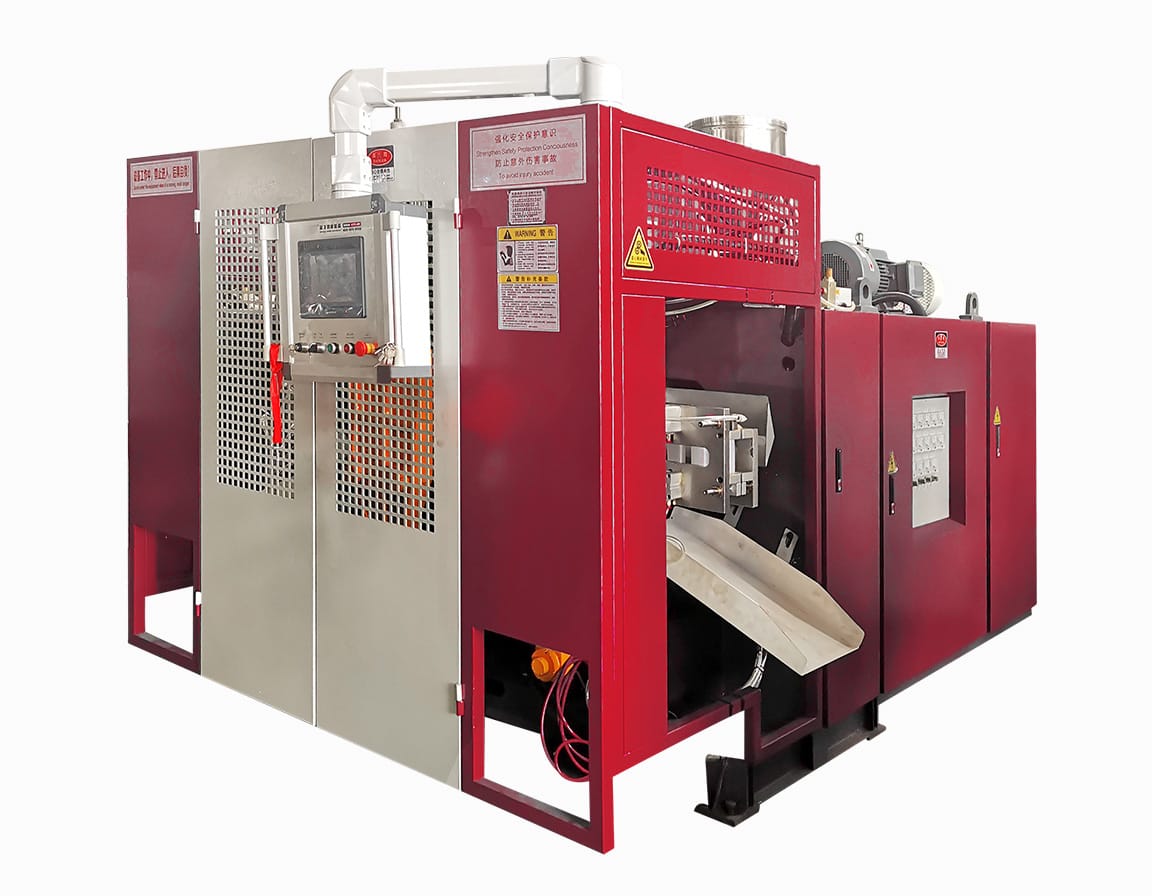
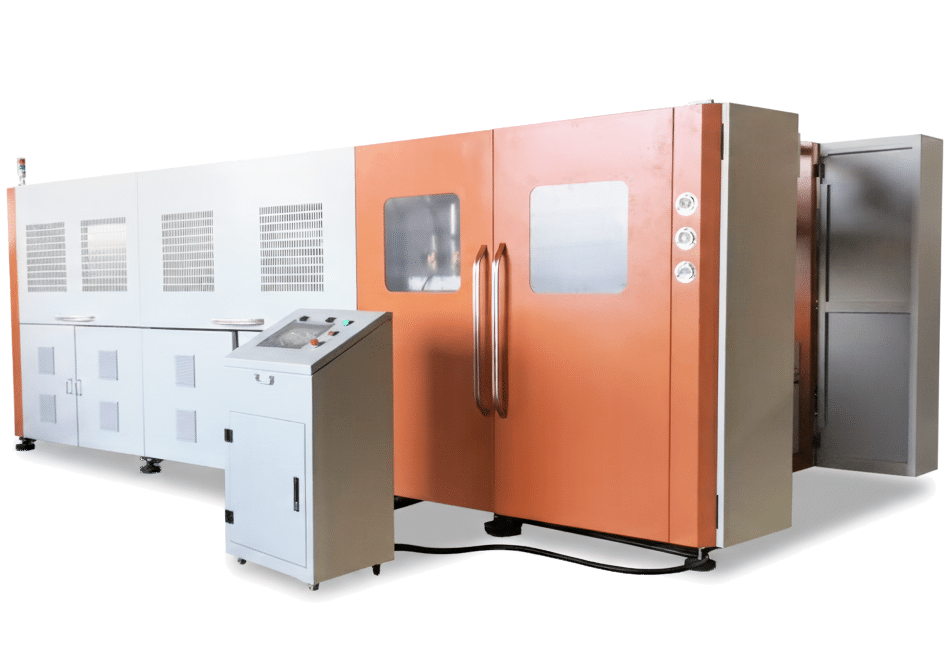
Cooling and startup system for a blow molding plant, typically serving extrusion blow molding machine and stretch blow molding machine lines.
Digging Deeper: The Auxiliary Trap
An extrusion blow molding machine cannot work alone. It is like buying a car without tires or gasoline. I often see competitors offer a very low price for the main machine to hook the customer. Then, the customer realizes they need a lot of extra gear.
Let’s break down the “must-haves” that are rarely in the base price:
1. The Mold: This is custom-made. A good mold for a 5L container can cost thousands of dollars.
2. The Chiller: Remember the cooling time I mentioned? You need cold water to cool the mold. No chiller means slow production.
3. The Air Compressor: Blow molding needs high-pressure air to “blow” the plastic. You need a compressor and an air tank.
4. The Crusher: EBM machines create “flash” (scrap plastic) at the top and bottom of the bottle. You need a crusher to grind this up so you can reuse it. If you don’t recycle this, you are throwing money away.
Also, pay attention to the “Incoterms.” If the quote says “EXW” (Ex Works), you have to pay to move the machine from the factory floor in China to the port. If it says “FOB” (Free on Board), the supplier pays to get it to the ship. “CIF” means they pay for the ocean freight. The difference between EXW and CIF to Europe or the USA can be $5,000 to $10,000 depending on container prices. Always ask for the price to be “CIF to [Your Port].”
How do I ensure the machine specs on paper match the actual equipment delivered?
You signed the contract for a machine with a specific screw diameter, a specific motor brand, and a specific mold size. Six months later, a crate arrives. How do you know they didn’t swap the Siemens motor for a cheap local brand?
You must insist on a detailed “Component Brand List” in the contract and perform a strict Factory Acceptance Test (FAT). Do not pay the final balance until you see the machine running continuously for 8 hours with your mold, meeting the speed promised in the contract.
%[An engineer holding a checklist inspecting the electrical cabinet of a machine](https://placehold.co/600×400 “Factory Acceptance Test Inspection”)
Digging Deeper: The Importance of the FAT
The Factory Acceptance Test (FAT) is your shield. Many buyers just ask for a video of the machine running for 5 minutes. This is not enough. Any machine can run well for 5 minutes. Issues like overheating, oil leaks, or unstable parison control usually show up after a few hours of running.
At LEKA Machine, we encourage our clients to come to China or hire a third-party inspector. Here is what your FAT checklist should look like:
1. Component Verification: Open the electrical cabinet. Take photos. If the contract says “Delta Inverter,” is there a Delta Inverter? If they swapped it for “Best-Run Inverter,” reject it.
2. The 8-Hour Run: The machine must run automatically without human help. If the machine stops or jams, the clock restarts.
3. Bottle Quality Check: Weigh the bottles every 30 minutes. Are they the same weight? If the weight fluctuates by more than 2-3 grams, the extrusion system is unstable.
4. Leak Check: Look at the floor. Are there oil spots? Look at the hydraulic block. Leaks now mean big messes later.
If you cannot come to China, demand a continuous video recording of the run, or a livestream. Do not accept “we will fix it before shipping.” Fix it before you pay.
What are the most common red flags when evaluating Chinese machinery suppliers online?
The internet is full of beautiful websites. Anyone can pay a web designer to make them look like a German engineering firm. But there are small signs that give away a bad supplier if you know where to look.
Watch out for suppliers who say “Yes” to everything. If a supplier agrees to every request you make without asking technical questions or warning you about risks, they are desperate for the sale and will likely fail to deliver.
A warning symbol highlights potential red flags during supplier communication for blow molding machine procurement.
Digging Deeper: The Danger of “Yes”
Engineering is about trade-offs. If you ask me, “Slany, can I make a 20-liter jerry can on your 5-liter machine?” and I say “Yes, sure, no problem!”, I am lying to you. The physical size of the platen (the metal plates that hold the mold) is too small. The clamping force is too weak.
A good supplier acts like a partner, not a waiter. If you ask for something dangerous or impossible, I will tell you, “No, that is a bad idea because X, Y, and Z.” I recently had a customer, Marco from Italy. He wanted to run 100% recycled material (PCR) on a standard screw. I told him no. I told him he needs a bimetallic screw and a special die head design, or the machine will clog and wear out in three months. He appreciated the honesty. A bad supplier would have said “Yes,” taken his money, and left him with a broken machine.
Other red flags include:
1. No Spare Parts List: If they cannot give you a list of “wear and tear” parts and their prices instantly, they probably don’t stock them.
2. Generic Manuals: Ask to see a sample user manual. If it is 10 pages of bad English translation that looks like it belongs to a toaster, be careful. A complex machine needs a complex manual with electrical diagrams.
3. Unbelievably Low Price: If three suppliers quote $50,000, $55,000, and $52,000, and one supplier quotes $30,000… do not buy the $30,000 one. They have removed safety features, used used motors, or thinned the steel frame.
Conclusion
Buying an extrusion blow molding machine is a partnership, not a one-time transaction. To succeed, you must verify the manufacturer, calculate the true output, uncover hidden costs, and demand rigorous testing. Do not let a low price blind you to the reality of production. If you ask the hard questions now, you will sleep better later.


0 Comments