

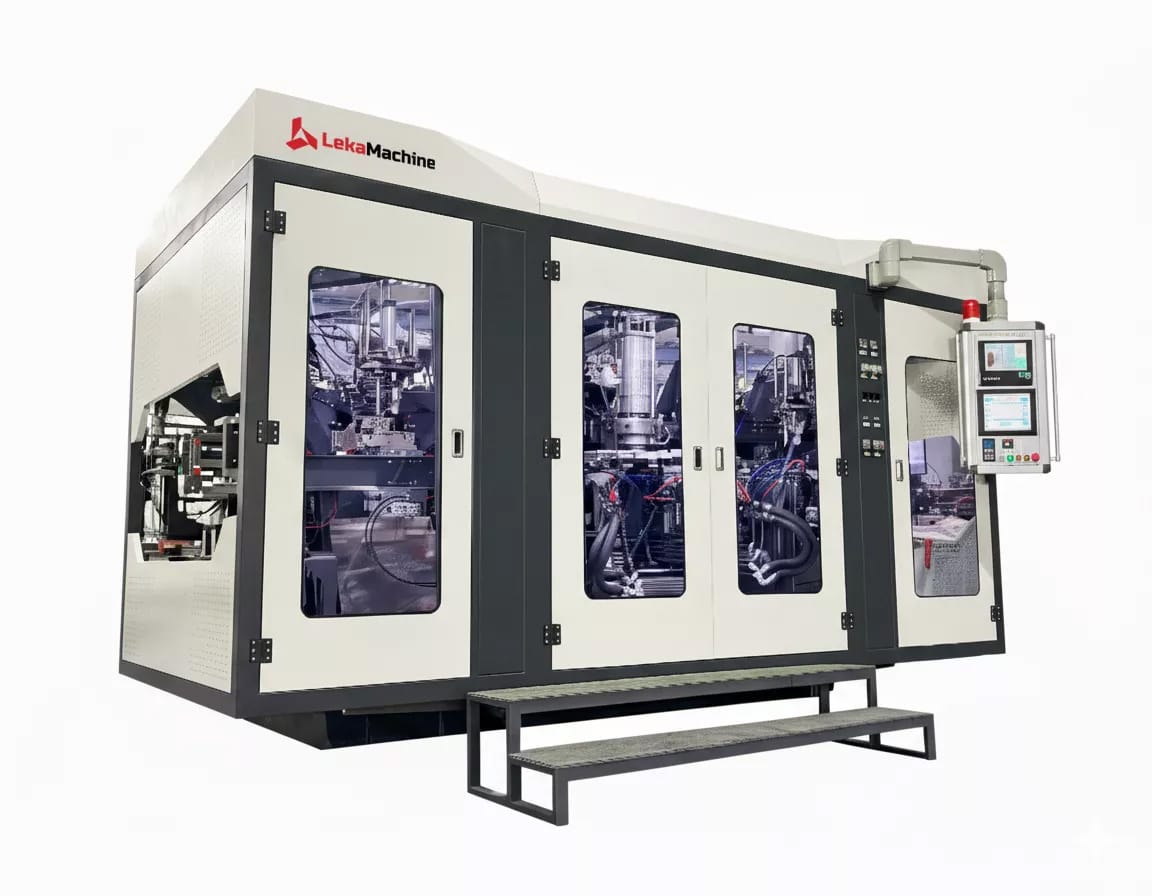
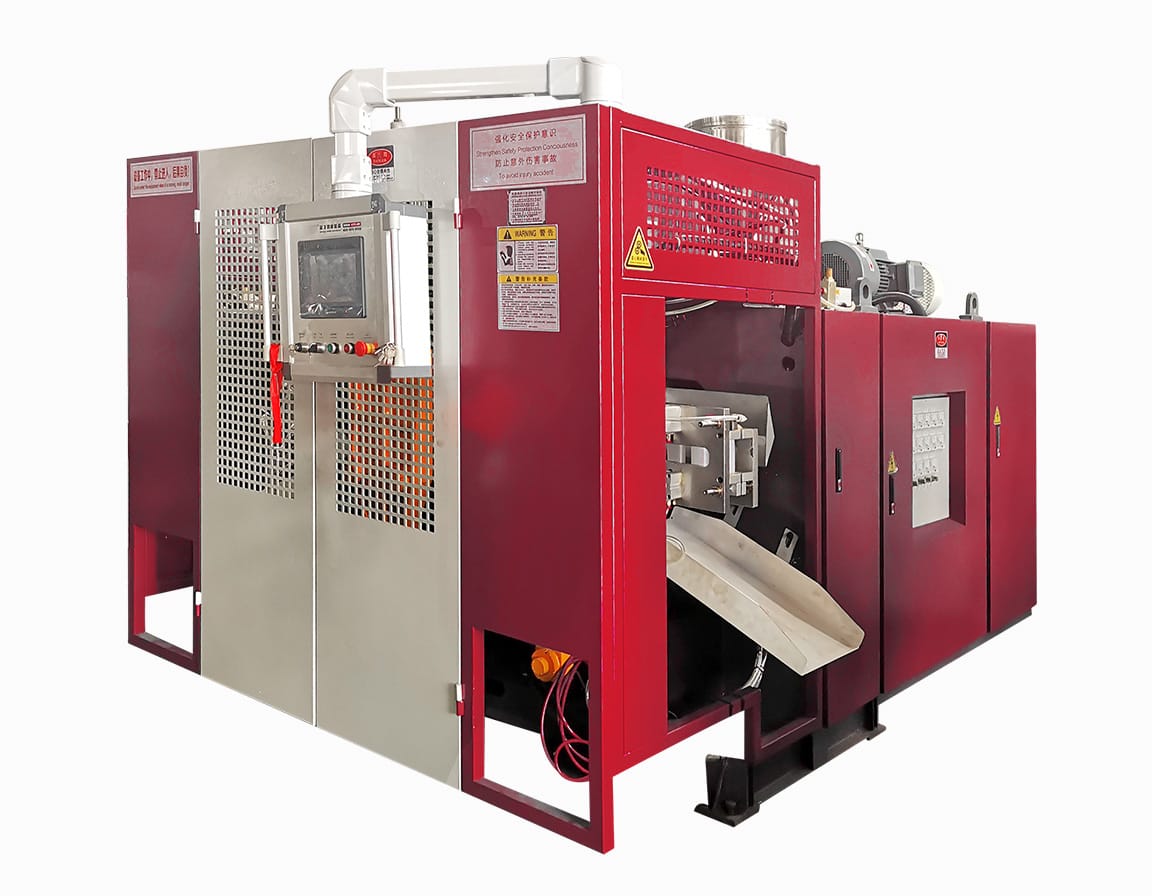



How should I carry out the unboxing and acceptance inspection for my all-electric blow molder?

We understand the mix of excitement and anxiety when a new container of machinery arrives at your loading dock. After weeks of production planning, the last thing you want is to discover hidden damage days after the delivery driver has left. (Max 30 words)
To ensure a successful installation, you must immediately inspect ShockWatch indicators before offloading and verify the internal "loose parts" box against the BOM. It is also critical to re-torque all electrical terminals and check servo motor alignment to prevent failures caused by transit vibration.
The following guide details the specific inspection steps you need to take to protect your investment and ensure a smooth startup.
What are the immediate external checks before offloading?
At our factory, we attach specific impact indicators to every crate, but we know that rough handling at ports can still occur. Catching these red flags before the crate hits your floor is your strongest leverage for insurance claims. (Max 30 words)
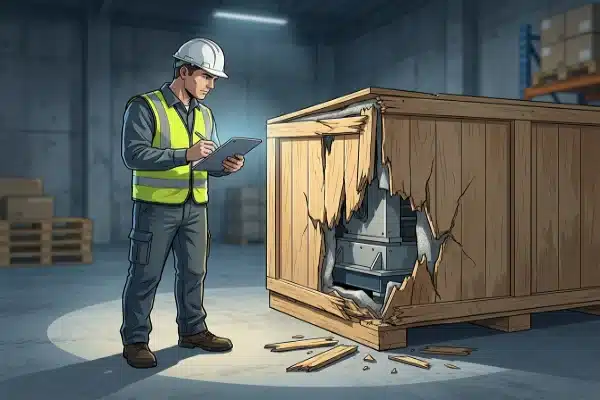
Before the forklift touches the crate, inspect the exterior ShockWatch and TiltWatch indicators; if they are red or missing, you must note "Possible Internal Damage" on the Bill of Lading. Halt the unboxing immediately and summon a third-party surveyor if visible structural damage exists.
The Importance of Impact Indicators
When your machine arrives, do not immediately rush to open the crate. Your inspection begins while the cargo is still on the truck or in the container. We utilize "ShockWatch" (impact) and "TiltWatch" (orientation) indicators to monitor the machine’s journey.
If these indicators are red or completely missing, it suggests the crate was dropped or tipped beyond safe limits. You must document this immediately. If you sign the driver’s paperwork without noting "Possible Internal Damage," you essentially release the carrier from liability.
Third-Party Verification
If the external wood shows signs of distress—such as crushed corners, holes, or splintered support beams—do not proceed alone. Pause the unboxing process. In these cases, we strongly advise bringing in a third-party surveyor or an insurance adjuster to witness the opening.
Opening a damaged crate without a neutral witness can sometimes void insurance claims if hidden damage is discovered later. The surveyor provides an objective report that links the external crate damage to any internal machine issues.
External Inspection Checklist
Use the following table to guide your decision-making process before the machine is moved into your facility.
| Indicator / Area | Observation | Action Required |
|---|---|---|
| ShockWatch | Red or Activated | Note on Bill of Lading; Take Photos; Notify Insurer. |
| TiltWatch | Red or Activated | Check machine for tipping; Inspect upper tie-bars for bending. |
| Crate Corners | Crushed or Splintered | Do not unbox. Call surveyor. Note on delivery receipt. |
| Vapor Barrier | Ripped or Torn | Check internal components for salt spray corrosion immediately. |
By strictly following these external checks, you establish a clear chain of custody and responsibility regarding the machine’s condition.
How do I verify the inventory and physical condition of the machine?
We pack our machines with specific "Crash Kits" and tools designed to keep you running, but these boxes often get lost in the chaos of unpacking. Identifying missing items now saves weeks of downtime later. (Max 30 words)
You must locate the "loose parts" box inside the clamp area before discarding any packaging and cross-reference components against the detailed BOM, not just the packing list. Simultaneously, inspect polished surfaces like tie-bars for rust caused by breached VCI packaging during ocean transit.
Locating the "Loose Parts" Box
One of the most common panic calls we receive involves "missing" HMI screens or leveling pads. In 90% of these cases, the items were not missing but were packed inside a specific "loose parts" box. To save space and protect high-value items, we strap this box inside the machine’s clamp area or the main electrical cabinet.
reforming’ process 2
Do not discard any wood, plastic, or cardboard until you have physically located this box. It typically contains:
- Leveling pads and anchor bolts.
- The HMI (Human Machine Interface) screen (often packed separately to prevent cracking).
- Software backup USBs or hard drives.
- Specialized tools and the recommended spare parts "Crash Kit."
The VCI Rust Check
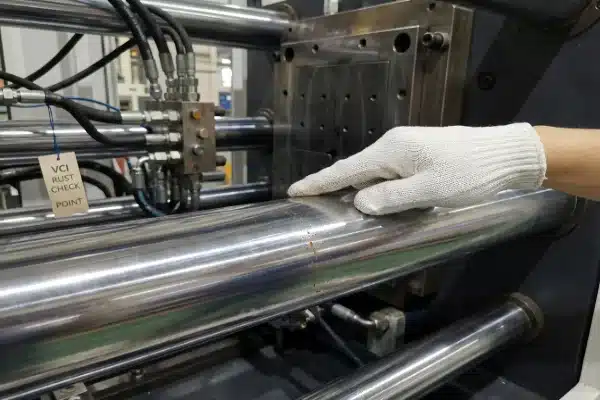
Ocean freight exposes machinery to high humidity and salty air. While we use VCI (Volatile Corrosion Inhibitor) bags, a small tear during customs inspection or transit can compromise this protection.
VCI (Volatile Corrosion Inhibitor) 3
Once the crate is open, immediately inspect all polished metal surfaces. Focus your attention on:
- Tie-bars: Look for small pitting or orange discoloration.
- Mold Platens: Check the mounting surfaces for rust.
- Guide Rails: Inspect the running surfaces.
If you find corrosion, clean it immediately with a rust remover and apply a protective oil coating. If left for even a few days, surface rust can develop into pitting that destroys the machine’s precision.
False brinelling 4
BOM vs. Packing List
Do not rely solely on the shipping packing list. The packing list is a logistics document often grouping items generically (e.g., "1 set accessories"). Instead, use the machine’s technical Bill of Materials (BOM).
The BOM provides the granularity needed to verify specific sensors, cables, and heater bands. A generic packing list might say "Cables," but the BOM will specify "K-Type Thermocouple, 3 meters." verifying against the BOM ensures you haven’t been short-shipped a critical, hard-to-replace component.
torque screwdriver 5
Inventory Discrepancy Guide
| Component Category | Common Location | specific check |
|---|---|---|
| HMI / Screen | Loose Parts Box | Check for screen cracks or impact damage. |
| Leveling Pads | Pallet Floor / Loose Box | Count against the machine’s mounting holes. |
| Spare Heaters | Spare Parts Kit | Verify voltage and diameter match the barrel. |
| Documents | Electrical Cabinet Pocket | Ensure electrical schematics and manuals are English. |
What critical electrical and mechanical tests are required before power-up?
Our engineers have found that even the best-built machines suffer from vibration-induced loosening during weeks of ocean travel. Powering up without specific checks can lead to arcing, short circuits, or immediate mechanical damage. (Max 30 words)
high-resistance arcing 6
You must physically re-torque all power connections to prevent high-resistance arcing and measure absolute encoder battery voltage to preserve home positions. Furthermore, inspect linear rails for false brinelling and reform DC bus capacitors if the machine has been stored for over six months.
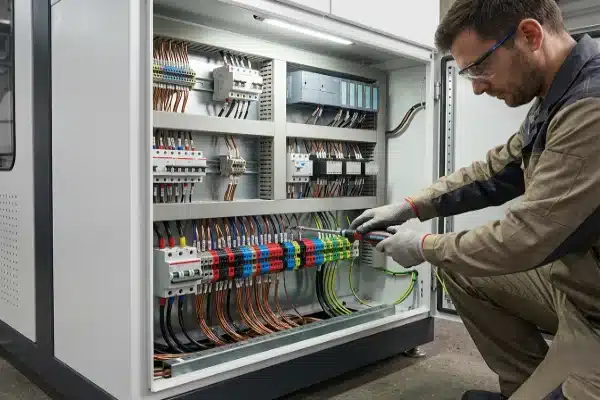
Re-Torquing Electrical Terminals
Vibration is the enemy of screw-type terminal blocks. During the constant low-frequency vibration of ocean freight, screws naturally back out. If you apply power to a loose connection, it creates a point of high resistance. This leads to "hot spots," arcing, and potentially a fire or a blown drive.
Bill of Materials (BOM) 8
Before applying any power, use a torque screwdriver to check:
- Main Breaker Connections: These carry the highest current.
- Servo Drive Power Inputs: Loose connections here can destroy sensitive drive electronics.
- Contactor Terminals: Check all motor starter connections.
Servo Motor and Alignment Checks
All-electric machines rely on precision servo motors. High G-forces during handling can slightly shift a heavy motor on its mount.
- Alignment Shift: Check the mounting alignment of servo motors, especially for the mold clamp and carriage. If the motor has shifted, it creates misalignment with the ball screw. Running the machine in this state will shatter the coupling or damage bearings on the very first high-speed cycle.
- Absolute Encoder Batteries: Many servo motors use battery-backed absolute encoders to remember their position. If the transit took weeks, check these battery voltages immediately. If they are dead, the machine loses its "home" position, requiring a complex factory-level recalibration before any axis can move.
Linear Guide "False Brinelling"
"False brinelling" occurs when bearings vibrate against a raceway in a single spot for a long period—exactly what happens during shipping.
- The Check: Run your finger along the linear rails where the carriage sat during transit.
- The Symptom: You are feeling for small indentations or "speed bumps."
- The Result: If present, these dents will cause permanent vibration and noise. They must be polished out or the rail replaced before operation.
Capacitor Reforming
If your machine was in transit or storage for more than 6 months, or exposed to extreme humidity, the large DC bus capacitors in the servo drives may have degraded.
Bill of Lading 9
Do not flip the main breaker to "ON" immediately. The sudden in-rush of voltage can cause these capacitors to fail catastrophically (explode). You may need to perform a "reforming" process, which involves gradually increasing the voltage to the drives over several hours to rebuild the dielectric layer in the capacitors.
Pre-Power Up Safety Matrix
| System | Potential Risk | Inspection Action |
|---|---|---|
| Power Terminals | Arcing / Fire | Re-torque all main power connections. |
| Servo Drives | Capacitor Explosion | Reform capacitors if stored >6 months. |
| Encoders | Data Loss (Home Position) | Test backup battery voltage. |
| Linear Rails | Vibration / Noise | Check for false brinelling (dents). |
| Servo Motors | Coupling Failure | Verify motor-to-screw alignment. |
Conclusion
Proper unboxing is not just about unpacking; it is the first step of maintenance. By verifying impact indicators, re-torquing connections, and checking for corrosion, you ensure your new machine starts profitable production immediately. (Max 30 words)
ShockWatch and TiltWatch indicators 10
Footnotes
- Educational resource from Cambridge University explaining dielectric materials in capacitors. ↩︎
- Major drive manufacturer explaining the necessity and procedure for capacitor reforming. ↩︎
- Leading industry organization (AMPP) for corrosion control standards and materials protection. ↩︎
- Technical guide from a major bearing manufacturer detailing this specific failure mode. ↩︎
- International standard (ISO 6789) specifying requirements for hand torque tools. ↩︎
- Government safety resources regarding electrical hazards and connection integrity. ↩︎
- Official government guidance on export packing lists and their limitations. ↩︎
- Standard definition of the manufacturing document used for inventory verification. ↩︎
- General definition of the legal shipping document required for insurance claims. ↩︎
- Official manufacturer page for the specific impact indicators mentioned in the text. ↩︎


0 Comments