
How should I verify that the mold movement mechanism of an all-electric extrusion blow molding machine is smooth and vibration-free?
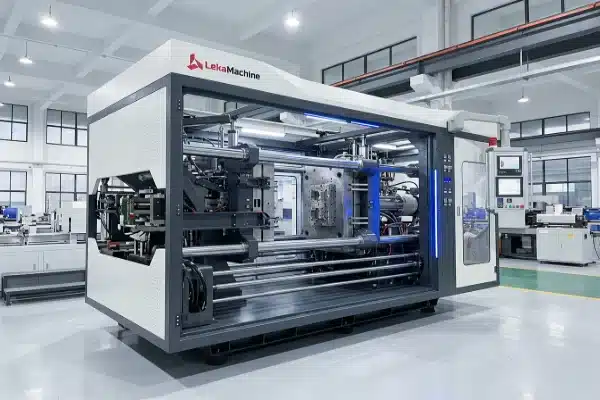
At our factory, we know that even microscopic vibrations during machine calibration 1 can destroy bottle quality and ruin efficiency. If your mold carriage isn’t perfectly smooth, your production suffers immediately.
To verify smooth mold movement, perform a dry cycle test monitoring servo motor torque spikes and audible noise. Use a high-speed camera to check deceleration consistency and inspect linear guides for uniform lubrication. Finally, analyze the "S-curve" acceleration profiles to ensure velocity transitions are seamless and vibration-free.
Let’s break down the specific testing protocols and inspection points you need to ensure your machine runs flawlessly.
How can I use a dry cycle test to check for jitter or noise in the servo-driven clamping unit?
During our FAT (Factory Acceptance Tests) 2, we run rigorous dry cycles to expose hidden mechanical resistance. Ignoring these early warning signs inevitably leads to costly servo failures later.
A dry cycle test reveals jitter by running the machine without plastic while monitoring servo torque loads. You must identify unexpected current spikes or audible grinding, which indicate mechanical resistance. Use a laser displacement sensor to confirm the carriage’s deceleration phase is consistent and free from stuttering.
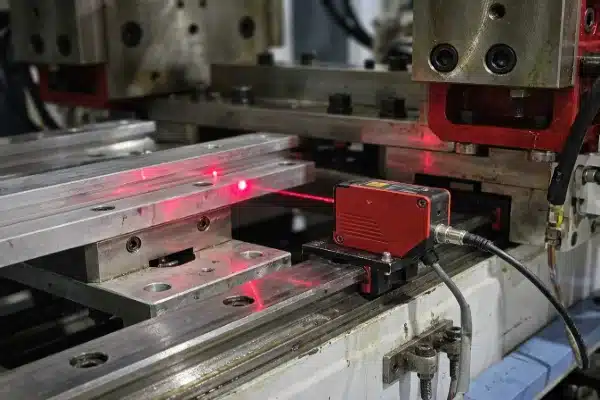
When we validate a new machine, the dry cycle is the most honest indicator of assembly quality. It strips away the variables of plastic processing and focuses purely on mechanics. To perform this effectively, you need to go beyond just watching the machine open and close. You need to look for specific "micro-stutters" that the naked eye might miss but your bottle quality will definitely reveal.
Monitoring Servo Torque Load
The most reliable way to detect hidden friction is through the machine’s HMI (Human Machine Interface). Access the servo motor 3 diagnostic screen. As the mold carriage moves, the torque curve should be smooth. If you see sharp spikes in current or torque load during what should be a steady movement phase, the motor is fighting against a mechanical obstruction—likely a misalignment in the clamping unit.
Acoustic Emission (AE) Sensing
Sometimes, ears aren’t enough. We recommend using acoustic emission 4 sensing tools during the dry cycle. These tools detect high-frequency stress waves that happen before you hear an audible grinding noise. This helps identify issues in the servo drive train long before they become catastrophic failures.
The "Blue Lead" Test
After running high-speed dry cycles, we often perform a pressure-sensitive film test (or "Blue Lead" test) on the mold faces. This involves placing pressure-sensitive paper between the mold halves. If the clamping force is perfectly parallel, the color density on the paper will be uniform. If the carriage is vibrating or "nodding" upon closure, you will see uneven patches, indicating that the vibration has shifted the carriage alignment.
Table 1: Dry Cycle Inspection Checklist
| Inspection Point | What to Look For | Potential Issue |
|---|---|---|
| Deceleration Phase | Smooth slowing down without "steps" or jerks. | Poor PID tuning 5 or worn ball screws. |
| Servo Current | Steady curve matching the motion profile. | Mechanical binding or lack of lubrication. |
| Audible Noise | Quiet "whirring" (electric) vs. grinding/clunking. | Bearing failure or loose guide rails. |
| Mold Contact | Soft touch before high pressure lock. | Miscalibrated position sensors. |
What should I look for in the linear guides and ball screws to ensure long-term smooth operation?
We often see machines fail prematurely because the linear guides 6 were neglected during routine checks. If you overlook pitting or lubrication issues now, you will face severe downtime and expensive repairs soon.
Inspect linear guides for uniform lubrication distribution and check ball screws for visible "pitting" or axial play. These physical signs are primary precursors to vibration. Also, analyze the thermal signature of bearings after cycling; localized overheating indicates misalignment or friction points that will eventually cause mechanical failure.

The linear guides and ball screws are the backbone of an all-electric machine’s movement. In our experience, vibration issues rarely start in the motor itself; they usually originate from wear or misalignment in these transmission components. A "smooth" machine is only as good as its rails.
Checking for "Pitting" and Axial Play
"Pitting" refers to small divots or flaking on the surface of the ball screw 7 or guide rail. This is metal fatigue caused by excessive stress or poor steel quality. Once pitting starts, vibration increases exponentially. You should also physically grab the carriage (with the machine locked out) and try to move it. Any "play" or looseness suggests the ball nut is worn or the pre-load is gone. This axial play allows the mold to bounce during the high-impact moments of opening and closing.
Thermal Signature Analysis
After the machine has been running dry cycles for 30 minutes, use a thermal imaging camera 8 or an infrared thermometer on the linear bearing blocks and the ball screw nut. They should be warm, but not hot.
- Uniform Heat: Good. Friction is distributed evenly.
- Hot Spots: Bad. If one bearing block is 10°C hotter than the others, it is taking more load. This means the rail is misaligned, fighting the motor, and creating vibration.
Lubrication Consistency
Look at the grease on the rails. It should be a thin, translucent film.
- Dark/Black Grease: Indicates metal dust is mixing with the lubricant—a sign of grinding.
- Dry Spots: Indicates blocked grease nipples or broken lines. Dry rails cause "stick-slip" motion, where the carriage sticks briefly and then jumps forward, creating a stuttering effect.
Table 2: Component Wear Indicators
| Component | Healthy Condition | Warning Sign (Vibration Risk) |
|---|---|---|
| Linear Guide Rail | Shiny, thin grease film. | Dull spots, scoring marks, or black grease. |
| Ball Screw | Smooth rotation, no noise. | "Growling" sound, visible flaking (pitting). |
| Guide Block | Warm to touch (40-50°C). | Hot to touch (>60°C) or leaking grease. |
| End Seals | Intact and wiping rail clean. | Cracked or missing, allowing debris inside. |
Can the supplier provide vibration analysis or acceleration curves for the mold carriage?
When we design custom EBM solutions, we rely on hard data rather than guesses to guarantee performance. Without seeing the acceleration curves, you are essentially purchasing high-speed equipment blind.
Yes, professional suppliers must provide "S-curve" acceleration and deceleration profiles from the control software. These curves verify smooth velocity transitions rather than abrupt trapezoidal movements. Request specific vibration analysis data to ensure the machine optimizes cycle time without mechanical "bounce" or instability during high-speed operation.

Requesting the right data separates knowledgeable buyers from the rest. A supplier might tell you the machine is "smooth," but physics doesn’t lie. You need to verify how the machine handles speed changes.
Understanding S-Curve vs. Trapezoidal Motion
In older or cheaper drive systems, the motion profile is "Trapezoidal." This means the motor accelerates at a constant rate and then stops accelerating instantly when it hits top speed. This sudden change in force causes a "jerk"—a physical shock that vibrates the entire machine frame.
High-end all-electric machines use S-Curve profiles 9.
- The S-Curve: The rate of acceleration itself changes gradually. It starts slow, ramps up, and then tapers off gently before reaching top speed.
- The Result: Think of it like a luxury car braking versus a sudden stop. The S-Curve eliminates the "jerk" at the start and end of the movement. This keeps the liquid plastic (parison 10) stable and prevents the machine from shaking.
Analyzing the Acceleration Curves
Ask the supplier to export the motion graph from the PLC. Look at the transition points.
- Sharp Angles: Indicate mechanical shock.
- Rounded Corners: Indicate S-Curve smoothing is active.
You should also ask for the Settling Time data. This is the time it takes for the mold to stop vibrating completely after it closes. If the machine closes fast but vibrates for 0.5 seconds afterward, you haven’t actually saved any time because you can’t blow the bottle until the mold is still.
Table 3: Motion Profile Comparison
| Feature | Trapezoidal Profile (Standard) | S-Curve Profile (High-End) |
|---|---|---|
| Acceleration | Constant, abrupt changes. | Variable, smooth transitions. |
| Vibration | High "jerk" at start/stop. | Minimal to zero jerk. |
| Parison Swing | Causes parison to sway. | Keeps parison straight. |
| Wear on Mechanics | High stress on ball screws. | Low stress, longer life. |
How does smooth mold movement impact the seam quality and cycle time of my bottles?
Our engineers have found that erratic clamping destroys profit margins by causing high reject rates. If the mold vibrates even slightly upon closure, you risk weak seams and inconsistent bottle weights.
Smooth mold movement is critical because any oscillation during closure causes uneven wall thickness or "ghosting" on the bottle surface. Furthermore, erratic clamping speeds lead to premature parison cooling and weak seams. Eliminating vibration allows for precise clamping synchronization, directly improving yield rates and reducing cycle time.
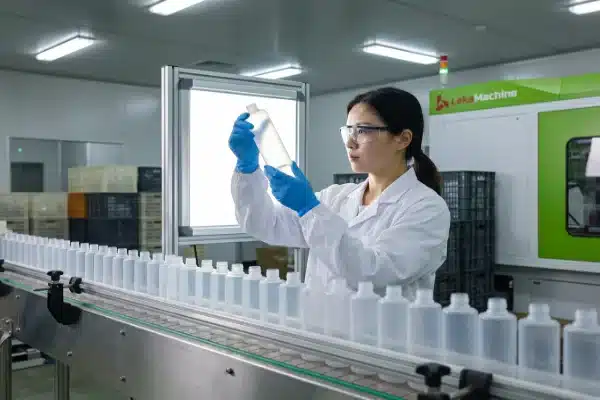
The connection between the machine’s vibration and your final bottle quality is direct and unforgiving. When we troubleshoot quality issues for clients, we often find the root cause isn’t the plastic or the temperature—it’s the mold movement.
The "Ghosting" Effect
"Ghosting" appears as faint, repeating lines or ripples on the surface of the bottle. This happens when the mold carriage is vibrating as the parison is inflated. The plastic touches the vibrating metal wall, freezing that vibration pattern into the finished product. This ruins the aesthetics of high-end cosmetic bottles and makes labeling difficult.
Weak Seams and Pinch-Off Issues
The "pinch-off" is where the mold cuts and seals the plastic at the bottom and top.
- The Vibration Problem: If the mold "bounces" when it hits the closed position (even by a fraction of a millimeter), the pressure on the seam fluctuates instantly.
- The Result: The plastic cools slightly during the bounce, preventing a proper fuse. This creates a weak bottom seam that will split during drop tests or leak when filled.
Cycle Time Optimization
Many operators slow their machines down to hide vibration issues. They run at 70% speed because at 100%, the machine shakes too much.
- The Fix: A truly smooth, vibration-free machine allows you to run at maximum speed without waiting for the "settling time" mentioned earlier.
- Synchronization: Smooth movement ensures the "blow pin" enters the neck exactly when the mold locks. If the mold is jittery, you have to add a delay timer to ensure safety, which adds unnecessary seconds to every cycle. Over a year, those seconds add up to thousands of dollars in lost production.
Conclusion
Verifying the smoothness of your mold movement isn’t just about protecting the machine; it’s about protecting your profits. By performing dry cycle tests, inspecting physical components like linear guides, and demanding S-curve data, you ensure your investment delivers consistent quality. A vibration-free machine yields stronger seams, faster cycles, and a significantly longer lifespan for your equipment.
Footnotes
1. Definition of equipment calibration processes and their importance. ↩︎
2. Guide to Factory Acceptance Testing (FAT) procedures in manufacturing. ↩︎
3. Basics of servo motor selection and performance characteristics. ↩︎
4. Overview of acoustic emission testing for machinery health. ↩︎
5. Explanation of PID controller tuning mechanisms. ↩︎
6. Guide to troubleshooting and maintaining linear motion guides. ↩︎
7. Understanding ball screw wear patterns and life expectancy. ↩︎
8. Using thermal imaging for industrial predictive maintenance. ↩︎
9. Comparison of S-curve versus trapezoidal motion profiles. ↩︎
10. Technical definition and role of the parison in blow molding. ↩︎