Blow Molding Machine Manufacturers: Direct Factory for Extrusion & Stretch Solutions
Comparing blow molding machine manufacturers is not only about price. You are selecting a supplier that must deliver stable output, verifiable QC, and dependable after-sales support—especially for overseas projects.
- Manufacturer-focused: engineering-led project support (mold, parison control, line integration)
- Application-driven: bottles, jerry cans, drums, industrial & consumer packaging
- Support-ready: FAT/SAT workflow, spare parts planning, remote support & on-site training options
Tip: Most buyers lose weeks by comparing only prices. Use this page to compare manufacturers using TCO, QC, delivery readiness, and service accountability.
Our Blow Molding Machine Technologies
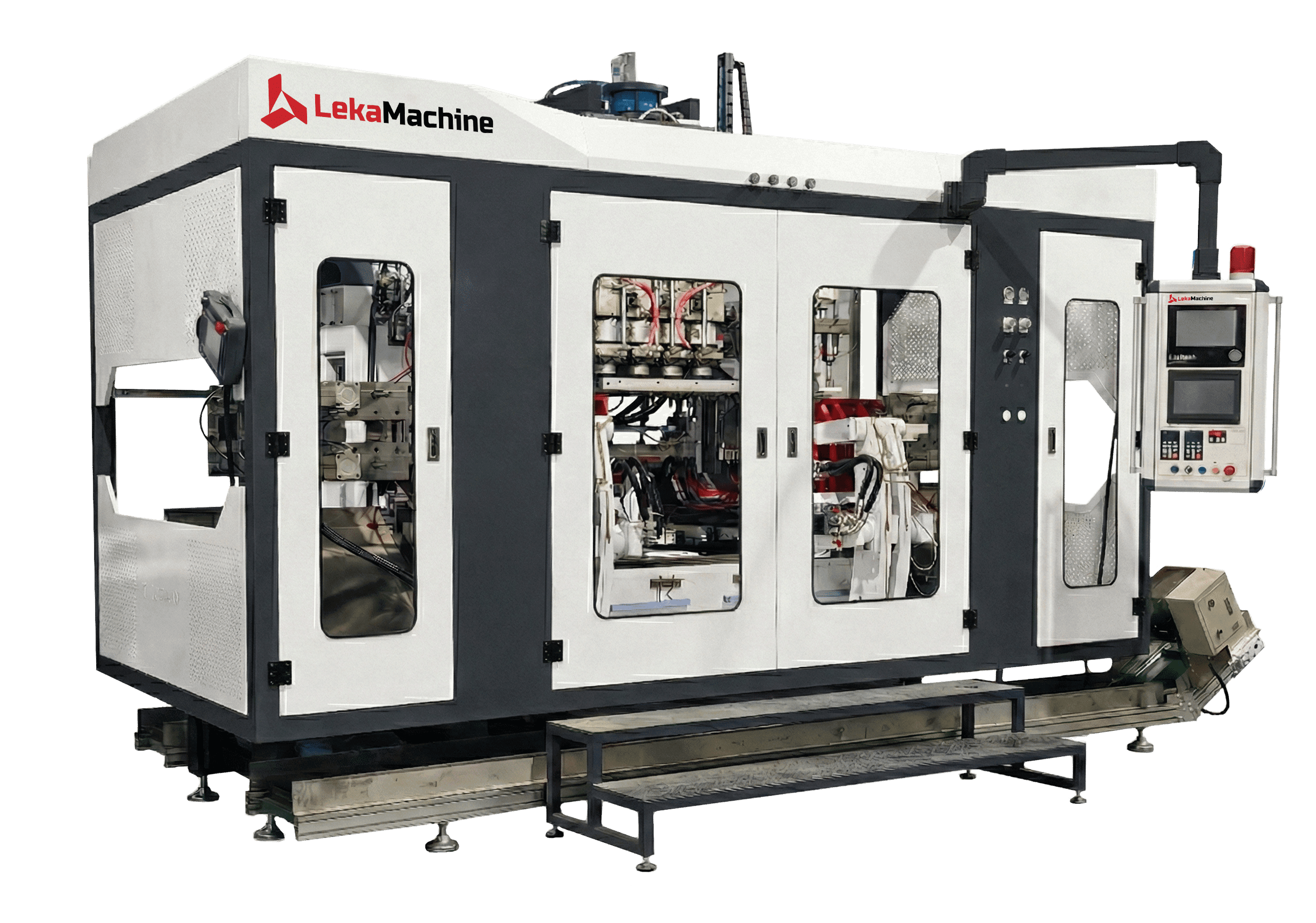
Extrusion Blow Molding Machines (EBM)
Best for HDPE/PP containers such as detergent bottles, agrochemical bottles, jerry cans, drums, and industrial packaging where wall-thickness control and structural strength matter.
- Multi-cavity bottle production for high output
- Advanced parison programming for lightweighting
- Options: leak testing, trimming, conveyors, labeling & filling integration
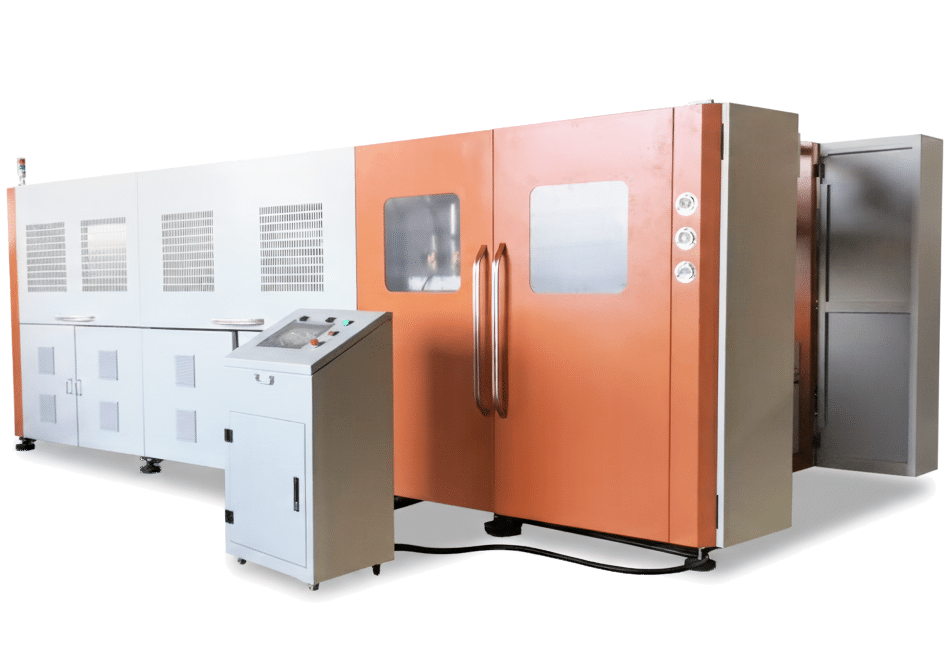
Stretch Blow Molding Machines (SBM)
Best for PET bottles where clarity, performance, and consistent neck finish are critical—commonly used for water, beverage, edible oil, and personal care packaging.
- PET bottle forming consistency for mass production
- Stable heating and stretch control for uniform bottle quality
- Options: compressor, chiller, unscrambler, filling & packing line
Factory Tour: LEKA Machine Blow Molding Manufacturer (Video)
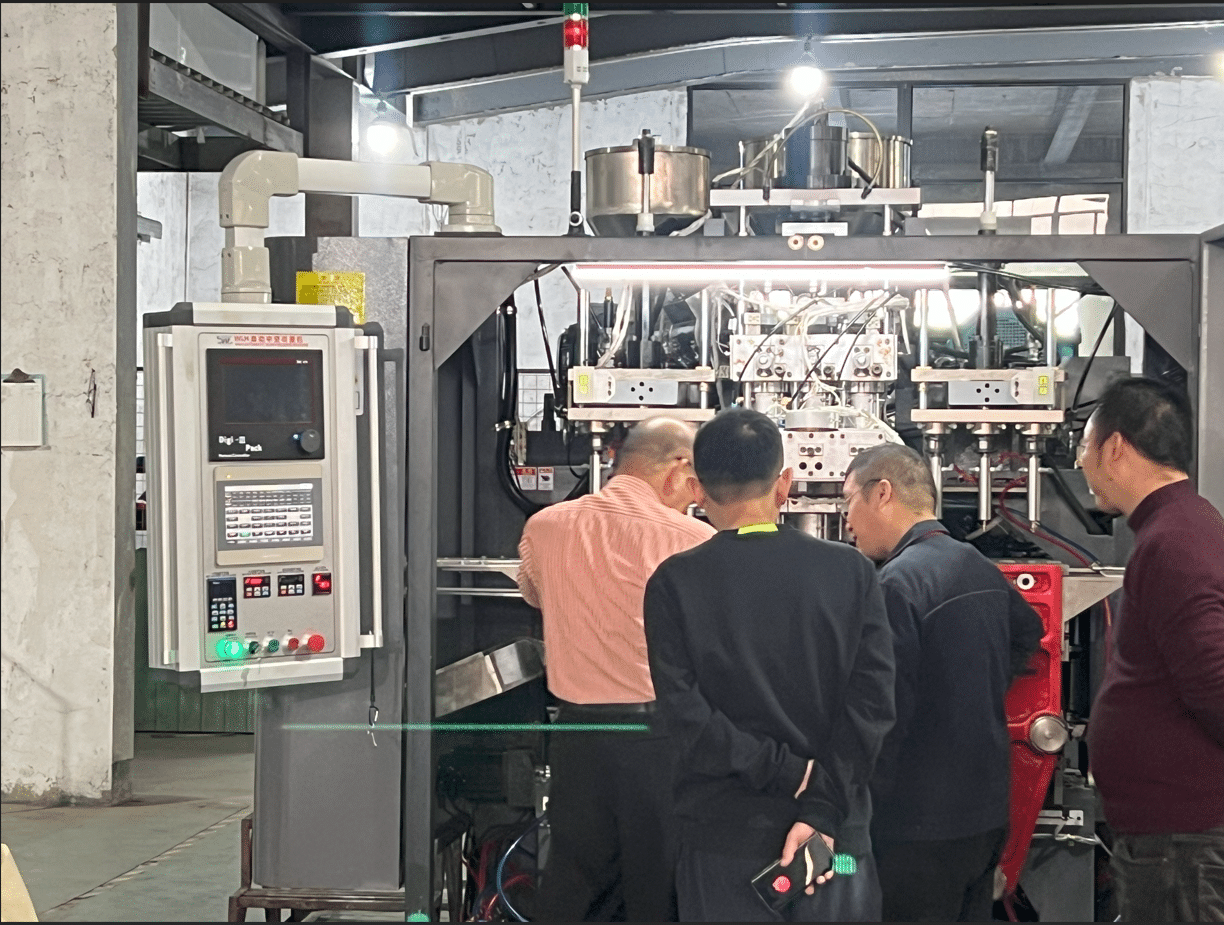
This factory tour helps buyers verify our manufacturing capability, assembly workflow, and FAT readiness as a direct blow molding machine manufacturer.
What You Can Verify From This Factory Tour
This video is intended for overseas buyers evaluating whether a supplier has real in-house manufacturing and testing capability.
- Direct factory assembly & testing (not outsourced)
- Quality control workflow before shipment
- Factory Acceptance Testing (FAT) readiness
- Overseas delivery and commissioning experience
Why “Manufacturer” Matters (Not Trader)
Many suppliers list themselves as “manufacturers”, but buyers often face delays, inconsistent documentation, and unclear accountability after the deposit is paid. The difference becomes visible only when problems appear. This comparison makes that difference visible before you sign.

What You Actually Get
- Clear responsibility for build quality and performance targets
- Standard FAT process with traceable QC records
- Direct engineering support for mold, parison control, and line integration
- Spare parts strategy with clear documentation ownership
Where Problems Usually Start
- Unclear build responsibility (subcontracted workshops)
- FAT reports that are not standardized or not reproducible
- After-sales “handoff” issues, slow response, unclear parts lead time
- Mismatch between quoted specification and delivered configuration
Manufacturer Verification Checklist (Procurement-Ready)
Use this checklist when you compare blow molding machine manufacturers. It reduces risk and makes the decision defensible across TCO, compliance, and after-sales accountability.
| Checklist Item | What to Ask / Verify | Evidence You Should Receive |
|---|---|---|
| Factory Capability | Is it a direct factory? What is your assembly & testing workflow? | Factory tour video, workshop photos, FAT area demonstration |
| Component Brands | PLC / Servo / Pneumatics brands? Are parts globally replaceable? | BOM list, brand proof, part numbers |
| Performance Targets | Cycle time, output/hr, scrap rate, energy kWh/kg — guaranteed? | FAT report template, test logs, contract guarantee clause |
| Mold & Bottle Development | Mold audit, DFM review, parison programming support? | Mold drawings, DFM notes, trial & validation plan |
| Documentation | Manuals, wiring diagrams, spare list, maintenance SOP? | Complete document package, sample pages, revision control |
| After-Sales Support | Response SLA? Remote support? Training? Parts lead time? | Service SOP, crash parts kit list, support channel definition |
Applications & Industries
Explore common bottle and container applications and move directly to the right LEKA machine category. For HDPE, PP, jerry can, drum, and industrial container projects, start with our extrusion blow molding solutions.
HDPE Bottles
Detergent, shampoo, agrochemical, and household chemical bottle applications.
Jerry Cans
5L–30L industrial containers for chemicals, lubricants, and transport use.
Drums
Large-volume containers requiring strength, sealing reliability, and stable wall control.
PET Water & Beverage Bottles
High-clarity PET bottle production with stable neck finish and repeatable output.
Edible Oil Bottles
Oil bottle applications requiring controlled weight, top-load strength, and bottle consistency.
Personal Care & Cosmetic Bottles
High-appearance packaging for shampoo, lotion, personal care, and cosmetic products.
Lubricant & Automotive Containers
Engine oil and lubricant packaging with sealing safety and industrial-use durability.
Food & Household Containers
Food-grade and household packaging projects requiring compliance, repeatable output, and reliable container quality.
Custom / OEM Projects
Non-standard bottle and container projects requiring custom molds, die heads, and line matching.

Need help choosing the right blow molding machine?
Tell LEKA your bottle or container type, resin, volume range, and output target. Our team can help you evaluate the right machine direction for your project and suggest a suitable production solution.
- HDPE bottle projects
- Jerry can production
- Industrial container lines
- Custom bottle requirements
Project Workflow: RFQ → Mold → FAT → Shipment → SAT
A real manufacturer follows a repeatable workflow with clear deliverables at each stage. This ensures accountability and reduces project risk.
- Drawings / samples, resin, bottle weight, neck finish
- Output/hr target, cycle time expectation
- Utilities: power, air, water, layout
- Model selection & configuration
- Mold concept & cavities planning
- Automation options & TCO notes
- Critical areas & wall thickness targets
- DFM notes, risks, revision control
- Trial plan & acceptance criteria
- Output, stability, scrap rate verification
- Safety & QC checklist confirmation
- FAT report, videos & samples
- Packing list, manuals, wiring diagrams
- Spare parts kit (“Crash Kit”)
- Installation & commissioning checklist
- Ramp-up support & operator training
- Performance confirmation vs targets
- Maintenance SOP handover
Quality, Compliance & Documentation
Documentation and compliance are not paperwork — they define accountability. A professional manufacturer should provide traceable records that support performance, maintenance, and after-sales service.
What a Professional Manufacturer Should Provide
- FAT checklist & performance logs (output, cycle time, stability)
- Machine manuals, wiring diagrams, pneumatic / hydraulic schematics
- Spare parts list with part codes and recommended stock
- Maintenance SOP and preventive maintenance schedule
- Revision-controlled documents matching the delivered configuration
What You Should Ask Any Supplier
- Can you share a real FAT report sample from a recent project?
- Which components are global brands and locally replaceable?
- Do you have revision control for drawings and documents?
- What is your warranty scope and response SLA?
- Who owns the documentation after delivery — factory or third party?
After-Sales Support & Spare Parts Planning
After-sales support defines the real cost of ownership. A professional manufacturer should offer a structured support model and a clear spare parts strategy — not ad-hoc responses.
Support Model (Recommended)
- Remote diagnostics: troubleshooting via video call and HMI screen sharing
- On-site training: operator and maintenance training during ramp-up
- Preventive maintenance plan: reduce unplanned downtime
- Spare parts “Crash Kit”: critical parts shipped together with the machine
- Service documentation: fault codes, maintenance logs, and escalation path
What Buyers Should Confirm
- Defined response SLA (e.g., within 12–24 hours)
- Critical parts lead time and local sourcing availability
- Clear warranty scope, coverage, and exclusions
- Parts classification: wear parts / critical parts / optional parts
- Who manages support — factory engineers or third-party agents?
Frequently Asked Questions (Procurement-Focused)
These questions are based on real discussions with buyers comparing blow molding machine manufacturers. Clear answers reduce risk and prevent costly misunderstandings.
Are you a direct manufacturer or a trading company?
We are a direct manufacturer responsible for machine assembly, testing, FAT execution, and after-sales support. There is no subcontracted responsibility gap between quotation and delivery.
Can you guarantee output, cycle time, and energy consumption?
Performance targets such as output per hour, cycle time, scrap rate, and energy consumption are verified during FAT and documented in the acceptance report as reference benchmarks.
What happens if the machine does not meet performance during FAT or SAT?
FAT criteria are agreed in advance. If targets are not met, corrective actions are taken before shipment. SAT focuses on ramp-up and confirmation under real production conditions.
Are spare parts and consumables proprietary?
Critical components are selected from globally available brands. A classified spare parts list (wear / critical / optional) is provided, allowing local sourcing where possible.
How do you support overseas customers after installation?
Support includes remote diagnostics via video and HMI screen sharing, clear escalation paths, and optional on-site support during ramp-up or major maintenance periods.
What documentation is delivered with the machine?
Each project includes manuals, wiring diagrams, pneumatic and hydraulic schematics, spare parts lists, and maintenance SOPs, all aligned with the delivered configuration.
How do you handle warranty and response time?
Warranty scope and exclusions are defined in the contract. Typical response time for technical issues is within 12–24 hours, depending on issue severity and time zone.
Can the machine be expanded or upgraded in the future?
Machine configurations are designed with future expansion in mind, including automation, downstream integration, and mold changes, subject to project planning.
Request a Quote (RFQ)
To provide an accurate quotation and technical recommendation, we review each project based on real production requirements — not generic price lists.
- Container drawing or sample photos (front / side / bottom / neck finish)
- Material: HDPE / PP / PET (please indicate PCR percentage if applicable)
- Target output per hour and expected working hours per day
- Bottle weight target and tolerance requirement
- Utilities: voltage, air pressure, cooling water / chiller availability
- Downstream requirements: leak testing, trimming, conveyor, packing, labeling or filling
Contact