Automatic PET Blowing Machine for Water Bottles: A Practical Buyer’s Guide

Reading Time: ( Word Count: )

15 November, 2025

Automatic PET Blowing Machine for Water Bottles: A Practical Buyer’s Guide

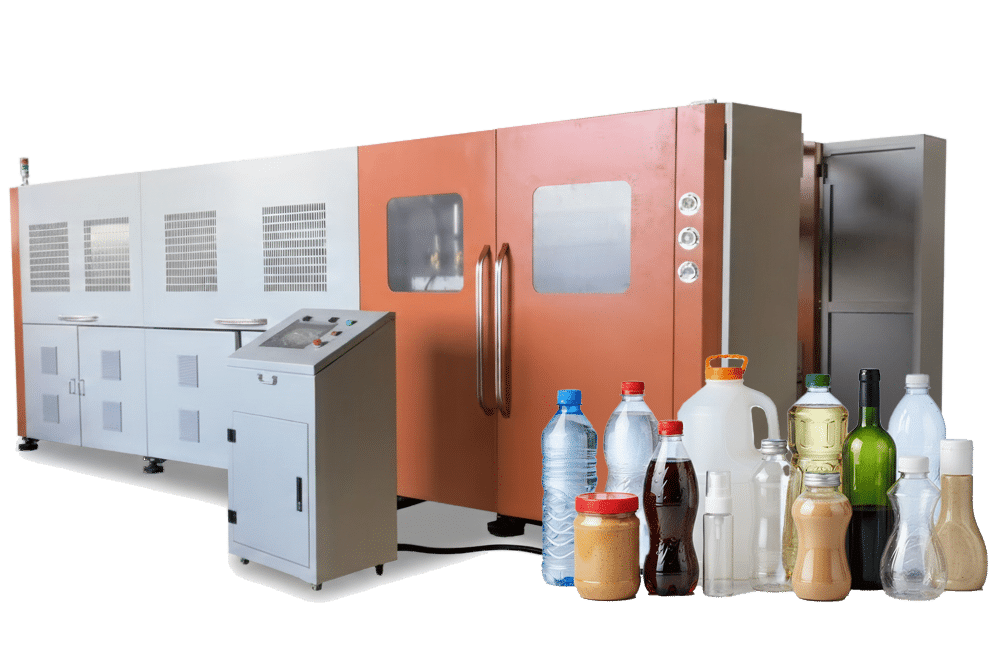
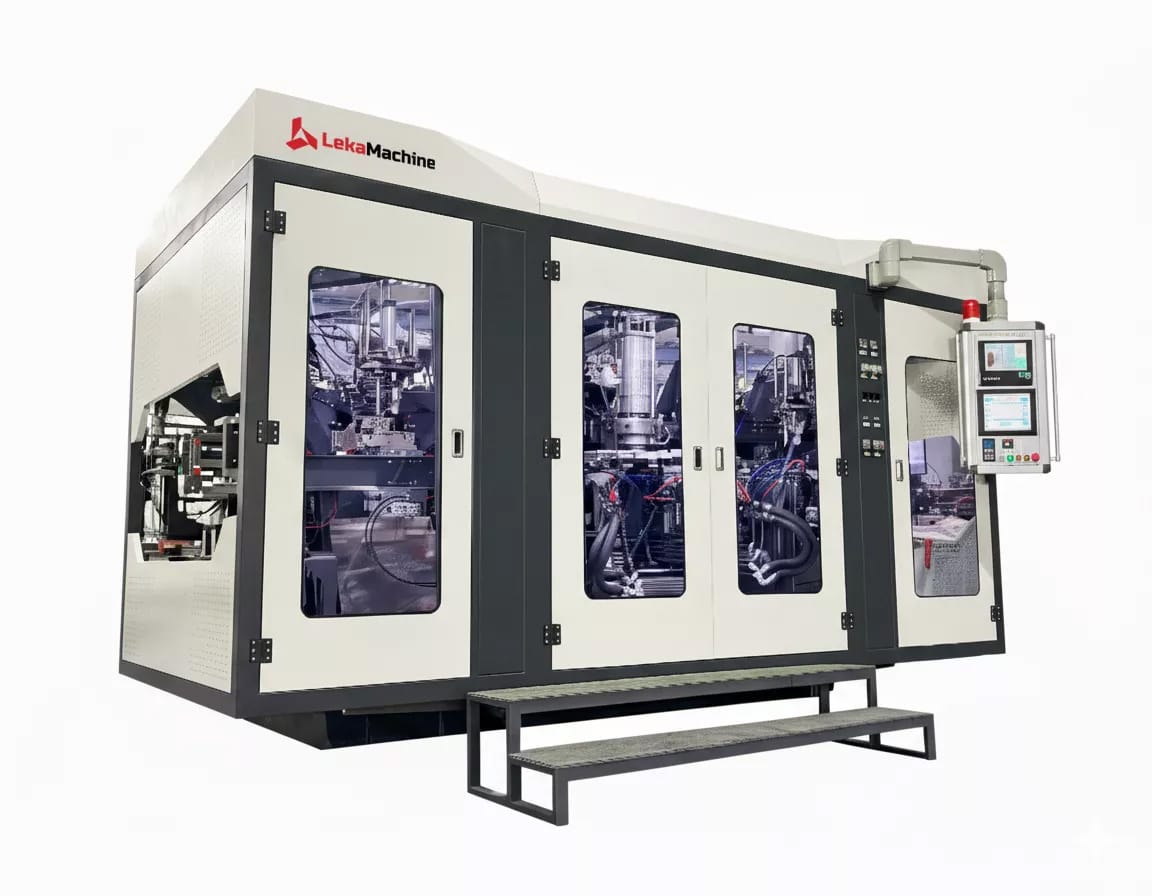
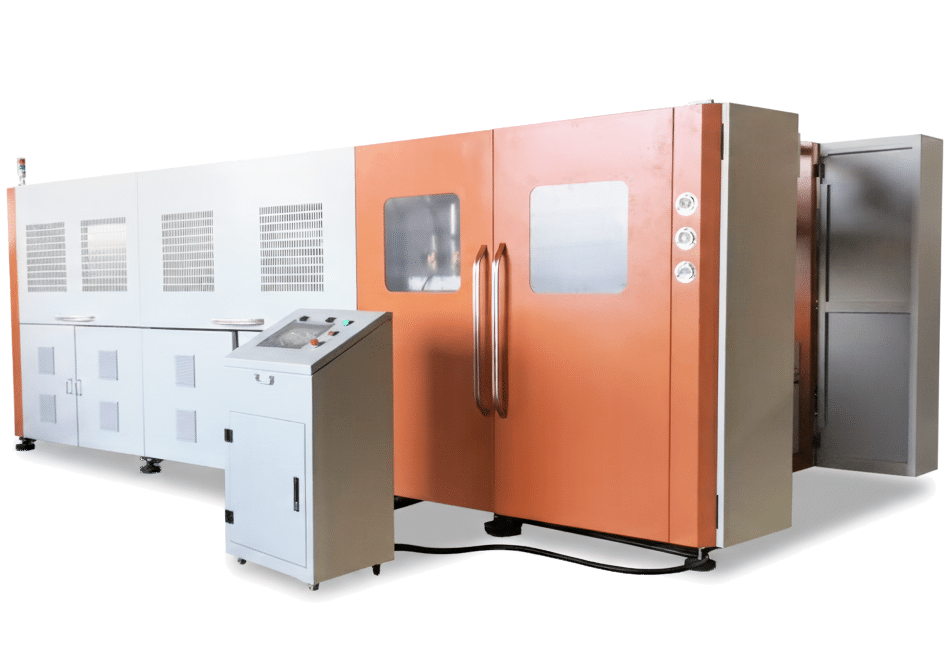
Stretch blow molding machine with enclosed cabinets and viewing windows

This stretch blow molding machine features enclosed service cabinets and a guarded molding area for forming plastic bottles.

What an Automatic PET Blowing Machine Really Does for Your Water Line

What “automatic PET blowing machine for water bottles” actually means in practice

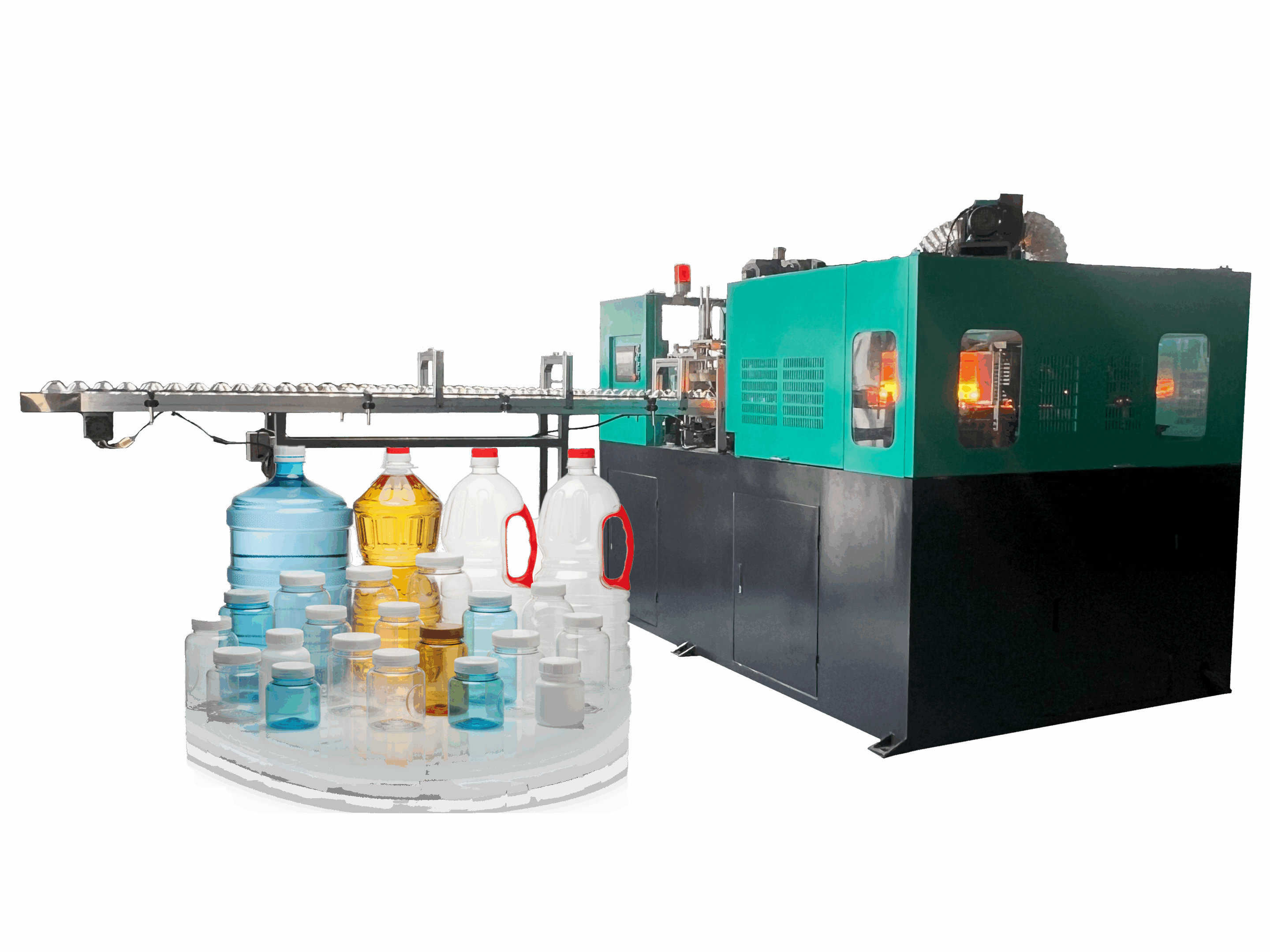
When people say “automatic PET blowing machine for water bottles”, they usually mean a two-stage stretch blow molding (SBM) line that takes PET preforms, heats them, stretches them, blows them into bottles, and sends those bottles straight toward the filler without manual handling. The machine automatically feeds preforms, indexes them through an infrared oven, blows them in multi-cavity molds, and discharges finished bottles onto an air conveyor or flat conveyor.

In other words, it is the heart of a modern water bottling line. It decides how many bottles per hour the plant can really run, how stable the neck quality is, how low the weight per bottle can go, and what your real cost per bottle looks like once energy, air, maintenance, and labour are counted.

For most water plants, the machine is a linear two-stage SBM: preforms are made elsewhere (or bought from a supplier), then reheated and blown on a dedicated PET blower with 2–8 cavities and outputs that can reach up to around 16,000 bottles per hour on small formats when properly configured. :contentReference[oaicite:0]{index=0}

From preform to finished bottle: quick overview of the process

The process looks simple from the outside but has many parameters inside:

  • Preform feeding: Preforms are tipped into a hopper, lifted by an elevator, and oriented by an unscrambler so that every neck points in the correct direction.
  • Infrared heating: The preforms pass through a multi-zone IR oven. Each zone can adjust power and sometimes air flow to give a precise temperature profile along the preform wall.
  • Transfer to blowing unit: Heated preforms are transferred by neck-handling chains or grippers into the blowing station, keeping the neck finish cool and dimensionally stable.
  • Stretching and blowing: Inside each cavity, a stretch rod elongates the preform while high-pressure air expands it into the mold to create the final bottle geometry.
  • Cooling and discharge: The mold is cooled by circulating water. Once the bottle is set, molds open and bottles are taken out onto a conveyor toward leak testing and then the filler.

Every step has its own “process window” for speed, temperature, air pressure, and timing. A good automatic PET blowing machine gives you stable control over that window instead of “try and pray” adjustments.

The process looks simple from the outside but has many parameters inside:

  • Preform feeding: Preforms are tipped into a hopper, lifted by an elevator, and oriented by an unscrambler so that every neck points in the correct direction.
  • Infrared heating: The preforms pass through a multi-zone IR oven. Each zone can adjust power and sometimes air flow to give a precise temperature profile along the preform wall.
  • Transfer to blowing unit: Heated preforms are transferred by neck-handling chains or grippers into the blowing station, keeping the neck finish cool and dimensionally stable.
  • Stretching and blowing: Inside each cavity, a stretch rod elongates the preform while high-pressure air expands it into the mold to create the final bottle geometry.
  • Cooling and discharge: The mold is cooled by circulating water. Once the bottle is set, molds open and bottles are taken out onto a conveyor toward leak testing and then the filler.

Every step has its own “process window” for speed, temperature, air pressure, and timing. A good automatic PET blowing machine gives you stable control over that window instead of “try and pray” adjustments.

Why serious water brands move from semi-auto to fully automatic systems

Semi-automatic blowers still have a place, but they rely heavily on operators to load and unload preforms and bottles. At low volumes that can be acceptable. Once daily demand grows, manual handling becomes the bottleneck and a hidden source of inconsistency.

Fully automatic PET blowing machines change three things at once:

  • Throughput: Multi-cavity automatic machines can easily achieve several thousand bottles per hour on typical 500–1500 ml water bottles, something that would need multiple semi-auto units and several operators to match.
  • Consistency: Automated heating, stretching, and blowing give much tighter variation on wall thickness and top-load performance, especially when running light-weight preforms.
  • Traceability: Automatic blowers are easier to integrate with filling, capping, and coding equipment, which matters when auditors and brand owners ask for detailed production data.

For water brands with supermarket or convenience store distribution, semi-auto machines quickly become a risk to supply, not just a cost issue.

When it makes sense to bring bottle production in-house instead of buying ready bottles

Many water plants start by buying finished PET bottles from an external supplier. Shifting to in-house blowing usually makes sense when:

  • Annual bottle volume passes a threshold where logistics and supplier margins are larger than the capital cost of a PET blower over 3–5 years.
  • Lead times from the bottle supplier are slowing down product launches or promotions.
  • There is pressure to reduce the grams per bottle, but the supplier will not invest in new molds only for one customer.
  • The factory wants tighter control over hygiene, traceability, and quality at the neck finish.

In-house blowing also lets you synchronize bottle supply with filler uptime. The bottle warehouse shrinks, and “out of bottles” stops being a weekly drama.

Who This Guide Is For (And Who It’s Not For)

OEM bottle manufacturers serving water and beverage brands

If you operate as an OEM bottle supplier making bottles for multiple water and beverage brands, the automatic PET blowing machine is your core asset. You care about:

  • Running different neck finishes and bottle shapes on the same platform.
  • Minimizing changeover times between customers.
  • Keeping energy per 1,000 bottles under control so you can quote competitive, but profitable, prices.

You likely run several blowers side by side and add new machines every few years as contracts grow. The right machine choice will decide whether those expansions feel smooth or painful. :contentReference[oaicite:1]{index=1}

Bottled water factories upgrading from older or semi-automatic PET blowers

Many existing water plants in emerging markets still run older linear blowers or semi-auto units that were state-of-the-art 10–15 years ago. Common symptoms:

  • Energy consumption is high; line operators joke that the oven is a “space heater”.
  • Frequent stoppages from mechanical wear and ageing pneumatics.
  • Limited ability to handle light-weight preforms without collapse or ovality.

For these plants, upgrading to a modern automatic PET blowing machine is less about chasing maximum BPH and more about stabilizing daily output and cutting utilities per bottle.

New beverage brands planning their first in-house PET bottling line

If you are planning the first in-house bottling line, there is a temptation to buy “the biggest and fastest” machine your budget will allow. In reality, it is more important to:

  • Match machine speed to realistic sales forecasts and filler speed.
  • Choose a platform that is forgiving to new operators and maintenance teams.
  • Keep enough flexibility for future SKUs: maybe a flavored water or functional drink in a different shape.

A properly chosen 4–6 cavity linear blower running at a comfortable speed can be safer than an oversized rotary system that you cannot fully utilize yet.

Who should not buy an automatic PET blowing machine right now

There are also cases where buying an automatic PET blowing machine is not the best move:

  • Very low annual volume where a contract bottle supplier or semi-auto machine covers demand easily.
  • Short-term projects or promotional SKUs that will not run long enough to justify capital expenditure.
  • Factories without stable power, air, or cooling infrastructure; the machine will never reach its promised performance.
  • Teams with no capacity for maintenance and no budget for service; even the best machine will degrade without care.

In these situations, it can be smarter to postpone the purchase, use a contract packer, or start with semi-auto equipment while building experience.

How Automatic PET Blowing Machines Work: Step-by-Step

Preform loading and unscrambling: keeping the oven always “fed”

The first job of an automatic PET blowing machine is to make sure the oven never runs empty. A good preform feeding system:

  • Uses a large hopper and elevator to buffer several minutes of production.
  • Includes an unscrambler that aligns preforms by their neck, using gravity and guides instead of complex sensors.
  • Has simple adjustments for different preform lengths and neck finishes.

When preform feeding is unstable, the blower will be forced to stop and restart frequently. That hurts output, increases scrap, and makes energy consumption per bottle worse. Consistent feeding is a basic, but often underestimated, part of the design.

Infrared heating tunnel: why stable preform temperature is everything

In PET blowing, the heating tunnel is the “brain” of the machine. Infrared lamps heat the preform wall, while blowers and cooling fans remove excess heat and equalize temperature. Modern machines divide the tunnel into multiple zones, allowing fine tuning for:

  • Shoulder vs. base temperature.
  • Inside vs. outside wall heating.
  • Different preform colours and recycled content levels.

For water bottles that are heavily light-weighted, a stable, well-controlled oven is the difference between a bottle that holds its shape and one that buckles during palletizing. This is also where better oven design and air management can significantly reduce kWh per 1,000 bottles. :contentReference[oaicite:2]{index=2}

Stretching and blowing: how mechanical stretch and high-pressure air shape the bottle

Once heated, each preform enters the blowing station. Here two key movements happen almost in parallel:

  • The stretch rod drives down to elongate the preform axially, aligning PET molecules and giving mechanical strength.
  • High-pressure air (usually 25–40 bar for typical water bottles) expands the preform radially against the mold surface.

The timing between pre-blow, high-pressure blow, and exhaust is precisely controlled. A well-tuned machine keeps this sequence repeatable from cycle to cycle; a poorly tuned one shows visible streaks, pearlescence, or weak shoulders when the process window is off.

Cooling, bottle take-out, and leak testing on an automatic line

The mold halves are cooled by circulating water. If the cooling circuit is undersized, cycles must be slowed to avoid sticking and deformation. Proper cooling design allows the machine to run shorter cycles while still releasing a dimensionally stable bottle.

After demolding, bottles transfer to an air conveyor or flat belt. Many water plants integrate:

  • Inline leak testers that pressurize each bottle briefly and reject any with tiny holes or cracks.
  • Vision systems that check neck finish, body defects, and sometimes base and engraving.

By catching defects here, you avoid filling and capping bad bottles, which would waste both product and line time.

Automatic vs Semi-Automatic PET Blowers: What Changes on Your Shop Floor

Labour: how many operators you really save (and where you still need people)

A semi-automatic PET blower typically needs:

  • One operator to load preforms into the heating station.
  • One operator to remove blown bottles and place them on a conveyor or into bags.

An automatic PET blowing machine for water bottles can often run with one operator for preform loading and general supervision over several machines, especially when preform and bottle conveying are automated. You still need people for:

  • Quality checks and sampling.
  • Mold changes and setting adjustments.
  • Routine cleaning and lubrication.

So the machine does not eliminate labour, but it shifts the work from repetitive manual handling to supervision and process control.

Speed: realistic bottles-per-hour for typical water bottle sizes

Realistic outputs depend on bottle size, preform design, and process parameters. Typical ranges on linear, two-stage automatic PET blowers are:

  • 2-cavity: around 2,000–3,500 BPH for 500–1500 ml water bottles.
  • 4-cavity: around 4,000–7,000 BPH.
  • 6–8 cavity: up to 12,000–16,000 BPH on smaller formats when optimally configured.

These numbers assume stable preform supply, good utilities, and a fine-tuned oven. Pushing beyond this usually requires rotary machines or very specialized high-speed systems. :contentReference[oaicite:3]{index=3}

Consistency: neck quality, wall thickness, and top-load strength differences

Automatic PET blowers have three consistency advantages over semi-auto:

  • Neck handling reduces the risk of scuffing and deformation at the neck finish.
  • Computer-controlled heating and stretching reduce wall thickness variation, helping you hold tight tolerances while light-weighting.
  • Stable process windows allow higher top-load performance from the same gram weight.

This consistency is important when selling to big retailers or brand owners who monitor defects closely and penalize supply issues.

Where semi-automatic still makes sense (small volumes, many trial shapes)

Semi-automatic machines are still useful in:

  • R&D labs for bottle design trials and preform testing.
  • Very small brands with limited, seasonal output.
  • Specialty shapes where manual handling is acceptable and volumes are low.

If your main need is flexible prototyping, a semi-auto unit plus external production on a larger OEM line may be more economical than buying a high-speed automatic machine.

Key Technical Specs That Matter for Water Bottle Projects

Bottle range: typical volumes (250 ml–2 L) and neck finishes for water

Most dedicated water lines focus on:

  • Volumes from 250 ml up to 2 L, sometimes 3–5 L for bulk formats.
  • Standard neck finishes such as 28 mm PCO (1810/1881) and 30/38 mm for larger bottles.

The machine must support your chosen neck families with quick changeovers and compatible preform designs. For export markets, make sure your neck standard matches closure options in the target country.

Cavity count and output: how to translate BPH into daily and monthly capacity

To plan capacity, start from filler speed and planned shifts. For example:

  • A 6-cavity machine at 8,000 BPH, running 16 hours per day, can produce roughly 128,000 bottles per day.
  • Over 26 production days per month, that is about 3.3 million bottles.

Always leave margin for maintenance, mold changes, and unplanned downtime. Buying a machine that can cover 120–130% of your expected average demand is usually safer than running it at the limit every day.

Air, electricity, and cooling water requirements you must plan for

High-pressure air, electricity, and cooling water are not optional extras; they are integral to the machine:

  • High-pressure air: Dedicated compressors and air dryers for blowing (typically 25–40 bar), plus low-pressure air for pneumatics.
  • Electricity: Ovens are the main consumer. Modern machines aim to keep consumption in a competitive range of a few kWh per 1,000 bottles, depending on bottle size and design.
  • Cooling water: Stable flow and temperature for both molds and utilities around compressors and chillers.

Without properly sized utilities, even the best automatic PET blowing machine will never achieve its nameplate performance. :contentReference[oaicite:4]{index=4}

Preform type, weight, and light-weighting limits for water bottles

Water bottles are typically among the lightest bottles in the plant. The preform design must balance:

  • Enough material in the support ring and neck to meet torque and sealing requirements.
  • Sufficient wall thickness in the shoulder and base for top-load and stacking.
  • Weight reduction targets to save resin without causing paneling or deformation.

Discuss your light-weighting ambitions early with the machine supplier. Not every machine can reliably handle ultra-light preforms, especially when ambient temperatures fluctuate or when rPET content is high.

How to Choose the Right Automatic PET Blowing Machine for Water Bottles

Start from sales forecast, not just “maximum BPH on the brochure”

Instead of picking a machine because the brochure shows an impressive BPH number, work backwards:

  • Annual sales forecast in bottles.
  • Number of working days per year.
  • Planned shifts and running hours per day.

From there, define a realistic machine speed that covers both current volume and near-term growth, without paying for excessive unused capacity.

Matching cavity number, cycle time, and mold set to your SKU mix

If 80–90% of your volume is one core water bottle format, choose a cavity count that optimizes this SKU. For smaller, occasional SKUs, accept slower speeds or shared molds. It is better to run your main bottle efficiently than to oversize the machine for occasional products.

Linear vs rotary vs single-stage solutions for water applications

For water bottles, three main architectures exist:

Most water bottlers choose linear or rotary two-stage SBM, with separate injection or outsourced preforms.

When to plan space and utilities for a future second machine

If your growth plan suggests a second blower within 3–5 years, plan space and utilities now. It is much cheaper to:

  • Reserve floor space for an additional machine and chiller.
  • Oversize some utility manifolds and cable trays.
  • Design the conveyor and layout so a second blower can be integrated later.

Thinking ahead avoids expensive civil and layout changes later on.

Designing a Stable, Low-Cost Water Bottle Around Your Blowing Machine

Choosing preform weight and design for a competitive cost per bottle

Cost per bottle is driven mainly by resin grams. To stay competitive:

  • Benchmark current market weights for your bottle sizes.
  • Use simulation or experienced suppliers to design a preform that supports lighter weights without compromising function.
  • Iterate with real production trials on the target machine before freezing the design.

Sometimes a 1–2 gram reduction across millions of bottles each year pays for a large part of the machine investment.

Balancing light-weighting with top-load and stackability

There is a physical limit. Go too light and the bottle cannot withstand pallet loads, higher warehouse temperatures, or minor abuse in the distribution chain. Top-load testing and pallet trials are essential. It is better to accept a slightly heavier, robust design than chase the absolute lowest weight and face returned goods or retailer complaints.

Label panel, grip, and base design: what affects blow stability

Water bottle design must also respect blowing behaviour:

  • Label panels should be designed so they do not collapse during shrink-sleeving or labelling.
  • Grip areas are more suited to hand-held beverage bottles than to very thin, low-cost water bottles.
  • Base design (champagne base, petaloid, etc.) must match filling temperature and stacking requirements.

Bad geometry will show up as unstable blowing, high scrap, and bottle jams further down the line.

How early to involve your machine supplier in bottle design reviews

Involving the machine supplier early helps avoid designs that look good on a screen but are difficult or expensive to blow. A short design review can highlight:

  • Areas where wall thickness is likely to be too thin.
  • Risk of wrinkles or trapped material.
  • Need for different base or support ring features.

This collaboration saves time and reduces the number of trial molds you need to pay for.

Integrating the Blowing Machine into a Complete Water Bottling Line

Typical layout: from preform loading to packed water cases

A typical integrated water line looks like this:

  1. Preforms are fed and blown into bottles on the PET blower.
  2. Bottles travel via air conveyor to the rinser–filler–capper block.
  3. After filling and capping, bottles go through labelling and coding.
  4. Multipacks and cases are formed by packers and shrink wrappers.
  5. Cases are palletized and wrapped, ready for storage or shipping.

The PET blowing machine must fit into this flow without creating bottlenecks, especially at the air conveyor and accumulation points.

Synchronising the blower with filling, capping, labelling, and packing

To avoid starved or blocked fillers:

  • Use line control systems that adjust blower output to filler status.
  • Maintain buffer capacity in conveyors to absorb short stoppages.
  • Coordinate maintenance and changeovers so utilities and line sections are available when needed.

Good synchronisation cuts micro-stops and improves overall equipment effectiveness (OEE) for the entire line.

Inline leak testing and vision inspection: catching defects before they reach the filler

Placing leak testers and cameras between the blower and filler ensures that defective bottles never reach the filler. This reduces product loss, preserves filler hygiene, and avoids the need to rework filled bottles.

Working with one turnkey supplier vs multiple vendors for the full line

There are two main approaches:

  • Turnkey supplier: One vendor supplies the PET blower, filler, labeller, conveyors, and packers. You have a single point of responsibility and often smoother line integration.
  • Multiple vendors: You source each section separately. This can reduce equipment cost but requires strong internal engineering and project management to ensure everything communicates well.

The right approach depends on your internal capabilities, risk tolerance, and budget.

Energy Efficiency, Air Consumption, and Total Cost of Ownership

How high-pressure air, electricity, and cooling water drive your real cost per bottle

When comparing machines, it is not enough to look at purchase price. High-pressure air and electricity are long-term expenses that often exceed the machine cost over its lifetime. A 10–20% difference in kWh per 1,000 bottles can mean a significant cost difference every year.

Where modern machines save energy (oven design, air recovery, servo drives)

Modern automatic PET blowers save energy through:

  • More efficient infrared ovens with optimized reflector design.
  • Air recovery systems that reuse part of the high-pressure air for pre-blow or low-pressure circuits.
  • Servo drives on key axes to optimize movement profiles and reduce wasted energy.

Machines that mention kWh per 1,000 bottles and air consumption per bottle with real test data are easier to compare on total cost of ownership. :contentReference[oaicite:6]{index=6}

Simple daily checks that keep kWh/kg and Nm³ of air per bottle under control

Operators can influence energy use more than they think:

  • Check that oven doors and covers are closed to avoid heat loss.
  • Monitor leaks in compressed air circuits and repair them quickly.
  • Avoid running the oven at full power during long stops; use stand-by modes.

Small habits, repeated every day, keep energy per bottle close to the machine’s design values.

Building a 3–5 year ROI model before you sign the purchase order

Before buying, build a simple ROI model:

If the model shows payback within 3–5 years with conservative assumptions, the investment is usually sound.

Common Traps When Buying an Automatic PET Blowing Machine

Focusing only on “maximum BPH” and ignoring changeover time

A very fast machine with slow changeovers is often worse than a slightly slower one with quick mold changes and recipe adjustments. If you have multiple SKUs, ask for real changeover time data, not just BPH numbers.

Underestimating mold cost and spare mold sets for different bottle sizes

Molds are not a small accessory; they are a major budget item. When calculating project cost, include:

  • Initial mold set for each bottle size.
  • Spare cavities or backup sets for critical SKUs.
  • Future mold needs for planned new products.

Ignoring mold cost early often leads to unpleasant surprises later.

Ignoring local service, spare parts lead time, and training

A technically excellent machine is not enough if support is weak. Consider:

  • Local or regional service presence.
  • Spare parts stock and typical lead times.
  • Availability of remote diagnostics and online support.

Without this, minor issues can turn into days of downtime.

Buying a machine that cannot handle future light-weighting or recycled PET content

Regulations and brand sustainability targets are pushing higher rPET content and lighter bottles. Choose a machine with:

  • Oven and process control capable of handling preforms with higher rPET percentages.
  • Enough flexibility to adjust to future preform designs.

A machine that barely copes with today’s designs may struggle badly with tomorrow’s.

Practical Case Snapshot: Upgrading a Water Line with a Modern PET Blower

Before: older machine, high energy use, frequent downtime

A mid-sized water plant ran an older linear PET blower that consumed a lot of energy, needed constant attention, and limited the filler speed. Unplanned stops were frequent, and maintenance teams spent more time firefighting than improving.

After: automatic PET blowing machine with stable output and lower energy per bottle

After installing a modern automatic PET blowing machine with updated oven design and better air management, the plant saw:

  • Higher net output at similar or lower nameplate speed.
  • Reduced kWh per 1,000 bottles thanks to a more efficient heating tunnel.
  • Less scrap during startup and changeovers.

What changed in operators’ daily work and maintenance routines

Operators shifted from manual handling to monitoring process parameters, performing regular checks, and changing molds more systematically. Maintenance moved to planned interventions and condition checks instead of constant emergency repairs.

Key lessons other water plants can copy from this type of upgrade

Three lessons stand out:

  • Do not underestimate the impact of a modern oven on both quality and energy.
  • Invest in proper training during installation; it pays back quickly.
  • Measure energy and air consumption before and after to prove the ROI internally.

Installation, Commissioning, and Operator Training Checklist

Site preparation: foundations, power, air, and chiller planning

Before the machine arrives:

  • Confirm floor loading and levelness at the installation site.
  • Run power cables, air lines, and cooling water lines to the planned connection points.
  • Plan access routes for moving the machine into the building.

FAT (Factory Acceptance Test) vs SAT (Site Acceptance Test): what to verify

A robust project includes both FAT and SAT:

  • FAT: At the supplier’s factory, verify output, energy use, and agreed test bottles under controlled conditions.
  • SAT: At your site, confirm that the machine meets performance targets with local utilities, preforms, and environment.

What a good 3–7 day on-site training programme should include

Training should cover:

  • Basic operation and safety.
  • Recipe management and changeovers.
  • Daily, weekly, and monthly maintenance tasks.
  • Common troubleshooting steps for process and mechanical issues.

Documents you should insist on: manuals, PLC backups, maintenance schedules

Always request:

  • Complete operation and maintenance manuals.
  • PLC programs and parameter backups, or at least a defined procedure to obtain them.
  • Recommended maintenance schedules and spare parts lists.

These documents are essential to keep your machine running for years.

Maintenance, Spare Parts, and Keeping Your Line Running

Daily, weekly, and monthly maintenance tasks for PET blowing machines

A simple, consistent maintenance plan often includes:

  • Daily cleaning of preform paths and bottle take-out areas.
  • Checking filters, lubrication points, and air leaks.
  • Weekly inspection of clamps, guides, and sensors.
  • Monthly checks on oven reflectors, lamp conditions, and water circuits.

Critical spare parts to stock locally for water bottle production

For a water bottle line, critical spares typically include:

  • Sensors and proximity switches.
  • Common valves and pneumatic components.
  • Stretch rods and wear parts for clamping mechanisms.
  • Key electronic modules as agreed with the supplier.

How remote support and online diagnostics reduce unplanned downtime

Machines equipped with remote access and diagnostic tools help service engineers:

  • Identify problems without travel delays.
  • Guide your team through parameter checks and quick fixes.
  • Plan visits with the right parts when on-site presence is needed.

When it’s time to schedule a major overhaul or upgrade package

After several years of continuous operation, performance may start to decline. At that point, consider:

  • Overhauling high-wear mechanical components.
  • Upgrading oven controls or air recovery systems.
  • Refreshing the HMI or adding new monitoring functions.

A planned overhaul is cheaper and less disruptive than waiting for a major breakdown.

Compliance, Safety, and Food-Contact Considerations

Machine safety features: guards, interlocks, and emergency stops

Safety is non-negotiable. The machine should include:

  • Physical guards around moving parts and hot ovens.
  • Interlocks that stop dangerous movements when doors are opened.
  • Clearly marked emergency stop buttons within easy reach.

Food-contact and hygiene standards for bottled water production

For bottled water, regulators and brand owners expect:

  • Cleanable surfaces and controlled lubricant use.
  • Proper separation between utilities and product-contact zones.
  • Documented procedures for cleaning, maintenance, and inspection.

The blowing area is usually not in a high-care zone like the filler, but it must still meet hygiene expectations.

Noise, heat, and operator comfort around the blowing area

PET blowers can generate heat and noise. Modern designs use:

  • Enclosures around the oven and moving parts.
  • Better insulation to limit heat radiation.
  • Quieter pneumatics and dampening for operator comfort.

Documentation you may need for audits from brands or regulators

Keep a file with:

  • Certificates of conformity and safety.
  • Lubricant and material certificates.
  • Maintenance logs and calibration records for critical sensors.

These documents simplify audits and demonstrate good manufacturing practice.

How to Talk to Suppliers and Compare Quotes Professionally

What to include in your RFQ for an automatic PET blowing machine for water bottles

A clear RFQ (request for quotation) should specify:

  • Target bottle sizes, neck finishes, and annual volumes.
  • Required output in BPH for each key SKU.
  • Available utilities (power, air, water) and local conditions.
  • Any specific requirements for energy data, integration, or service.

How to compare offers beyond price: energy, service, warranty, and upgrade paths

When comparing offers:

  • Normalize energy and air consumption per 1,000 bottles.
  • Compare warranty length and what is covered, not just the headline.
  • Check service coverage, response times, and spare parts policy.
  • Ask about upgrade options for rPET, new neck finishes, or higher outputs.

Questions to ask during video calls, factory tours, and reference checks

Useful questions include:

  • “Can we see the machine running at our target bottle size and weight?”
  • “What is your typical installation and ramp-up timeline?”
  • “Which customers use similar configurations, and can we speak to them?”

Red flags in quotations and contracts you should not ignore

Be cautious if:

  • The supplier refuses FAT or SAT conditions.
  • Key performance metrics (BPH, energy, scrap rate) are vague.
  • Payment terms are heavily front-loaded with weak performance guarantees.

FAQs About Automatic PET Blowing Machines for Water Bottles

What size of factory justifies investing in an automatic PET blowing machine?

As a rough guideline, once annual bottle demand reaches several million units and is expected to grow, an automatic PET blower usually becomes more economical than buying bottles, especially when energy-efficient models are considered.

Can one machine handle both water and other beverage bottle designs?

Yes, as long as:

  • Neck finishes and bottle heights stay within the machine’s design range.
  • You have appropriate molds and recipes for each SKU.

This is common in plants producing both still water and flavored drinks on similar formats. :contentReference[oaicite:7]{index=7}

How much floor space is needed for a typical PET blower and auxiliaries?

Space needs vary by model, but a linear machine for 2–8 cavities usually fits in a compact footprint, plus room for compressors, chillers, and preform/bottle conveyors. Ask each supplier for a layout drawing to check against your building.

What is a realistic lead time from order to first good bottle?

Depending on configuration, mold complexity, and shipping distance, lead time from order to first good bottle typically runs from a few months up to half a year. This includes design, manufacturing, FAT, shipping, installation, and SAT. :contentReference[oaicite:8]{index=8}

::contentReference[oaicite:9]{index=9}

Unlock the Process for Professional Blow Molding Machine Procurement Now!

    Slany Cheung

    Slany Cheung

    Author

    Hello, I’m Slany Cheung, the Sales Manager at Lekamachine. With 12 years of experience in the blow molding machinery industry, I have a deep understanding of the challenges and opportunities businesses face in optimizing production and enhancing efficiency. At Lekamachine, we specialize in providing integrated, fully automated blow molding solutions, serving industries ranging from cosmetics and pharmaceuticals to large industrial containers.

    Through this platform, I aim to share valuable insights into blow molding technologies, market trends, and best practices. My goal is to help businesses make informed decisions, improve their manufacturing processes, and stay competitive in an ever-evolving industry. Join me as we explore the latest innovations and strategies that are shaping the future of blow molding.

    You May Also Like…

    0 Comments

    Submit a Comment

    Your email address will not be published. 必填项已用 * 标注