
How to Produce Shampoo Bottles in 2026: A Practical Manufacturer’s Guide to Extrusion Blow Molding
If you plan to produce shampoo bottles at commercial scale, the real challenge is not only making a bottle. The real challenge is matching bottle design, resin, mold, machine configuration, and downstream filling requirements from the beginning.
This guide explains how shampoo bottles are produced with extrusion blow molding, what technical decisions matter most, which production problems are most common, and how to choose a machine partner that can support stable long-term output.
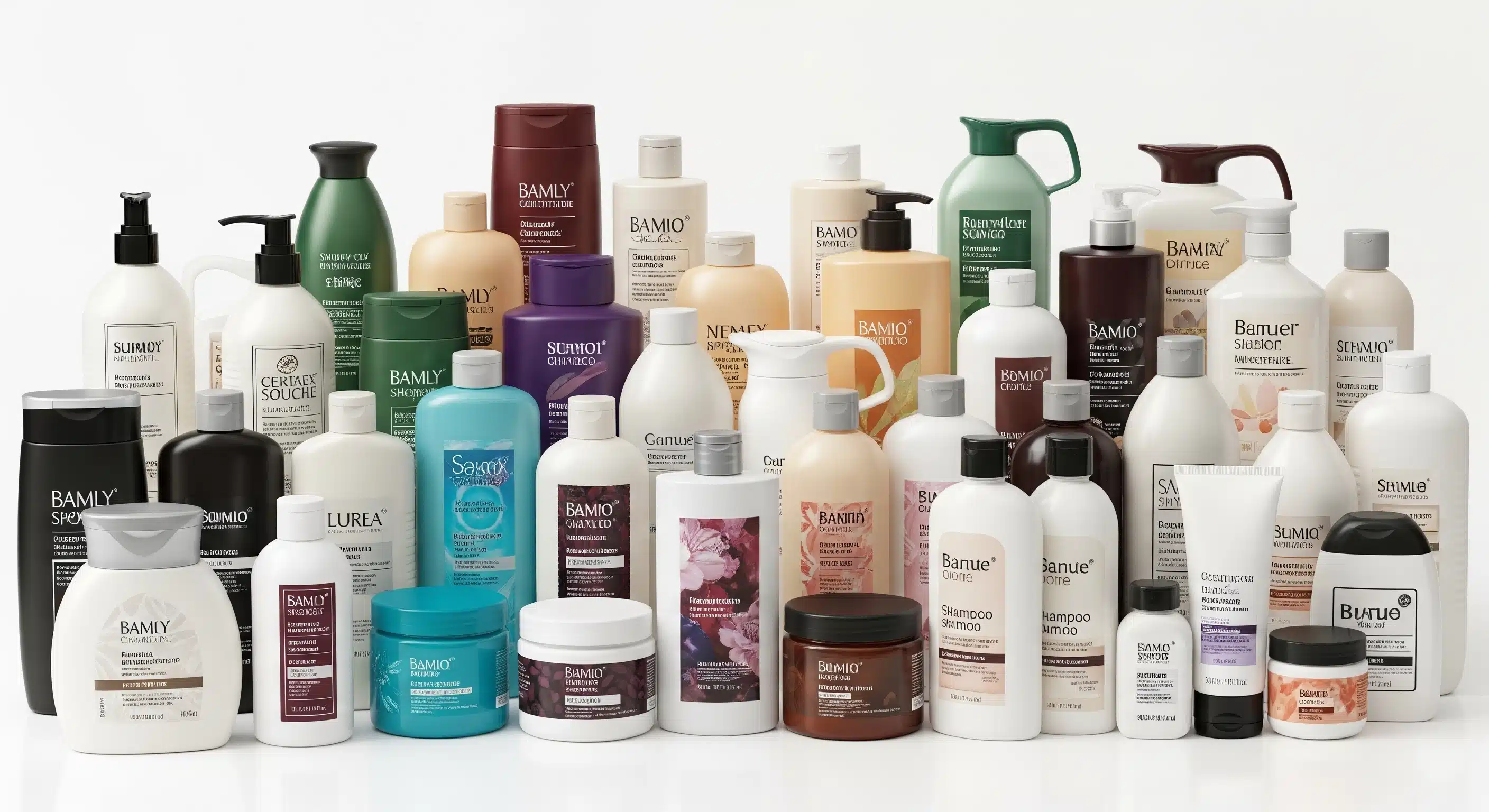

Slany Cheuang, Engineer Sales Manager at LEKA Machine
Hi, I’m Slany Cheuang from LEKA Machine. I work with customers building bottle projects for shampoo, detergent, lotion, and other personal-care products. Shampoo bottles may look simple, but stable production depends on many details: bottle weight, neck accuracy, wall-thickness control, color change efficiency, mold design, and how well the bottle will run on filling and capping lines later.
If you are planning a new shampoo bottle project, this article will help you evaluate the process more practically before you invest in molds and machinery.
Start with the Bottle Specification Before You Choose the Machine
Before selecting equipment, define the bottle clearly. Machine selection becomes much easier when the bottle specification is already practical and complete.
| Key Item | Why It Matters |
|---|---|
| Bottle volume | Determines die-head range, mold size, and output planning. |
| Neck finish | Affects cap fit, sealing reliability, and compatibility with capping equipment. |
| Bottle shape | Influences wall-thickness distribution, mold complexity, and label panel stability. |
| Target bottle weight | Directly affects resin cost, top-load performance, and drop resistance. |
| Output target | Helps decide cavity count, machine model, and automation level. |
| Downstream packaging needs | Impacts bottle design, shoulder shape, stability, and later filling-line handling. |
Many bottle projects run into problems because these decisions are delayed until after the machine discussion starts. In practice, the bottle, mold, machine, and downstream packaging flow should be evaluated together.
Why HDPE Is the Main Material for Shampoo Bottles
For most shampoo bottles, HDPE remains the most practical material. It offers a strong balance of chemical resistance, toughness, squeezability, low weight, and cost control. It is also well suited to extrusion blow molding and widely used for household and personal-care packaging.
Compared with more rigid or transparent packaging choices, HDPE works especially well when the bottle needs to survive transportation, repeated handling, and high-volume production without excessive material cost.
As sustainability becomes more important, many projects also evaluate PCR blends or other modified resin combinations. That creates additional requirements for melt stability, color consistency, odor control, and process adjustment. If PCR use is part of your plan, the machine and mold strategy should be reviewed early rather than added later as an afterthought.
If you are still comparing bottle-material directions, it can also help to review how different plastic forming methods fit different packaging requirements.
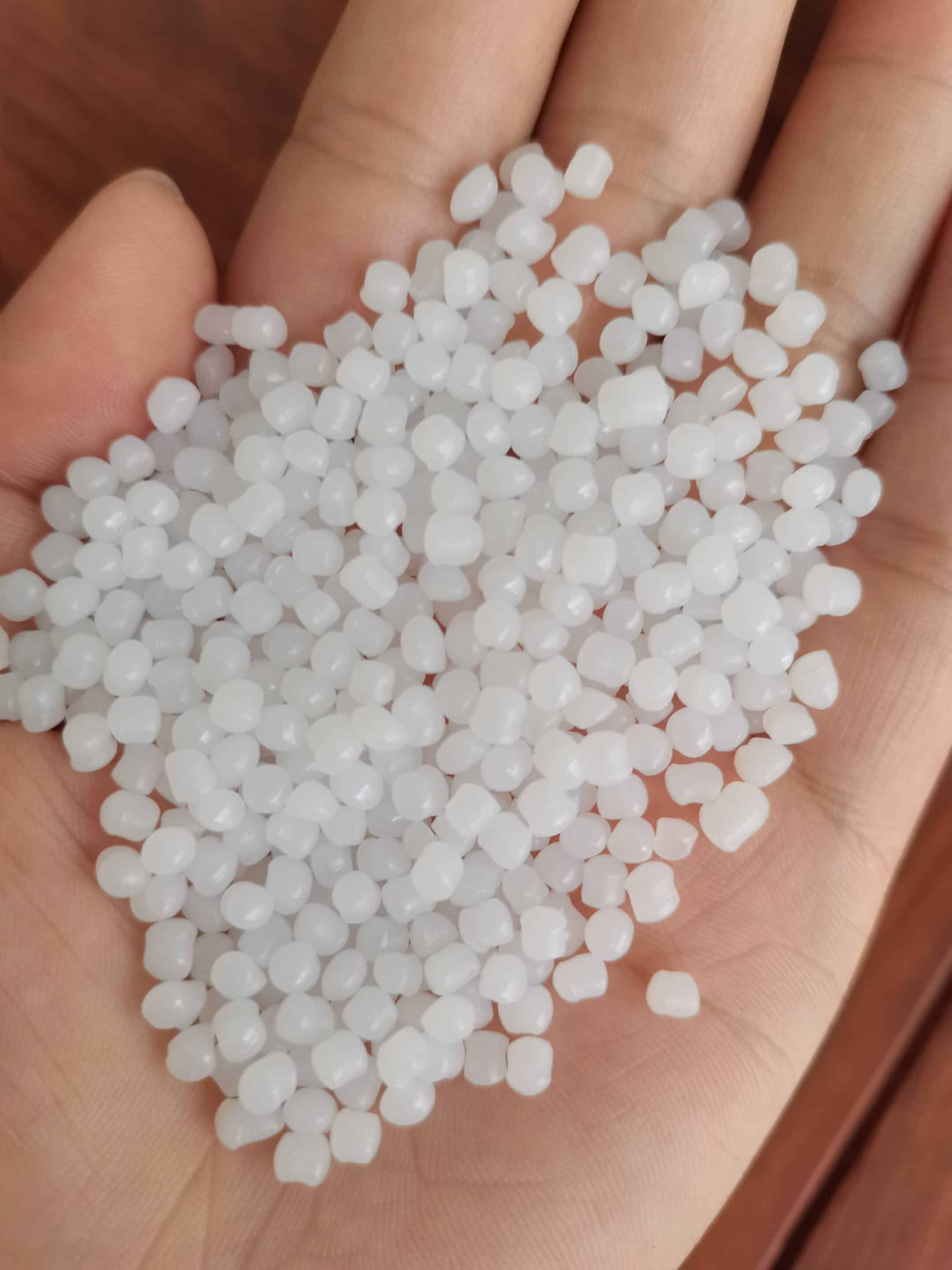
HDPE material for shampoo bottle production
What Machine Is Used to Produce Shampoo Bottles?
The standard equipment for many shampoo bottle projects is an extrusion blow molding machine. The exact model depends on bottle size, bottle geometry, mold cavitation, output target, resin choice, and how much automation the customer wants in trimming, take-out, leak testing, or downstream conveying.
When choosing a machine, buyers should focus less on general claims and more on whether the machine fits the actual bottle project. The most useful questions are practical ones:
- Can the machine maintain stable bottle weight across all cavities?
- Is the parison control good enough for the bottle shape and wall-thickness requirement?
- Can it support future lightweighting without creating high scrap rates?
- Is it suitable for PCR or color-change production conditions?
- Can the mold, bottle output, and downstream line speed be matched properly?
- Will operator changeover and maintenance be manageable in daily production?
For many buyers, the best machine is not simply the fastest machine. It is the machine that gives stable bottles, manageable operation, and more reliable integration with the rest of the packaging line.

Extrusion blow molding machine screw section
How the Shampoo Bottle Extrusion Blow Molding Process Works
The process itself is straightforward in principle, but production stability depends on how consistently each step is controlled.
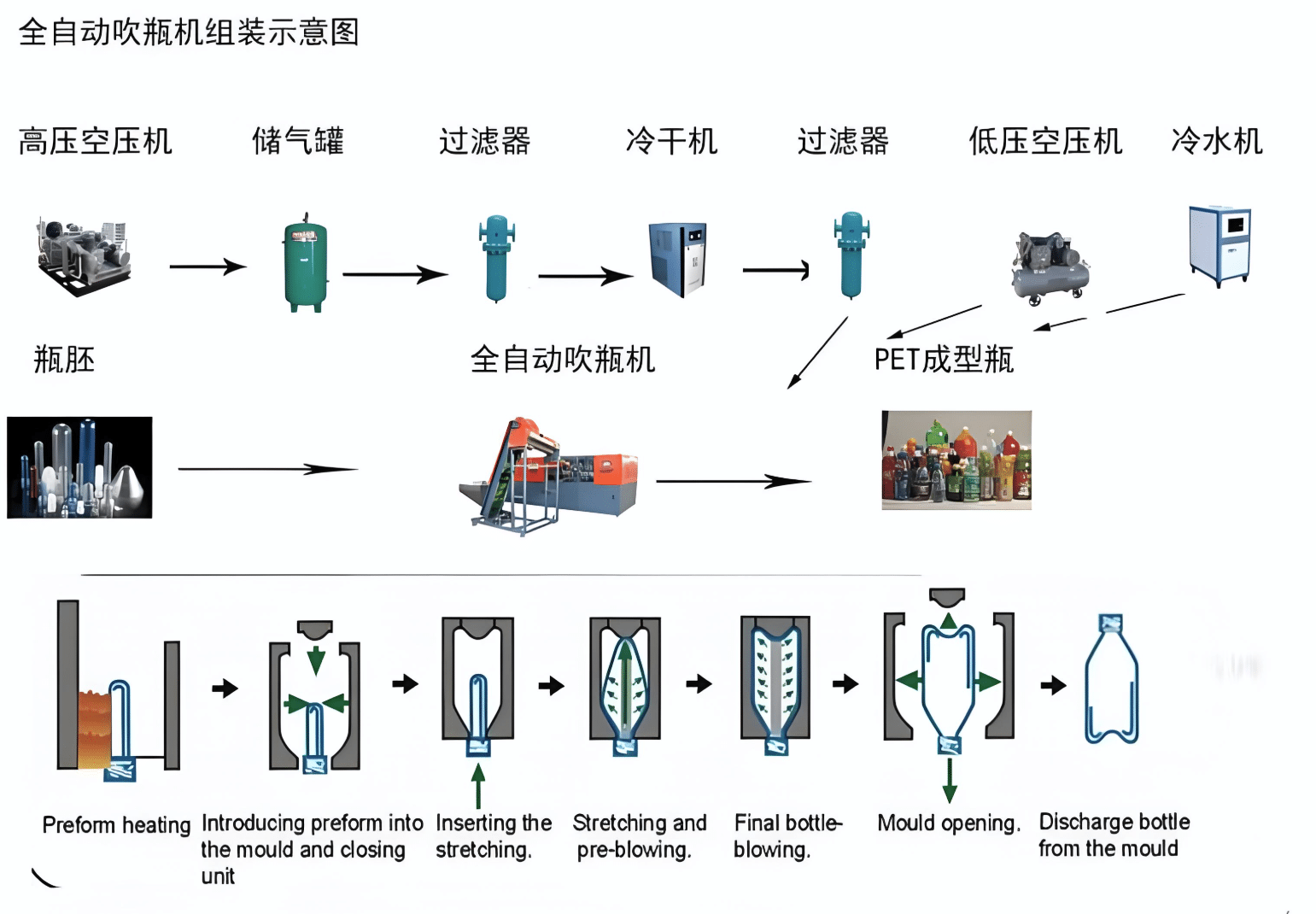
Blow molding machine workflow
- Resin feeding and melting: HDPE pellets enter the extruder, where they are heated and plasticized into a stable melt.
- Parison formation: The melt exits the die head as a hollow tube called the parison.
- Mold closing: The mold closes around the parison and captures the material in the bottle cavity.
- Air blowing and shaping: Compressed air expands the parison against the mold walls to form the bottle.
- Cooling and ejection: The bottle cools inside the mold and is then released.
- Deflashing and finishing: Excess material is removed, and the bottle can move to leak testing, inspection, conveying, and later filling or packing steps.
The better this process is controlled, the easier it becomes to achieve stable neck finish, consistent wall distribution, lower scrap, and smoother downstream handling.
Common Shampoo Bottle Production Problems
In real production, most problems are not mysterious. They usually come from material instability, bottle design mismatch, poor parison control, weak mold design, or changeover inconsistency.
| Common Problem | Likely Cause | What To Check |
|---|---|---|
| High scrap during color change | Long purge time, unstable operator method, poor material transition | Screw design, purge procedure, color planning, changeover discipline |
| Inconsistent bottle weight | Unstable parison output or cavity imbalance | Die-head condition, parison control, cavity-to-cavity monitoring |
| Thin shoulder or weak handle area | Poor wall-thickness distribution | Bottle design, mold venting, parison programming |
| Neck finish out of tolerance | Mold precision or unstable forming condition | Neck tooling accuracy, cooling, cycle stability |
| PCR process instability | Variation in recycled resin quality | Material screening, melt consistency, odor and contamination control |
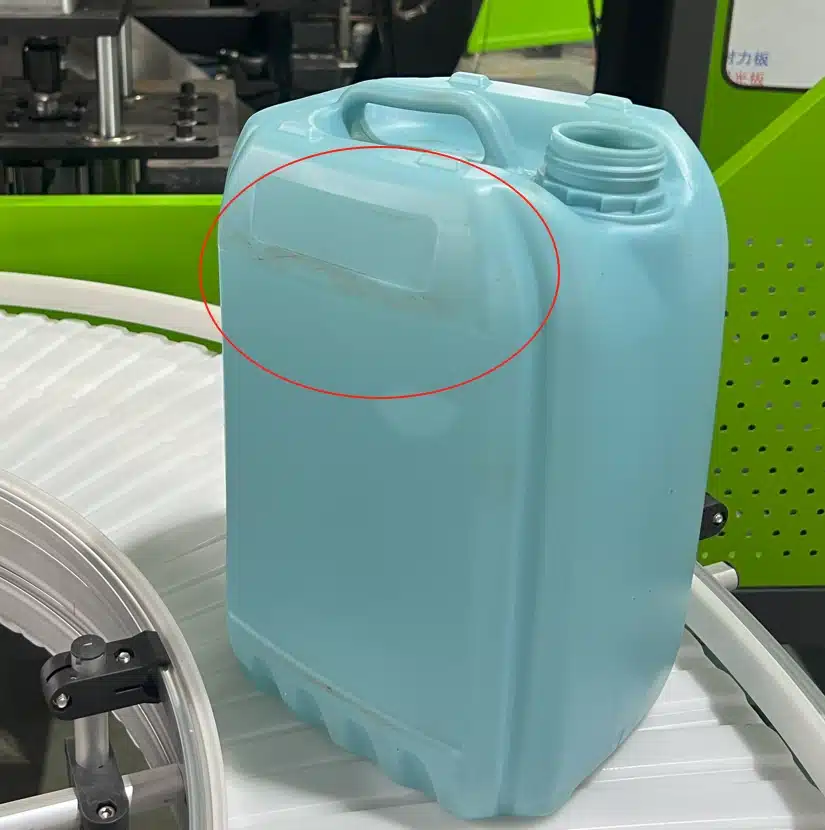
Broken bottle caused by unstable production conditions
For buyers comparing machine suppliers, these issues matter more than brochure language. A useful supplier should be able to explain how the machine, mold, and process settings will reduce these problems in actual bottle production.
Quality Control Does Not End When the Bottle Leaves the Mold
After molding, shampoo bottles still need to pass practical quality checks before they are ready for filling and packing. Depending on the bottle design and market, the most important checks may include:
- Bottle weight consistency
- Neck finish accuracy and cap fit
- Leak performance
- Visual appearance and flash control
- Top-load or handling strength
- Label panel flatness and presentation quality
- Compatibility with filling, capping, labeling, and packing equipment
This is why buyers should think beyond the bottle itself. If your project will also involve filling, capping, labeling, or final packing, early coordination is far more efficient than treating each stage as a separate sourcing decision. LEKA also supports broader equipment planning for bottle packaging projects, not only standalone bottle production equipment.
If quality consistency is a major concern, you can also review our approach to quality control and project reliability.
How to Choose the Right Shampoo Bottle Machine Supplier
Choosing a machine supplier is not only about machine price. It is about whether the supplier can help you reduce risk before production starts.
- Ask for project matching, not only a quotation. A useful supplier should ask about bottle volume, resin, neck finish, output target, and downstream requirements.
- Check mold and machine coordination. Bottle production stability depends heavily on how the mold and machine work together.
- Ask for sample review or trial discussion. Real technical discussion is more valuable than generic promises.
- Review delivery and service capability. Lead time, installation support, spare parts, and operator training all affect project success.
- Think beyond the bottle machine. Many customers eventually need a broader packaging line path, so early planning can reduce later sourcing gaps.
In many projects, the supplier who helps you make clearer decisions early will save you more money than the supplier who only gives the lowest initial machine price.
Conclusion
Producing shampoo bottles successfully comes down to a few practical decisions: define the bottle clearly, choose the right resin strategy, match the mold and machine correctly, control the process well, and plan for downstream packaging requirements from the beginning.
If you are evaluating a shampoo bottle project, the best starting point is to share your bottle volume, bottle image or drawing, target output, resin plan, and any filling-line requirements. With that information, it becomes much easier to recommend a more suitable machine configuration and project path.
Discuss Your Shampoo Bottle Project With LEKA Machine