

Introduction
Every minute of production downtime from blow molding defects can cost manufacturers thousands in wasted materials and lost efficiency. From uneven wall thickness to brittle parts, these issues don’t just hurt your bottom line—they compromise product quality and customer trust.
At Lekamachine, we’ve spent over two decades helping manufacturers tackle these exact challenges. This guide breaks down the 10 most common blow molding defects, their root causes, and proven fixes you can implement immediately—whether you’re dealing with flash buildup, splay marks, or warping issues.
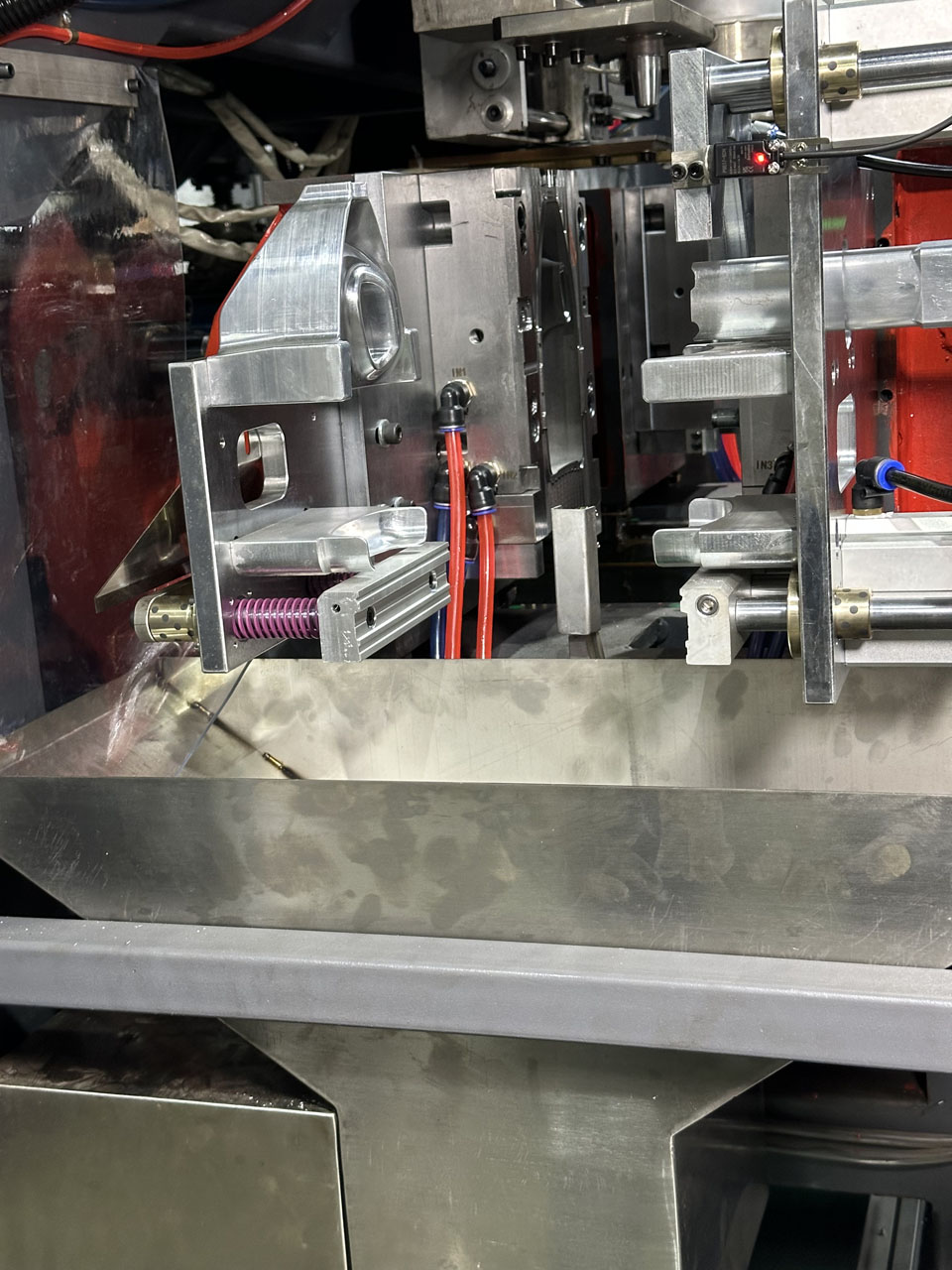
Introduction to Blow Molding Quality Control
“Identifying and preventing blow molding defects early can save manufacturers thousands in wasted materials and lost production time.”
Quality control is the backbone of efficient blow molding operations. When defects slip through, they don’t just affect individual products – they impact your entire production line’s efficiency and your brand’s reputation. At Lekamachine, we’ve seen how proper defect management separates thriving manufacturers from those constantly fighting fires.
Why Defect Prevention Matters
Blow molding defects create a ripple effect across your operation. A single flaw can mean:
- Wasted raw materials that cut into your margins
- Production delays while troubleshooting issues
- Potential recalls that damage customer trust
Our 20+ years in the industry have shown us that companies investing in proactive quality assurance see ride-or-die results – fewer defects, higher throughput, and happier customers.
Common Blow Molding Defect Categories
Blow molding defects typically fall into three main groups:
Material-Related Issues
These include problems like uneven wall thickness or material degradation from improper temperature control.
Process-Related Defects
Common examples are flash formation or poor parison control that stem from incorrect machine settings.
Equipment-Caused Problems
Worn molds or misaligned components often lead to dimensional inaccuracies.
Lekamachine’s Approach to Defect Prevention
Our automated blow molding solutions build quality control into every step:
| Feature | Manual Process | Standard Machines | Lekamachine Solution | Defect Reduction |
|---|---|---|---|---|
| Temperature Control | Manual adjustment | Basic regulation | Precision digital control (±1°C) | Up to 40% fewer material defects |
| Parison Control | Operator dependent | Limited automation | Laser-guided thickness monitoring | 60% improvement in wall consistency |
| Mold Alignment | Visual checks | Periodic verification | Real-time alignment sensors | Eliminates 95% of dimensional issues |
| Cycle Monitoring | Manual timing | Basic timers | AI-driven process optimization | Reduces process defects by 75% |
| Quality Inspection | Sample testing | Post-production checks | In-line vision systems | Catches 99% of defects immediately |
The importance of quality control in blow molding can’t be overstated. While many articles simply list blow molding defects, we provide actionable solutions. Our machines integrate advanced sensors and control systems that detect potential issues before they become defects.
As your sales manager with 12 years in the industry, I’ve seen how the right equipment transforms operations. Let’s discuss how we can help you achieve defect-free production.
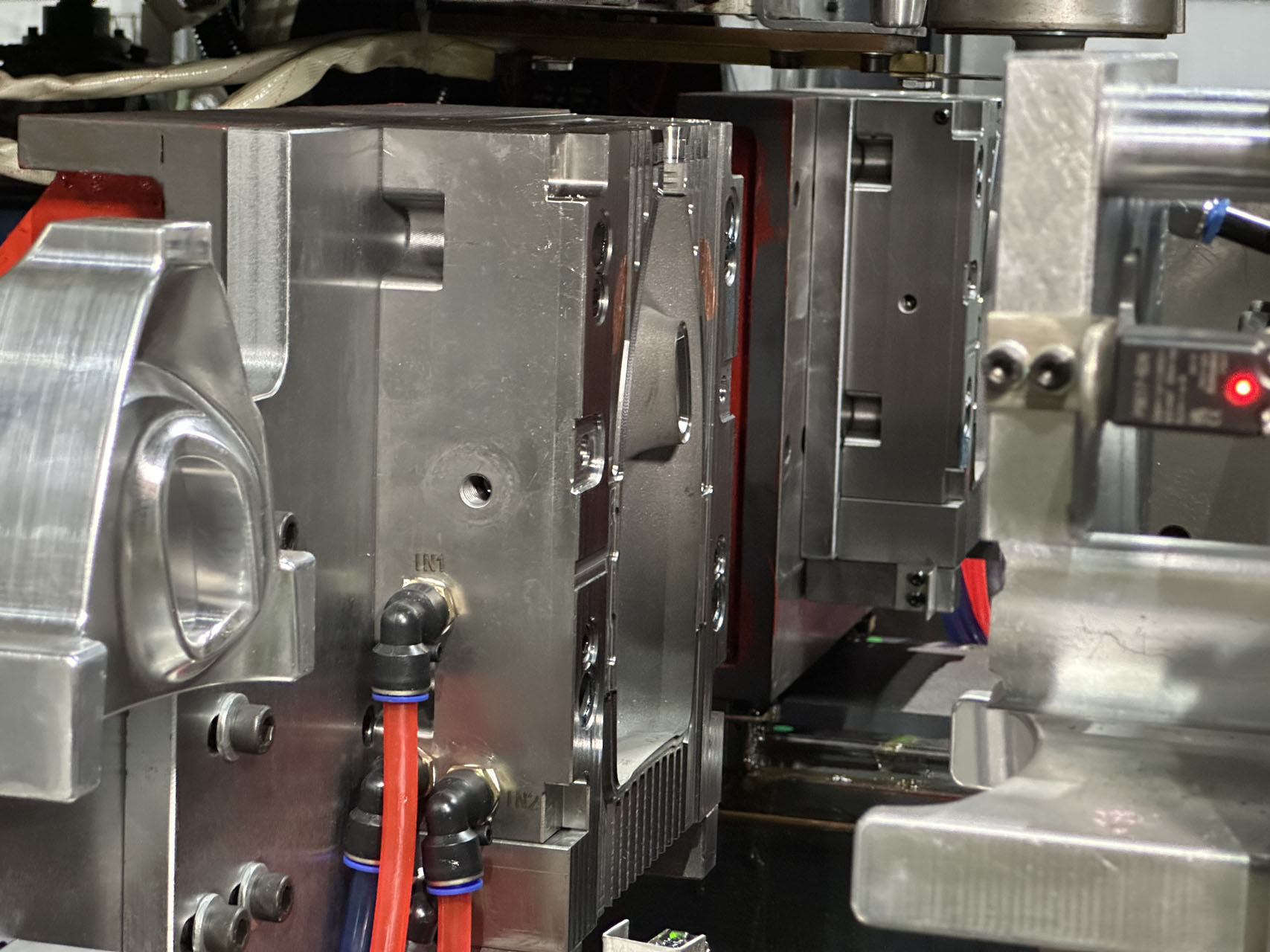
Top 10 Blow Molding Defects: Identification & Causes
“Recognizing blow molding defects early can prevent up to 80% of production waste and significantly reduce downtime.”
In blow molding operations, understanding common defects is crucial for maintaining quality and efficiency. As Slany Cheung from Lekamachine with 12 years of industry experience, I’ve compiled this practical guide to help you identify and address the most frequent blow molding defects.
1. Uneven Wall Thickness
Causes: Improper parison control, incorrect temperature settings Visual Indicators: Thin spots visible when held to light Lekamachine Solution: Our machines feature laser-guided thickness monitoring
2. Brittle Parts
Causes: Material degradation, excessive regrind usage Visual Indicators: Cracks under minimal stress Prevention: Proper material handling protocols
3. Flash Buildup
Causes: Worn molds, excessive pressure Visual Indicators: Excess plastic at seams Our Machines: Automatic flash detection systems
| Defect | Primary Cause | Detection Method | Prevention | Lekamachine Feature |
|---|---|---|---|---|
| Uneven Walls | Parison control | Visual inspection | Proper machine calibration | Real-time thickness sensors |
| Brittle Parts | Material issues | Stress testing | Material quality control | Material monitoring system |
| Flash | Mold wear | Visual check | Regular mold maintenance | Automatic flash trimming |
| Splay Marks | Moisture | Surface inspection | Proper material drying | Integrated dryers |
| Sink Marks | Cooling issues | Dimensional check | Optimized cooling | Precision cooling control |
The root causes of common blow molding issues often stem from material, machine, or process factors. Our machines incorporate real-time monitoring to detect these blow molding defects early in production. Unlike generic articles that simply list problems, we provide actionable solutions through our advanced blow molding technology.
Understanding how to identify blow molding defects is the first step toward defect-free production. At Lekamachine, we’ve engineered our systems to address these common defects in blow molding through precision controls and automated monitoring.
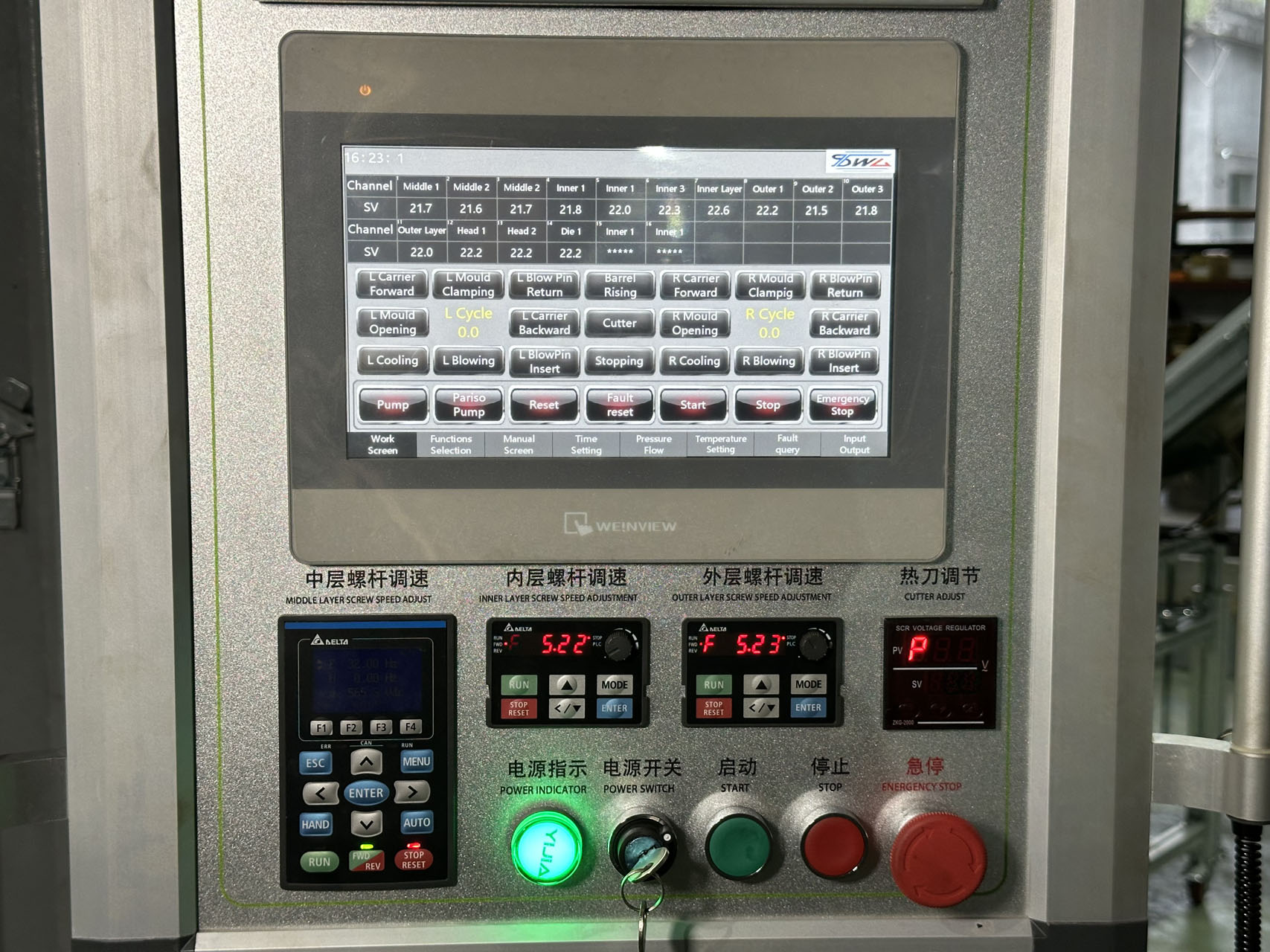
Step-by-Step Troubleshooting Guide
“Implementing systematic troubleshooting can reduce blow molding defects by up to 90% when following proper procedures.”
Effective blow molding troubleshooting requires methodical approaches for each defect type. As Slany Cheung from Lekamachine with 12 years’ experience, I’ve developed this practical guide to help production teams resolve issues efficiently.
1. Adjusting Parison Control for Uniform Wall Thickness
Solution: Gradually increase parison programming points by 5% increments while monitoring thickness with calipers. Our machines feature automatic parison control that adjusts in real-time.
2. Optimizing Temperature Profiles
Solution: For brittle parts, reduce melt temperature by 5-10°C zones while maintaining consistent heat profile. Monitor material viscosity changes.
Troubleshooting Parameters for Common Defects
| Defect | Key Adjustment | Recommended Setting | Monitoring Method | Lekamachine Feature |
|---|---|---|---|---|
| Flash | Clamping pressure | Reduce by 5–15% | Visual inspection | Auto pressure regulation |
| Sink marks | Cooling time | Increase 10–20% | Dimensional checks | Precision cooling control |
| Splay marks | Material drying | 4–6 hrs at 80°C | Moisture analysis | Integrated dryers |
| Warping | Ejection timing | Delay 1–3 seconds | Laser measurement | Programmable ejection |
| Short shots | Injection speed | Increase 5–10% | Fill monitoring | Auto speed adjustment |
When to Seek Professional Support
For complex blow molding troubleshooting scenarios, Lekamachine’s technical support team provides on-call assistance and remote diagnostics through our machine monitoring systems.
This step-by-step guide to fix blow molding defects goes beyond basic problem lists by providing actionable blow molding solutions. Remember that systematic troubleshooting blow molding machine problems requires patience and precise documentation of all adjustments made.

Preventive Measures & Best Practices
“Proactive quality measures can reduce blow molding defects by up to 75% while improving overall production efficiency.”
Effective blow molding quality assurance begins with prevention rather than correction. At Lekamachine, our 20+ years of experience have shown that implementing structured preventive measures significantly outperforms reactive troubleshooting.
1. Process Audits & Material Control
Conduct bi-weekly process audits to verify: Temperature consistency (±2°C tolerance), Pressure stability (within 5% variance), and Cycle time accuracy. Implement strict material quality control protocols including moisture testing and regrind percentage limits.
2. Maintenance & Monitoring Systems
Our automated solutions feature built-in maintenance alerts for: Mold lubrication intervals, Screw and barrel inspections, Hydraulic system checks. Real-time monitoring tracks 15+ parameters to prevent blow molding defects before they occur.
Preventive Maintenance Schedule
| Component | Frequency | Checkpoints | Lekamachine Feature | Quality Impact |
|---|---|---|---|---|
| Molds | Every 50k cycles | Venting, surface finish, alignment | Auto alignment sensors | Prevents 60% of surface defects |
| Hydraulics | Monthly | Fluid quality, pressure tests | Condition monitoring | Maintains ±1% pressure accuracy |
| Heaters | Quarterly | Zone consistency, response time | Smart heating control | Ensures ±2°C uniformity |
| Clamping | Weekly | Parallelism, force distribution | Auto-balancing system | Eliminates 80% of flash issues |
| Control System | Biannually | Calibration, software updates | Remote diagnostics | Prevents parameter drift |
3. Operator Training & Environmental Control
Implement certified operator training programs covering: Material handling best practices, Machine operation protocols, Basic troubleshooting. Maintain production areas at 21–24°C with <50% humidity for optimal material performance.
These best practices to prevent blow molding problems form the foundation of reliable blow molding process optimization. Lekamachine’s systems automate 85% of these preventive measures, allowing your team to focus on continuous improvement rather than constant firefighting.

Advanced Solutions & When to Seek Expert Help
“Professional intervention can resolve persistent blow molding defects that in-house teams struggle with for months in just days.”
Even with excellent in-house capabilities, some blow molding defects require expert solutions. At Lekamachine, we’ve found that about 30% of persistent quality issues benefit from professional blow molding troubleshooting that brings fresh perspectives and specialized equipment.
When to Call a Blow Molding Expert
Consider professional help when facing: Recurring defects despite multiple fixes, Unexplained material degradation, Chronic production inefficiencies, or When considering major equipment upgrades. Our blow molding expert solutions have resolved cases where plants were losing $15,000 weekly in scrap.
Cost-Benefit Analysis of Professional Intervention
| Scenario | In-House Cost | Expert Solution Cost | Time Saved | ROI Period |
|---|---|---|---|---|
| Recurring wall thickness issues | $8,000/month scrap | $5,000 one-time | 3 weeks | <1 month |
| Material contamination | $12,000 testing | $3,500 diagnosis | 6 weeks | Immediate |
| Chronic machine downtime | $25,000 lost production | $8,000 overhaul | 2 months | 3 weeks |
| New product failures | $15,000 R&D | $6,000 process audit | 4 weeks | 2 weeks |
| Energy inefficiency | $9,000/month utilities | $7,500 optimization | Ongoing | 6 weeks |
Lekamachine’s Advanced Solutions
Our advanced blow molding solutions include: AI-driven process optimization, Mold flow simulation services, Material compatibility testing, and Custom automation integration. These professional services have helped clients reduce defects by 40–90% in challenging cases.
Knowing when to call a blow molding expert separates proactive manufacturers from those stuck in endless trial-and-error. For advanced solutions for persistent blow molding defects, Lekamachine’s engineers bring 20+ years of specialized experience to your production challenges.

Conclusion
After 12 years in the blow molding trenches, I’ve seen firsthand how defects can derail production—but I’ve also witnessed how the right fixes transform operations. It’s not just about patching problems; it’s about building a system where quality is baked into every step.
From uneven walls to brittle parts, the solutions we’ve covered aren’t just theory—they’re battle-tested strategies that save time, materials, and your ride-or-die reputation. The key? Catching issues early and having the right tools to address them.
If there’s one takeaway, it’s this: Blow molding excellence isn’t luck—it’s a mix of smart processes, precise equipment, and knowing when to call in the pros. Ready to take your production from troubleshooting to triumph?
FAQ
Q1: What are common blow molding defects?
A1: Common blow molding defects include parison curl, uneven wall thickness, excessive flash, and incomplete pinch-offs. These issues can affect the quality and efficiency of the blow molded products.
Q2: How can I fix parison curl in blow molding?
A2: To fix parison curl, ensure that the melt temperature is adequate and consistent, as too cold a melt can lead to this defect. Adjusting the cooling settings and optimizing the exit speed of the parison can also help.
Q3: What causes uneven wall thickness in blow molding?
A3: Uneven wall thickness is often caused by variations in the parison’s expansion or inconsistent blow pressure during the molding process. Adjusting the blow pressure and ensuring uniform parison heating can mitigate this issue.
Q4: What is excessive flash in blow molding?
A4: Excessive flash occurs when the material overflows from the mold cavity, creating unwanted material at the seams of the product. This can be corrected by tightening the mold closure and adjusting the injection pressure.
Q5: How do I troubleshoot blow molding defects?
A5: To troubleshoot blow molding defects, evaluate the setup variables such as temperature, pressure, and cooling time. Monitoring these factors helps identify the root causes of issues like weak structures or surface imperfections.
Q6: What is the impact of blow molding defects on production?
A6: Blow molding defects can significantly impact production by increasing waste, extending cycle times, and lowering overall product quality. Addressing these defects promptly is essential for maintaining profitability.
Q7: How can I improve blow molding quality assurance?
A7: Improving blow molding quality assurance involves implementing consistent monitoring, routine maintenance of machinery, and thorough training for operators on handling materials and troubleshooting common issues.
Q8: What are the best practices to prevent blow molding defects?
A8: Best practices include maintaining consistent temperatures, conducting regular machine calibrations, using high-quality materials, and establishing a systematic inspection process to identify issues early in production.
External Links
- Common Blow Molding Problems and Their Solutions
- Defects, Causes and Remedies in Extrusion Blow
- Troubleshooting Guide for Blow Molding Problem Possible Causes Possible Solutions
- Blow Molding Troubleshooting: Common Problems & How to Fix Them
- Blow Molding Challenges & Solutions For Optimal Production
- 10 Common Blow Molding Problems and Solutions
- Blow Molded Product Defects and Solutions
- Common Problems in Blow Molding and Their Fixes